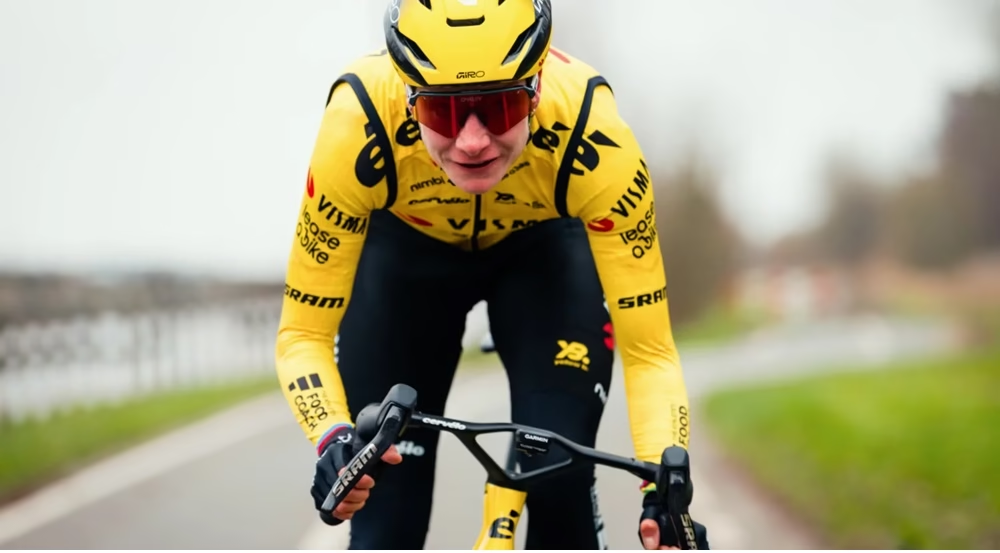
Marianne Vos’s 2026 season has already taken on a shape that says plenty about where she now sits in the sport. At 38, she is no longer judged only by whether she can still win the biggest races herself. She is judged by whether she can still shape them, strengthen one of the strongest teams in the women’s peloton, and remain dangerous enough that rivals cannot ignore her. So far, the answer on all three fronts still looks clear.
Her road season began with 7th at Strade Bianche and 6th at Trofeo Alfredo Binda, two results that immediately suggested she had opened the year in strong condition. But the early part of the campaign has also been interrupted by personal circumstances, with Vos stepping away from Milan-Sanremo Women and then missing the Tour of Flanders after the death of her father.
That means this is a season guide shaped as much by context as by raw results. Vos has not had a long block of racing yet, but the early evidence still points in a familiar direction. She remains competitive in the biggest one-day races, still has enough punch to feature deep into selective finishes, and continues to hold a crucial role within Team Visma | Lease a Bike. For a wider race context around the part of the calendar that would normally define her spring, ProCyclingUK’s How to watch Tour of Flanders Women 2026 in the UK, Brabantse Pijl Women 2026 route guide and beginner’s guide to La Vuelta Femenina 2026 help place the rest of her season in the broader calendar.
 Photo Credit: Getty
What 2025 changed for Marianne Vos
The easiest way to understand Vos’s 2026 is to start with what 2025 did to her place within the team. Last season was another reminder that she remains capable of delivering at the very highest level, even as Team Visma | Lease a Bike increasingly builds around multiple leaders and more varied objectives across the season.
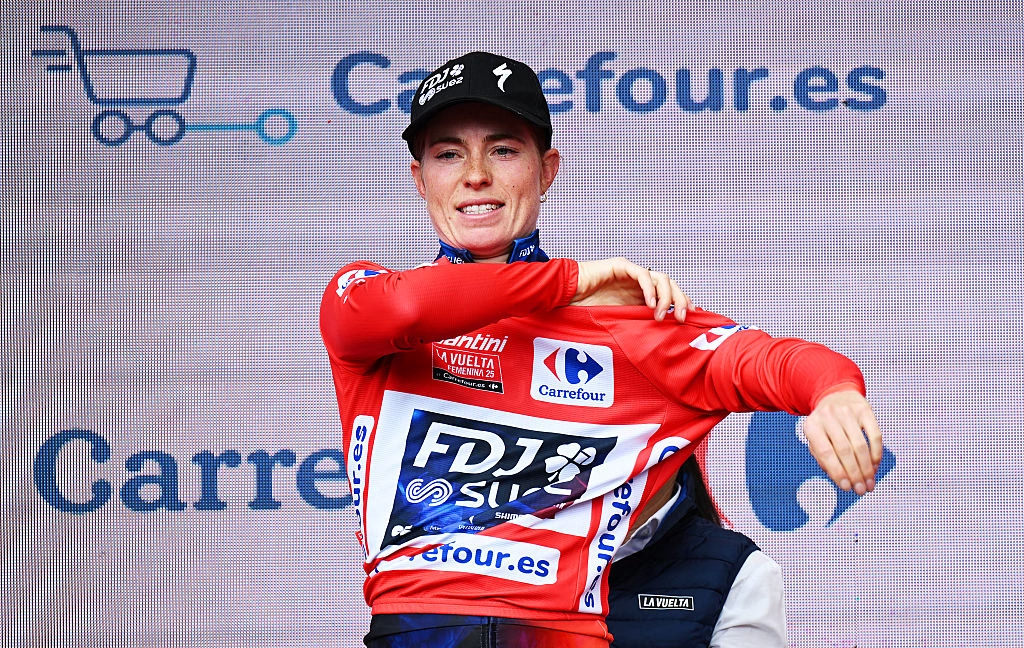
Vos won two stages and the points classification at La Vuelta Femenina in 2025, then added a stage win at the Tour de France Femmes. Just as importantly, she also played a valuable role in helping Pauline Ferrand-Prévot during the team’s biggest successes elsewhere in the year. That matters because it changes the way Vos’s season has to be read now. She is still Marianne Vos, still one of the greatest riders in the history of the sport, but this phase of her career is no longer only about building an entire season around her alone.
Instead, her value often comes from a combination of leadership, flexibility and tactical intelligence. In some races, that still makes her a genuine contender in her own right. In others, it makes her the rider who can unlock more options for the team around her. For more on the biggest stage-race platform where she thrived last year, ProCyclingUK’s brief history of La Vuelta Femenina gives the wider background.
Her 2026 results so far
So far, Vos has only raced twice on the road in 2026, but both results were strong enough to suggest she started the year in good shape. Finishing 7th at Strade Bianche and then 6th at Trofeo Alfredo Binda may not look headline-grabbing by the standards of her peak seasons, but they are still high-quality placings in major races.
They also say something useful about where her level currently sits. Vos did not open the season by dominating, but she did open it by being immediately relevant in races that reward punch, positioning and endurance. For a rider balancing individual ambition with a wider team role, that is often enough to show that the foundations are there.
It is also worth noting the type of races in which those results came. Strade Bianche and Binda remain two of the best tests of a rider’s all-round sharpness in the spring. They are not flat sprints, but nor are they pure climbing contests. They reward riders who can handle repeated changes of rhythm, awkward terrain and selective finales. Vos still fitting that profile is significant.
 Photo Credit: Bram Berkien
The interrupted Classics campaign
The biggest storyline in her spring so far is not a result but an absence. Vos had been expected to play a key role through the biggest cobbled and semi-cobbled races of the spring, but that rhythm was interrupted when she stepped away from racing for family reasons. That ruled her out of Milan-Sanremo Women and then the Tour of Flanders.
In purely sporting terms, those were both races where she would have mattered. She would have been relevant as a contender in her own right and as a tactical card inside a very strong Team Visma | Lease a Bike line-up. Missing them does not define the whole season, but it does remove two major chances from the early spring and makes the shape of the next block of racing less straightforward.
That also means her 2026 cannot yet be judged in the same way as a more settled campaign. There is a difference between a rider missing races because of poor condition and a rider stepping back because of personal circumstances. In Vos’s case, the interruption does not undermine the evidence of her early form, it simply delays the next stage of the season.
For the wider context around one of the races she missed, ProCyclingUK’s Which big names aren’t racing the women’s Tour of Flanders, and why? explains how her absence changed that race specifically.
What sort of races still suit her best
Even now, Vos remains one of the hardest riders in the peloton to place into just one category. That has been true for most of her career and it is still true today. She is not simply a sprinter, not simply a puncheur, and not simply a stage-race rider. Her strength has always been the breadth of what she can do.
In practical 2026 terms, though, the races that still appear to suit her best are the selective one-day events and the stage-race days where experience, positioning and finishing speed from a reduced group matter most. Her early rides at Strade Bianche and Binda support that reading. She remains especially dangerous on terrain that strips away the pure sprinters but does not become a pure climbers’ contest.
That is why races such as Brabantse Pijl, Amstel Gold Race and selective stages at La Vuelta Femenina still feel like very natural territory for her, even if the team’s biggest GC ambitions may sit elsewhere. For a wider read on how those races fit together in the season, ProCyclingUK’s guide to the most important women’s cycling races is a useful companion.
Her role inside Team Visma | Lease a Bike
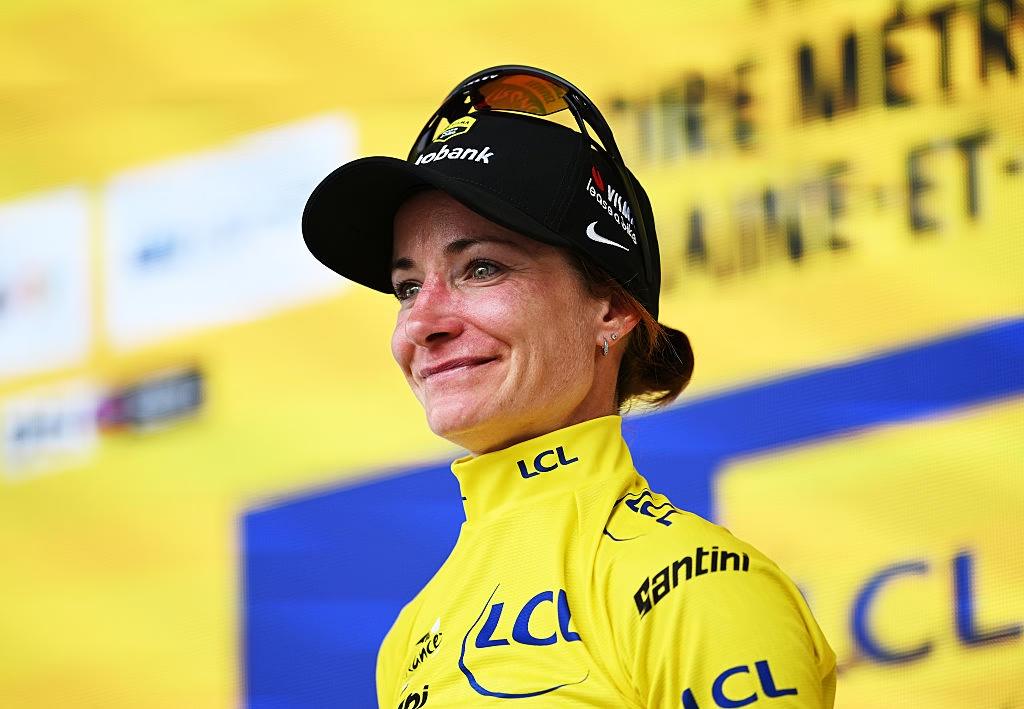
This may be the most interesting part of her 2026 season. Vos is no longer simply the rider a whole campaign must orbit around, but that does not reduce her importance. In some ways, it increases it.
She gives Team Visma | Lease a Bike experience, adaptability and another tactical angle in the biggest races, especially when Pauline Ferrand-Prévot is the more obvious focal point. That matters in modern women’s cycling because the strongest teams are often those with more than one route to winning. Vos gives Visma exactly that.
It also means her season should not be judged too narrowly. A Vos campaign can still be an excellent one even without a Monument or a major GC title attached to it, especially if she remains decisive in how the team approaches the biggest events. That broader team-reading is essential if you want to make sense of where she now sits in the sport.
What success would look like in 2026
At this point, success for Vos in 2026 probably looks like a combination of three things. The first would be winning again, because she is still good enough to target major one-day races and selective stage finishes. The second would be a strong presence in the Ardennes and Spanish stage-race blocks, where her versatility still gives her multiple routes to results. The third would be continuing to play a high-value role inside a Visma team whose ambitions now stretch across every major part of the calendar.
That is the key point. Vos does not need to dominate the season to have a strong one. She needs to remain relevant in the races that suit her, deliver when the opportunities appear, and continue to give her team another layer of intelligence and flexibility in the biggest moments. The early spring interruptions mean the season has not yet had a clean flow, but the year is far from defined.

Expected direction for the rest of the season
The precise race-by-race programme is not yet fully settled in public view, but the likely direction is easier to read. Once she returns to a more regular rhythm, the races that should still suit her best are those that reward experience and versatility rather than one extreme quality.
That points naturally towards selective Classics, stages at La Vuelta Femenina, and the sort of Tour de France Femmes days where she can still out-think and out-finish riders who may be stronger in only one narrow way. It also means that even if she is not the headline favourite for every major race, she remains one of the riders most capable of making those races more complicated for everyone else.
That sort of value has followed her through almost every phase of her career. It is simply being expressed slightly differently now.

Verdict
Vos’s 2026 has not yet had enough race days to feel fully formed, but the outline is already there. She opened with 7th at Strade Bianche and 6th at Trofeo Alfredo Binda, then stepped away from Milan-Sanremo Women and the Tour of Flanders because of the death of her father.
So this is a season guide built around pause as much as momentum. But once the personal interruption eases, the racing case still looks strong. Vos remains one of the most adaptable riders in the peloton, still competitive in the biggest races, and still central to one of the strongest teams in women’s cycling.
At 38, that is no small thing. It is another reminder that Marianne Vos has moved beyond being measured only by what she wins. She is still being measured by how much she can shape.