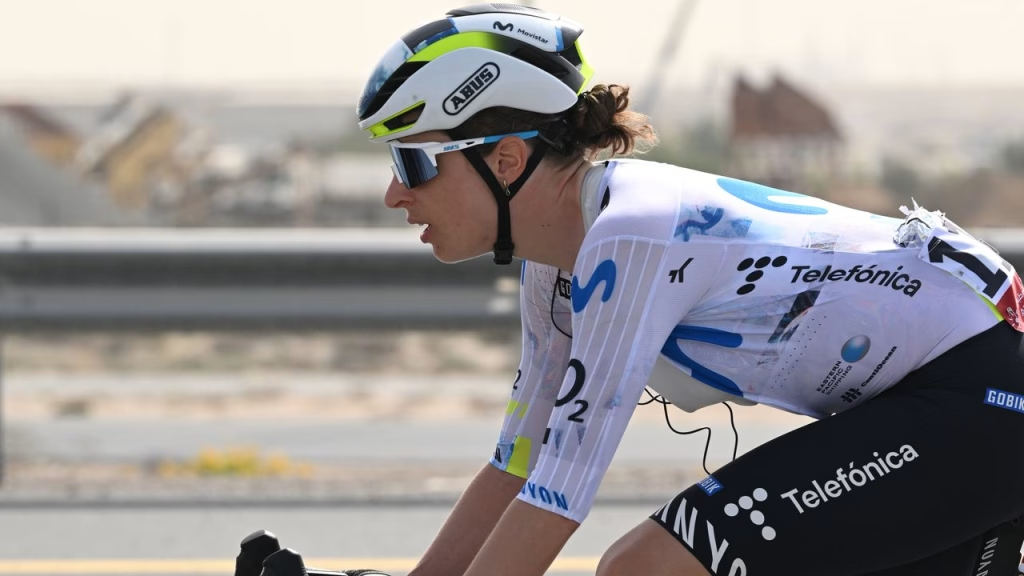
Marlen Reusser’s 2026 calendar is built around pressure, control and stage-race depth. It is the programme of a rider who can win in different ways, but who is most dangerous when the race becomes selective through accumulation rather than pure explosiveness.
That is what makes this line-up so interesting. There is enough spring one-day racing here to test her across very different terrain, but the deeper logic of the season still points toward GC, time trial strength and stage races where she can shape the race as much as simply follow it. Movistar have not built a scattergun calendar for her. They have built one around the races where her engine, tactical sense and ability to sustain form over weeks can matter most.
Marlen Reusser’s 2026 programme
Reusser is set to race:
- UAE Tour Women
- Strade Bianche
- Dwars door Vlaanderen
- Tour of Flanders
- La Flèche Wallonne
- Liège-Bastogne-Liège
- La Vuelta Femenina
- Itzulia Women
- Tour de Suisse Women
- Tour de France Femmes
- Tour de Romandie Féminin
What this schedule tells us
The first thing it says is that Movistar are not trying to force Reusser into one narrow category. This is not a pure Classics block, and it is not a pure Grand Tour block either. It is a programme that accepts she can be a major factor in both.
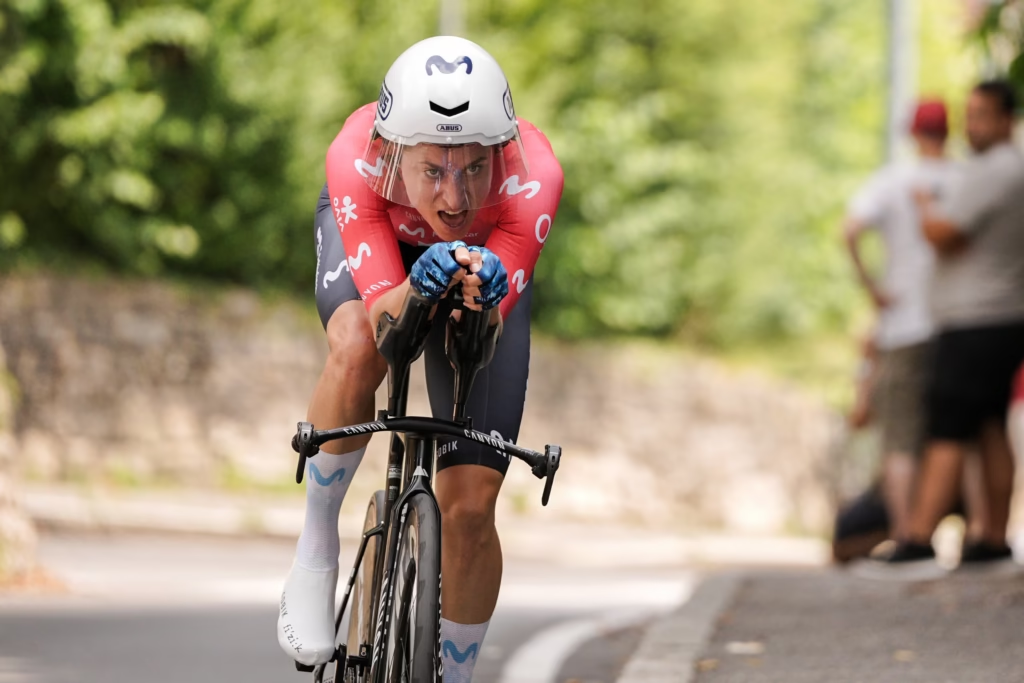
That makes sense because Reusser has always been slightly awkward to classify in the best possible way. She is one of the strongest time trial and diesel-style riders in the sport, but she is not limited to flat racing. She can thrive in hilly one-day races, she can handle hard stage-race weeks, and she can turn a selective race into something very uncomfortable for more explosive rivals.
The spring proves that point immediately. Strade Bianche, Dwars door Vlaanderen, the Tour of Flanders, Flèche Wallonne and Liège-Bastogne-Liège do not belong to one simple rider type. Yet all of them can make sense for Reusser because she is capable of reshaping a race through strength rather than waiting for the perfect finish.
The spring classics section
Strade Bianche feels like one of the best early markers on the calendar. It is a race that rewards composure, repeated effort and the ability to stay strong while the road keeps changing beneath you. Reusser does not need a neat race. In some ways she is better when the race is gradually worn down.
Dwars door Vlaanderen and the Tour of Flanders are more intriguing because they test her on terrain where position and timing are just as important as raw power. She can absolutely be a factor there, especially if the race becomes selective from distance rather than simply explosive on the final climbs.
Then the calendar shifts toward the Ardennes, and that is where her programme becomes even more interesting. Flèche Wallonne is the least natural fit of the three because it compresses everything into one final effort on the Mur. But Liège-Bastogne-Liège is much more her sort of race: long, attritional, layered, and open to riders who can keep making hard moves when others are already close to empty.
 Photo Credit: Getty
Why the stage races matter more
As strong as the one-day part of this programme is, the real heart of it probably begins with La Vuelta Femenina.
From there, the season runs through Itzulia Women, Tour de Suisse Women, Tour de France Femmes and Tour de Romandie Féminin. That is an extremely telling sequence. It says Movistar see Reusser not just as a rider who can win a stage race, but as one who can carry a high level across several of them.
La Vuelta gives her an early major GC platform. Itzulia is a shorter but often very revealing race where sharp climbing form matters. Tour de Suisse is an especially obvious target for a Swiss rider, but it also works perfectly in the run-up to the Tour de France Femmes. Then comes the biggest stage race of them all, before Romandie closes the year in another race that should suit her profile very well.
That is a serious block for any rider. For Reusser, it makes sense because she has the kind of riding style that travels well from one stage race to the next. She does not depend on one specific finish or one specific terrain feature. She depends more on pressure, fatigue and sustained quality, which is exactly what those races are built to expose.
The races that suit her best
Liège-Bastogne-Liège stands out immediately among the one-day races. It is the sort of event where she can use strength over a long day and turn the race into something selective before the pure finishers or the most explosive climbers get exactly the scenario they want.
Among the stage races, Tour de Suisse Women and Tour de Romandie Féminin look like especially strong fits. Both should suit her ability to manage GC over several days, and both sit naturally within her wider profile as a rider who can gain through time trials, pacing and sustained climbing rather than only through one-off attacks.
La Vuelta Femenina and Tour de France Femmes are the bigger headline targets, of course, and those are the races that matter most in terms of status. But Suisse and Romandie may be the races where the fit between rider and parcours feels cleanest.
 Photo Credit: Getty
What to watch for
The most interesting question in Reusser’s 2026 programme is not whether she can be competitive. It is where she chooses to become aggressive.
In one-day races, that usually means asking whether she can turn strength into race shape before the favourites around her are ready. In stage races, it means asking whether she can use consistency, time trialling and accumulated fatigue to put rivals under pressure across the week.
That is what makes this calendar so coherent. It gives her enough spring racing to stay sharp and dangerous in the Classics, but the deeper structure is clearly built around stage-race authority. For Movistar, this looks like the programme of a rider they expect to shape major races. For Reusser, that is probably exactly where she belongs.