
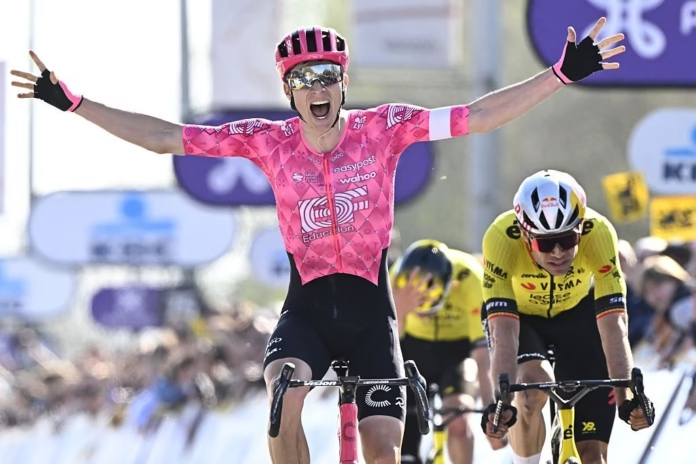
Men’s Dwars door Vlaanderen 2026 takes place on the 1st April, starting in Roeselare and finishing in Waregem over around 184km. As ever, it arrives in one of the most revealing slots on the spring calendar, close enough to the Tour of Flanders that many teams bring similar leaders and similar ambitions, but different enough in distance and route flow to create its own tactical personality. This is not simply a smaller Ronde. It is a race that often rewards timing, depth and nerve a little more openly, especially when the finale becomes fragmented rather than fully controlled.
That is why the 2026 route matters. The organisers have refreshed the course and increased the difficulty in exactly the way that suits Dwars door Vlaanderen. It is still recognisably the same race, still Flemish, still built on repeated climbs, cobbles and constant positioning pressure, but the design looks sharper and more selective than before.
If you want the broader context around the race first, ProCyclingUK’s Beginner’s guide to Men’s Dwars door Vlaanderen 2026 sets out why the race matters in cobbled week, while the Ronde van Vlaanderen 2026 full route guide helps place Sunday’s Monument in the wider tactical picture.
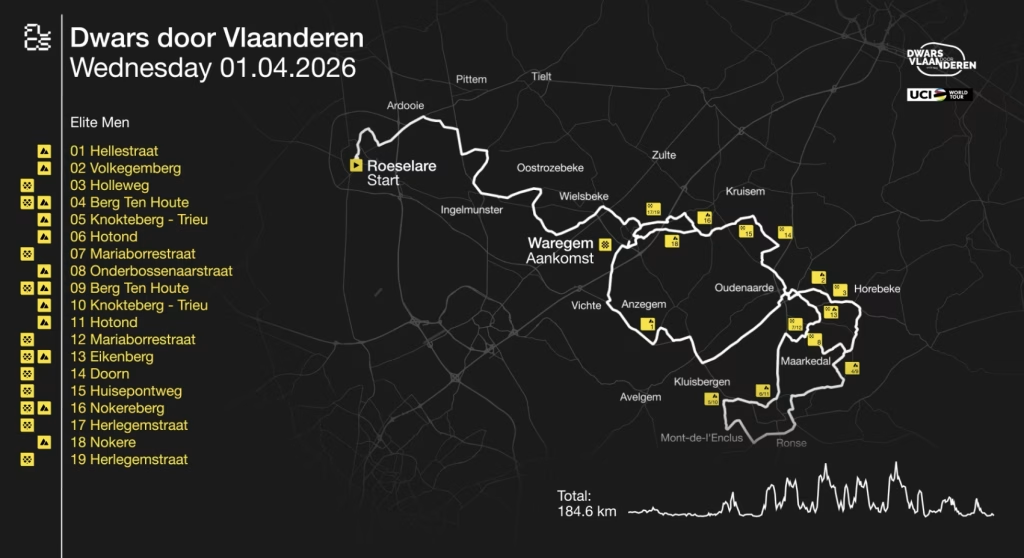
What is different about the 2026 route?
The big story is that the route has been toughened rather than reinvented. Two climbs have been added to the men’s course, bringing the total to 12 bergs, while seven cobbled sectors remain part of the route. The climbing also begins earlier than usual, which should make the race feel less like a long wait for the final hour and more like a rolling attritional contest where teams can start making mistakes much sooner.
That matters because Dwars door Vlaanderen is usually at its best when the race begins by asking questions before the finale rather than saving everything for one closing sequence. A route that bites earlier tends to reward squads willing to race in layers, applying pressure, forcing positioning battles, and making rivals spend energy before the last decisive phase even begins.
Start in Roeselare, finish in Waregem
The race continues to start in Roeselare and finish in Waregem, preserving one of the key elements of its identity. Roeselare gives the day a clean run towards the hill zone, while the Waregem finish keeps the finale tactically open rather than locking the race into one inevitable outcome.
That is one of the more interesting things about Dwars door Vlaanderen. A solo rider can survive. A tiny front group can fight for the win. If the strongest riders hesitate at the wrong time, a reduced sprint can still happen. The route is hard enough to create separation, but not so rigid that it dictates one fixed ending every year.
The climbs and sectors that should shape the race
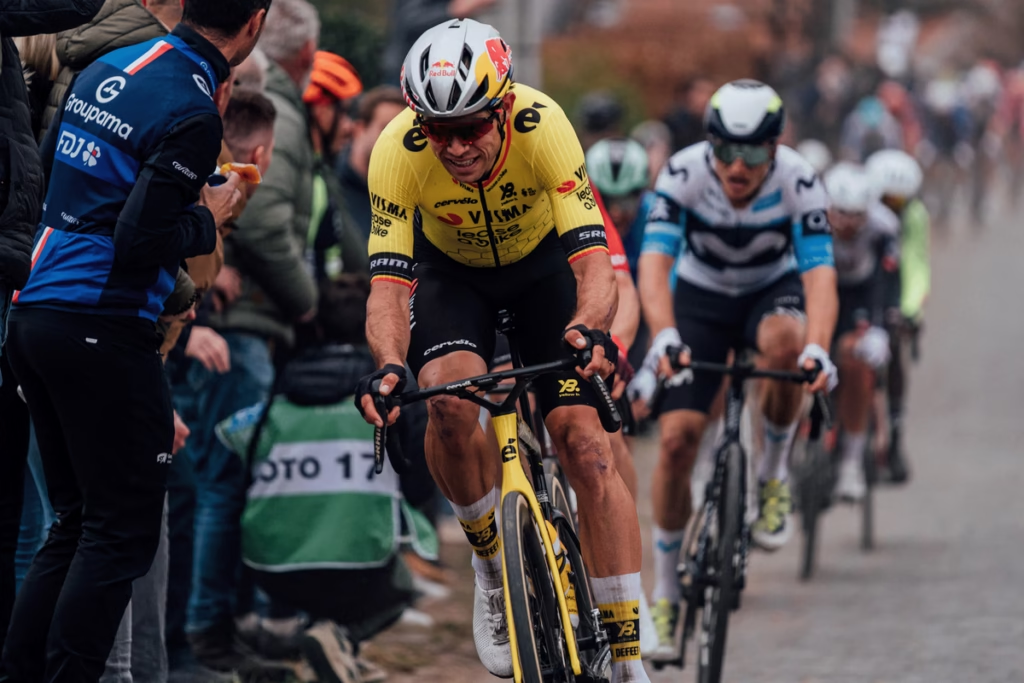
The climbing begins with the Volkegemberg before the route moves through familiar Flemish terrain, including Berg Ten Houte, Côte de Trieu and Hotond. One of the most interesting additions this year is Onderbossenaarstraat, which should give the middle part of the race more bite and make it easier for strong teams to increase the pressure before the final hour.
Later in the race, riders face repeat ascents of Berg Ten Houte, Côte de Trieu and Hotond, alongside cobbled sections such as Mariaborrestraat. Knokteberg is also one of the notable points on the route, and its repeated importance underlines the wider truth of Dwars door Vlaanderen: this is a race usually decided by accumulation rather than by one single iconic wall.
That is the real route story. Riders have to fight for position, recover, accelerate again, handle cobbles, then repeat the whole cycle. The strongest rider does not always win here by brute force alone. Just as often, the winner is the rider who spends the least energy being out of place.
Why this route is so revealing before the Tour of Flanders
Dwars door Vlaanderen has long been one of the most useful form guides of the cobbled spring because it tells you more than a standard one-day result ever could. It comes just a few days before the Tour of Flanders, it attracts many of the same contenders, and it forces them onto roads that demand similar skills without replicating the Monument exactly.
The 2026 route should sharpen that role even further. Earlier climbing, added difficulty and a finale that still encourages repeated attacks mean this is a race where strong teams can test several scenarios at once. Some riders will naturally have Sunday in mind, and that can create hesitation. Others will sense that and make the race harder than expected. That tension is part of what makes Dwars door Vlaanderen tactically different from the Tour of Flanders. It is a major target in its own right, but it is also a race shadowed by something even bigger three days later.
Will the race end in a solo, a small group or a sprint?
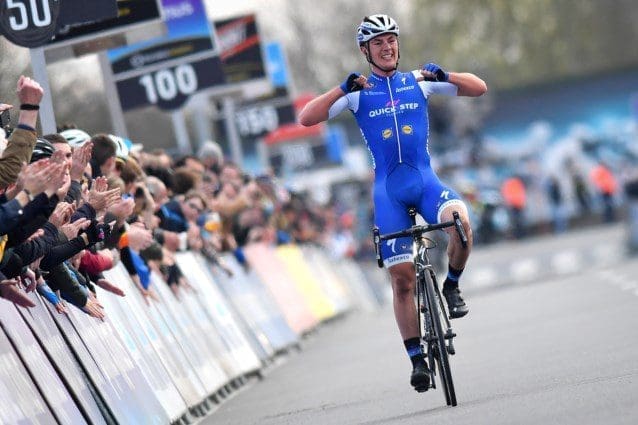
The safest expectation is a selective finish rather than a full bunch sprint. With 12 climbs, seven cobbled sectors and repeated late pressure points, this route should be hard enough to remove many of the heavier sprinters before the finish in Waregem.
But selective does not automatically mean solo. One of the reasons this race remains so compelling is that it leaves room for different endings. A rider can attack on one of the final climbs or sectors and stay clear. A small front group can form and then hesitate just enough for a faster finisher to benefit. Or the repeated late passages can produce one final split that decides everything.
In other words, the route is hard, but not rigid. That balance is what makes Dwars door Vlaanderen such a good race. It rewards strength, but it also rewards timing and clarity.

The final circuit into Waregem
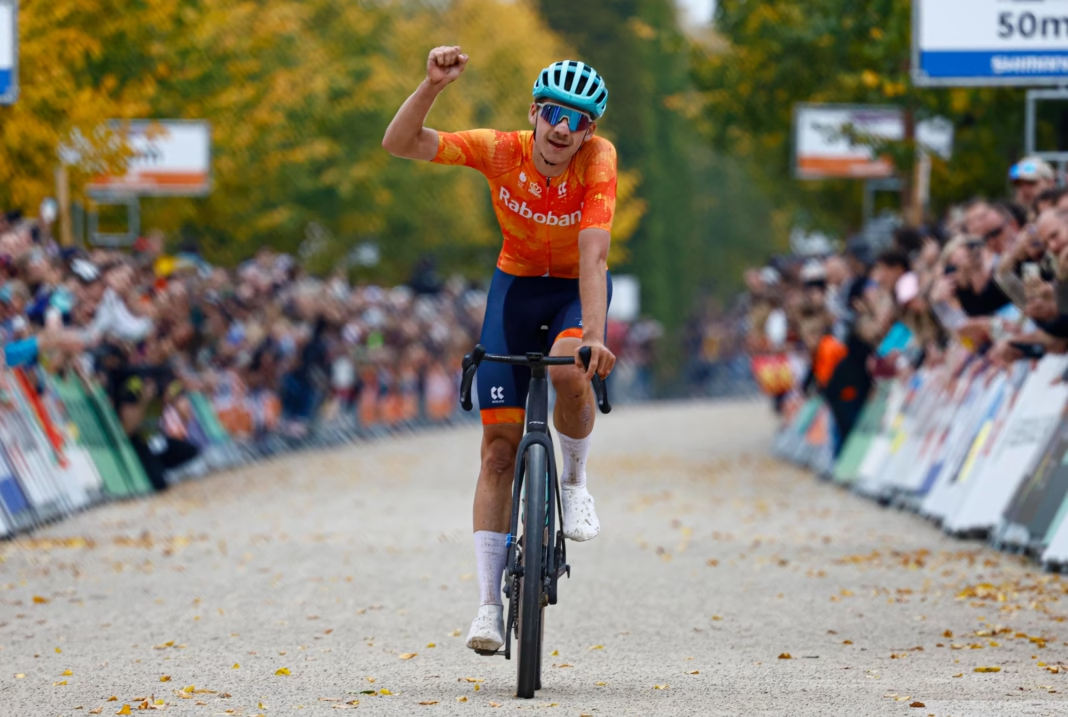
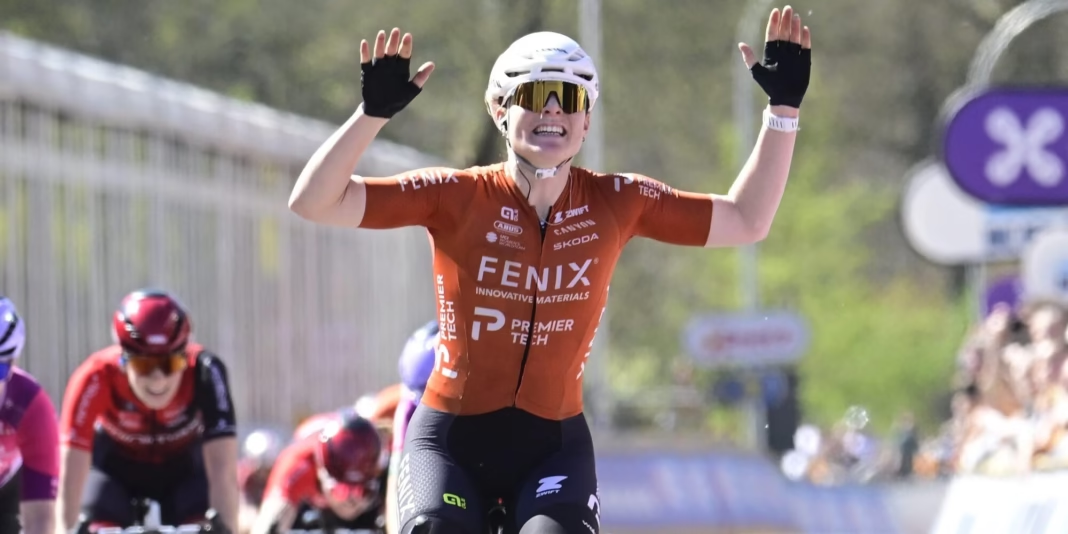
The final part of the race again uses two loops via Nokereberg and Herlegemstraat before the finish on Verbindingsweg in Waregem. That sequence is important because it gives the race one last chance to split after many riders are already close to their limit. The climbs themselves are not the most famous in Flemish cycling, but in this context, they do exactly what Dwars door Vlaanderen needs them to do. They keep the pressure on and stop the finale from becoming too straightforward.
That also means team depth matters enormously here. A team with two or three riders still present late can play the route in several ways. They can attack repeatedly, force others to chase, or simply sit behind and let the course do the damage. A lone leader, by contrast, can find Dwars door Vlaanderen a very difficult race to manage because the route keeps generating moments where fresh team-mates are worth more than raw watts alone.
Final verdict on the Men’s Dwars door Vlaanderen 2026 route
Men’s Dwars door Vlaanderen 2026 looks like a stronger route than last year’s, not because it has been reinvented, but because it has been sharpened in the right places. The earlier climbing, the added difficulty through routes such as Onderbossenaarstraat, and the repeated late passages through familiar Flemish sectors should all help make the race more selective and less predictable.
In practice, that should produce what Dwars door Vlaanderen does best, a race that feels like a serious spring Classic in its own right, but also a brutally revealing dress rehearsal for the Tour of Flanders. It is long enough to expose weakness, technical enough to punish poor positioning, and open enough tactically to reward the team willing to make the race uncomfortable before everyone else is ready.

