

The Giro d’Italia 2026 runs from Friday 8th May to Sunday 31st May, beginning with three stages in Bulgaria before returning to Italy and finishing in Rome. The 109th edition of the race covers more than 3,400km, includes 49,150 metres of climbing, and is built around a route that gives sprinters several chances but clearly saves the decisive general classification terrain for Blockhaus, Pila, Carì, the Dolomites and Piancavallo.
This is not a Giro overloaded with time trial kilometres. There is only one individual time trial, a 40.2km test from Viareggio to Massa on stage 10. That gives the climbers far more room to shape the race, especially with seven summit finishes across the three weeks. It is a route that asks for more than one kind of GC strength: time trialling on the Tuscan coast, resilience on medium mountain days, then repeated climbing depth across the final week.
For wider race context, this guide sits naturally alongside ProCyclingUK’s A brief history of Giro d’Italia, the site’s Giro d’Italia Women coverage and the profile of Miguel Indurain, whose own Giro-Tour doubles underline just how much this race can demand from a Grand Tour rider.
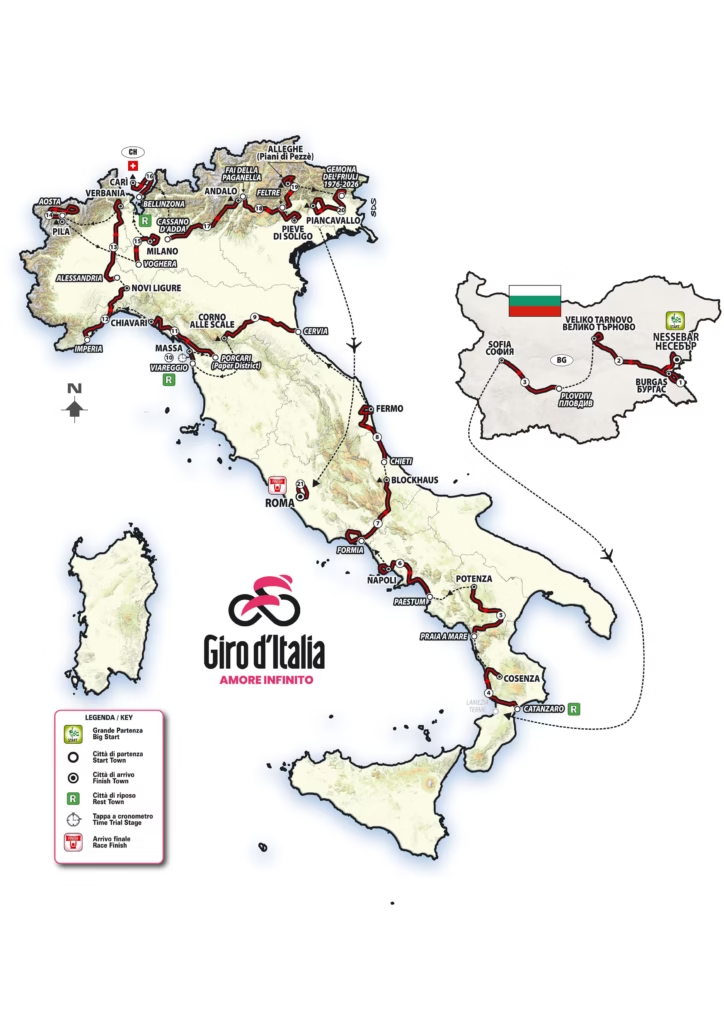
The overall shape of the 2026 Giro d’Italia route
The race begins with a foreign Grande Partenza in Bulgaria, the 16th time the Giro has started outside Italy. The opening three days move from the Black Sea coast inland towards Sofia, with two likely sprint opportunities split by a hillier second stage that could already create tension. After a transfer rest day, the race restarts in Calabria and begins a long move north through southern Italy, the Adriatic side, Tuscany, Liguria, the Alps and the Dolomites before the final procession in Rome.
The first week is more awkward than brutal, at least until stage 7. The first true GC moment comes on the long road to Blockhaus, which should expose any rider who arrives undercooked. The second week then gives the race its main time trial and several tricky transition stages before the mountain finish at Pila. The third week is where the Giro becomes properly severe, with Carì in Switzerland, the Dolomite queen stage to Alleghe, and the final mountain stage to Piancavallo before Rome.
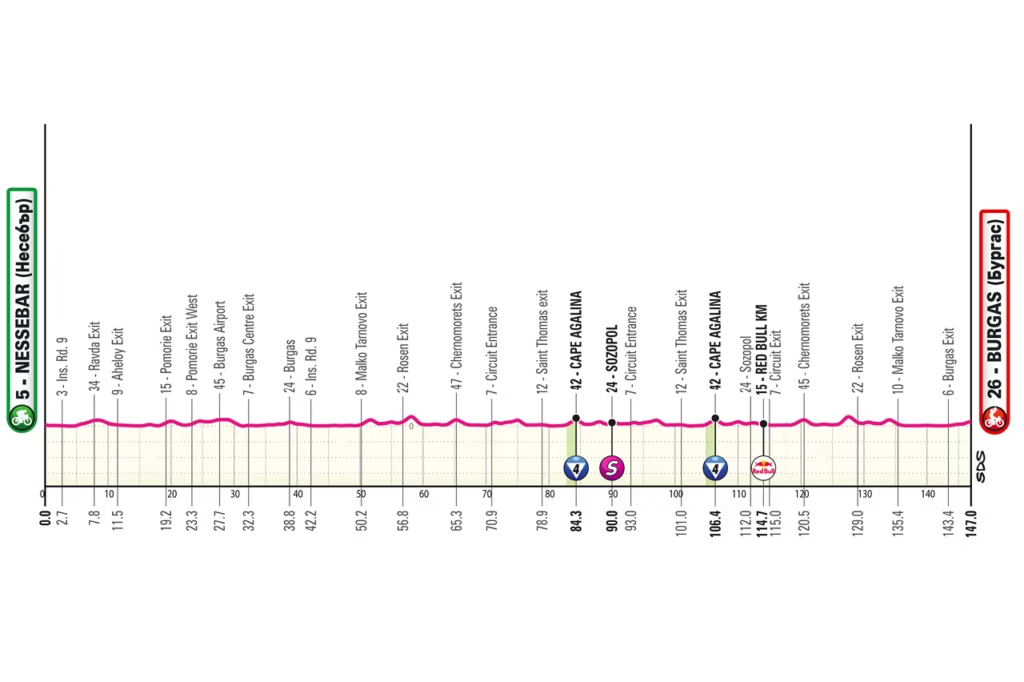
Stage 1 – Nessebar to Burgas, 156km
The Giro opens in Bulgaria with a flat stage from Nessebar to Burgas. The route runs along the Black Sea coast and is expected to favour the sprinters, with the first maglia rosa likely to go to one of the fast finishers.
The start in Nessebar gives the race a scenic opening, but the sporting logic is simple enough: control the break, keep the sprint trains organised, and fight for the first leader’s jersey. For the GC riders, this should be about avoiding stress rather than making a statement.
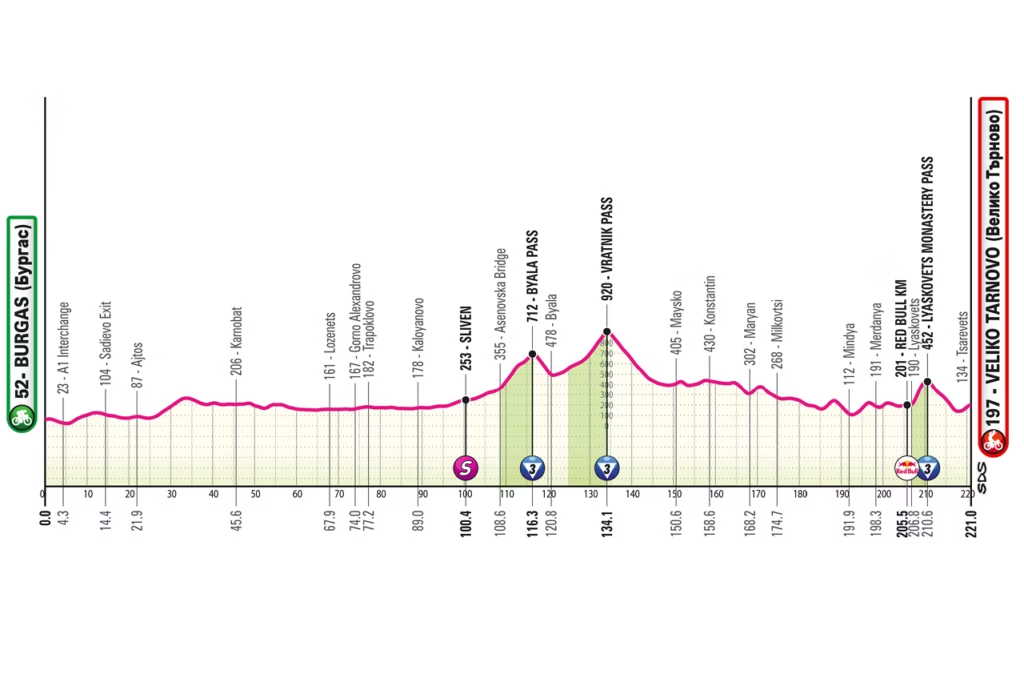
Stage 2 – Burgas to Veliko Tarnovo, 220km
Stage 2 heads inland from Burgas to Veliko Tarnovo and immediately changes the tone. At 220km, it is long, hilly and more difficult to control than the opening day. The route includes mid-stage climbing and a late climb that tops out close enough to the finish to give attackers real hope.
This is not likely to decide the Giro, but it could reshape the early GC and create the first significant selection among riders who are not fully switched on. A reduced sprint, late attack or small group finish all feel more plausible than a straightforward bunch sprint.
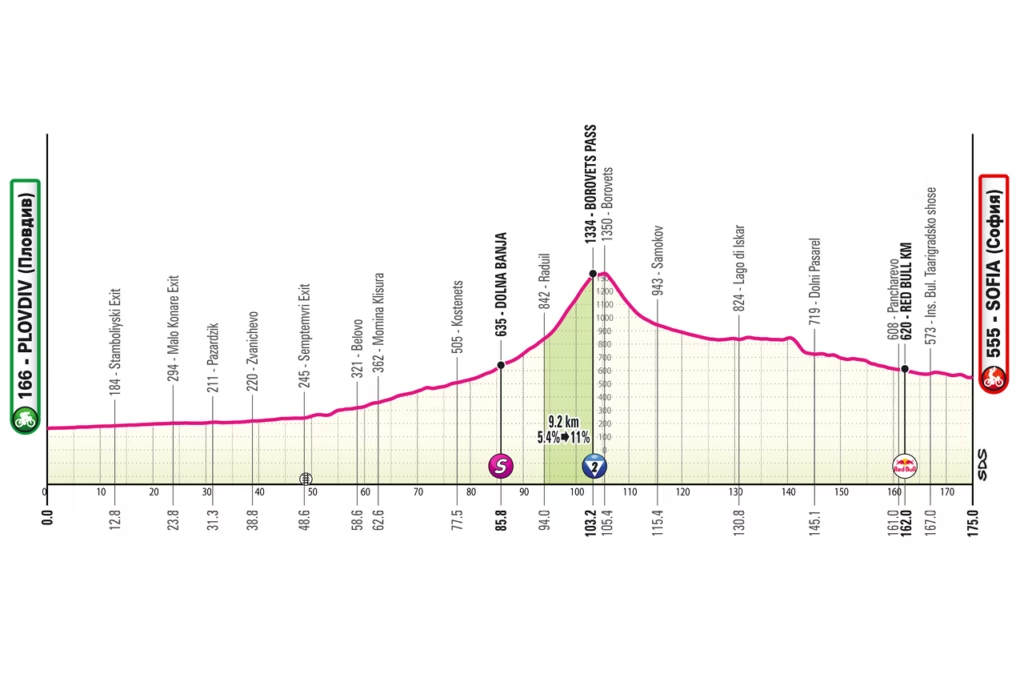
Stage 3 – Plovdiv to Sofia, 174km
The final Bulgarian stage runs from Plovdiv to Sofia and looks more favourable for the sprinters again. There is enough terrain to encourage a breakaway, including a long mid-stage climb towards Borovets, but the finish in the capital gives the fast teams a clear reason to work.
If the sprint teams still have control after stage 2, this should be their second major chance of the opening block. It also brings the foreign start to a close before the transfer back to Italy.
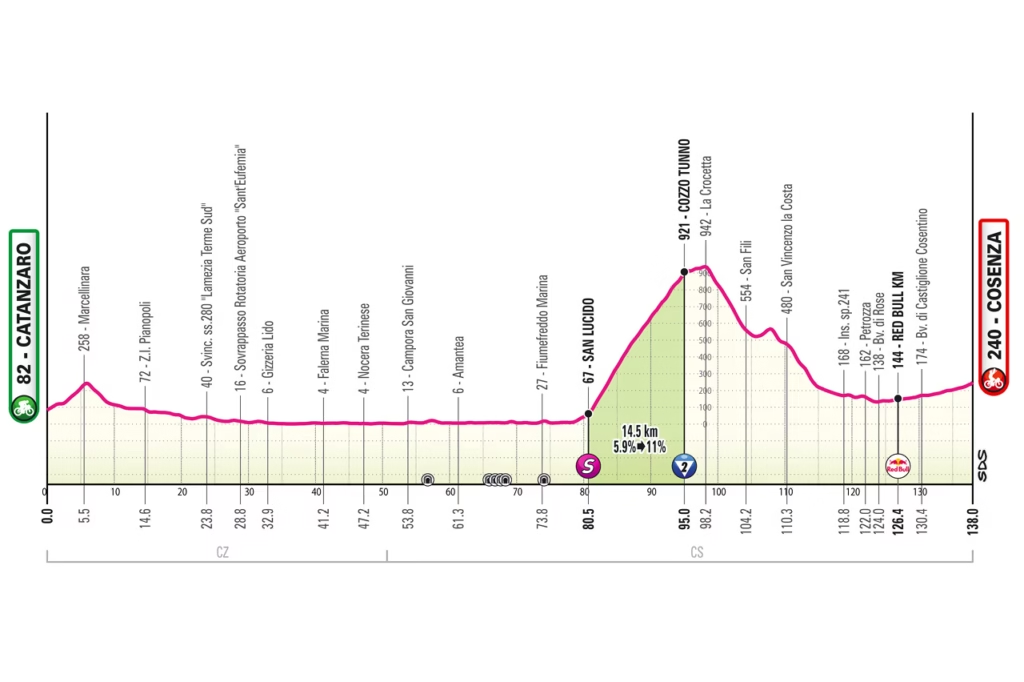
Stage 4 – Catanzaro to Cosenza, 144km
After the first rest and transfer day, the Giro resumes in Calabria with a 144km stage from Catanzaro to Cosenza. The profile is not mountainous, but the Cozzo Tunno climb after around 86km makes it more complicated than a basic flat stage.
This is one of those Giro stages where the sprinters can win, but only if their teams survive the middle of the day with enough riders left to organise the chase. It also gives the race a classic southern Italian restart: roads that look manageable on paper, but could still become awkward if the pace lifts early.
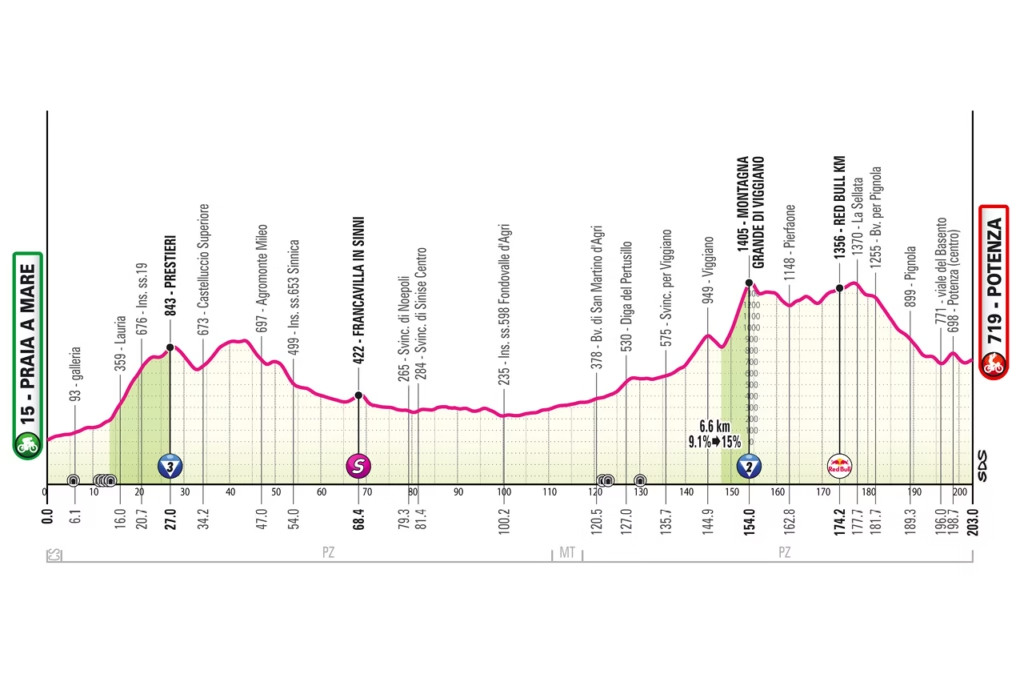
Stage 5 – Praia a Mare to Potenza, 204km
Stage 5 is one of the first really interesting medium mountain days. The race runs 204km from Praia a Mare to Potenza, with around 3,700 metres of climbing and a punchy final rise to the line.
This looks ideal for a breakaway, but the GC riders cannot completely relax. The rolling roads, steep late climb and uphill finish all create the sort of terrain where small time gaps or bonus seconds could appear. It is also a stage where teams without a pure sprinter may see their first serious chance to shape the race.
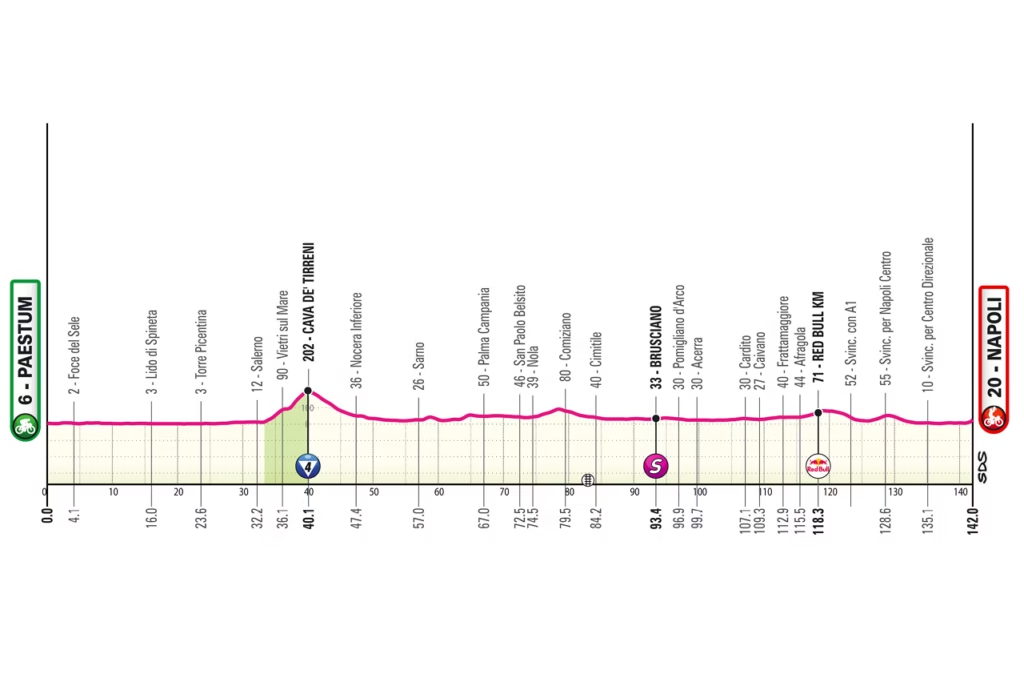
Stage 6 – Paestum to Naples, 161km
Stage 6 takes the race from Paestum to Naples and gives the sprinters another chance. The stage is flatter than the two previous Italian days and should be controlled if the fast teams are still fresh enough.
Naples has become a familiar Giro stage finish in recent years, often delivering a scenic but nervous finale. Positioning will still matter, especially if the run-in is technical, but this is one of the clearer sprint opportunities of the first week.
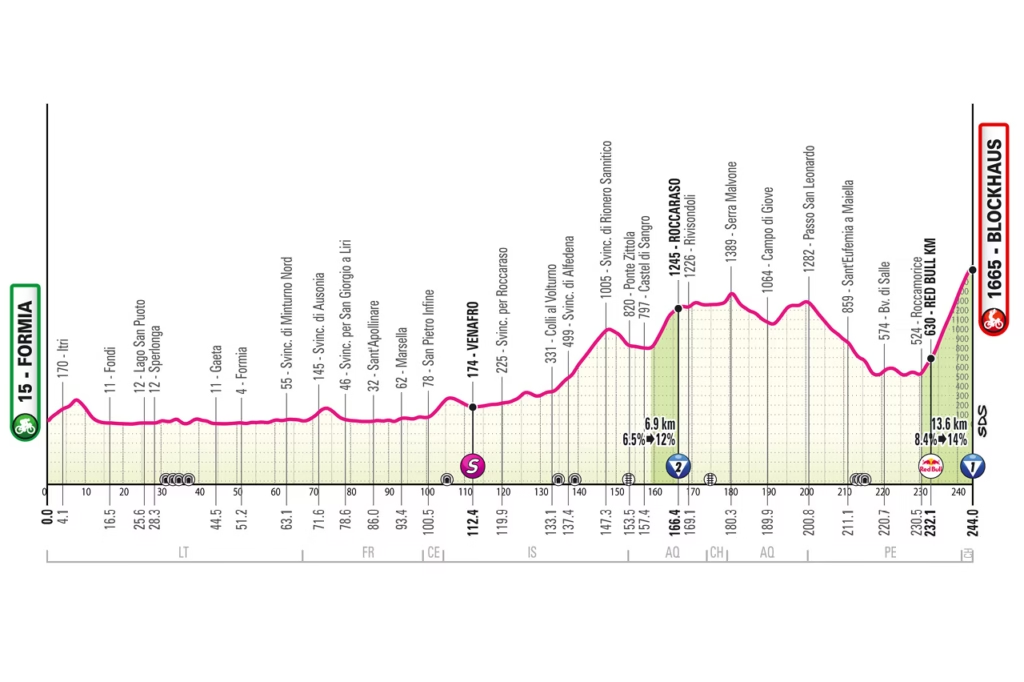
Stage 7 – Formia to Blockhaus, 246km
Stage 7 is the first major GC stage of the race and the longest stage of the 2026 Giro. The route from Formia to Blockhaus covers 246km, includes around 4,600 metres of altitude gain, and finishes at 1,665 metres after the steeper Roccamorice road to Blockhaus.
This is a proper early mountain test. The sheer distance matters as much as the final climb. Riders who came into the race hoping to ride themselves into form may be exposed here, because Blockhaus is too hard and too long to bluff. It should provide the first serious hierarchy among the GC contenders.
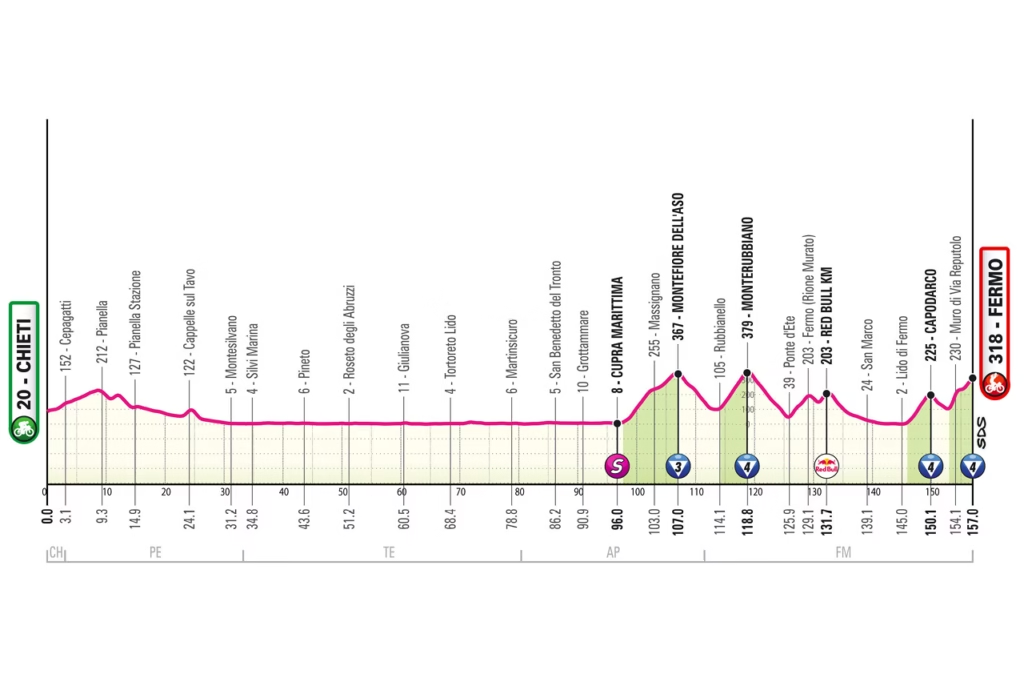
Stage 8 – Chieti to Fermo, 159km
Stage 8 is a hilly stage from Chieti to Fermo, and it should suit aggressive riders rather than pure sprinters. The roads in this part of central Italy are rarely simple, with short climbs, changing gradients and a finish that should reward punch and timing.
After Blockhaus, this could be a day for the breakaway, especially if the GC teams want to reset before another mountain finish. It is also the kind of stage where a rider slightly down on GC might be allowed freedom to chase a stage win.
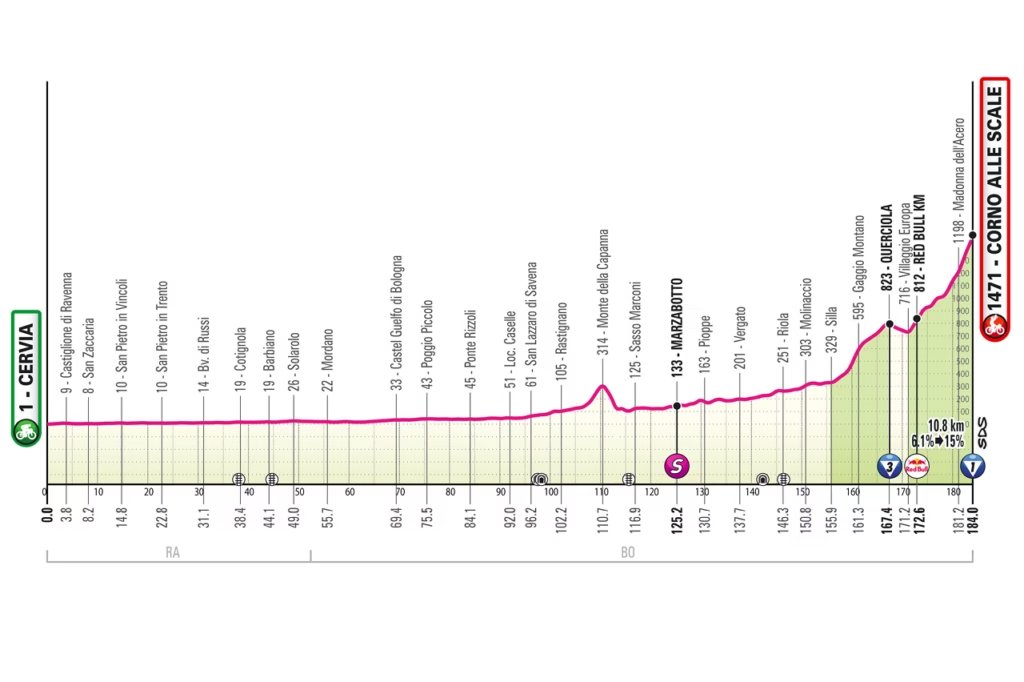
Stage 9 – Cervia to Corno alle Scale, 184km
Stage 9 brings another mountain finish, this time from Cervia to Corno alle Scale. The first part of the stage is flatter, but the final 30km include around 2,400 metres of climbing, with the ever-steepening 13km climb to the finish coming after Gaggio Montano.
This is the third consecutive stage with real GC implications after Blockhaus and Fermo. Corno alle Scale is not as long a day as Blockhaus, but the final climb should still test the difference between riders who can survive and riders who can attack. It also lands just before the second rest day, so there is no obvious reason for the strongest riders to hold back completely.
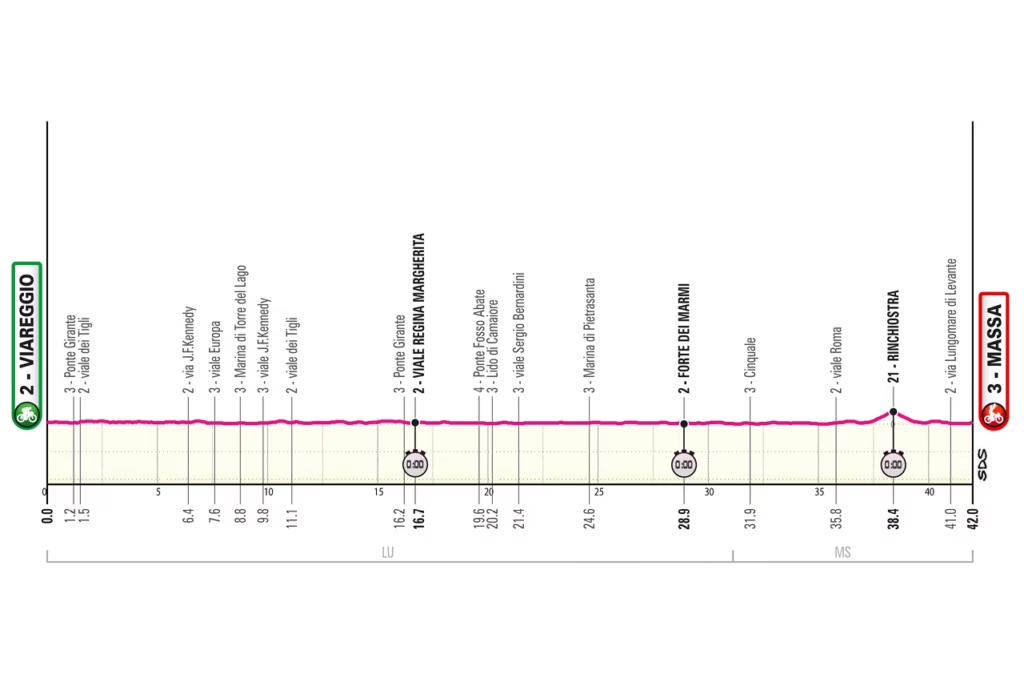
Stage 10 – Viareggio to Massa, 40.2km individual time trial
After the second rest day, the Giro resumes with its only individual time trial: 40.2km from Viareggio to Massa. The route is flat and fast along the Tuscan coast, making it a major opportunity for the strongest time triallists to take time before the climbing-heavy second half of the race.
This is one of the most important balancing stages of the route. A pure climber cannot afford to concede too much here, but a time trial specialist cannot assume this will be enough to win the race, because the final two weeks contain so much climbing.
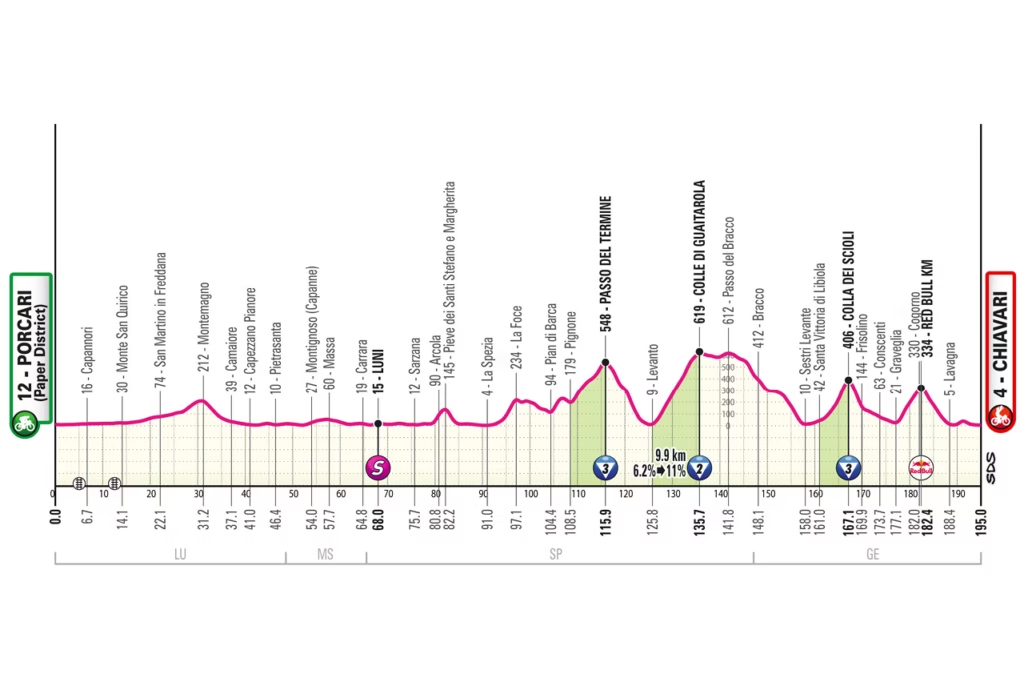
Stage 11 – Porcari to Chiavari, 178km
Stage 11 is a hilly restart from Porcari to Chiavari. It heads towards the Ligurian coast and includes climbs such as Passo del Termine, Colle di Guaitarola and San Bartolomeo before a technical descent to the finish.
This is exactly the sort of stage that can be awkward after a time trial and rest day rhythm. It looks well suited to a strong breakaway, but the descents and late climbs mean the GC riders will still need focus. A lapse here may not look dramatic on paper, but it could be costly.
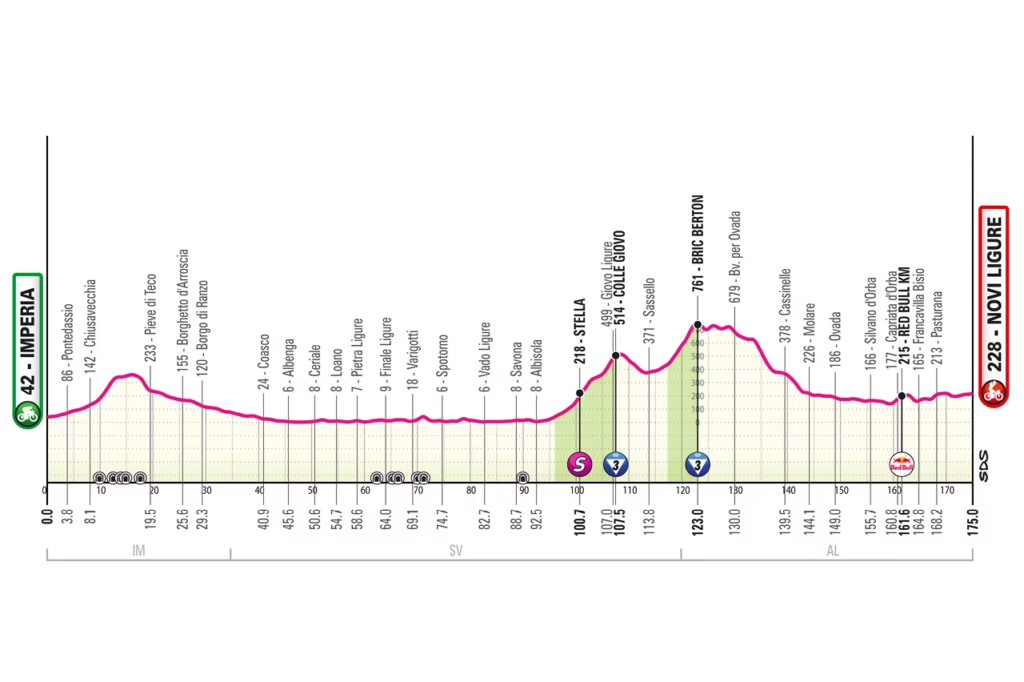
Stage 12 – Imperia to Novi Ligure, 177km
Stage 12 has been described as a reverse Milan-San Remo style stage, starting on the Ligurian coast before heading inland to Novi Ligure. Instead of the Passo del Turchino, the riders tackle the harder Colle Giovo and Bric Berton, but the final 50km of descending and flatter roads could bring the sprinters back into play.
This is a finely balanced day. A strong break can make it difficult, but the route still gives sprint teams a reason to believe. Much will depend on how much energy teams want to spend after the time trial and before the Alps.
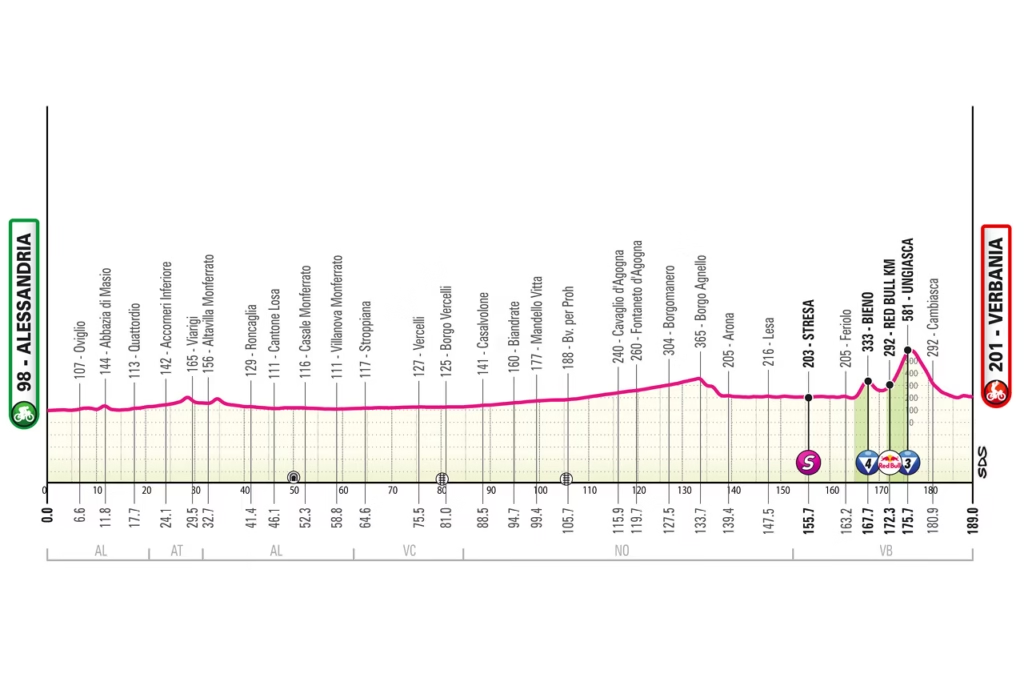
Stage 13 – Alessandria to Verbania, 186km
Stage 13 moves the Giro towards the Alps, running from Alessandria to Verbania on Lake Maggiore. The route is largely flat as it passes west of Milan and through the rice fields north of Novara, but two late climbs near Lake Maggiore change the complexion of the finale. The climb to Ungiasca is especially steep and ends only 13km from the finish.
This could be a reduced sprint, a late attack or a breakaway stage depending on how hard the race is ridden. It is not the biggest mountain day, but it comes at the point where fatigue is starting to accumulate. That makes it more dangerous than the profile might initially suggest.
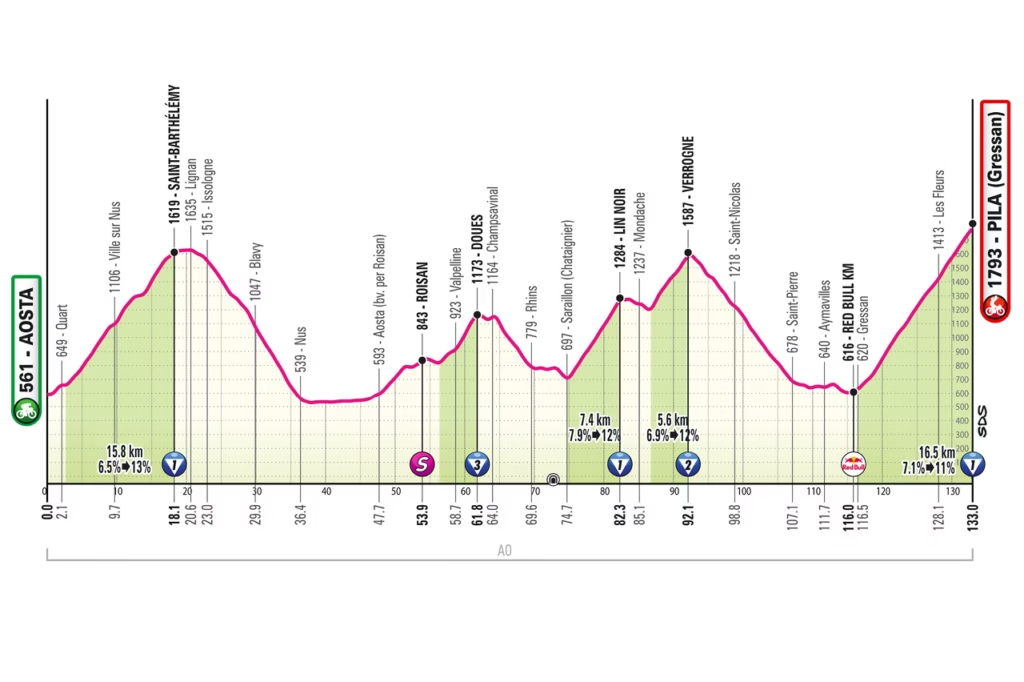
Stage 14 – Aosta to Pila, 133km
Stage 14 is short, mountainous and potentially decisive. The race covers only 133km from Aosta to Pila but includes around 4,400 metres of climbing. The route begins with the long Saint-Barthélemy climb, then uses Lin Noir and Verrogne before the 16.5km final climb to Pila.
This is one of the most important summit finishes of the race. The short distance should make the stage intense from early on, and the final climb is long enough to create proper GC gaps. It also comes immediately before a sprint stage to Milan, so there is no reason for the overall contenders to hold too much back.
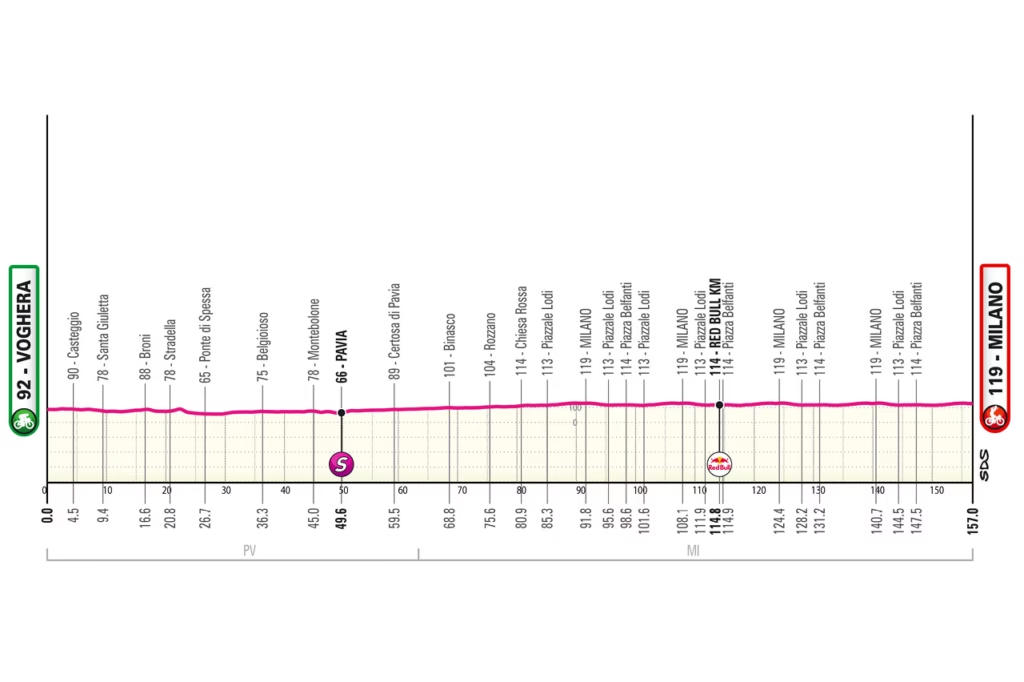
Stage 15 – Voghera to Milan, 136km
Stage 15 runs from Voghera to Milan and should give the sprinters another opportunity before the final rest day. The race finishes with laps of a city-centre circuit near the Vigorelli velodrome.
This is a stage with symbolic weight as well as sprint value. The Giro now finishes in Rome rather than Milan, but Milan remains central to the race’s history and identity. For the GC riders, the priority will be to stay safe before the final week.
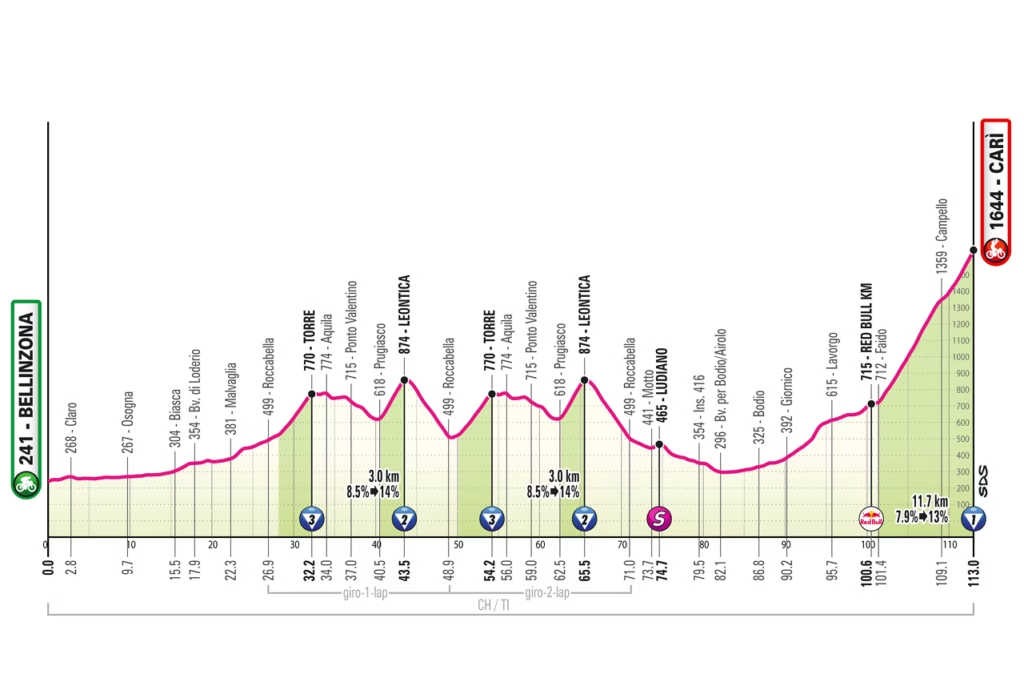
Stage 16 – Bellinzona to Carì, 113km
The third week begins in Switzerland with a short mountain stage from Bellinzona to Carì. It is only 113km, but the distance should make the racing more intense. The route stays entirely in Ticino, with the Leonticas climb tackled twice before the summit finish at Carì.
The final climb to Carì should restart the GC battle immediately after the rest day. Short mountain stages can be difficult to control because there is less time for the race to settle, and anyone feeling strong could try to take advantage of riders who struggle after the pause.
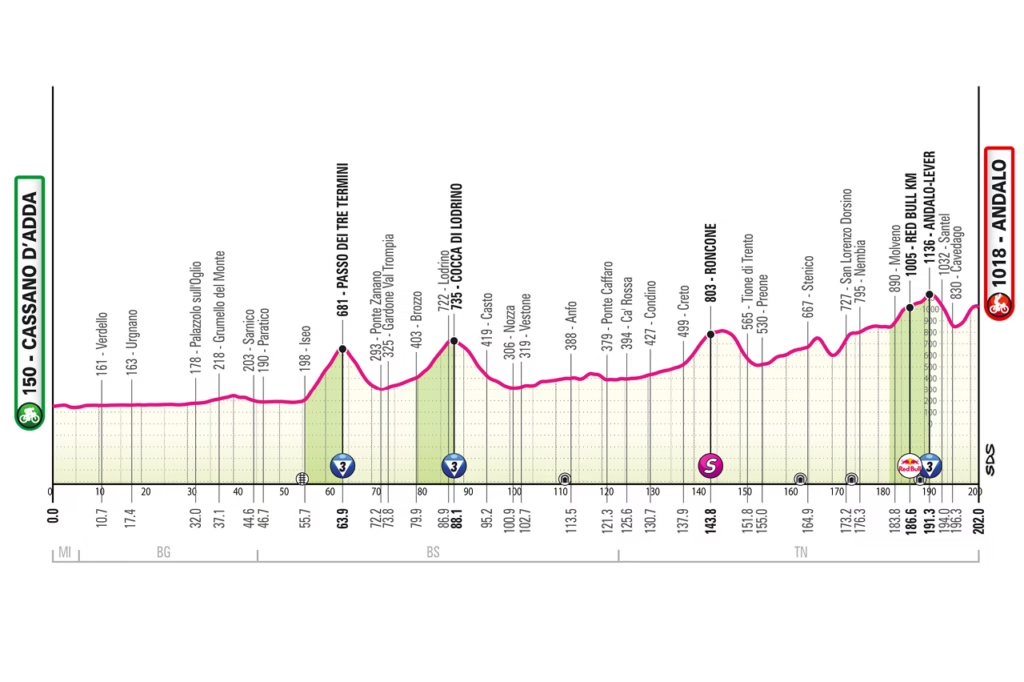
Stage 17 – Cassano d’Adda to Andalo, 200km
Stage 17 runs 200km from Cassano d’Adda to Andalo. It looks more like a transition or breakaway day towards the final high mountains than a pure GC showdown, but the route still climbs in the valleys near Lake Garda before reaching Andalo.
This could become a classic third-week breakaway stage. The overall contenders may not want to burn teams too hard, but nobody can completely relax in the final week of the Giro. Andalo is not the most brutal finish of the race, but at this point in the third week even a slightly awkward day can create consequences.
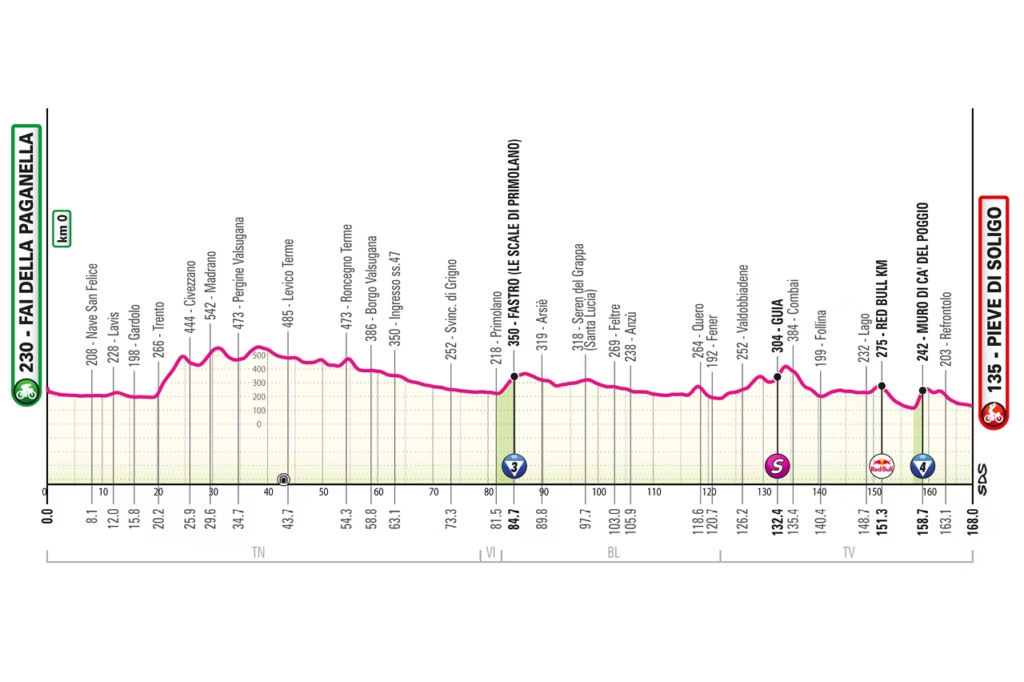
Stage 18 – Fai della Paganella to Pieve di Soligo, 167km
Stage 18 takes the race into Veneto and the Prosecco hills, finishing in Pieve di Soligo. The route includes the Ca’ del Poggio climb around 10km from the finish, making positioning and team strength important even if it is not a major GC mountain day.
This stage may not create huge time gaps, but it can still create stress. It comes just before the queen stage, so the strongest teams will want to avoid crashes, splits or unnecessary effort. A breakaway looks plausible, especially if sprint teams are tired by this point.
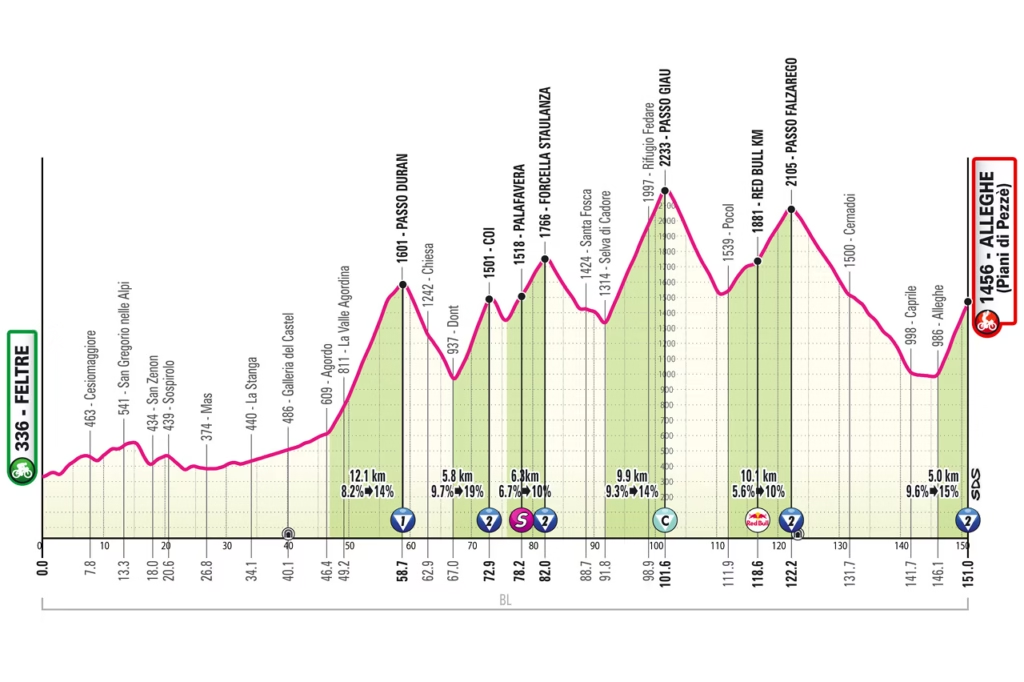
Stage 19 – Feltre to Alleghe, 151km
Stage 19 is the queen stage of the 2026 Giro and the clearest mountain showdown of the race. It covers 151km from Feltre to Alleghe, with around 5,000 metres of climbing packed into five major climbs. The route takes in Passo Duran, Forcella Staulanza, Passo Giau, Passo Falzarego and the final climb to Piani di Pezzè. Passo Giau reaches 2,233 metres and is the Cima Coppi of the race.
This is where the Giro can be won or lost. The climbs come close together, the altitude is significant, and the final climb may be short but arrives after a brutal sequence. Any weakness here will be punished heavily.
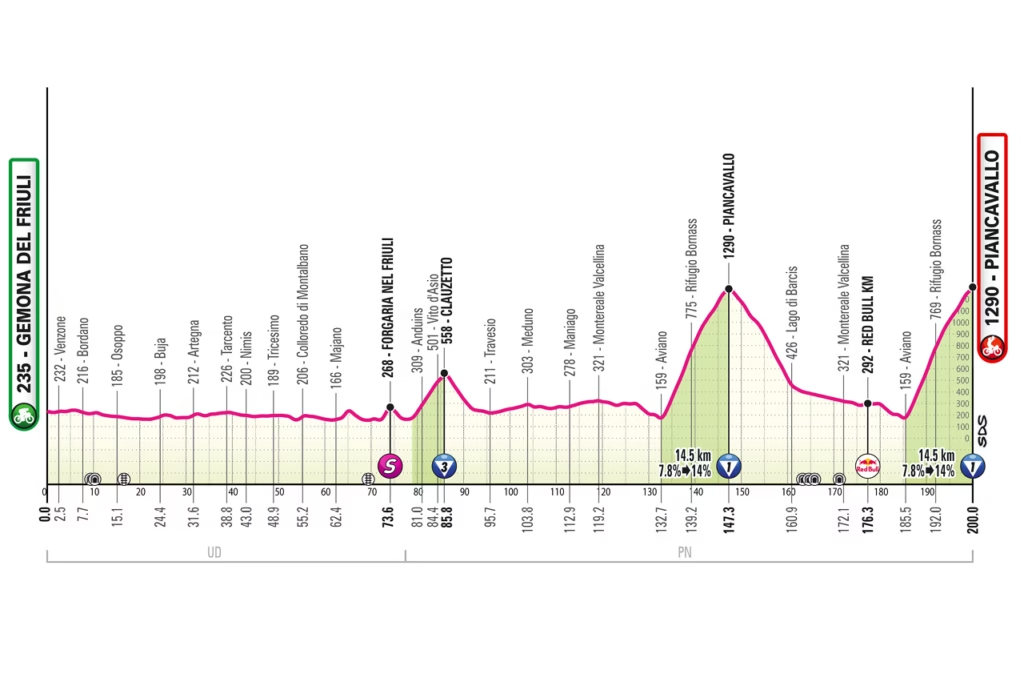
Stage 20 – Gemona del Friuli to Piancavallo, 200km
The final mountain stage runs 200km from Gemona del Friuli to Piancavallo. It commemorates the 50th anniversary of the Friuli earthquake and uses Piancavallo twice, with the final ascent coming from Aviano after around 184km. The climb is 14.4km at 8.9 per cent, steep enough to create serious differences even on the penultimate day.
This is the last true chance to change the maglia rosa battle before Rome. If the race is close after Alleghe, Piancavallo could decide everything. Even if the leader has a cushion, this is a climb hard enough to make the final mountain day more than ceremonial.
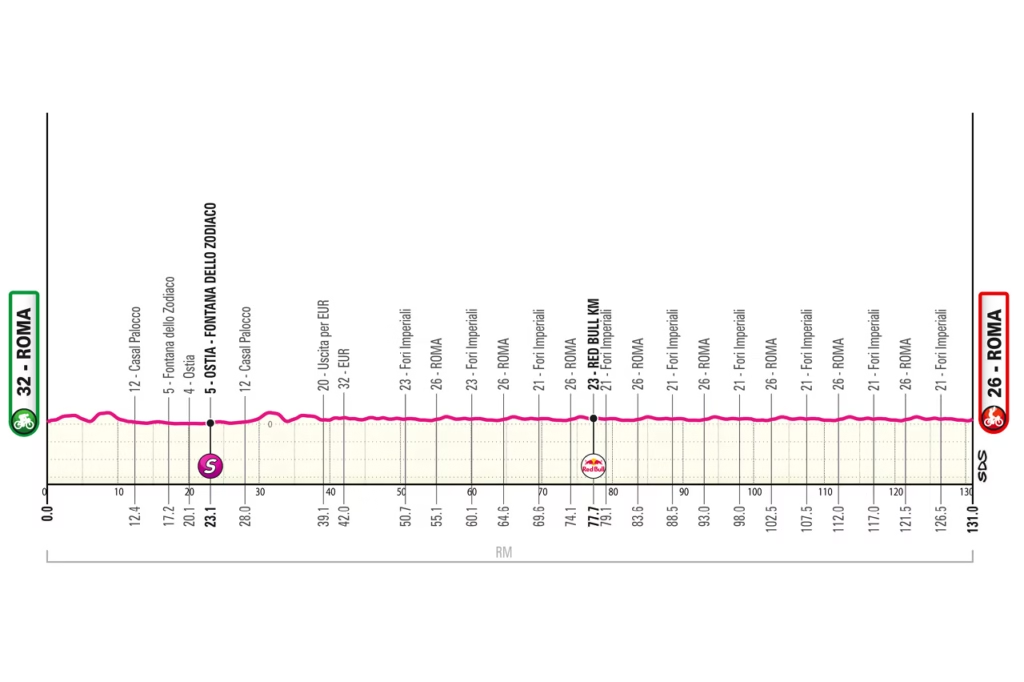
Stage 21 – Rome to Rome, 131km
The Giro ends with a 131km stage in Rome. After the brutality of the final mountain block, this should be a celebration for the overall winner and one last sprint opportunity for the fast men who have survived the mountains.
The Rome finish gives the race a grand visual conclusion, even if the general classification should already be settled by then. It also keeps the modern Giro’s recent preference for a capital-city finale, rather than a traditional Milan finish.
-
 Photo Credit: A.S.O./Billy Ceusters

What the 2026 Giro route tells us
The 2026 Giro d’Italia is a climber’s race, but not a one-dimensional one. The 40.2km time trial is long enough to matter, and the number of sprint stages means the race will not be relentless every day. But the decisive structure favours riders who can climb repeatedly, recover after hard days, and still produce their best in the final week.
Blockhaus arrives early enough to expose weakness. Corno alle Scale and Pila add depth before the third week. Carì restarts the climbing fight after the final rest day, then the queen stage to Alleghe and the Piancavallo finale should decide the podium. The route gives the sprinters plenty to chase, but the maglia rosa battle belongs to the riders who can survive a huge amount of climbing and still stay disciplined in the lone time trial.
For readers following the wider Grand Tour picture, this route also gives extra context to ProCyclingUK’s A brief history of Giro d’Italia and the site’s Giro d’Italia Women coverage, where the modern identity of Italian stage racing continues to develop on both sides of the sport.
Giro d’Italia 2026 route at a glance
Stage 1 – Nessebar to Burgas, 156km, flat
Stage 2 – Burgas to Veliko Tarnovo, 220km, hilly
Stage 3 – Plovdiv to Sofia, 174km, flat
Rest day – Monday 11th May
Stage 4 – Catanzaro to Cosenza, 144km, hilly
Stage 5 – Praia a Mare to Potenza, 204km, hilly
Stage 6 – Paestum to Naples, 161km, flat
Stage 7 – Formia to Blockhaus, 246km, mountain
Stage 8 – Chieti to Fermo, 159km, hilly
Stage 9 – Cervia to Corno alle Scale, 184km, mountain
Rest day – Monday 18th May
Stage 10 – Viareggio to Massa, 40.2km, individual time trial
Stage 11 – Porcari to Chiavari, 178km, hilly
Stage 12 – Imperia to Novi Ligure, 177km, flat/hilly transition
Stage 13 – Alessandria to Verbania, 186km, hilly finale
Stage 14 – Aosta to Pila, 133km, mountain
Stage 15 – Voghera to Milan, 136km, flat
Rest day – Monday 25th May
Stage 16 – Bellinzona to Carì, 113km, mountain
Stage 17 – Cassano d’Adda to Andalo, 200km, hilly
Stage 18 – Fai della Paganella to Pieve di Soligo, 167km, hilly
Stage 19 – Feltre to Alleghe, 151km, mountain
Stage 20 – Gemona del Friuli to Piancavallo, 200km, mountain
Stage 21 – Rome to Rome, 131km, flat/ceremonial sprint stage

