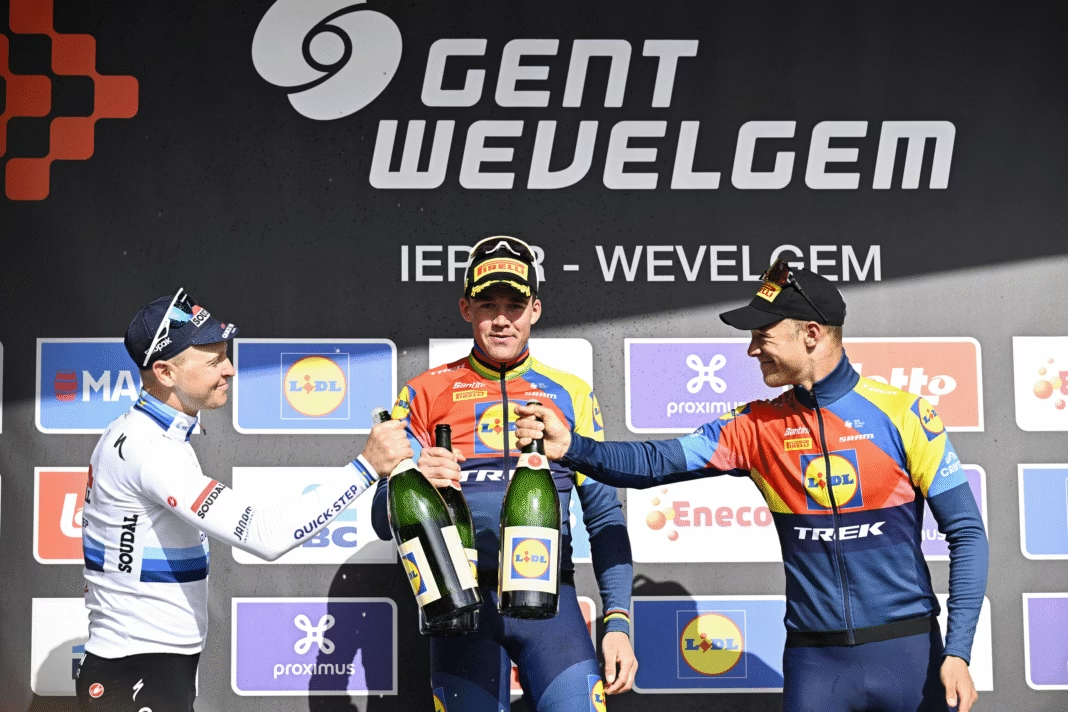
Men’s In Flanders Fields 2026 still carries the shape and feel of the race many fans will instinctively call Gent-Wevelgem. The 240.8km route starts in Middelkerke, runs through the exposed Moeren, then heads into Heuvelland for the Scherpenberg, Baneberg, Monteberg and repeated passages of the Kemmelberg, with the final climb still coming far enough from the line to leave room for different kinds of finale. That usually means one of three outcomes: a reduced sprint, a late move that survives, or a hard selection that never fully comes back.
That is what makes this race so interesting to preview. It is not as brutally selective as the Tour of Flanders, but it is too hard and too exposed to be treated as a pure sprinters’ Classic either. The best contenders here are usually riders who can survive the climbs, stay sharp through the wind, and still finish strongly after a long and tactical day. For the wider race shape, the Men’s In Flanders Fields 2026 route guide and the In Flanders Fields 2026 team-by-team guide help set the scene.
The main favourites
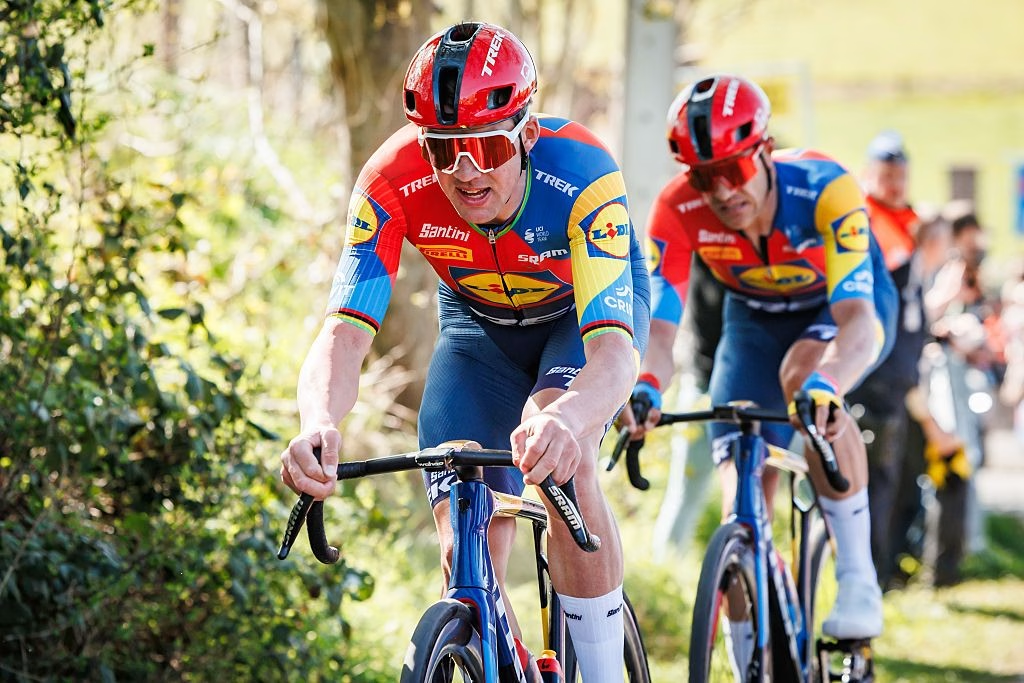
Mads Pedersen
Pedersen remains the clearest reference point for this race. He is already a multiple winner here, and the route still suits his mix of endurance, aggression and sprinting strength. The biggest question had seemed to be whether he would even make it back in time for the spring after breaking his collarbone and wrist in February, but he returned far earlier than expected and then backed that up with 4th at Milan-San Remo.
Pedersen also makes sense tactically in a way some rivals do not. He can win from a reduced sprint, he can attack before the finish, and he has the engine to benefit if the race is ridden hard through the wind and climbs. On this route, that range matters more than pure top-end speed.
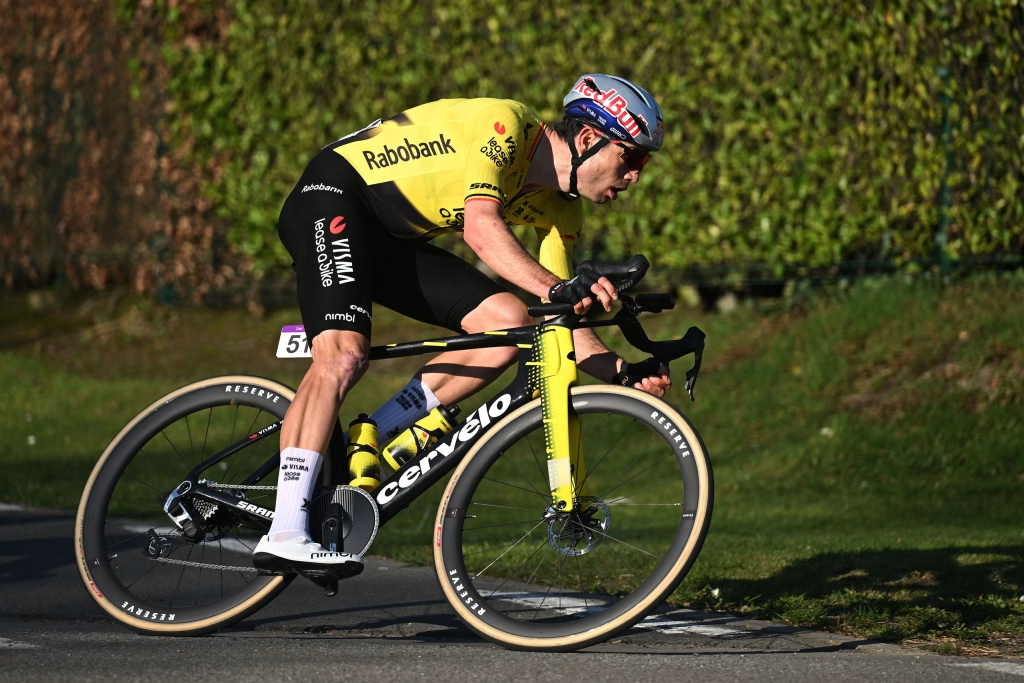
Wout van Aert
Van Aert comes in with slightly less recent racing than some of the other headline names this week, but he still looks like one of the central contenders. He was 3rd at Milan-San Remo despite being caught in the late crash, and then skipped E3 Saxo Classic before heading into this race. That gives him a cleaner, more targeted build into Sunday, even if it also means slightly less recent cobbled-race feedback than some of his rivals.
This race has always suited the version of Van Aert who can survive a hard day and still produce a powerful finish from a reduced group. The key question is whether he races aggressively on the Kemmelberg or trusts his sprint enough to keep the race together. With Team Visma | Lease a Bike bringing depth around him, he should have the support to play it more than one way.
Jasper Philipsen
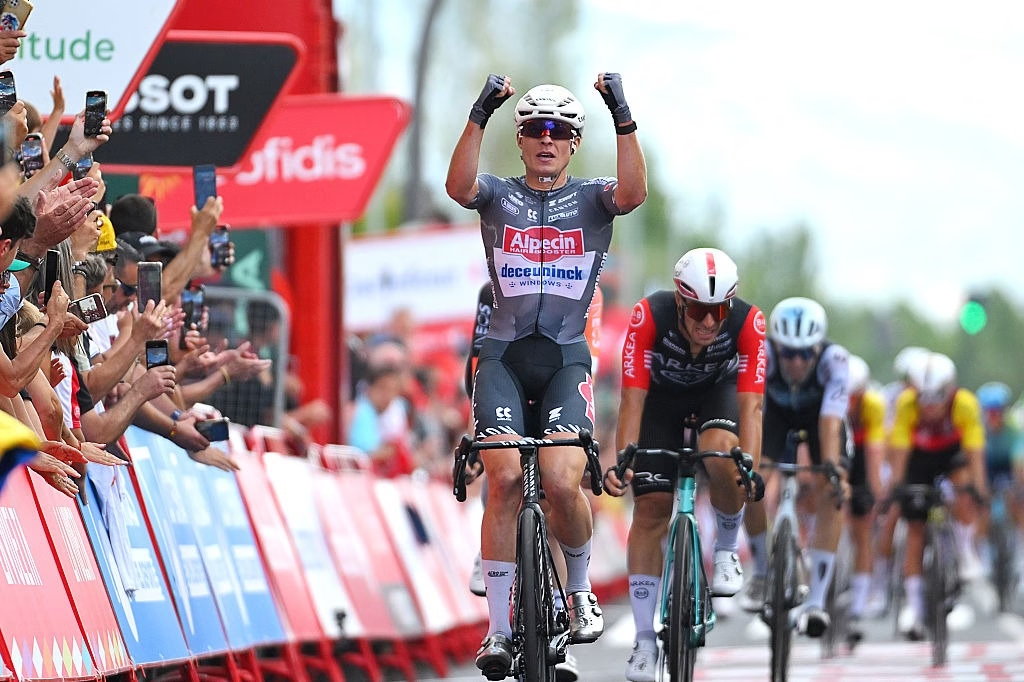
If the race comes back together more than the pure hardmen want, Philipsen becomes one of the most dangerous riders in the field. He had already won Nokere Koerse before Milan-San Remo, and this stretch of the calendar has long looked like the block where he could make a serious impact.
Men’s In Flanders Fields 2026 is exactly the kind of race where he does not need to be the best climber, only strong enough to survive the climbs and the late pressure before the final run to Wevelgem. The complicating factor is Alpecin-Premier Tech’s other leader. If Mathieu van der Poel starts and feels strong, the team can make the race much harder. If not, Philipsen becomes the clear finisher.
Mathieu van der Poel
Van der Poel’s status is the hardest to read. He was caught in the Milan-San Remo crash and carried uncertainty afterwards, even though he remained on the official starter lists. When fully fit, this route should suit him very well because he can turn the race into something more selective before the finish, and he has the class to win even if a small group arrives together.
That uncertainty matters. A fully fit Van der Poel is one of the two or three strongest riders in the field. A compromised one changes the tactical balance of the race and pushes more responsibility onto Philipsen. If you want the broader context around his week, the E3 Saxo Classic 2026 team-by-team guide and the How to watch E3 Saxo Classic 2026 in the UK sit naturally alongside this preview.
The next line of contenders
Tim Merlier
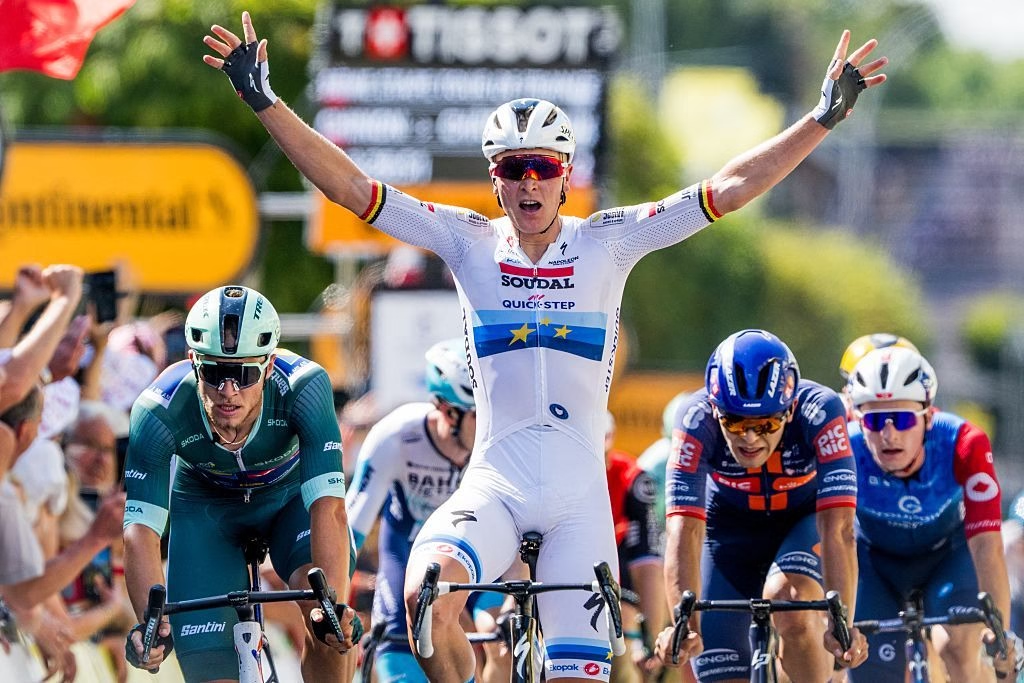
Merlier is the rider who benefits if the race is just that bit less selective than the climbing specialists want. He has the speed to win any sprint here, but his challenge is always the same in races like this: survive the hills, stay protected in the wind, and arrive at the finish with enough support left.
The route still keeps the Kemmelberg late enough to hurt, but not so late that it automatically kills the sprint scenario. That keeps Merlier firmly in the conversation, especially if Soudal Quick-Step can use Jasper Stuyven and Yves Lampaert to make the race safer rather than more explosive.
Biniam Girmay
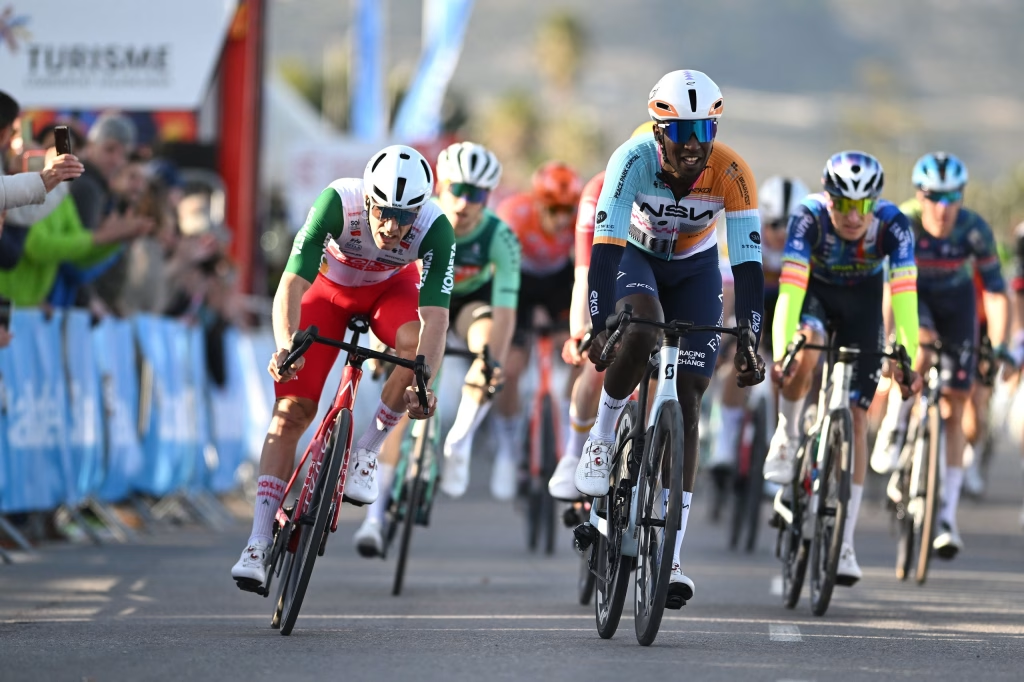
Girmay has long looked like a natural fit for this race when in top condition. He can handle climbs better than most sprinters and still finish fast from a reduced group. The concern is freshness after he too was caught up in the Milan-San Remo crash, which adds a layer of uncertainty to his prospects.
Even so, this remains one of the Classics that should fit him best on paper. If he has come through the week cleanly, he belongs in the serious contender bracket rather than among the outsiders.
Arnaud De Lie
De Lie is another rider whose best version belongs very high on this list. He has the power for the wind, the resilience for the climbs, and the finishing speed to punish hesitation. The challenge with him is often less about suitability and more about whether the timing of his form lines up with the biggest races. On route fit alone, though, he absolutely belongs in the conversation.
Jordi Meeus
Meeus is a very logical contender if the race comes back together, especially given how well Red Bull-BORA-hansgrohe can support him through a chaotic day. He is not usually the first name mentioned in this field, but this race often rewards that second wave of fast finishers when the absolute top favourites cancel each other out.
Strong outsiders
Laurence Pithie
Pithie is the kind of rider who can blow open a carefully written preview if the race turns into a true Classics fight rather than a controlled sprint set-up. He is aggressive, resilient and well-suited to a route where the strongest riders can still force separation before Wevelgem. If Red Bull-BORA-hansgrohe race more aggressively, he could easily become their most dangerous card rather than Meeus.
Matej Mohorič
Mohorič never needs much invitation to attack from distance, and a race with a late Kemmelberg and a long run to the line always gives him tactical room. The difficulty for him is that this finish often still favours riders with a faster kick, so he almost certainly needs to arrive alone or from a very small and disorganised move.
Søren Wærenskjold
Wærenskjold feels like one of the most natural dark horses for this edition. Uno-X Mobility are well suited to exposed northern races, and he has the size, stamina and finishing power to profit if the day becomes attritional without becoming completely selective. If the wind bites in the Moeren and the race then settles into a reduced sprint, he is exactly the kind of rider who can finish on the podium or better.
Filippo Ganna
Ganna is not the classic first-pick contender here, but he is the sort of rider who can reshape the race simply by forcing it harder than others want. If INEOS Grenadiers use him aggressively in the exposed opening or before the final Kemmelberg, they can make this much more than a waiting game for the sprinters. Winning would still require a specific scenario, but the disruption potential is real.
What is most likely?
The most likely outcome still looks like a reduced sprint from a strong front group rather than a completely intact bunch finish. The final Kemmelberg is far enough from the line to prevent the race from becoming a pure climbers’ contest, but late enough to expose any sprinter who is even slightly off. That balance is why Pedersen stands out so strongly: he does not need one specific race script to win.
Van Aert and Philipsen are close behind for similar reasons, though each depends slightly more on how the race is shaped around them. If Van der Poel is fully fit, he belongs right on that top line as well. If not, Pedersen may have the most complete case of all, especially after proving at Milan-San Remo that his comeback is already at a very high level.
For readers following the wider Belgian block on the site, this piece also links naturally with the beginner’s guide to In Flanders Fields 2026, the Men’s In Flanders Fields 2026 route guide, and the How to watch the Men’s In Flanders Fields 2026 in the UK guide.
My lean for Men’s In Flanders Fields 2026 is Mads Pedersen, with Wout van Aert and Jasper Philipsen as the next two most likely winners.