
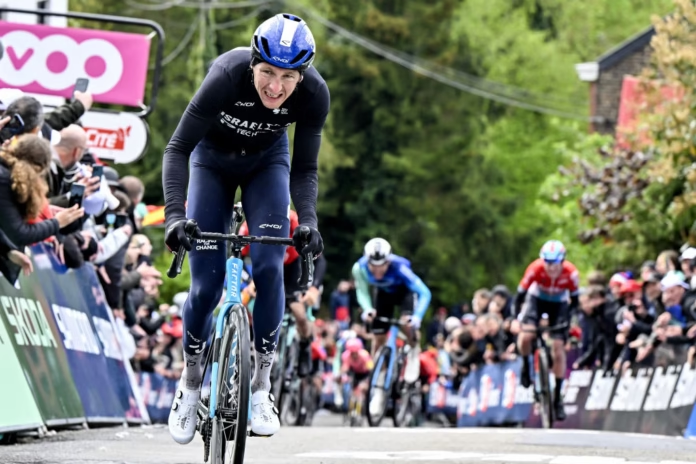
The Men’s La Flèche Wallonne 2026 route keeps the race’s essential identity intact while making a few notable adjustments around it. This year’s edition starts in Herstal, finishes in Huy, covers 208.8km, and once again builds towards repeated ascents of the Mur de Huy, the climb that still defines the race more than any other feature. The men’s race tackles the Mur three times in total, with passages at roughly 130.8km, 168km, and then the final summit finish.
That means the Men’s La Flèche Wallonne remains one of the most direct races on the spring calendar. It is not as open tactically as the Men’s Amstel Gold Race, and it does not carry the same broad endurance shape as Liège-Bastogne-Liège. Instead, it compresses everything towards one specific kind of effort, the steep, late-race uphill acceleration on the Mur de Huy. For a wider Ardennes context, this sits naturally alongside ProCyclingUK’s Men’s Amstel Gold Race 2026 route guide and A brief history of the Men’s Flèche Wallonne.
What sort of Men’s La Flèche Wallonne route is it in 2026?
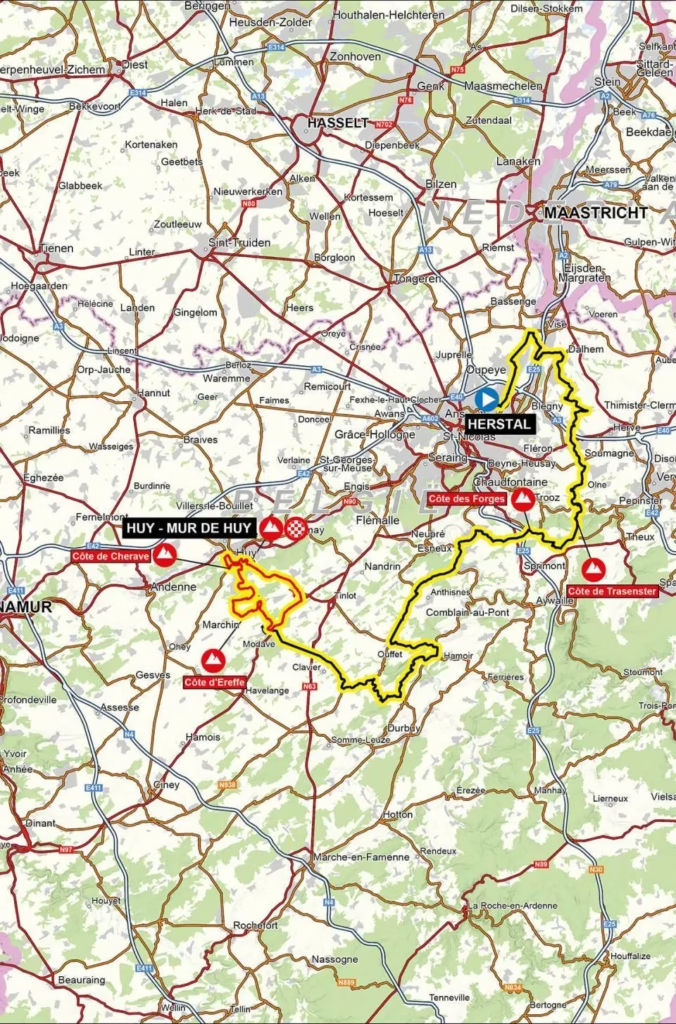
This is still a route built to tighten gradually rather than explode from the flag. The early phase includes climbs such as Trasenster and Les Forges before the race settles into the more recognisable modern structure built around the Huy circuits. From there, the decisive sequence becomes familiar: Côte d’Ereffe, Côte de Cherave and the Mur de Huy.
That matters because the Men’s La Flèche Wallonne is rarely decided by one isolated climb taken in a vacuum. The Mur is the final test, but it is only so decisive because the route keeps feeding riders into it in a more and more reduced, stressed and position-sensitive state. Ereffe helps wear the race down, Cherave offers the last serious attacking point before the finish, and the Mur then rewards whoever still has the sharpest uphill effort left.
Where does the race start and finish?
The 2026 men’s race starts in Herstal, a new host city for this edition, and finishes in Huy on the Mur de Huy as expected. That start is one of the few meaningful changes around the race this year, but the finish remains the part that gives La Flèche Wallonne its unmistakable character.
The finish on the Mur has been central to the race for decades, and that continuity is a large part of why the event feels so easy to read from one year to the next. Riders, teams and viewers all know where the race is heading. The difficulty is not in identifying the decisive point. It is in arriving there with the right legs and the right position.
How does the early route unfold?
The first half of the route is there to build pressure rather than to decide the race outright. The opening climbs, including Trasenster and Les Forges, help establish rhythm and begin the attritional process, but the race is not usually won there. Instead, those kilometres are about using support riders, stretching the field and making sure the finale is already selective before the Huy circuits fully take over.
That is an important part of the race’s design. If the Mur de Huy were reached too early and too fresh, the race would become even narrower than it already is. The opening and middle sections stop that from happening. They ensure that by the time the final circuits begin, the field is already reduced in both numbers and freshness.
When does the real finale begin?
The clearest marker is the beginning of the final Huy circuit structure. The race then moves into three loops over the modern Flèche circuits, with the sequence of Ereffe, Cherave and the Mur becoming the central pattern of the day. That is the point where the Men’s La Flèche Wallonne stops being a broad hilly Classic and becomes the very specific race everyone recognises.
Once that sequence begins, the road space matters more, the climbs come more quickly, and the margin for error shrinks. Riders who are just slightly below their best can survive much of the earlier route, but they are usually exposed once the repeated run-in to the Mur begins.
Which climbs shape the race most?
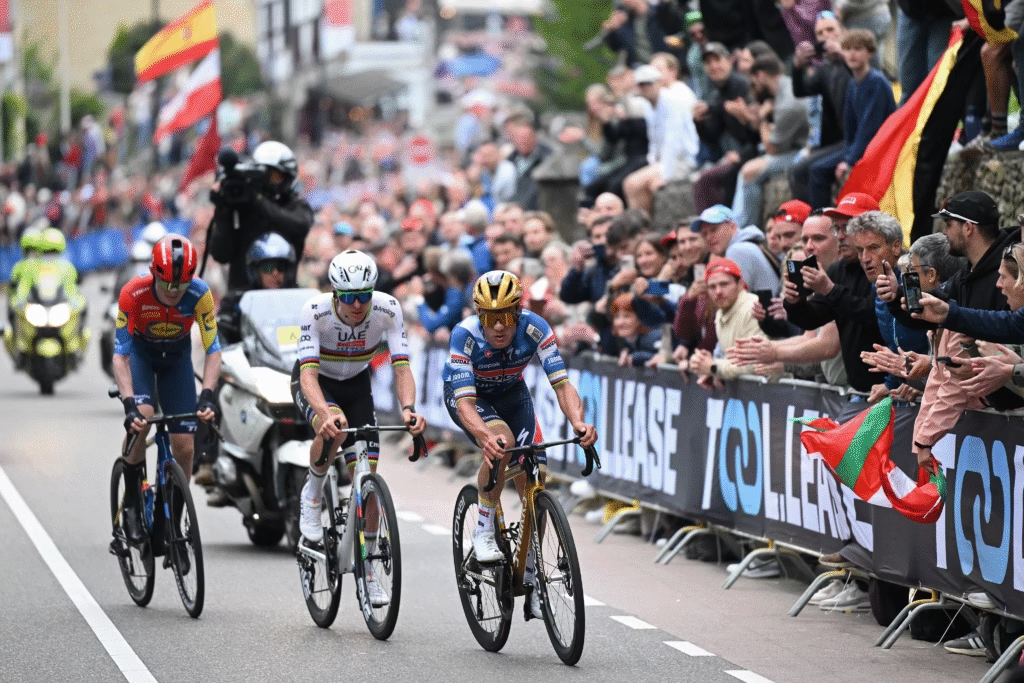
The decisive trio remains Ereffe, Cherave and the Mur de Huy. Ereffe is often where the pace begins to rise properly, especially if a team wants to reduce the group before the finish. Cherave is the more aggressive launching point, the climb that offers a last meaningful chance to attack before the Mur itself. Then the Mur de Huy brings the race to its most concentrated and brutal conclusion.
Cherave is especially interesting because it is where teams can still try to avoid a pure waiting game. If a squad does not want the race to come down to a straight uphill sprint on the Mur, Cherave is the place to force a split or isolate a favourite. But the route’s history also shows the risk: even when Cherave changes the race shape, the Mur often still drags the strongest puncheurs back into control.
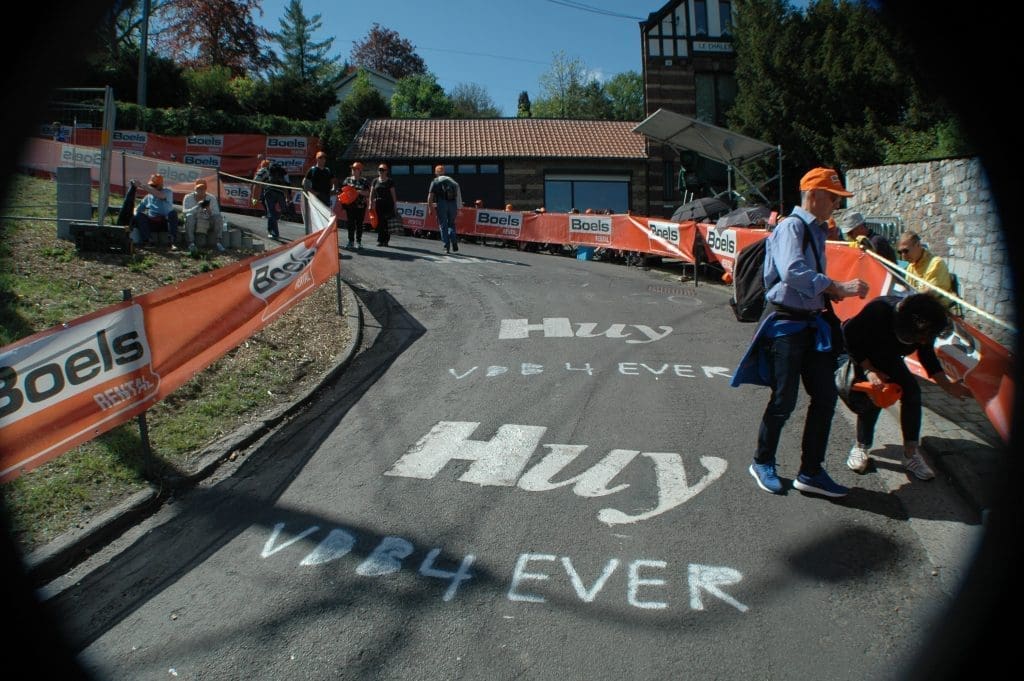
The Mur de Huy remains one of the most distinctive finishing climbs in men’s cycling. It is only 1.3km long, but it averages 9.6 per cent and reaches close to 20 per cent at its steepest. That is why timing matters as much as pure strength. Riders do not just need to be explosive. They need to know exactly when to use it.
How many times do they climb the Mur de Huy?
The men’s race climbs the Mur de Huy three times in 2026. Those passages come at around 130.8km, 168km and then for the final finish in Huy. That repeated exposure is one of the biggest differences between the men’s and women’s route structures.
That triple use of the Mur matters because it changes how the climb functions. It is not just the final obstacle. It is a repeated point of reference across the race, a place where riders and teams keep having to show themselves before the final answer is demanded.
What kind of rider does this route suit?
The Men’s La Flèche Wallonne still suits a pure puncheur more than any other rider type. The ideal winner is someone who can survive repeated hilly efforts, stay well positioned through a compressed late-race circuit, and then produce an explosive uphill acceleration on gradients that would blunt most other types of finish.
That is why the honours list is so distinctive. The Mur de Huy does not reward bluffing or broad all-round quality alone. It rewards riders with a very particular profile, punch, timing, calm under pressure, and the ability to launch on brutal gradients after nearly 200km of racing. For more on that side of the race, ProCyclingUK’s A brief history of the Men’s Flèche Wallonne provides the longer historical context.
-
 Photo Credit: Getty

What to watch for on race day
The first thing to watch is whether any team tries to make the race harder than usual before the final circuits. Because the finish is so obvious, there is always a temptation to delay the real selection. But a strong team can gain an advantage by increasing the pressure earlier and forcing rivals to use support riders before the decisive climbs.
The second is what happens on the final Cherave. That is usually the last realistic point to launch before the Mur without relying entirely on the final steep ramps. If a favourite is isolated there, or if one team still has two or three cards left, the race can shift more than its reputation suggests.
The third is positioning onto the Mur itself. In a finish this steep and narrow, the strongest rider can still lose if they begin too far back or are forced to hesitate. Positioning here is not a secondary detail. It is part of the finishing effort.
Verdict on the 2026 route
The Men’s La Flèche Wallonne 2026 route looks strong because it keeps faith with the features that make the race so recognisable. At 208.8km, starting in Herstal and finishing in Huy, with three ascents of the Mur de Huy and the repeated Ereffe-Cherave-Mur sequence shaping the finale, the course once again creates a race that is selective, compressed and brutally specific.
That should produce the kind of finish La Flèche Wallonne is known for. Riders can try to shape the race earlier, especially on Cherave, but in the end it still asks the same question it always has. Who can produce the sharpest uphill effort when the Mur de Huy arrives for the final time?
For readers building out the wider Ardennes package, this also pairs well with ProCyclingUK’s Men’s Amstel Gold Race 2026 route guide, A brief history of the Men’s Flèche Wallonne and the broader Men’s cycling route guide hub.

