
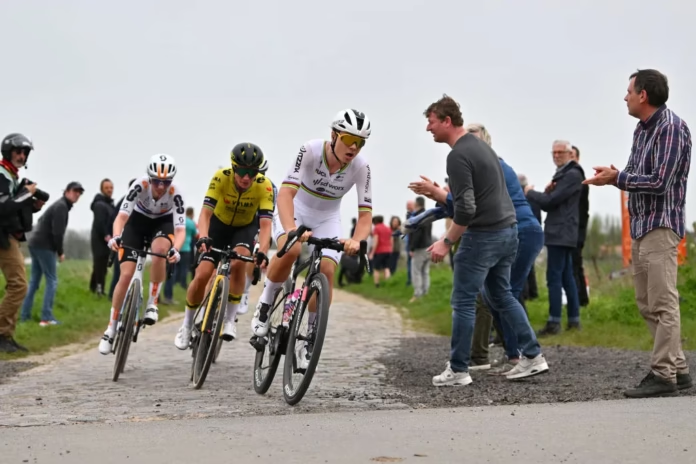
Paris-Roubaix always has a way of making the field look smaller than it really is. By the time the race reaches the final sectors, the conversation usually narrows to a handful of riders, but the teams around them still shape how the race gets there. For 2026, the headline rivalry again centres on Mathieu van der Poel and Tadej Pogačar, while Filippo Ganna, Wout van Aert and Mads Pedersen sit close behind in the wider contender picture.
This team-by-team guide looks at who matters most from each squad and how they may try to play Paris-Roubaix. Some teams arrive with a clear leader, others with a pair of cards, and a few will be hoping to survive long enough to turn chaos into opportunity. For a broader race context, ProCyclingUK’s Men’s Paris-Roubaix 2026 route and cobbled sectors guide, How to watch Paris-Roubaix 2026 in the UK and A brief history of Paris-Roubaix all sit alongside this preview.
-
 Photo Credit: Getty
 -
 Photo Credit: Getty
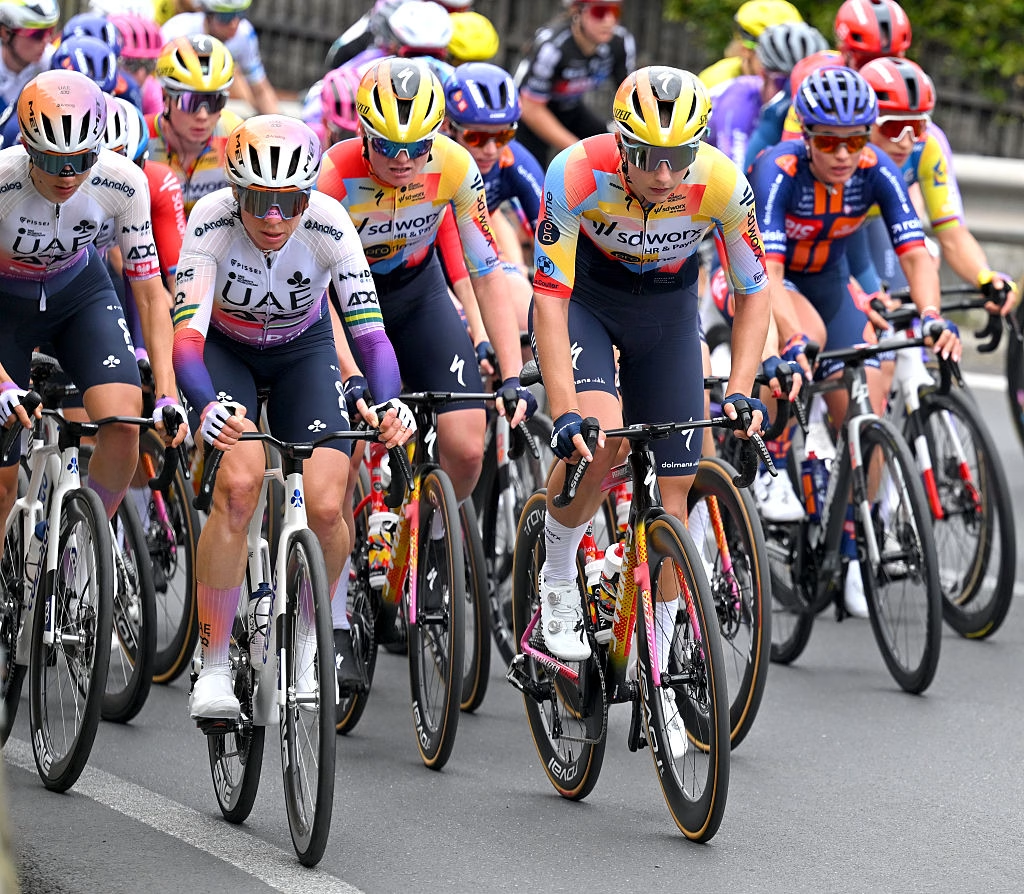
Alpecin-Premier Tech
Mathieu van der Poel is the obvious starting point. He arrives chasing a fourth straight Paris-Roubaix win, which would move him level with the record holders, and he still looks like the rider everyone else has to answer on this terrain. Jasper Philipsen gives Alpecin the best second card in the race, having already finished runner-up here twice, while Silvan Dillier, Jonas Rickaert and Florian Senechal give the team plenty of muscle before the finale.
This is still the most complete Roubaix team in the race. They have the favourite, they have the best fallback option if it comes back together, and they have enough support to make the race hard without immediately exposing themselves.
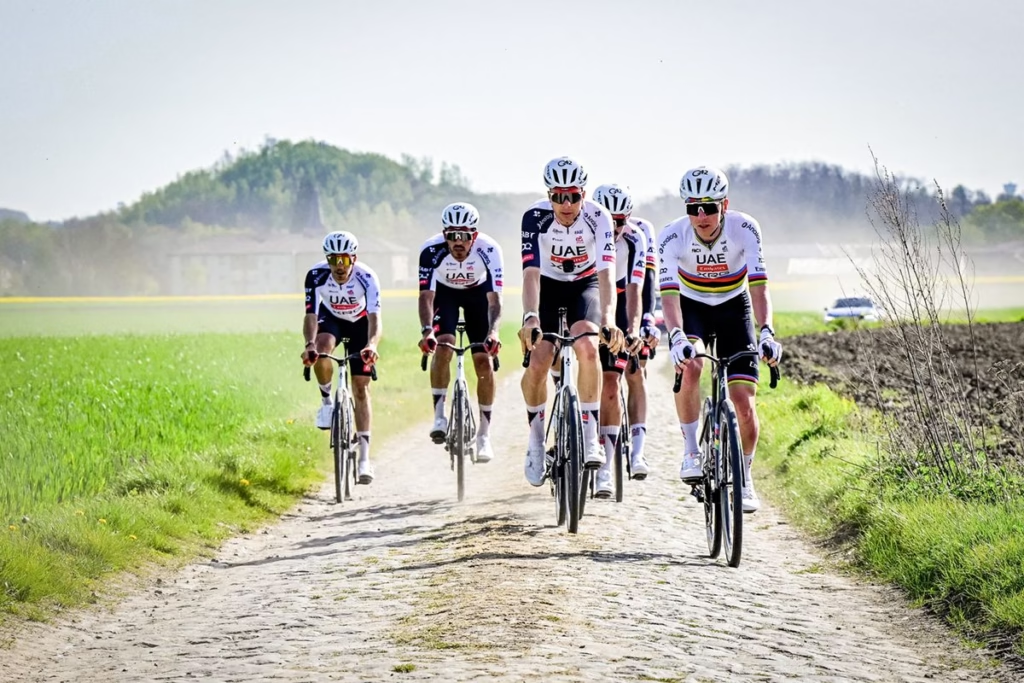
UAE Team Emirates-XRG
Tadej Pogačar is again the centre of gravity here. After his Tour of Flanders win, he arrives chasing the only Monument missing from his collection, and his debut second place last year removed any real doubt about whether he belongs on this terrain. Florian Vermeersch is a major part of the team’s depth too, with the kind of spring form and Roubaix pedigree that make him more than just a support rider, while Nils Politt remains one of the most important engines in the race.
UAE may not have the same depth of specialist cobbled experience as Alpecin, but they do have the rider with the highest current ceiling in the sport. That alone changes what is possible. For more on how Pogačar has shaped the spring, see What Men’s Ronde van Vlaanderen 2026 means for the season.
Lidl-Trek
Mads Pedersen heads this squad and Roubaix may suit him even better than Flanders right now. He has been building back into form impressively, and the combination of resilience, power and finishing speed keeps him firmly in the conversation. The other reason Lidl-Trek are so dangerous is depth, with Jonathan Milan, Mathias Vacek, Edward Theuns and Max Walscheid all strong enough to influence how the race unfolds before the sharp end.
That gives Lidl-Trek options. Pedersen is the main card, but Milan offers another route if the race becomes more tactical than expected, while Vacek increasingly looks like the kind of rider who can stay useful deep into the final sectors.
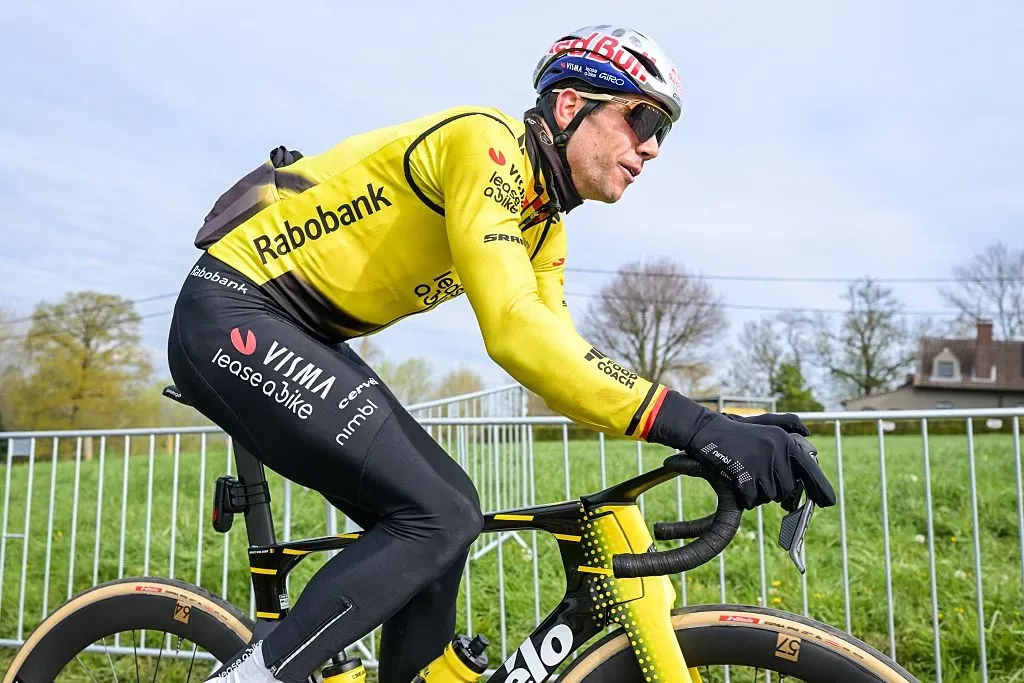
Team Visma | Lease a Bike
Wout van Aert remains the key name. His Roubaix record already shows just how well this race fits him, and that keeps him firmly in the top bracket even if he is not starting as favourite. Christophe Laporte, Axel Zingle and Edoardo Affini give Team Visma | Lease a Bike useful support, but this still looks like a race where Van Aert needs to arrive in the decisive moves rather than rely on full late-race control.
That is the slight difference with the very best Roubaix teams of recent years. Visma still have strength, but the race looks more likely to be decided by Van Aert’s own positioning and timing than by a full team lock on the finale.
Decathlon CMA CGM Team
This is a team with plenty of Roubaix-looking riders but no obvious top-tier favourite. Oliver Naesen is still the clearest reference point for experience and grit, while Stefan Bissegger and Daan Hoole bring raw power that can matter on this sort of course.
If Decathlon CMA CGM get someone into the right split after the major sectors, that is probably already a strong day. They look more like a team that can place well than one that can fully direct the race.
 Photo Credit: Getty
Lotto Intermarche
Arnaud De Lie is the headline name, but this is still a tricky race for him to fully own. The squad also includes Jonas Rutsch, Cedric Beullens and Huub Artz, which gives them a harder, more rugged shape than a pure sprint set-up.
Their best outcome probably comes from De Lie surviving deeper than expected and then still having enough speed left to punish a hesitant group. If the race is too hard too early, the burden shifts to the support cast to keep Lotto Intermarche visible.
INEOS Grenadiers
Filippo Ganna is the reason this team belongs firmly in the win conversation. Roubaix has long looked like the Monument that suits him best, because it gives full value to his engine while reducing the importance of repeated steep climbs. Connor Swift, Ben Turner and Joshua Tarling add to the horsepower, but Ganna is the rider who can turn INEOS from visible to decisive.
The key question is whether he can arrive in the velodrome with the very best still alongside him. If he does, he becomes extremely dangerous. For more context on the spring around him, the Men’s Dwars door Vlaanderen 2026 live viewing and start time update and wider cobbled coverage show how his build-up has taken shape.
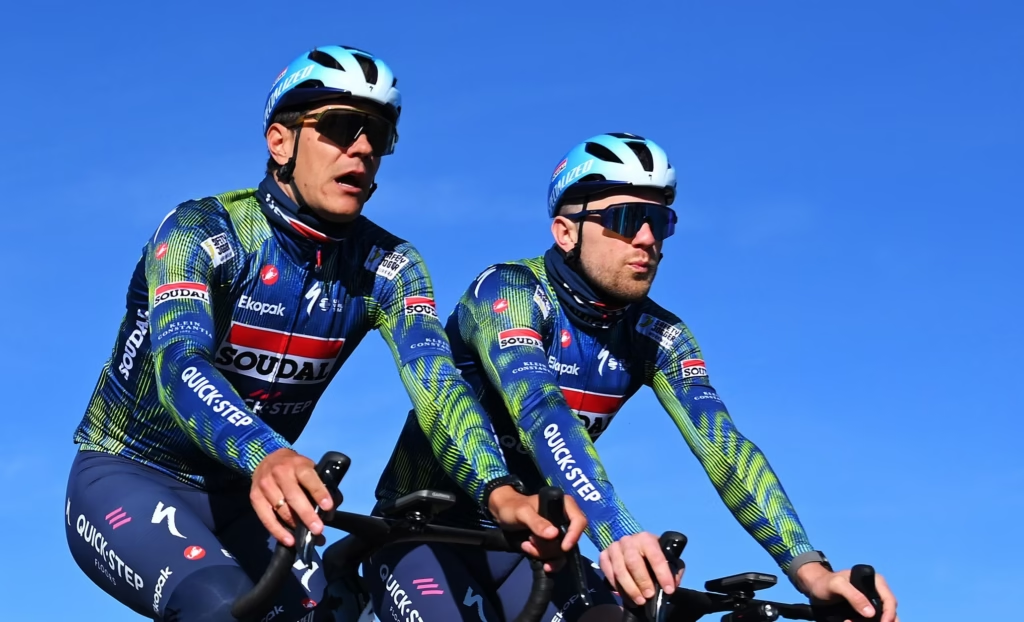
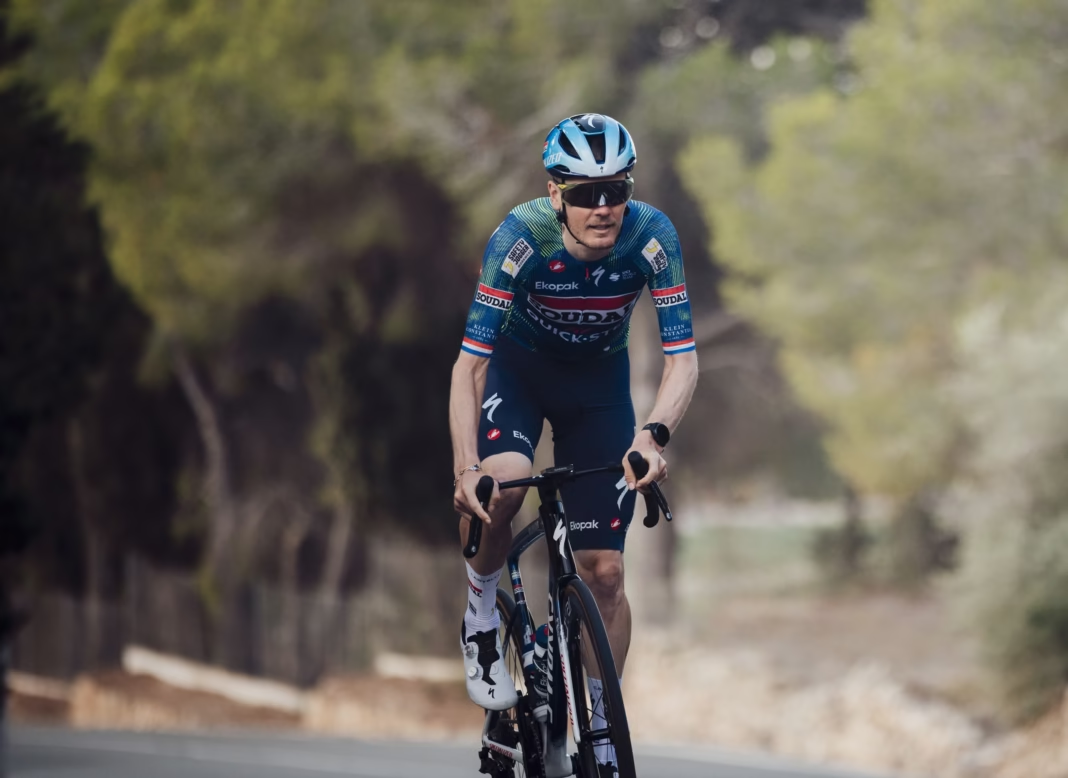
Soudal Quick-Step
Jasper Stuyven looks like the team’s best hope here. He has had a quietly strong spring and remains one of the smartest riders in this type of race, while Dylan van Baarle has not yet looked fully back to his best despite being a former winner of Paris-Roubaix. Tim Merlier gives them a fast finisher and Yves Lampaert brings experience, but Stuyven looks the most realistic route to a major result.
This is not classic Quick-Step dominance, but it is still a group with enough know-how to stay relevant if the race becomes fragmented and tactical.
Team Picnic PostNL
John Degenkolb remains the emotional centre of this line-up because of his past win and his connection to the race, but this is no longer a team built around a single dominant Roubaix card. Julius van den Berg and Frits Biesterbos should be useful in the harder opening and middle phase, while Pavel Bittner offers some late speed if the race becomes strangely tactical.
They look more like a team chasing a strong top 10 than a genuine favourite. Even so, Roubaix often rewards teams that simply stay organised while others begin to lose shape.
Red Bull-BORA-hansgrohe
Gianni Vermeersch is the obvious focus. His cyclocross background, gravel strength and steady spring form make him the team’s clearest podium-level option for Roubaix. Laurence Pithie, Mick van Dijke, Tim van Dijke and Jordi Meeus give Red Bull-BORA-hansgrohe several other ways to stay relevant, but Vermeersch is the rider most likely to turn their day into something serious.
That makes them dangerous in a slightly different way from the headline teams. They may not control the race, but they have enough cards to exploit any hesitation from the biggest favourites.
 Photo Credit: Getty
Bahrain Victorious
Matej Mohorič gives Bahrain their best-known option, but Alec Segaert may be the more interesting Roubaix card. He has been one of the spring’s more intriguing risers and this race should suit him even better than some of the hillier cobbled races. Mohorič still gives them unpredictability, yet Segaert feels like the rider with the cleaner upward curve into this Sunday.
If Bahrain are going to exceed expectations, it will probably come through one of those two forcing the race rather than waiting for it.
Groupama-FDJ United
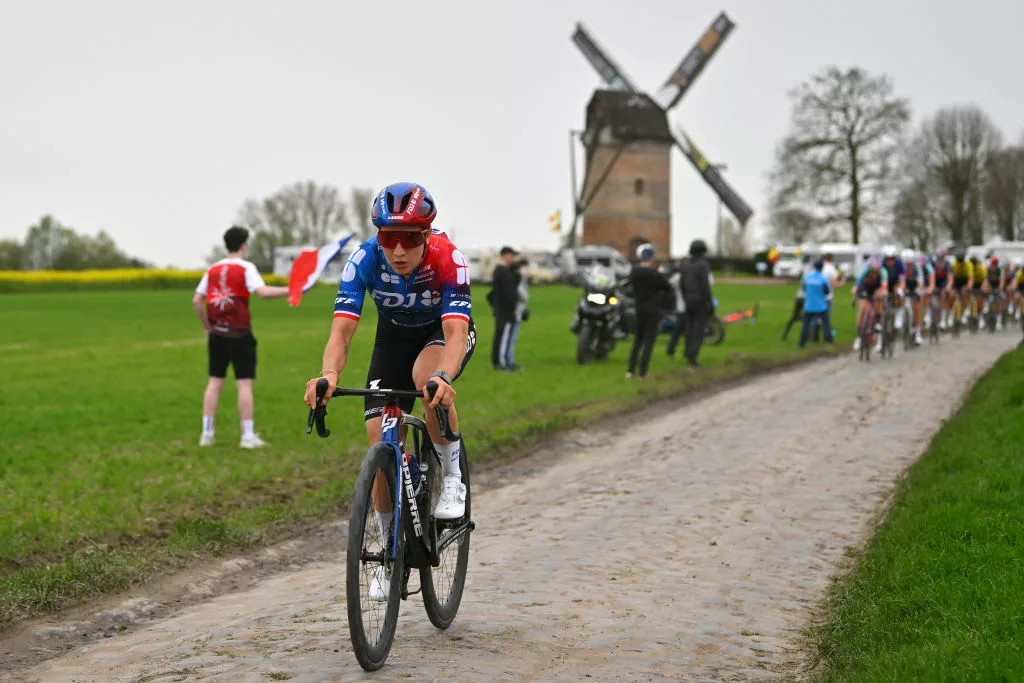
This is a line-up built more around resilience than outright star power. Bastien Tronchon, Johan Jacobs and Clement Russo look the most likely riders to stay visible longest, while Thibaud Gruel gives them some punch if the race becomes fractured.
A result in the top 10 would be a very strong return from this group. They look better suited to opportunism than to matching the biggest teams sector for sector.
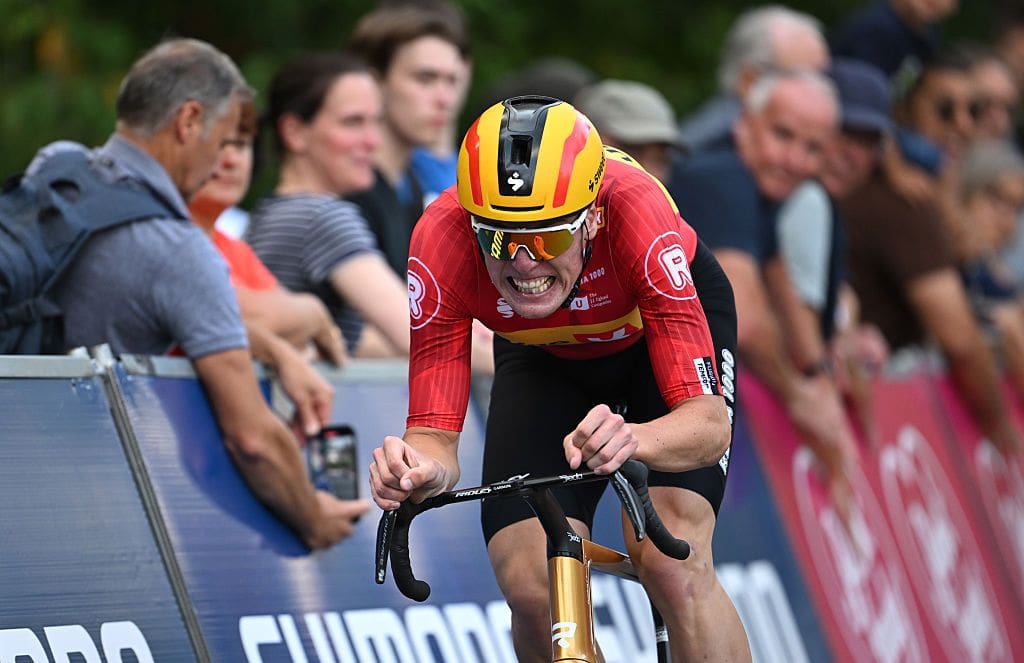 Photo Credit: Getty
Uno-X Mobility
Rasmus Tiller and Soren Waerenskjold make this a dangerous outsider team. Both suit hard, flat one-day racing and Uno-X usually commit fully to the style of race rather than waiting passively for a sprint. Jonas Abrahamsen adds another rider who can thrive in attritional conditions, so they look capable of placing somebody in the final picture if the favourites hesitate.
This is one of those teams that can make the race uncomfortable without necessarily needing to be the strongest on paper. That alone makes them worth watching.
Cofidis
Alexis Renard and Hugo Page are the two names that stand out most here. Dylan Teuns and Benjamin Thomas add experience and racing intelligence, but this is not a squad with an obvious front-rank Roubaix favourite.
Their best path is likely aggression before the race fully settles into favourite-versus-favourite mode. If they can get ahead of the biggest moves and force others to chase, that is where their race becomes more interesting.
XDS Astana Team
Mike Teunissen and Davide Ballerini give Astana a genuine Classics backbone. Teunissen in particular still feels like a rider who can get deep into a race like Roubaix if the positioning and luck line up, while Gleb Syritsa gives them a faster option for a reduced finish.
This is not the strongest team on paper, but it is one that could hang around for longer than expected. That often counts for plenty in Roubaix.

EF Education-EasyPost
Kasper Asgreen is the clear leader here. His power and ability to handle long, hard races make him the team’s best chance of forcing his way into relevance, while Madis Mihkels is an interesting second card both for now and for the longer term. Luke Lamperti adds speed, but EF’s ideal day probably depends on Asgreen turning the race into something selective before the pure finishers can benefit.
The team’s best version here is aggressive rather than reactive. If they wait too long, they risk being crowded out by stronger squads.
NSN Cycling Team
Biniam Girmay is the headline rider, but Paris-Roubaix is still a different challenge from the races where his finishing speed carries the most weight. Lewis Askey and Riley Sheehan make this a more robust line-up than a single-leader sprint team, and Tom van Asbroeck adds another rider who can survive a rough day.
They may need the race to become more tactical than usual if they are to turn that into a standout result. Still, there is enough strength here for the team to stay in the race longer than some might expect.

TotalEnergies
Anthony Turgis is the obvious focal point. His style fits the race and he is the rider most likely to carry the team into the final sectors with real intent, while Alexys Brunel and Thomas Gachignard help give TotalEnergies a harder edge than some other ProTeams.
This is the sort of team that can profit if the big names spend too long watching one another. They are unlikely to dominate, but they are capable of being well placed when the race opens up.
Team Jayco AlUla
Luke Durbridge and Jasha Sutterlin are the key engines here. Both know how to ride long, exposed one-day races and can keep the team in the right part of the race for a long time, while Kelland O’Brien adds another powerful rouleur.
What Jayco AlUla may lack is the final-level finisher needed to turn presence into a podium challenge. Even so, they have the experience to shape the middle of the race if conditions become particularly wearing.
Movistar Team
Ivan Garcia Cortina remains the rider who gives this line-up its edge. Filip Maciejuk and Albert Torres should also suit the rougher demands of Roubaix, but Garcia Cortina is still the most likely to come through the sectors with a meaningful result in reach.
On paper this looks a team chasing a top 10 rather than the win. That is not a weakness so much as a realistic reading of where they stand against the strongest squads.
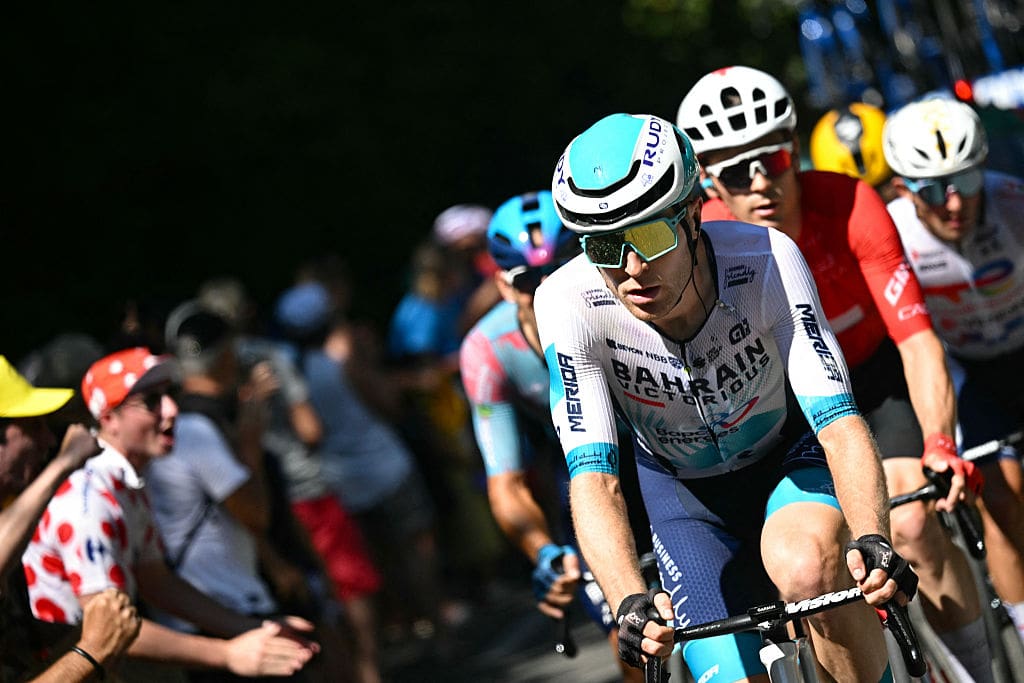 Photo Credit: Getty
Pinarello-Q36.5 Pro Cycling Team
Fred Wright is the obvious headline here and this race should suit him better than many Ardennes-style days. Aimé De Gendt, Frederik Frison and Brent Van Moer make the line-up sturdy enough to stay visible, but Wright is the rider most likely to animate the race if a mid-distance move becomes dangerous.
This feels like a strong outsider team rather than a likely winner. For readers following Wright’s wider spring profile, this sits naturally alongside ProCyclingUK’s broader cobbled campaign coverage.
Tudor Pro Cycling Team
Luca Mozzato is the name to watch. Marco Haller and Fabian Lienhard add plenty of support and durability, but Mozzato is the rider most likely to turn survival into a real placing if he gets through the key sectors near the front.
Tudor do not have the firepower of the biggest teams, yet they have enough experience to avoid being dismissed. That can be valuable in a race where calm often matters as much as strength.
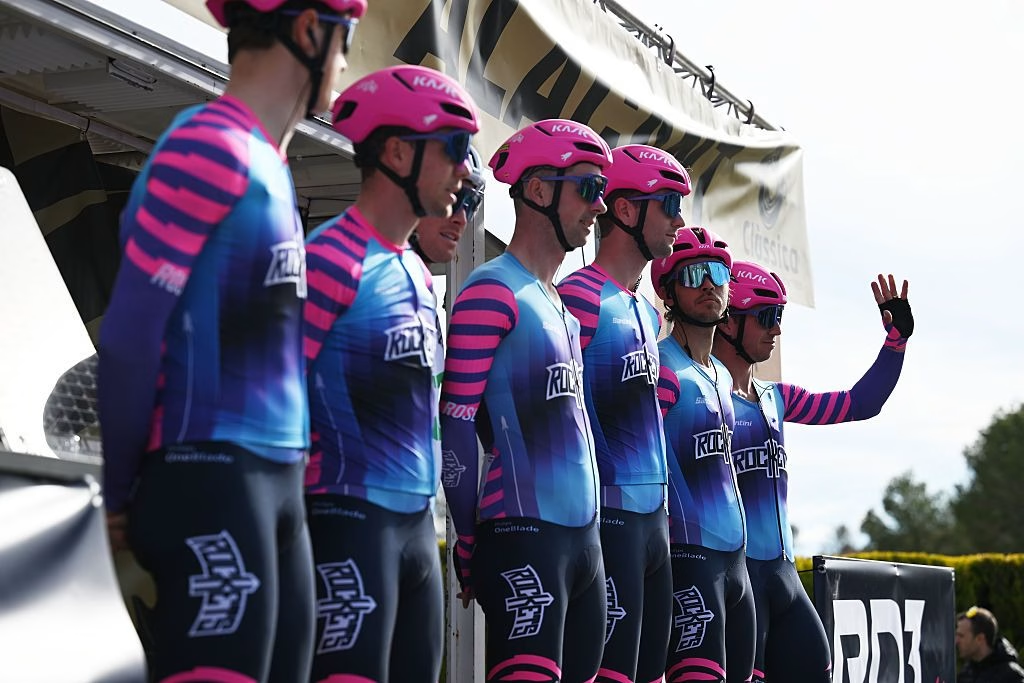
Unibet Rose Rockets
Lukáš Kubiš stands out as the most interesting rider in this group, with the sort of robust one-day profile that can translate well when races get messy. Niklas Larsen and Wessel Mouris add support, but this is a team more likely to seek TV time and race presence than to shape the final outcome.
A deep finish would still be a major success. Roubaix can occasionally open the door for that sort of result, but they begin as clear outsiders.
Modern Adventure Pro Cycling
This is one of the more intriguing wildcard squads simply because Roubaix gives smaller teams a chance to matter through positioning and persistence. Robin Carpenter and Mark Stewart bring useful know-how, while Riley Pickrell gives them a rider with enough speed to chase an opportunistic result if the race opens up strangely.
Even so, they start this race as outsiders. Their job will be to anticipate rather than react.
Team Flanders-Baloise
A home-region race always gives this team extra visibility, even if the result ceiling is usually lower than the WorldTour giants around them. Michiel Lambrecht, Jules Hesters and Victor Vercouillie are the names most likely to stay in the picture longest.
Their job will be to race aggressively and try to make the early and middle phase count. That is usually the right approach for this sort of wildcard team in Roubaix.
-
Photo Credit: Getty
-
Photo Credit: Getty
What the team battle really looks like
In simple terms, this still looks like a race where Alpecin-Premier Tech and UAE Team Emirates-XRG hold the strongest cards, with Team Visma | Lease a Bike, INEOS Grenadiers and Lidl-Trek closest behind. Alpecin have the best combination of favourite and back-up option, UAE have the rider with the highest current ceiling on almost any terrain, and the chasing teams all have at least one rider capable of exploiting any hesitation or bad luck up front.
That is what makes Paris-Roubaix so compelling every year. The favourites are obvious, but the race never stays neat for long. A puncture, a split, one bad sector or one perfectly timed acceleration can turn the team hierarchy upside down in seconds.
For more around the same race week, this piece pairs well with the Men’s Paris-Roubaix 2026 route and cobbled sectors guide, A brief history of Paris-Roubaix and the wider Men’s cycling history, races, riders and teams hub.

