Men’s Ronde van Vlaanderen 2026 has the strongest field of the cobbled spring so far, and that gives this edition an edge before the flag has even dropped. Tadej Pogačar returns as defending champion, Mathieu van der Poel comes in after another statement ride at E3 Saxo Classic, Wout van Aert looks close to his best without yet landing the defining result, and Filippo Ganna has just given his Classics campaign extra weight with that late comeback win at Dwars door Vlaanderen. Add in Remco Evenepoel for his Tour of Flanders debut, plus the returning Mads Pedersen, and this is a race with both depth and tension.
That also means the preview cannot be reduced to one simple question of whether Pogačar or Van der Poel will decide it. They remain the two clearest reference points, but the shape of the spring so far suggests this race could open in more than one way. If you want the broader context before Sunday, ProCyclingUK’s How to watch Tour of Flanders 2026 in the UK and Men’s Dwars door Vlaanderen 2026 season analysis help set up where the favourites now stand.
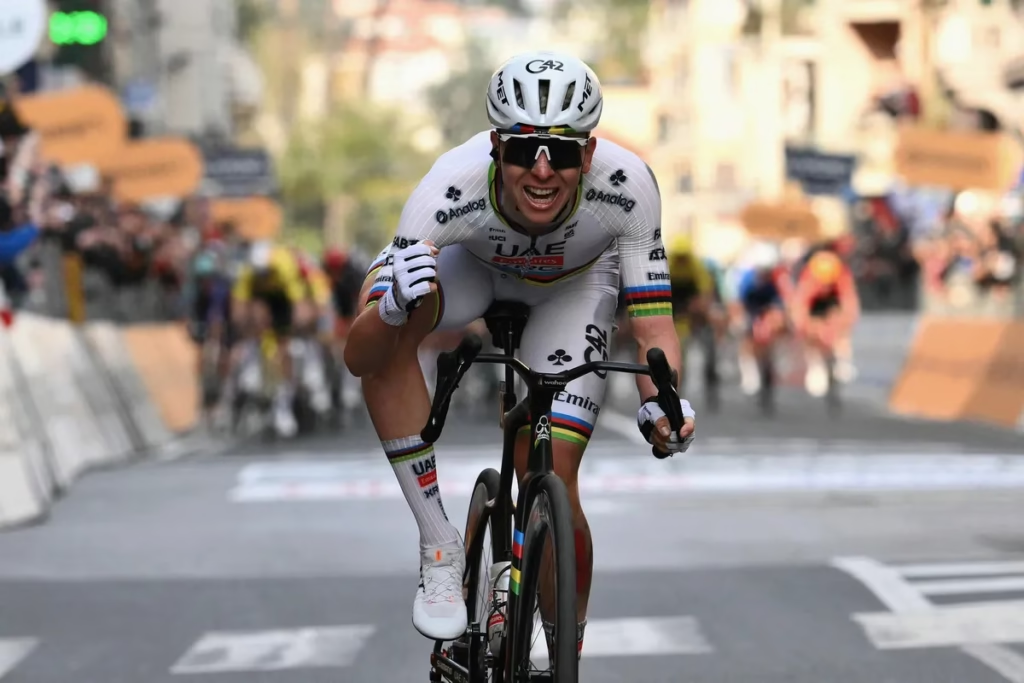 Photo Credit: Getty
Tadej Pogačar remains the benchmark
Pogačar starts this race in the most obvious position possible. He is the defending champion and still the rider most capable of making the decisive split on the climbs through sheer force. The Oude Kwaremont and Paterberg sequence suits riders who can hit repeated accelerations hard enough to strip the race down to its essentials. Pogačar has already shown in recent years that he can do exactly that.
There is also a particular pressure he places on the race. When he attacks, the selection is rarely just about legs. It becomes a question of who is willing to commit fully to following, and who starts to race for second place too early. That is why he remains the benchmark even in a field this strong. Few riders can turn a tactical race into a physiological one as quickly as he can.
The only reason not to place him clearly above everyone else is the nature of this year’s opposition. This is not a field that will politely let him ride away if the move is not perfect. Van der Poel, Van Aert and even Ganna all bring different kinds of resistance. Even so, if the race is won on the steepest climbs by the rider with the highest ceiling, Pogačar is still the most obvious answer.
For a wider look at where he sits in the season, the Men’s WorldTour guide is useful for understanding how this race fits into the broader spring picture.
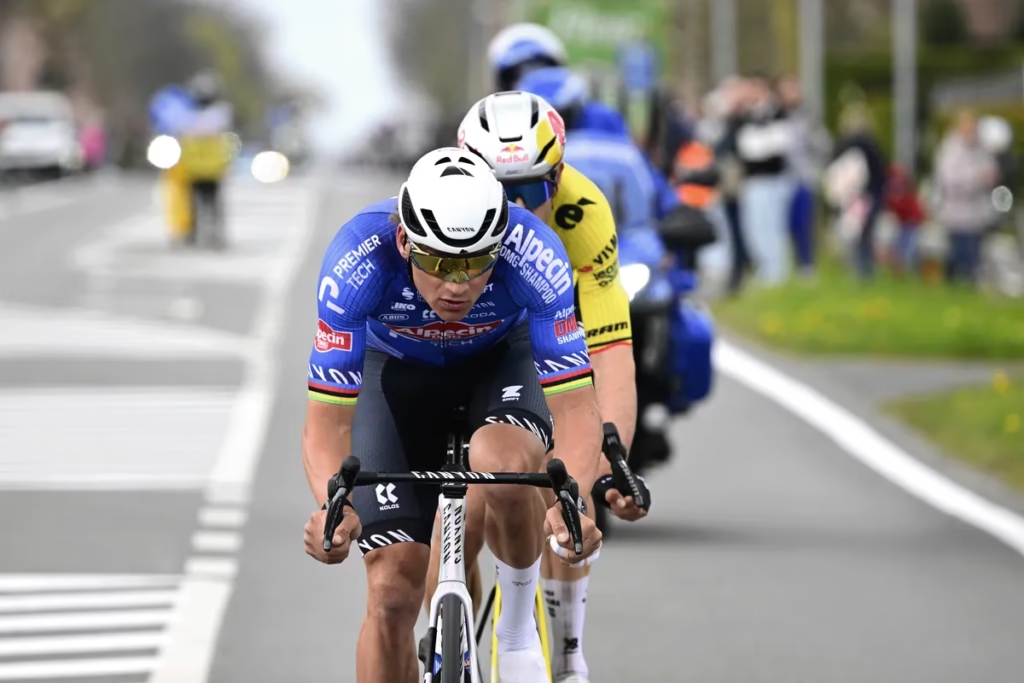 Photo Credit: Getty
Mathieu van der Poel looks every bit the co-favourite
Van der Poel remains the rider most likely to turn this race into something violent and unmistakable. That has been the pattern of his best cobbled performances for years, and there has been little in the spring so far to suggest any drop in level. When he attacks, he does not just create a gap. He changes the race entirely.
That matters in Flanders because this is a route that rewards sharp handling, explosive power, and the confidence to race from distance. Van der Poel has all three in abundance. He also has the kind of familiarity with the race that counts for plenty when the final 50km become increasingly frantic.
The most interesting part of his profile going into this edition is that he still looks beatable, but only just. He has shown enough vulnerability that rivals can believe they have a route to defeating him, yet not enough that anyone can reasonably place him outside the top bracket. That is a dangerous combination, because it means he can race with aggression while still carrying the aura of a favourite.
If Sunday turns into a race of sharp selections, repeated accelerations and technical pressure rather than one huge long-range move, Van der Poel may be the rider best equipped to handle every version of the finale.
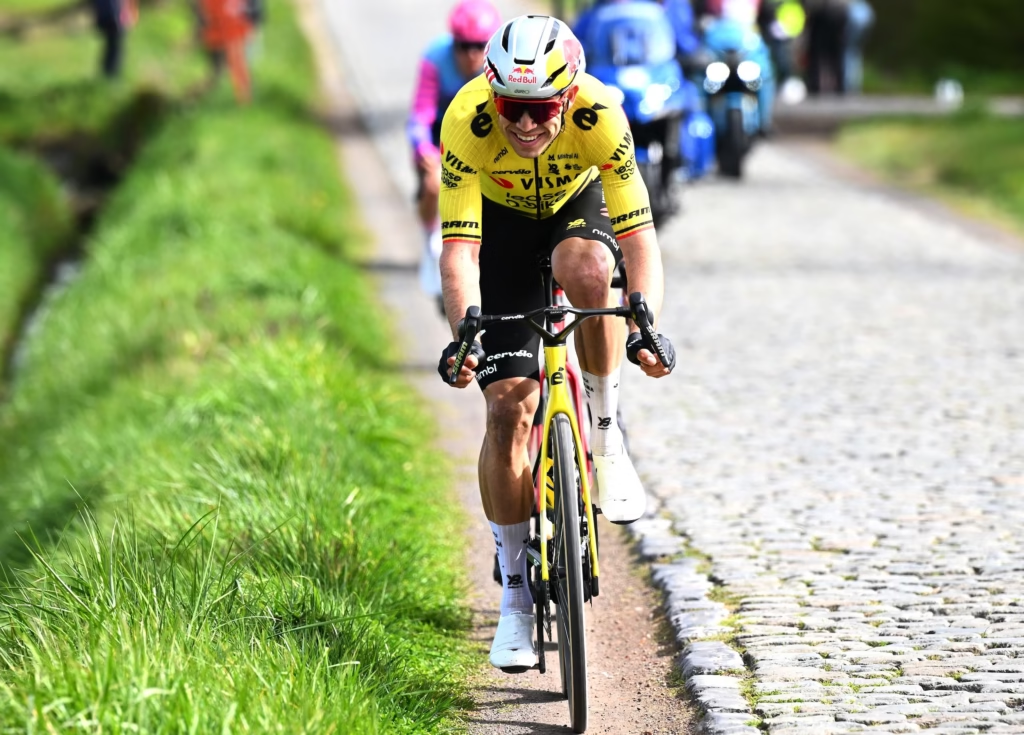 Photo Credit: Getty
Wout van Aert has the shape of a winner, but not the result yet
Van Aert comes into Men’s Ronde van Vlaanderen 2026 in an awkward but still promising position. His level looks good enough to win. His recent results have not quite matched that. That distinction matters, because Flanders is often won by riders who arrive with proof of decisive form, not just encouraging signs.
Yet the signs have been strong enough to keep him squarely among the main contenders. He has repeatedly been in the right place in the biggest moments and has looked capable of shaping races himself rather than simply reacting to them. That remains one of the strongest indicators of all for a rider heading into Flanders.
The challenge for Van Aert is that his biggest rivals each bring a clearer recent headline. Pogačar is the defending champion. Van der Poel has already delivered another major cobbled statement. Ganna has just won Dwars door Vlaanderen in dramatic style. Van Aert, by contrast, arrives with encouragement mixed with frustration.
That does not weaken his case as much as it might seem. In some ways, it strengthens it. He does not need to prove he belongs in the decisive group. He needs to prove he can finish the job once he gets there. This route suits him well enough for that to happen, especially if the race becomes selective without being completely explosive.
There is also a team dimension here. Team Visma | Lease a Bike should give him support deep into the race, and that could matter if the finale becomes tactically complicated rather than simply a test of the strongest legs. ProCyclingUK’s How to watch Tour of Flanders 2026 in the UK has the key race details if you are following how that battle develops live.
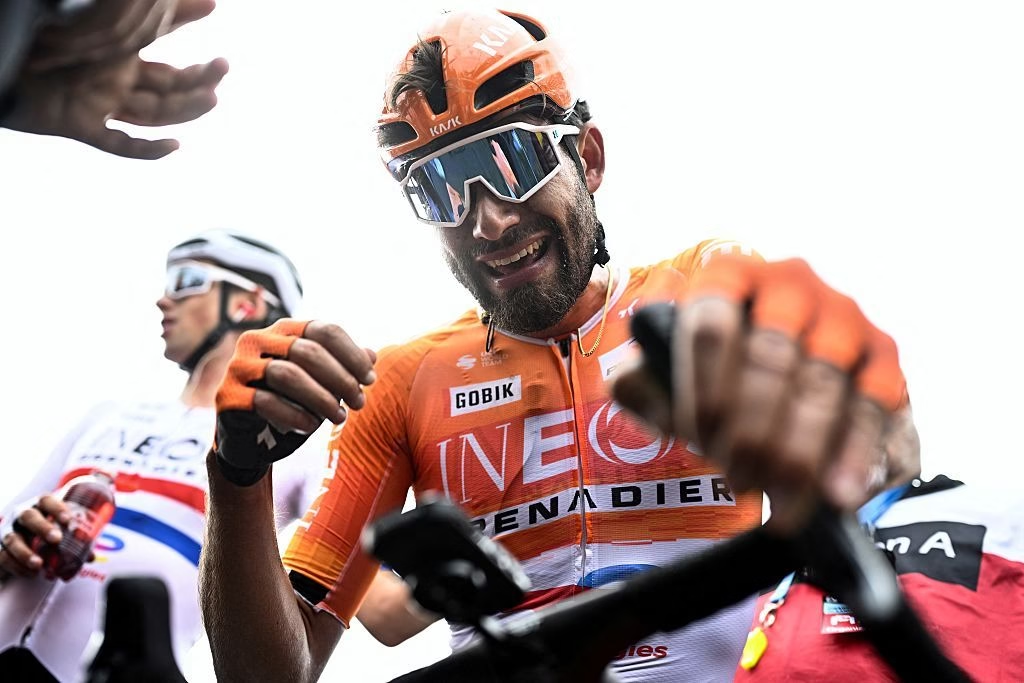 Photo Credit: Getty
Filippo Ganna has moved out of outsider territory
Ganna’s recent rise has changed the tone around him immediately. Before Dwars door Vlaanderen, he was respected as a possible disruptor. After it, he looks more like a rider who can force the favourites to take him seriously from much earlier in the race.
Flanders is still a slightly less natural fit for him than Paris-Roubaix because the repeated climbs ask different questions. That is the obvious caveat. Even so, it no longer feels sufficient on its own. Ganna now has the confidence of a rider who knows he can survive race chaos and still produce the biggest moment.
That changes how you read his chances. He may not be the likeliest rider to attack on the Kwaremont and ride clear alone, but he does not need to win in the most traditional Flanders fashion to be dangerous. If the biggest names hesitate, if the race becomes tactical, or if a reduced group reaches the final kilometres with enough hesitation behind it, Ganna has the engine to punish that.
His Dwars door Vlaanderen ride also said something useful about resilience. He lost ground, had to reset, and still found a way back into the race. That is one of the reasons he now feels more relevant for the biggest cobbled events. ProCyclingUK’s What Men’s Dwars door Vlaanderen 2026 means for the season goes into that shift in more detail.
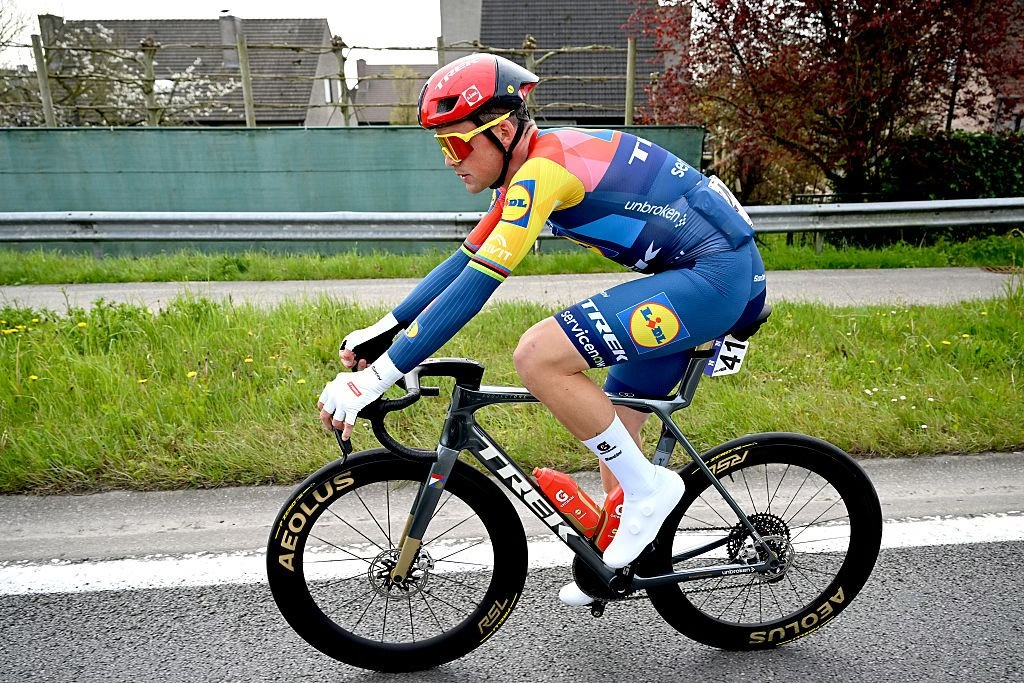 Photo Credit: Getty
Mads Pedersen depends on what the interrupted build-up has cost him
Pedersen is almost always worth serious consideration in this race because his skill set is so well suited to the demands of Flanders. He can survive a hard day, handle repeated climbs better than many fast finishers, and still finish strongly if the winning move is not completely solo. He also understands these races well, which remains an undervalued asset when the selection begins to form.
The complication this time is his build-up. An interrupted spring makes him harder to place than usual. There is a difference between a rider being strong enough to stay involved and sharp enough to win against the very best in a race like this. With Pedersen, that uncertainty is probably the central issue.
At his best, he belongs very close to the top of the contenders list. He is tough enough, fast enough, and tactically aware enough to win from several different race shapes. But Flanders does not often forgive anything less than top condition, particularly when the field is this deep. That is why he sits just behind the first wave rather than fully within it.
If the race becomes slightly more controlled than expected, or if the decisive move retains enough riders for a finish from a reduced front group, Pedersen’s stock rises very quickly.
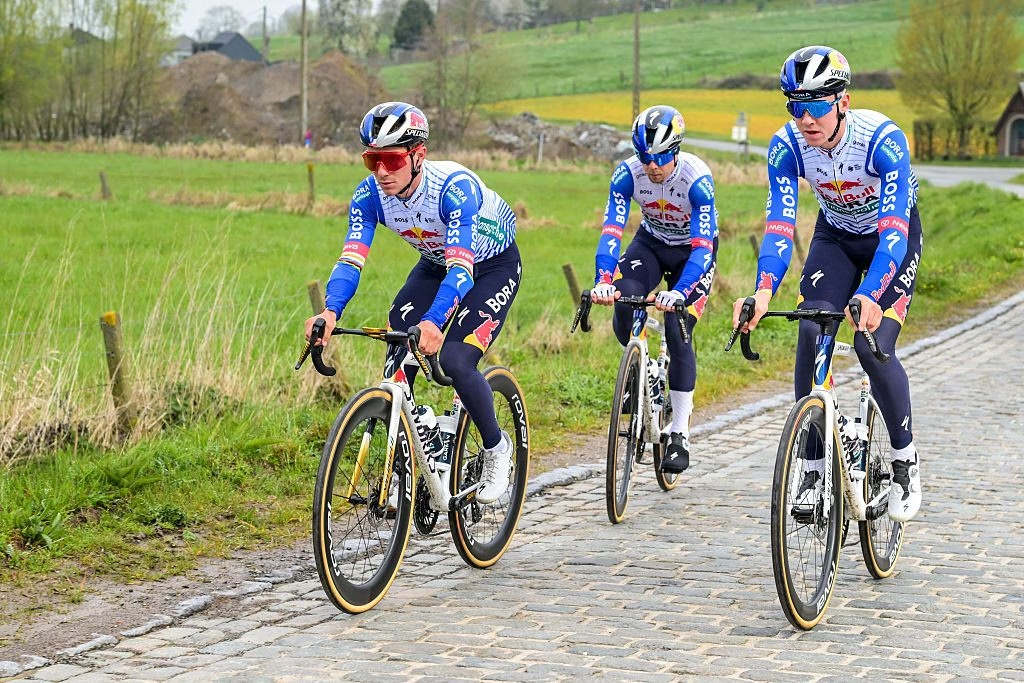 Photo Credit: Getty
Remco Evenepoel is the intriguing unknown
Evenepoel gives this edition a different texture because he introduces uncertainty into a race that already has plenty of it. On raw engine, he obviously belongs in any discussion of major one-day races. On specific Flanders instinct and route suitability, he remains much harder to read.
That is what makes him so interesting. Flanders is not simply about riding hard. It is about how that hardness is delivered. Positioning through narrow roads, repeated rhythm changes, punchy cobbled climbs and tactical patience all matter. Riders usually need time to learn how the race opens and where it can be won or lost.
The case against Evenepoel is therefore fairly simple. This is a highly specialised race, and the very best specialists are all here. The case for him is just as obvious. He has the ability to make races uncomfortable in ways that few others can. If he finds the right moment before the usual favourites fully settle into their own patterns, he could alter the whole script.
He is not the safest pick, but he may be the most compelling unknown in the entire field.
-
Photo Credit: Getty
-
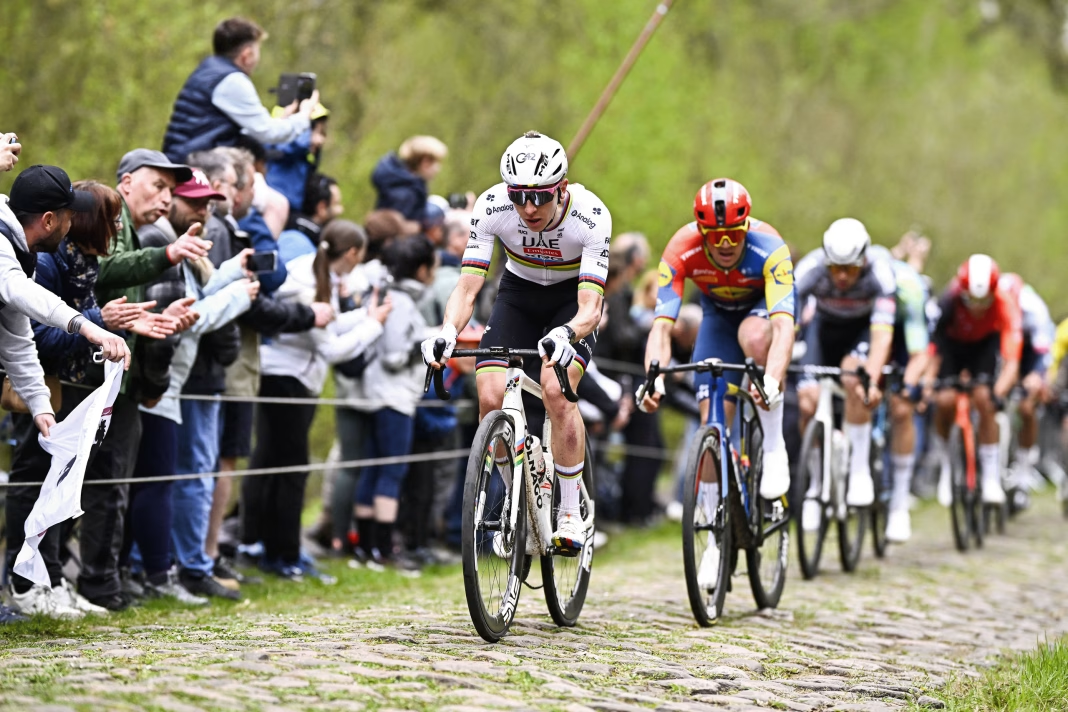 Photo Credit: Getty
The next group who could still shape the race
This race is too strong to stop at six names. Jasper Philipsen matters because he gives Alpecin-Premier Tech another card and could still be relevant if the race comes back more than expected. Florian Vermeersch has the kind of engine that can make him useful deep into a hard race, whether for his own chances or as part of a bigger UAE plan. Christophe Laporte and Per Strand Hagenes give Team Visma | Lease a Bike depth behind Van Aert, and that could become important if the favourites start marking one another too closely.
Arnaud De Lie, Jasper Stuyven and Matej Mohorič also sit in that dangerous second line. They may not be the most likely winners on paper, but races like Flanders are not always won by the rider who looked strongest all week. Sometimes they are won by the rider who reads the moment better than everyone else when the biggest names hesitate.
That second tier matters because Tour of Flanders is often shaped by who survives in support, who bridges once, or who forces the favourites to close a move they would rather leave. ProCyclingUK’s Men’s Ronde van Vlaanderen 2026 team-by-team guide is the natural companion piece if you want to read how those team dynamics could play out.
Prediction
On paper, this still feels like a race that should come down to Pogačar and Van der Poel, because they remain the two riders most capable of forcing the decisive split on the most important climbs. Van Aert looks close enough to join them, and Ganna has earned the right to be taken seriously after Dwars door Vlaanderen. Pedersen and Evenepoel add extra uncertainty, but in pure route terms the advantage still sits with the riders most likely to make the finale a sustained test of repeated acceleration.
Van der Poel looks slightly more battle-hardened for the specific demands of this race right now, but Pogačar’s ceiling on the climbs remains the most disruptive force in the field. If he gets the timing right, he can still be the one rider who makes normal tactical logic disappear.
My slight lean is still towards Pogačar, simply because when Tour of Flanders becomes a race of repeated damage on the bergs, he is the rider most capable of making the selection so small that tactics barely matter.