

Men’s Tour de Romandie 2026 takes place from Tuesday 28th April to Sunday 3rd May, with six stages across French-speaking Switzerland and a route that should favour climbers and complete general classification riders. The race begins with a short prologue in Villars-sur-Glâne, then builds through a series of hilly and mountainous road stages before the final finish in Leysin.
The 2026 field is smaller than a full WorldTour stage-race line-up, but it still carries serious weight. Tadej Pogačar and Primož Roglič give the race two obvious headline names, while Oscar Onley, Lenny Martinez, Antonio Tiberi, Florian Lipowitz, David Gaudu, Valentin Paret-Peintre and Mauro Schmid add depth across the GC and stage-hunting groups.
That mixture gives Romandie a useful shape. Some teams arrive with clear overall ambitions. Others look better suited to opportunistic stages, breakaways and late attacks. With more than 850km of racing and a final mountain stage to Leysin, the strongest squads will need more than one good climber. They will need support, recovery and enough tactical flexibility to handle a race that may not wait politely for the final climb.
UAE Team Emirates-XRG
UAE Team Emirates-XRG arrive with the clearest favourite in Pogačar, and that immediately changes the way every other team has to approach the race. Romandie is not a Grand Tour, but a six-day Swiss race with a prologue, repeated climbing stages and a final summit-style finish is more than enough terrain for Pogačar to impose himself if he chooses.
The support structure also looks strong. Pavel Sivakov and Felix Grossschartner give UAE serious climbing cover, while Domen Novak, Kevin Vermaerke, Mikkel Bjerg and Ivo Oliveira provide different kinds of control across the week. Bjerg and Oliveira matter in the prologue and pacing phases, while Sivakov and Grossschartner can help manage the mountain stages.
The main question is not whether UAE have the strongest individual rider. They do. The more interesting question is how early they want to control the race. If Pogačar gains time in the prologue or on one of the early climbing days, the team may spend much of the week defending. If they wait, they still have enough strength to put the race under pressure before Leysin.
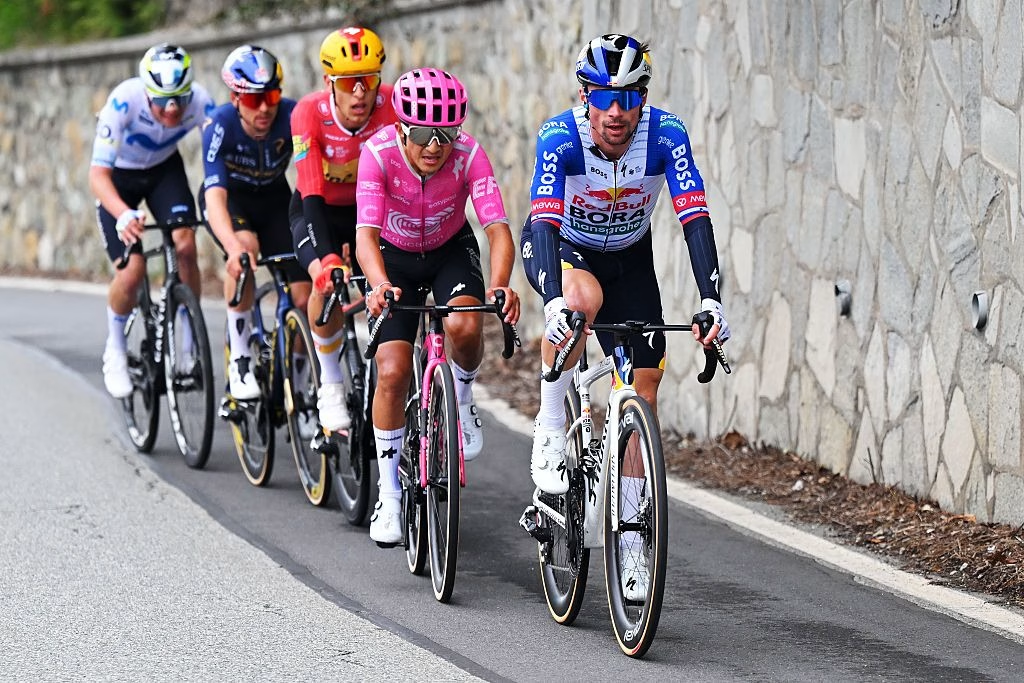 Photo Credit: Getty
Red Bull-Bora-Hansgrohe
Red Bull-Bora-Hansgrohe bring Roglič, Florian Lipowitz and Daniel Felipe Martínez, which gives them one of the most rounded GC squads in the race. Roglič is the obvious reference point, not just because of his palmarès but because Romandie has suited him before. The short efforts, mountain finishes and controlled racing style all fit the kind of stage race where he can be dangerous.
Lipowitz gives the team another serious climbing option, while Martínez provides experience and a second route into the GC battle if the race becomes more open than expected. Mattia Cattaneo and Jan Tratnik can be valuable in the prologue, transitional kilometres and positioning work, with Adrien Boichis and Luke Tuckwell adding further support.
The squad looks built to race seriously rather than simply prepare. If Roglič is close after the prologue, Red Bull-Bora-Hansgrohe can either ride directly for him or use Lipowitz and Martínez to make UAE respond earlier than they would like. That matters because beating Pogačar usually requires more than waiting for one final acceleration.
Bahrain Victorious
Bahrain Victorious have one of the most interesting climbing blocks in the race through Lenny Martinez, Antonio Tiberi and Damiano Caruso. Martinez and Tiberi both have strong claims to leadership, while Caruso gives the team experience, calm and tactical reliability across a week where positioning and patience could be as important as raw climbing speed.
Martinez is the more explosive climbing option and should be well suited to a route that repeatedly asks riders to respond on hard gradients. Tiberi may prefer a race that becomes more measured and accumulative, especially if the GC is still open by the final stage to Leysin. Caruso gives Bahrain the option of protecting both for longer rather than choosing too early.
Nikias Arndt, Kamil Gradek, Robert Stannard and Vlad Van Mechelen complete a squad that should have enough support for both GC and stage objectives. Bahrain may not be expected to control the race ahead of UAE or Red Bull-Bora-Hansgrohe, but they are strong enough to punish hesitation if the favourites begin watching each other.
INEOS Grenadiers
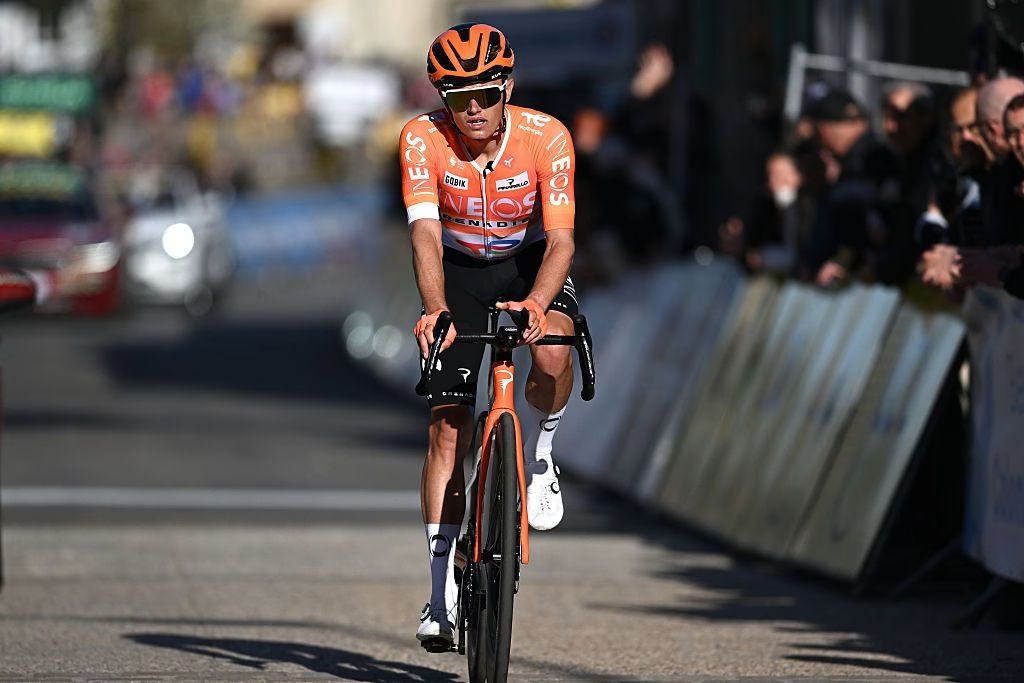
INEOS Grenadiers bring Oscar Onley as their most obvious GC option, and Romandie looks like a useful test of where he sits against some of the strongest stage-race riders in the peloton. Onley’s climbing profile should suit the harder road stages, especially if the race becomes selective before Leysin rather than being reduced to one final mountain finish.
The rest of the squad gives INEOS a strong mix of experience and support. Michal Kwiatkowski, Laurens De Plus and Bob Jungels can all help shape difficult stages, while Dorian Godon provides a different kind of threat in faster or more reduced finishes. Andrew August and Victor Langellotti give the team further depth.
INEOS may not have the single strongest rider in the race, but they do have a squad that can stay involved across several types of stage. If Onley is climbing well, the team has a clear GC path. If the overall battle becomes too controlled by Pogačar and Roglič, INEOS still have enough variety to chase stage results.
Team Jayco AlUla
Team Jayco AlUla arrive with Mauro Schmid and Luke Plapp as the key names. Schmid gives the team a strong Swiss storyline and a rider who can be dangerous on mixed terrain, especially if a stage becomes too hard for pure rouleurs but not quite hard enough for the main GC climbers to take full control.
Plapp brings another interesting angle. He has the engine for time trials, the climbing ability to survive tough days, and enough race intelligence to be used either for GC protection or stage opportunities. Filippo Conca, Davide De Pretto, Hamish McKenzie, Asbjørn Hellemose and Patrick Gamper round out a team that looks more flexible than dominant.
Jayco’s best route may be to avoid becoming trapped in a pure GC contest against stronger climbing teams. If they can place riders in the right moves and use Schmid or Plapp on the stages where the favourites hesitate, they have a realistic chance of leaving Romandie with a meaningful result.
Lidl-Trek
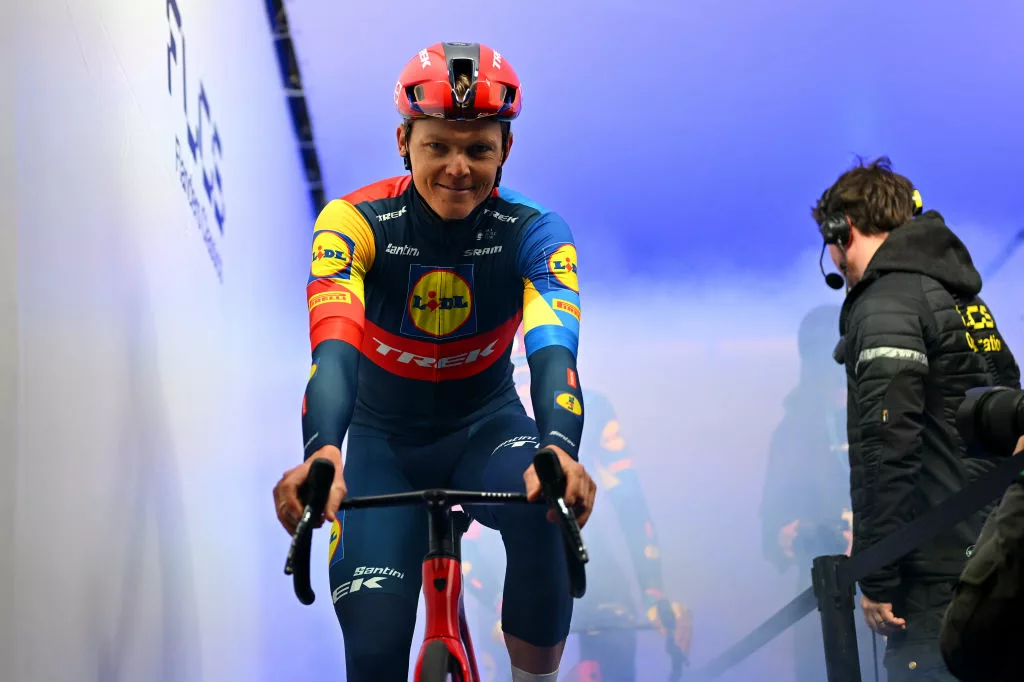
Lidl-Trek do not bring one obvious race favourite, but their squad has the kind of collective strength that can make Romandie awkward for teams trying to control everything. Toms Skujiņš is a natural stage-hunting option, while Patrick Konrad and Sam Oomen give the team climbing experience and the ability to stay involved when the race gets harder.
Bauke Mollema gives the squad another experienced card, particularly if a stage opens to a breakaway. Julien Bernard and Jacopo Mosca can help manage the race around the leaders, while Albert Withen Philipsen and Jakob Söderqvist bring younger energy into a line-up that may be more interested in chances than pure GC defence.
The team’s best scenario is a race with enough openings for breakaways and late attacks. If UAE and Red Bull-Bora-Hansgrohe lock the GC battle down from the start, Lidl-Trek may have to be selective. If the race becomes more fragmented, they have several riders who can make themselves useful and dangerous.
Groupama-FDJ United
Groupama-FDJ United bring David Gaudu, Rémi Cavagna, Clément Berthet, Rémy Rochas, Lorenzo Germani, Maxime Decomble and Joshua Kench. Gaudu is the obvious GC reference, especially on a route with enough climbing to give him room to work. If he arrives in good condition, Romandie should suit his ability to handle repeated mountain stages.
Berthet and Rochas give the team additional climbing depth, while Cavagna offers an important prologue and stage-race engine. That balance matters because Romandie is not just a race for the final climb. Early time losses, positioning, pacing and control all influence how a team reaches the decisive stages.
For Gaudu, the challenge is converting suitability into a result against a very strong top end of the start list. A podium would require a strong week, but a high GC finish and a stage opportunity both look plausible if Groupama-FDJ United can keep him protected and avoid early losses.
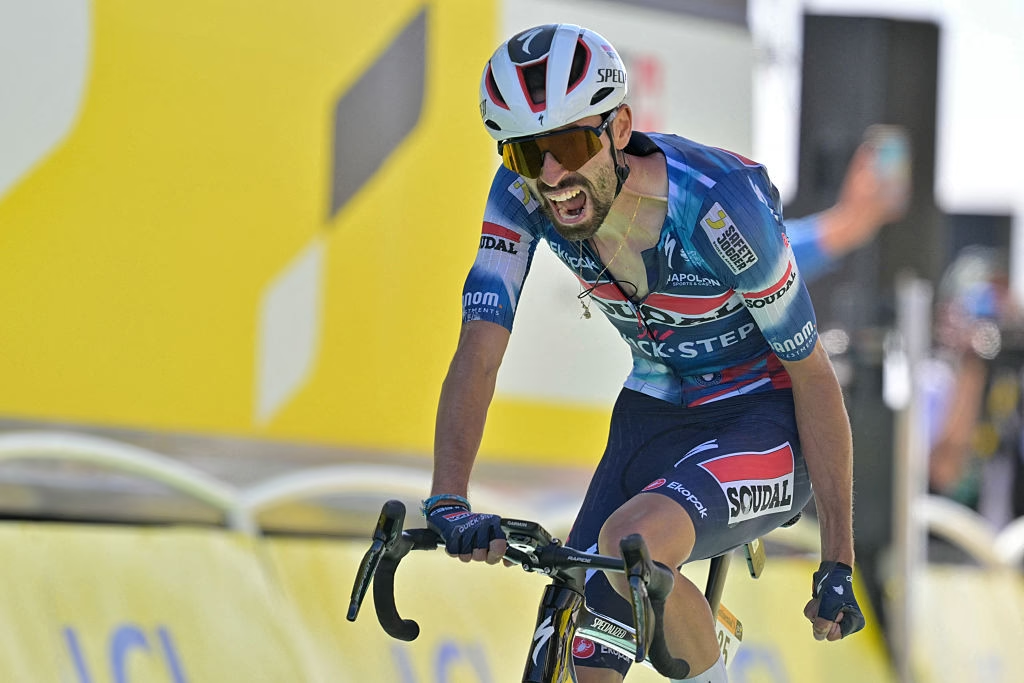 Photo Credit: Getty
Soudal-Quick-Step
Soudal-Quick-Step look like a team with several interesting cards rather than one overwhelming leader. Valentin Paret-Peintre is the most obvious rider for the climbing stages, especially if the race opens on the harder days before Leysin. Junior Lecerf is another rider to watch because Romandie can be useful terrain for developing climbers who need a serious WorldTour test.
Steff Cras and Mauri Vansevenant add more climbing and puncheur depth, while Louis Vervaeke gives the squad experience in difficult stage races. Ethan Hayter and Casper Pedersen provide a different profile, with Hayter particularly relevant if any stages become reduced, fast or tactically messy rather than purely mountainous.
The team may not be expected to control the GC battle, but it has enough variety to stay active. Paret-Peintre gives them a climbing route, Lecerf offers development upside, and Hayter gives them a way into stages that do not simply become a climbers’ procession.
Team Visma | Lease a Bike
Team Visma | Lease a Bike arrive without one of their obvious senior Grand Tour leaders, but that makes their line-up interesting in a different way. Jørgen Nordhagen, Tijmen Graat and Menno Huising give the team a strong developmental climbing thread, while Steven Kruijswijk brings the experience needed to guide a younger group through a demanding WorldTour week.
Axel Zingle offers a different kind of option in reduced finishes or rolling stages, and Pietro Mattio and Anton Schiffer complete a squad that looks more like a testing and opportunity line-up than a race-controlling one. That is not a weakness if the team uses the race intelligently.
Romandie should give Visma a clear read on its younger riders. Nordhagen in particular is worth watching on the climbing stages, while Graat and Huising can show how close they are to handling sustained WorldTour pressure. A stage win may be difficult, but a strong GC or breakaway performance from one of the younger riders would be valuable.
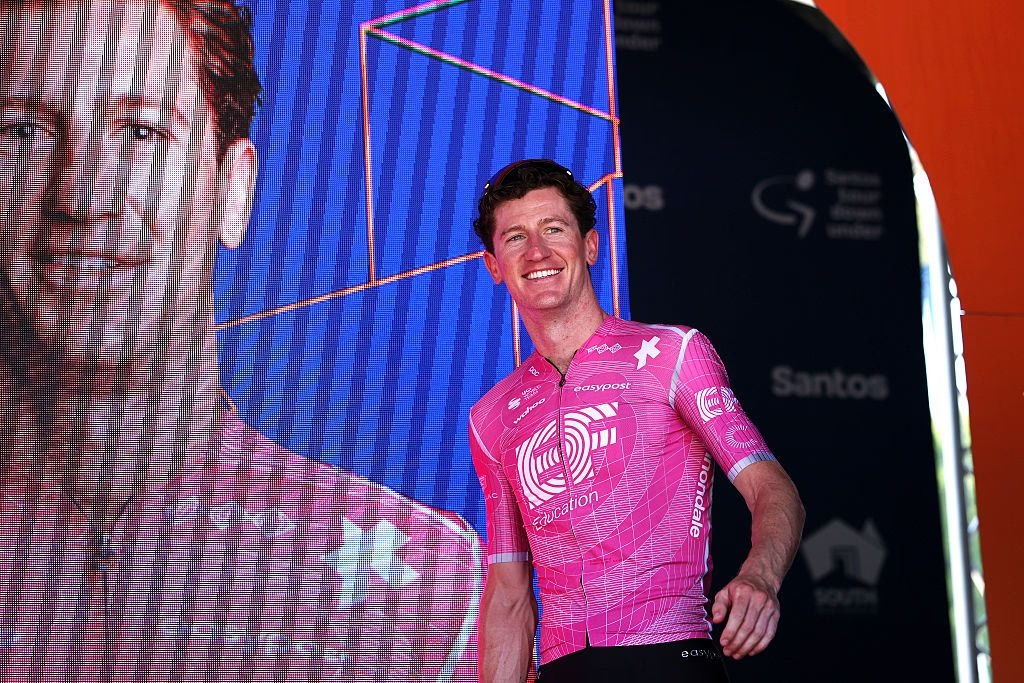
EF Education-EasyPost
EF Education-EasyPost bring a young and open line-up built around riders such as Georg Steinhauser, James Shaw, Lukas Nerurkar, Michael Leonard, Harry Sweeny, Markel Beloki and Jardi van der Lee. It is a team that looks more likely to hunt opportunities than control the general classification from the front.
Steinhauser has the profile to be active on climbing stages, while Nerurkar and Leonard give EF two developing riders who can use this race as a serious benchmark. Shaw brings climbing experience and could be useful either in support or in a breakaway if the right stage opens up.
The key for EF will be timing. If they wait for the GC favourites to settle everything, it may be difficult to break through. If they place riders in the right moves before the big teams fully commit, Romandie gives them several stages where a breakaway can become more than a holding pattern.
Movistar Team
Movistar Team bring Jefferson Alveiro Cepeda and Pablo Castrillo as their most obvious climbing and stage-hunting options. Cepeda should be well suited to the harder stages, while Castrillo has shown the kind of opportunistic aggression that can make him dangerous if the race gives space to breakaways.
Gonzalo Serrano, Jorge Arcas, Filip Maciejuk, Albert Torres and Pavel Novák complete a team that looks built more around flexibility than pure overall control. That may suit Romandie, especially if the race splits between dominant GC teams and stage-hunting squads trying to exploit the quieter moments.
Movistar’s best chance is probably not to ride defensively. Cepeda can aim for a strong GC placing if the race goes smoothly, but the team may be more threatening if it uses Castrillo or Serrano to make the race uncomfortable on stages where the favourites hesitate.
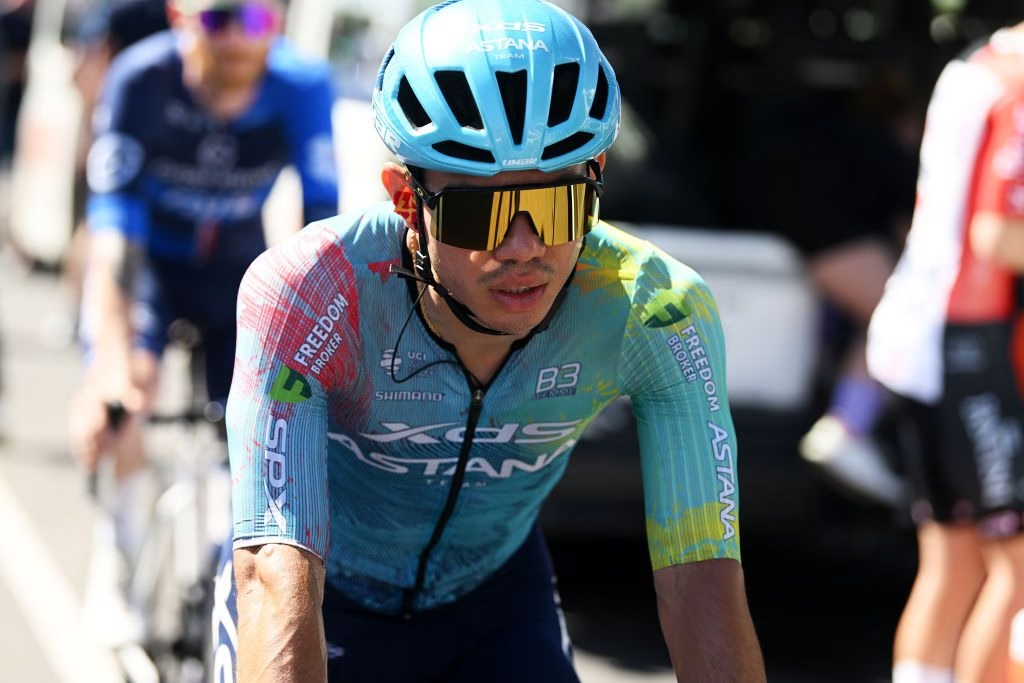
XDS Astana Team
XDS Astana Team have several riders who can make Romandie interesting, particularly Lorenzo Fortunato, Sergio Higuita and Cristian Rodríguez. Fortunato and Rodríguez give the squad climbing options, while Higuita brings punch and the ability to be dangerous if a stage becomes selective without fully breaking apart.
Florian Kajamini, Anton Kuzmin, Marco Schrettl and Davide Toneatti add depth, though the team’s main value likely sits with its climbing cards. Astana may not have the strength to control a race containing Pogačar and Roglič, but that is not really the point. Their opportunity is to be present when the race opens, not to dictate every kilometre before it does.
Fortunato’s climbing makes him the most obvious GC or mountain-stage option. Higuita may be more dangerous on a stage with a reduced group and a faster finish. If Astana can use both profiles rather than forcing one plan, they can be awkward opponents in the middle of the week.
NSN Cycling Team
NSN Cycling Team bring George Bennett, Joe Blackmore, Marco Frigo, Pier-André Côté, Alexey Lutsenko, Nadav Raisberg and Floris Van Tricht. It is a varied line-up with several ways to approach the race, from experienced climbing through Bennett to stage-hunting aggression through Lutsenko and Frigo.
Blackmore is one of the more interesting younger names in the squad, particularly on a course that gives developing climbers a proper test without the sustained brutality of a Grand Tour. Bennett brings the experience to handle mountain stages and guide the team’s approach if the race becomes attritional.
Lutsenko remains the kind of rider who can make a stage unpredictable if he finds the right moment. NSN are unlikely to dominate the race, but they have enough individual quality to be visible across several days. Their best route is probably stage hunting rather than a narrow focus on the overall.
Team Picnic PostNL
Team Picnic PostNL bring Frank van den Broek, James Knox, Timo de Jong, Dillon Corkery, Henri-François Haquin and Oliver Peace. This is not the deepest squad in the race on paper, but Van den Broek and Knox give the team two riders who can make sense of hard, rolling and mountainous stages.
Van den Broek is the most obvious attacking option. He has the strength to be useful in long moves and the kind of all-round profile that can suit Romandie’s awkward middle stages. Knox brings climbing experience and could be important if the team wants to chase a respectable GC position or target a selective breakaway.
The team’s best opportunities may come on days when the main GC squads allow a move to build. If Picnic PostNL can place Van den Broek or Knox into the right break, they can give themselves a route into the race without needing to match the top climbing squads rider for rider.
Tudor Pro Cycling Team
Tudor Pro Cycling Team bring Yannis Voisard, Marco Brenner, Roland Thalmann, Robin Donzé, Fabian Lienhard, Joel Suter and Luc Wirtgen. As a Swiss team racing on home roads, Tudor have extra reason to be visible, and Romandie offers them a useful platform to chase both stage opportunities and domestic attention.
Voisard and Brenner look like the most relevant riders for the harder terrain. Voisard gives the team a local climbing card, while Brenner brings the kind of profile that can suit selective stages if he finds the right move. Thalmann adds further Swiss experience, while Lienhard and Suter can help the team stay involved across transitional phases.
Tudor’s race will likely be judged by visibility and opportunity rather than overall control. A strong breakaway stage, a home-road performance from Voisard or a well-timed move from Brenner would all make sense. They do not need to win the GC battle to have a successful Romandie.
-
 Photo Credit: A.S.O./Billy Ceusters
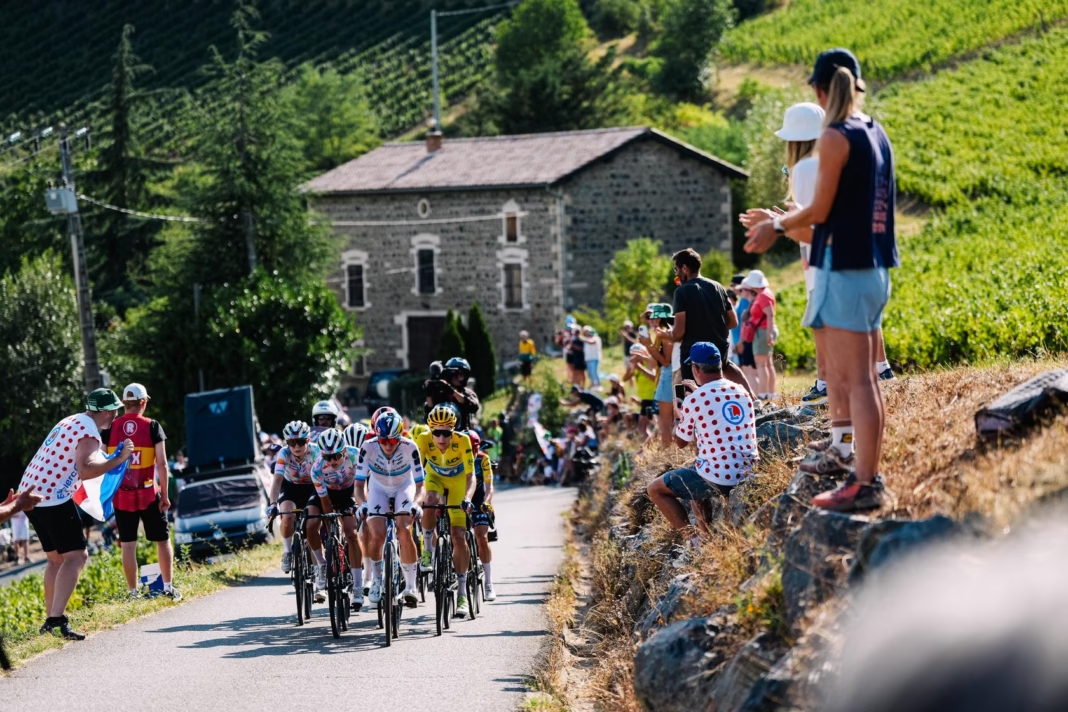
Which teams look strongest?
UAE Team Emirates-XRG and Red Bull-Bora-Hansgrohe are the two strongest teams on paper. UAE have Pogačar and enough climbing support to control the race if they choose. Red Bull-Bora-Hansgrohe have Roglič, Lipowitz and Martínez, which gives them more than one way to pressure the GC.
Bahrain Victorious are the most convincing alternative if the race becomes more open. Martinez, Tiberi and Caruso give them depth, experience and climbing options, which could be useful if the favourites begin marking each other. INEOS Grenadiers also have a strong collective line-up, with Onley as the central GC rider and enough experience around him to stay organised.
Behind them, Soudal-Quick-Step, Groupama-FDJ United, Team Jayco AlUla and Lidl-Trek look well placed for stage results and secondary GC stories. Team Visma | Lease a Bike and EF Education-EasyPost may be especially interesting for development, while Tudor Pro Cycling Team and NSN Cycling Team should be active if breakaway chances appear.
The full line-up can also be followed through the Men’s Tour de Romandie 2026 start list, which gives the race useful context alongside the individual team picture.
Men’s Tour de Romandie 2026 team-by-team verdict
The Men’s Tour de Romandie 2026 start list gives the race a strong hierarchy but enough uncertainty beneath it. Pogačar and Roglič are the obvious names around whom the race will be framed, yet the team picture is more layered than a simple two-rider contest. UAE Team Emirates-XRG have the strongest individual favourite. Red Bull-Bora-Hansgrohe have arguably the most rounded GC trio. Bahrain Victorious and INEOS Grenadiers have enough depth to make the race uncomfortable if they time their pressure well.
The route should reward teams who can manage several types of stage rather than just one mountain finish. The prologue creates early gaps, the midweek climbing stages invite pressure, and the final day to Leysin gives the race a clear overall test. That means the strongest team may not simply be the one with the best leader. It may be the one that still has useful riders left when the final climb arrives.

