Stage 3 of the Tour Down Under was a 140.8km drag from Henley Beach into the Adelaide Hills, finishing on a technical circuit in Nairne after the sting of Wickham Hill and the late rise over Mount Barker’s Summit Road. With Jay Vine in the ochre jersey and Willunga Hill looming, most teams began the day expecting a controlled chase and a reduced bunch sprint if the fast men survived the climbing and the heat.
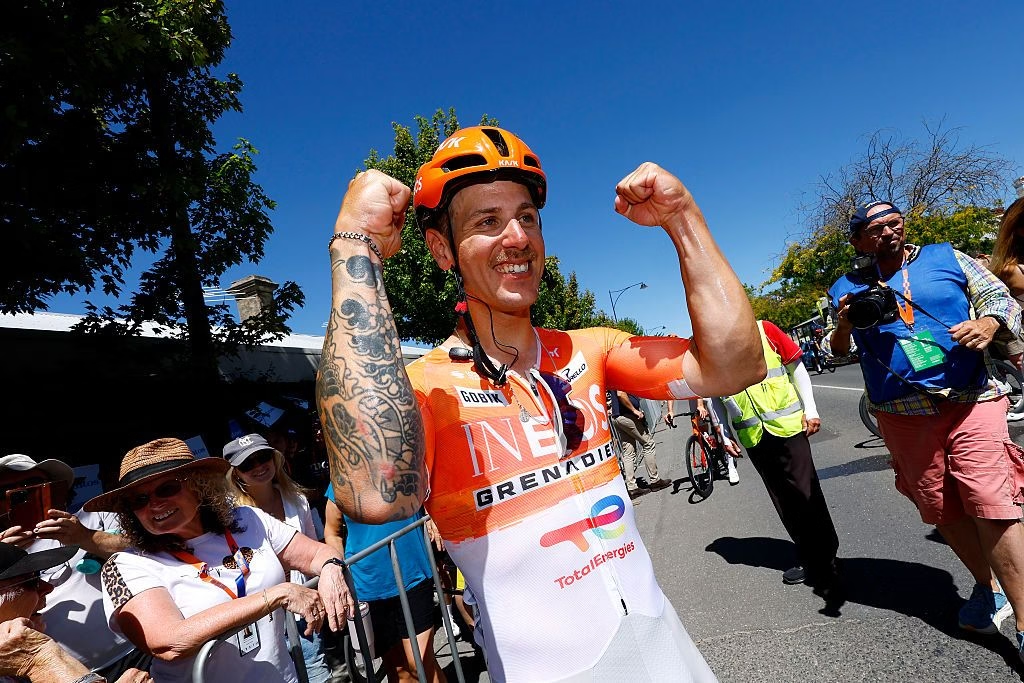
That is largely how it played out, but the final kilometres were messier than any neat script. Sam Welsford won for Ineos Grenadiers after a disorganised chase left the front of the peloton scrambling for structure, and after a late crash added further stress. The decisive moment was not the line itself but the way Ineos kept Welsford in touch over Mount Barker, then waited for the sprint to break apart before launching him in the final hundred metres.
A break that made sense and forced the teams to show their cards
A three-man move formed immediately after the flag, with Martin Urianstad, Baptiste Veistroffer and Enzo Paleni quickly given space. None of them carried a GC threat, but all three had reasons to commit: Urianstad to consolidate the mountains competition, the French pair to play for intermediate points and, just as importantly, to make the sprint teams spend riders earlier than they wanted.
Ineos, Visma-Lease a Bike and Decathlon set the tone behind, rotating through the front with a steady, controlled tempo rather than any aggressive pursuit. It was a classic Tour Down Under dynamic on a day like this: keep the break close enough to calm the bunch, but not so close that you burn your lead-out riders too early in the heat.
Wickham Hill and the quiet agreement to protect the sprinters
Wickham Hill arrived early, steep enough to expose anyone who started on the wrong side of the elastic, but too far from the finish to invite a serious GC move. The break split the points as if pre-arranged, while the peloton rode with restraint, more concerned with shepherding sprinters over the top than with lighting up the climb.
That restraint was revealing. Rather than treating the day as a chance to stress rivals, most teams were already thinking ahead to Willunga and the three ascents to come. The message was clear: spend as little as possible today, unless you were committed to the sprint.
Heat management, intermediate sprints, and a chase that never quite settled
As temperatures rose through the afternoon, the race became less about raw power and more about efficiency. The break took the intermediate sprints without serious interference, and the peloton’s priority shifted to bottles, ice socks and keeping leaders out of trouble.
Behind, the chase looked organised in theory but inconsistent in practice. Plenty of sprint teams were present near the front, yet there was rarely a single squad willing to fully commit to tightening the leash. That hesitation would matter later, because it allowed the break to keep believing, even when the gap looked manageable.
The 40km accelerations and the break’s second life
The calm finally broke around 40km from the finish when a cluster of attacks rolled through the peloton. Luke Durbridge tried to force the issue, Patrick Eddy jumped, and Santiago Buitrago’s presence in the move was enough to make several teams react sharply. The bunch fractured, snapped back together, then briefly lost rhythm.
For the break, that was a gift. Instead of being calmly reeled in, they were able to lift their pace and stretch the elastic again. Urianstad began to show the cost of his day’s work as the circuit approached, but Paleni and Veistroffer still had enough to keep the peloton honest.
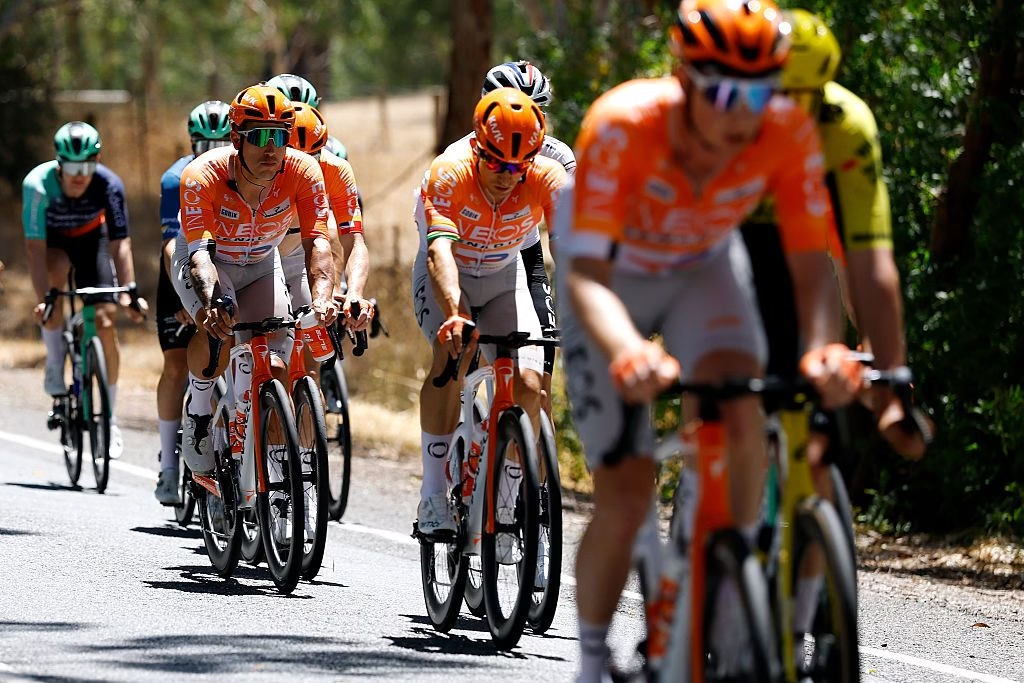 Photo Credit: Getty
Paleni’s late gamble and the sprint trains that never properly formed
On the Nairne circuit, fatigue started to rewrite the expected ending. Urianstad cracked first, then Veistroffer wavered, leaving Paleni to gamble solo, get caught, and then briefly regain contact when Veistroffer refused to fully surrender. It was the sort of stubborn resistance that forces sprint teams into a difficult choice: commit early and risk leaving your sprinter isolated, or hold your riders back and risk misjudging the catch.
The peloton chose the cautious option for too long. With 10km to go the gap was still uncomfortable, and even inside the final five kilometres, the chase looked oddly uncoordinated, with teams represented but no one dictating a clean, single-file lead. When Paleni was finally swallowed with roughly two kilometres remaining, the front of the bunch was already scrambling to assemble trains rather than executing them.
A win built on survival, then timing
Welsford’s day had been about staying in the race before it became about winning it. He later admitted he had been “on [his] absolute limit” on the final climb, and that Ben Swift’s guidance to stay patient was key when the race threatened to slip away. That detail fitted what was visible from the outside: Ineos did not chase theatrically; they simply ensured their sprinter never fell out of contention.
In the finale, Sam Watson’s work was decisive. In a finish where several lead-outs appeared and vanished within seconds, Watson delivered Welsford into clean air late, and Welsford had the acceleration to finish the job. Tobias Lund Andresen managed second from the chaos, with Lewis Bower third, but the decisive difference was Ineos having one last organised launch when others were still searching for it.
A crash in the finale added another layer of disorder, with Liam Walsh among those brought down in the finishing straight. The most important GC consequence was what did not happen: the incident came inside the final three kilometres, so Vine retained the ochre jersey without time loss, and the contenders could refocus on the decisive climbing to come.
Men’s Tour Down Under Stage 3 result
Results powered by FirstCycling.com
Main photo credit: Getty