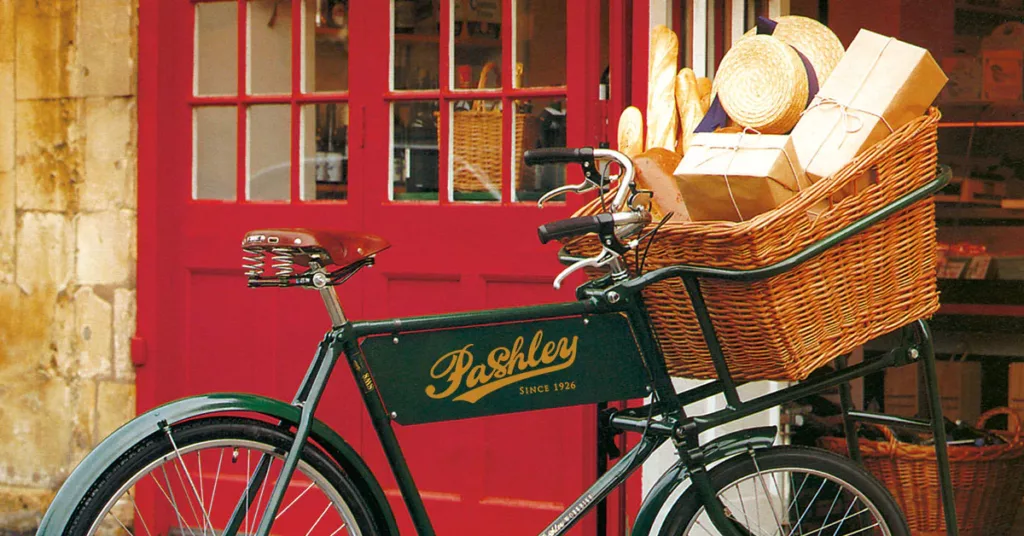
Pashley marks 100 years of bicycle production in 2026. Founded by William Rathbone “Rath” Pashley in Birmingham in 1926, the company later moved to Stratford-upon-Avon, where it continues to build bicycles. The range extends beyond traditional upright town bikes to newer road, gravel, utility and electric models.
The classic designs remain distinctive, but choose a Pashley around the journeys you intend to make. Riding position, gearing, luggage, storage and the effort of lifting the bike matter more than buying into a particular look. The original photographs below illustrate the model families; current equipment can differ from older examples.
What distinguishes the classic range?
Steel frames, upright positions and practical fittings feature prominently, with hub gears and hub brakes on several models. The details vary, so do not assume that every Pashley has the same lighting, chaincase, carrier or number of gears. Ask for the specification of the exact build you are ordering.

Pashley Princess
The Princess has the familiar low-step frame and upright position associated with Pashley’s traditional town bikes. The current Sovereign listing offers five- or eight-speed hub-gear configurations, rather than only the five-speed option found in many older descriptions.
Its equipment includes a full chaincase and rear carrier. Current specifications distinguish a dynamo-powered front light from a battery-powered rear light; do not assume both lights use the dynamo. Pashley also notes that some images show a previous generation, so confirm included fittings before ordering.
Try the bike with both feet reaching the ground as you would normally stop, then check mounting, reach and handling at low speed. A low-step frame makes access easier but does not remove the need to choose the correct size.

Pashley Britannia
The Britannia pairs a traditional frame and upright handlebar with mudguards and a chainguard. Current listings include five- and eight-speed hub-gear options. That gives a different choice from the older description of one fixed five-speed specification.
Compare the equipment with the Princess instead of judging only colour and price. A chainguard and a full chaincase provide different levels of coverage, and baskets, carriers and lighting should be checked against the chosen build. Think about what you will carry and how the bike will be secured when parked.

Pashley Parabike
The Parabike’s duplex-tube frame takes inspiration from wartime airborne bicycles. The current model is a full-size bicycle, not a folding bike. If a compact fold for trains or indoor storage is the requirement, our Brompton guide addresses a different category.
Pashley lists the Parabike with five-speed hub gears, hub brakes and mudguards. A rear carrier is offered as an extra, so do not assume the presence of mounting points means a rack is included. Check available frame sizing carefully, particularly if you need a larger or smaller fit.

Pashley Countryman
The Countryman uses Reynolds 531 steel tubing and a Shimano Alfine eight-speed hub. That corrects the older description of a Sturmey Archer eight-speed system. It is a more stripped-back interpretation of a practical steel bicycle than the fully equipped Princess.
Check the exact included equipment, especially the carrier and lighting, rather than treating an old price or photograph as a current specification. Consider how the gearing suits your local hills and whether you want to carry panniers before placing an order.
Beyond the traditional models
Pashley’s newer Pathfinder and Roadfinder families broaden the choice, and electric-assist models are also part of the range. They should be assessed separately from the classic town bikes. Our gravel-bike buying guide explains the fit, clearance and gearing questions relevant to mixed-surface riding.
The Guv’nor is a Pashley model, not a separate brand with which Pashley collaborated. Distinguishing model names from collaborations makes it easier to understand the catalogue and to search for appropriate spares.
Before buying
Confirm the model year, build specification, size, lead time and total delivered price. Prices and available options can change, so an old quoted figure is not a reliable purchase budget. If possible, test ride the model and check whether you can lift and store it comfortably.
For a used Pashley, inspect condition and identify the hub, brakes and tyre size before pricing repairs. Keep purchase records and check insurance and locking requirements for the way you will store it. A traditional appearance still needs the same practical ownership checks as any other bicycle.