
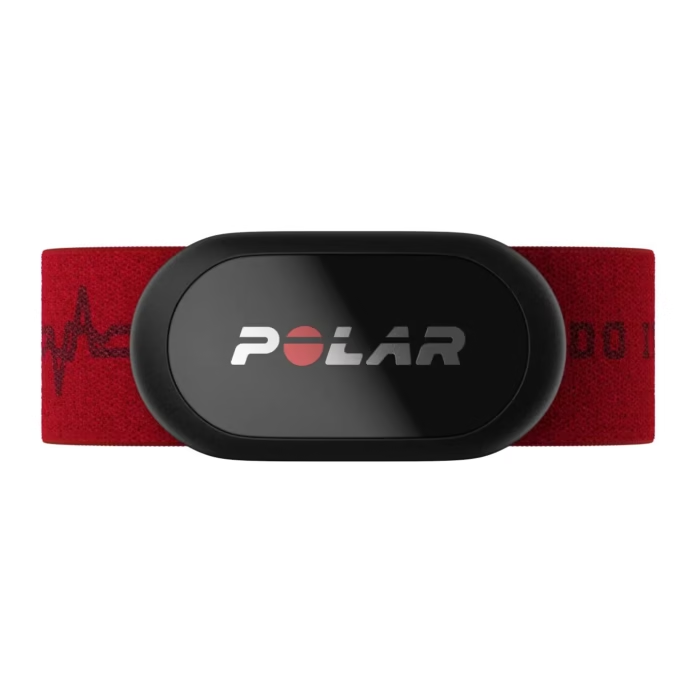
The Polar H10 is one of the most established chest-strap heart-rate monitors in cycling, and for good reason. With a UK list price of £86.50 in September 2026, it sits above basic budget straps but below more feature-heavy multisport options such as the Garmin HRM-Pro Plus.
This Polar H10 review looks at whether it still deserves its reputation as the benchmark heart-rate strap for cyclists. The short answer is yes, if accurate, stable heart-rate data matters more to you than extra running metrics, rechargeable batteries or a flashy app experience.
Check Polar H10 availability on Polar UK
Polar H10 review
The Polar H10 is a chest-strap heart-rate monitor built around ECG-style measurement rather than optical sensing. For cyclists, that matters. Wrist-based optical sensors can be useful for everyday activity tracking, but they often struggle when grip pressure, vibration, temperature changes and interval efforts all interfere at once. A good chest strap remains the cleaner option for serious training.
The H10’s appeal is not novelty. It has been around long enough to become a reference point, and that is part of its strength. It works with Garmin, Wahoo, Hammerhead, Polar, Zwift, indoor training apps, smartphones and many gym systems. It is accurate, comfortable, widely compatible and simple to live with, which is exactly what a heart-rate strap for road cycling needs to be.
Quick verdict
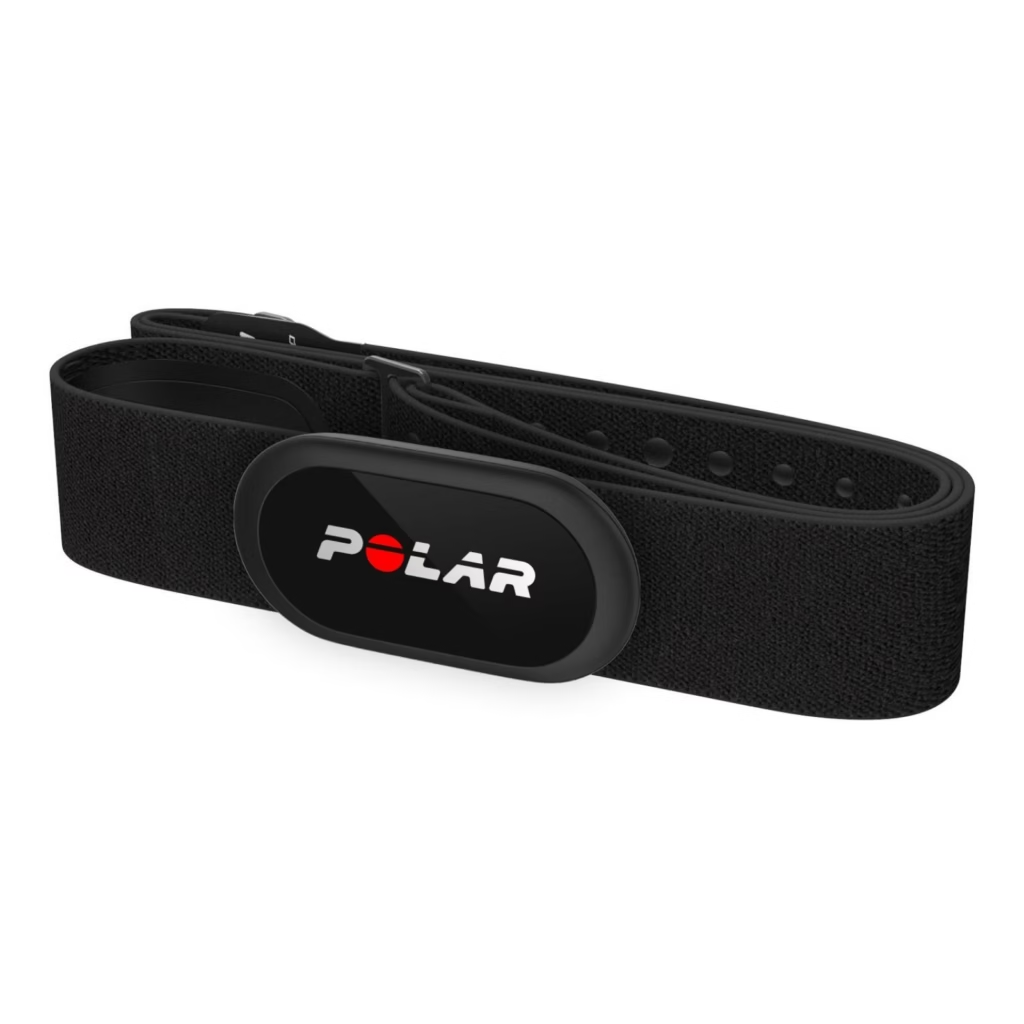
Overall verdict: The Polar H10 remains one of the best heart-rate straps for cycling because it delivers the essentials extremely well. It is accurate, stable, comfortable and broadly compatible, although riders who want rechargeable batteries or advanced Garmin-specific training dynamics may prefer other options.
Best for: cyclists who want dependable heart-rate data for road riding, turbo training, structured intervals, commuting, gravel riding and multi-sport use.
Not ideal for: riders who dislike chest straps, want a rechargeable sensor, or need Garmin running dynamics from the same strap.
Price: typically around £70 to £90 in the UK
Weight: 21g connector, 39g strap, approximately 60g total
Key specs: ECG heart-rate measurement, Bluetooth, ANT+ and 5 kHz connectivity, CR2025 battery, around 400 hours of battery life, 30m water resistance, one-session internal memory and Polar Pro strap.
Reasons to buy
- Excellent heart-rate accuracy during steady riding and hard intervals
- More reliable than wrist-based optical sensors on the bike
- Bluetooth, ANT+ and 5 kHz connectivity gives wide compatibility
- Comfortable Polar Pro strap with silicone grip dots
- Long battery life from a replaceable CR2025 cell
- Works well with Garmin, Wahoo, Zwift, Polar apps and many training platforms
Reasons to avoid
- Still more expensive than basic heart-rate straps
- Chest-strap fit will not suit every rider
- Uses a replaceable coin cell rather than USB charging
- No Garmin running dynamics or cycling-specific metrics beyond heart rate
- One-session memory is useful but limited compared with more advanced wearables
Product overview
The Polar H10 sits in a fairly simple but important category: the serious heart-rate strap. It is not trying to be a smartwatch, GPS computer or training platform on its own. Its job is to measure heart rate accurately and send that data reliably to the device you already use.
For cyclists, that will usually mean a Garmin Edge, Wahoo Elemnt, Hammerhead Karoo, Polar watch, Zwift set-up, training app or smart trainer environment. Pairing over Bluetooth and ANT+ means it fits into most modern cycling ecosystems without fuss. The addition of 5 kHz transmission also keeps it useful for some gym equipment and swimming scenarios.
The closest alternatives include the Garmin HRM-Dual, Garmin HRM-Pro Plus, Wahoo Trackr Heart Rate, Wahoo Tickr, 4iiii Viiiiva, Coospo H808S and Polar’s own H9. The H10 does not win by being the cheapest, and it does not have the most sport-specific bonus features. It wins because it is consistently accurate and easy to trust.
That makes the Polar H10 heart-rate strap for cycling a strong choice for riders using heart rate to guide endurance rides, zone two work, threshold sessions, indoor intervals and race-day pacing.
Design and construction
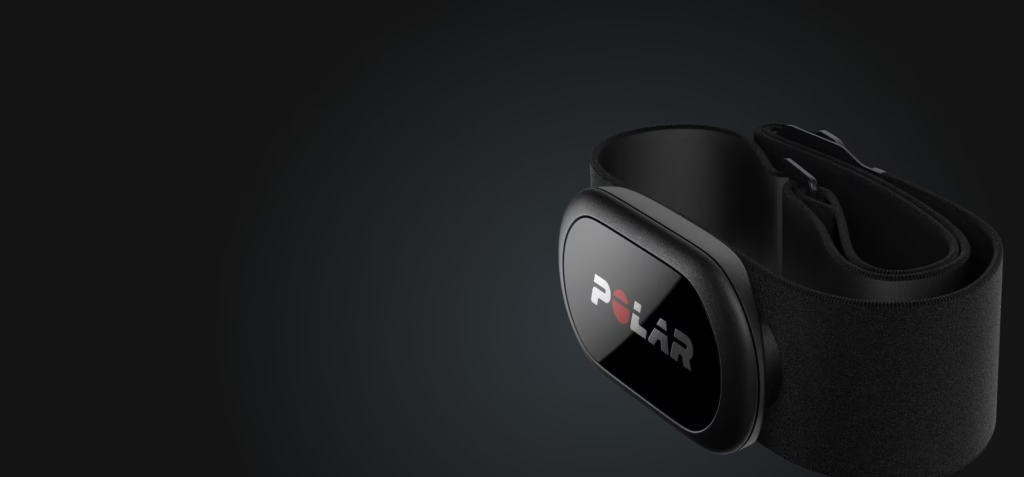
The Polar H10 is made up of two parts: the small sensor pod and the Polar Pro chest strap. The connector measures 34mm x 65mm x 10mm and weighs 21g, while the strap adds another 39g. Together, the system is light enough that it disappears under a base layer once fitted properly.
The sensor pod clips into the strap using two press studs. That makes it easy to remove after each ride, which is important for battery life and strap care. Leaving a sensor connected to a damp strap can drain the battery more quickly, so unclipping it after training is a useful habit.
The Polar Pro strap is a major part of why the H10 works so well. It uses improved electrodes, a firm buckle and silicone grip dots to keep the strap stable against the skin. That stability matters during cycling because body movement is not the only issue. Breathing, sweat, jersey pressure, road vibration and changes in posture can all affect contact quality.
The strap is soft enough for long indoor rides and winter base miles, but it holds its position better than many cheaper straps. It is not invisible, because no chest strap really is, but after a few minutes it becomes easy to forget. Riders who already tolerate chest straps should find the H10 comfortable. Riders who dislike chest straps altogether may be better served by an optical armband such as the Polar Verity Sense.
Water resistance is rated to 30m, so sweat, rain and washing are not a concern when used properly. The strap itself is machine washable once the sensor pod is removed, which is important for any rider doing regular turbo sessions. Few accessories collect sweat quite as reliably as a heart-rate strap.
Setup and ease of use
Setup is straightforward. Moisten the electrode areas, fasten the strap around the chest, clip in the sensor, then pair it with your head unit, watch, phone app or training platform. On a Garmin Edge, Wahoo Elemnt and indoor training apps such as Zwift, the process is quick and familiar.
The H10 can transmit over Bluetooth and ANT+, which is a practical advantage for cyclists with several devices. You can pair it with a head unit for outdoor rides, a laptop or Apple TV for indoor training, and a phone app for off-bike sessions. It can also maintain more than one Bluetooth connection, which is useful if you want heart-rate data going to a training app and a second device at the same time.
Polar’s own app support is useful without being overbearing. Firmware updates are handled through Polar Beat or Polar Flow, and the H10 can record one training session using its internal memory. That standalone recording is not something most cyclists will use every day, but it is handy for gym work, travel, swimming or sessions where you do not want to carry a watch or phone.
Battery management is simple. The H10 uses a CR2025 coin cell and is rated for around 400 hours of use. Some riders will prefer a rechargeable unit, especially now that USB-C is becoming standard across cycling electronics, but the H10’s long battery life means it rarely becomes a nuisance. Carrying a spare coin cell before a trip or training camp is still sensible.
The only real setup issue is strap discipline. The electrodes need moisture, the strap needs to sit firmly, and the sensor should be unclipped after use. If you treat it casually, you may get occasional dropouts or early battery drain. Used properly, it is one of the least troublesome pieces of training kit you can own.
Real-world performance of the Ppolar H10 Heart Rate Monitor
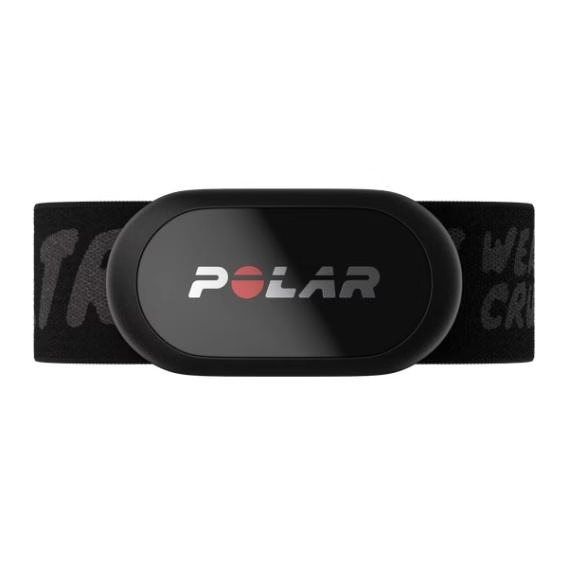
The Polar H10’s strongest quality is that it rarely draws attention to itself. Across steady endurance rides, harder tempo efforts and sharp indoor intervals, the readings behave as expected. There are no strange early spikes once the strap is properly moistened, no obvious lag when moving through zones, and no drifting numbers when the effort is steady.
That reliability is exactly why chest straps still matter for cyclists. A wrist sensor can look perfectly adequate during a steady spin, then lose the plot during cold starts, rough roads or short interval work. The H10 is much better when efforts change quickly. During over-under intervals, threshold blocks and repeated accelerations, it tracks the rise and fall in effort cleanly.
Indoor riding is where the H10 becomes especially useful. Turbo sessions create heavy sweat, high body temperature and repeated changes in effort. The strap stays in place well, and the sensor maintains a stable signal when paired to Zwift or a head unit. That makes it a strong option for structured training, where inaccurate heart-rate data can distort pacing and post-ride analysis.
On the road, the biggest benefit is consistency. During winter endurance rides, when gloves, jackets and road vibration make wrist-based sensing less reliable, the H10 continues to give usable data. It is also more dependable on rougher lanes and gravel tracks, where wrist movement and handlebar pressure can affect optical readings.
Comfort is good for long rides, provided the strap is adjusted correctly. Too loose and it can move, too tight and it becomes irritating under bib straps or a close-fitting base layer. Once dialled in, the Polar Pro strap spreads pressure well and avoids the scratchy feeling that cheaper straps can develop after a couple of hours.
There is still no getting away from the fact that it is a chest strap. Some riders simply do not like that sensation, particularly during hot indoor sessions or long summer rides. The H10 is comfortable by chest-strap standards, but an optical armband remains the better choice for riders who value comfort over the final margin of accuracy.
Connectivity is one of the H10’s quiet strengths. It pairs cleanly with Garmin and Wahoo head units, smart trainers, smartphones and training apps. The dual Bluetooth support is helpful in modern indoor setups, where it is common to have a laptop, phone, watch and head unit all competing for sensor data. The Polar H10 heart-rate monitor for road cycling handles that complexity better than many cheaper straps.
The battery life also makes a difference over time. A rechargeable strap can be convenient, but it also gives you one more thing to charge. The H10’s coin cell lasts long enough that it becomes a background item. Replace the battery when needed, keep the strap clean, and it continues working with minimal fuss.
The main disappointment is that the H10 does not add many cycling-specific extras. There are no running dynamics, no advanced Garmin ecosystem features and no power-style cycling metrics. That is not really its job, but it is worth knowing before buying. This is a heart-rate strap first, and a very good one, rather than a broader performance sensor.
Heart-rate accuracy and cycling performance
For cycling, heart-rate accuracy is not only about the average number at the end of a ride. It is about how quickly the strap responds when effort changes, how stable the reading remains when the rider is sweating heavily, and whether the data can be trusted during sessions that depend on tight pacing.
The Polar H10 performs strongly across those situations. During long zone-based rides, it avoids the small but frustrating fluctuations that can make pacing harder than necessary. During intervals, it responds smoothly enough to show effort changes clearly, without the lag often seen from wrist-based optical sensors.
That makes it particularly useful for riders who train with heart-rate zones. Power meters have become more common, but heart rate still has value because it shows the body’s response to effort. On tired days, hot days or long climbs, heart rate can reveal what power alone misses.
The H10 is also useful for heart-rate variability work, where beat-to-beat accuracy matters. Riders using HRV for recovery monitoring, morning checks or deeper training analysis will be better served by an ECG chest strap than by most wrist-based sensors.
For racing, the benefit is more subtle. Few riders are staring at heart rate deep in a criterium, road race or hard sportive group. The data is more useful afterwards, helping to understand effort distribution, fatigue and whether the race was limited by legs, fuelling or pacing. The H10 gives clean enough data to make that analysis worthwhile.
How it compares
The Garmin HRM-Dual is the most direct alternative for many cyclists. It is usually cheaper, simple and compatible with ANT+ and Bluetooth. For riders who just want basic heart-rate broadcasting to a Garmin or Wahoo head unit, it remains a sensible option. The Polar H10 feels more refined, has stronger app support and offers internal memory, but the Garmin HRM-Dual is better value if you only need simple data transmission.
The Garmin HRM-Pro Plus is the more feature-rich rival. It adds running dynamics, offline activity recording and deeper Garmin ecosystem integration. It is a better choice for runners, triathletes and Garmin users who want extra metrics from one strap. For cyclists who mainly want accurate heart rate, the Polar H10 is cheaper, simpler and arguably more focused.
The Wahoo Trackr Heart Rate is an interesting modern alternative because it uses a rechargeable battery. That will appeal to riders who dislike coin cells and want their heart-rate strap to fit the same charging routine as other electronics. The Polar H10 still feels like the safer accuracy-first choice, but the Wahoo makes sense for riders already using Wahoo head units and looking for a rechargeable design.
The Polar H9 is the budget in-house option. It shares much of the basic heart-rate accuracy appeal but lacks some of the H10’s advanced features, including internal memory and the same level of connectivity flexibility. If price matters most, the H9 is a strong buy. If you want the best Polar strap, the H10 is still the one to choose.
The 4iiii Viiiiva is a clever alternative for indoor riders because it can act as an ANT+ to Bluetooth bridge. That makes it useful in some Zwift and smart trainer setups. As a pure heart-rate strap, though, the Polar H10 alternative conversation still comes back to accuracy, comfort and reliability, where the H10 remains very hard to beat.
-
 Photo Credit: Luc Claessen/ISPA
 -
 Photo Credit: Unsplash / Chris Linnett


Value
The Polar H10 is not a budget heart-rate monitor. Cheaper straps can be found for less than half the price, and some of them work perfectly well for casual riding. The question is whether the extra spend buys something useful.
For regular cyclists, it does. The H10’s value is in the quality of the data and the lack of irritation. It pairs easily, stays connected, sits comfortably, lasts a long time on one battery and gives readings that can be trusted during real training. Those are not glamorous features, but they are exactly what matter when a device is used several times a week.
The value case is strongest for riders doing structured training. If you use heart-rate zones, indoor workouts, recovery analysis or HRV, the H10 is a better investment than a cheap strap that occasionally drops out or gives erratic numbers. Bad data is worse than no data when it leads to poor training decisions.
It is less compelling if you only glance at heart rate occasionally. For commuting, casual weekend riding or general fitness tracking, a cheaper strap or optical armband may be enough. The Polar H10 heart-rate strap for UK cyclists is best justified by riders who actually use the data.
Verdict
The Polar H10 remains a benchmark heart-rate strap for cyclists because it gets the fundamentals right. It is accurate, comfortable, widely compatible and dependable across road riding, indoor training, gravel rides and harder interval sessions. It does not try to be more complicated than it needs to be.
For riders using heart rate seriously, it is easy to recommend. The readings are stable, the strap holds position well, and the broad compatibility means it can move between Garmin, Wahoo, Zwift, Polar apps and other training platforms without turning every ride into a pairing exercise.
Riders who dislike chest straps should look elsewhere, probably towards the Polar Verity Sense or another optical armband. Garmin-focused runners and triathletes may also prefer the HRM-Pro Plus for its extra metrics. For cyclists who mainly want accurate heart-rate data, though, the H10 remains the cleaner and more focused choice.
The single biggest reason to buy the Polar H10 heart-rate monitor is the confidence it gives in the data. The single biggest reason to hesitate is that it is still a premium chest strap in a market where cheaper options can be good enough for casual use.
Rating: 4.5/5

