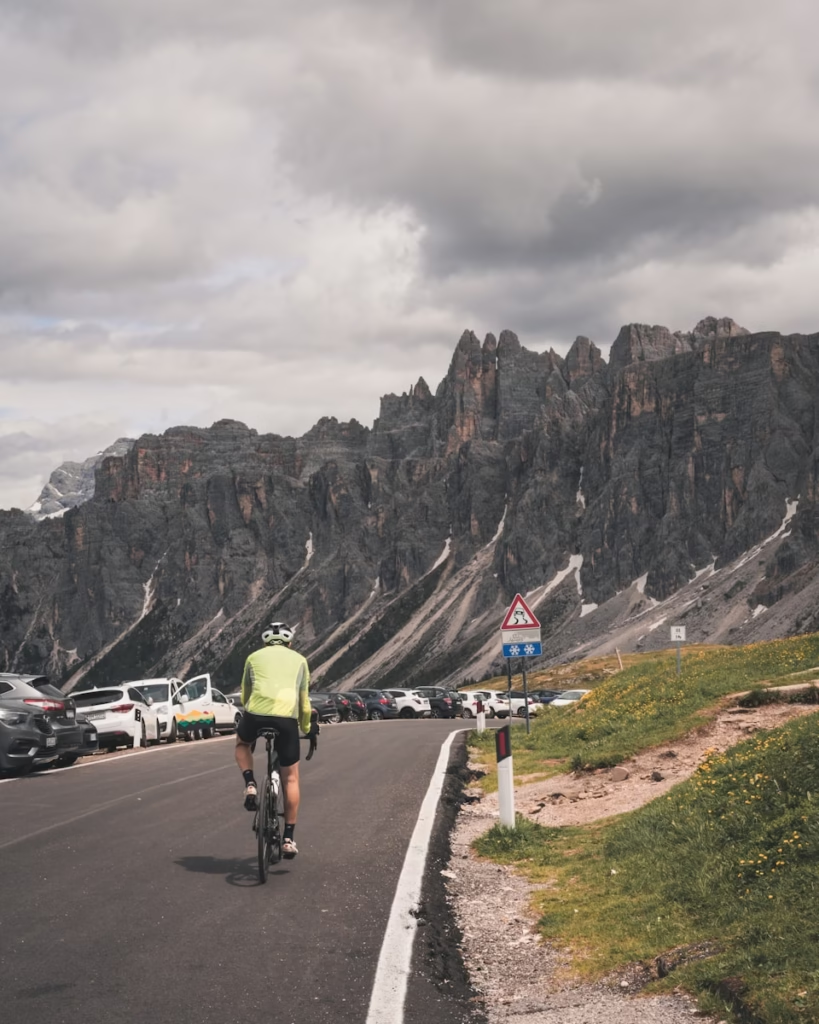
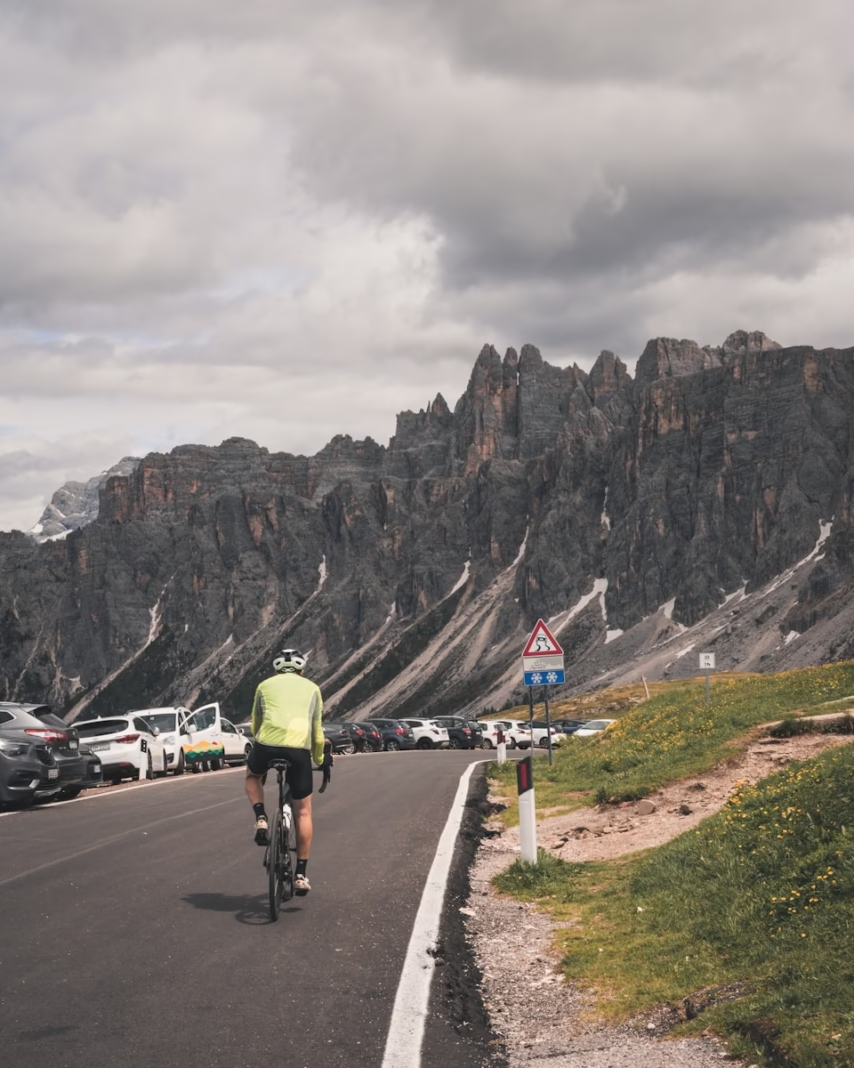
There is a moment, somewhere on the upper slopes of Passo Giau, when the road tilts past ten per cent, and the pine forests fall away, and the world becomes nothing but grey limestone towers, empty sky, and the sound of your own breathing. The Dolomites do not ease you in. They reveal themselves all at once, in their full, vertiginous, almost implausible scale, and the effect on a cyclist who has never seen them before is something close to shock. This is not the gentle undulation of Chianti, nor the long valley roads of Provence. It is something altogether more dramatic, more demanding, and, when the light catches the pale rock in the hour before sunset, more beautiful than almost anywhere else on earth.
Cortina d’Ampezzo sits at the centre of all of it. The town occupies a broad, sun-filled bowl in the heart of the Ampezzane Dolomites at around 1,224 metres, ringed by some of the most extraordinary mountain architecture in the world. The Tofane group rises to the north-west, the Cristallo massif to the north-east, and the Cinque Torri and Nuvolau above and beyond to the south. Every road out of town climbs, and climbs hard, and at the top of each one waits a different version of the same staggering view. For a cyclist who enjoys suffering with purpose, there are few places on earth quite like it.
Cortina has been a destination for the European wealthy since the late nineteenth century, when the first mountain hotels opened along the valley and the Dolomites began to attract the attention of artists, mountaineers, and holidaymakers from Vienna and Munich. The town hosted the Winter Olympics in 1956, and is doing so again in 2026, a fact which has brought considerable investment in infrastructure but which also means that parts of the town and surrounding roads are subject to ongoing construction. Despite the glamour of its boutiques, its Porsche Cayennes and its celebrity visitors, Cortina retains a deep, unhurried connection to the mountains that surround it, and cyclists who venture here quickly discover that the culture of the town is as much about the outdoors as it is about being seen on the Corso Italia.
The cycling here belongs to a particular tradition. These are roads that the great Italian champions have ridden, roads that have appeared on the Giro d’Italia route sheets since the early years of the race, roads where Coppi rode and Pantani flew and Marco Pantani attacked on the Fedaia in 1998 to produce one of the most famous stage finishes in the race’s history. To ride here is not merely to exercise. It is to participate in something much older and more richly layered, a story told in gradient and granite and the faded posters of champions in the windows of Cortina’s sporting shops.
 Photo Credit: Wolfgang Moroder
The Character of Dolomite Cycling
Before describing individual climbs, it is worth understanding what makes cycling in the Dolomites different from riding in other mountain ranges. The Alps, the Pyrenees, even the Massif Central, all share a broadly similar character: long valleys leading to long climbs, the gradient building steadily over many kilometres before the road tilts and the real work begins. The Dolomites operate differently. The passes here are concentrated, compressed. The valleys are narrower and the ascents shorter but frequently steeper, delivering the full altitude gain in fewer kilometres and at a more punishing average gradient. You are rarely more than twenty kilometres from the next summit, and the roads between them twist and switchback with an abandon that reflects the geological improbability of what the engineers who built them actually achieved.
The rock itself is part of the riding experience in a way that feels unique. Dolomite limestone, named after the eighteenth-century French geologist Déodat de Dolomieu, weathers into shapes that seem barely geological, more like the product of some enormous creative ambition. Pillars, towers, spires and walls of pale grey-white stone line the upper sections of the major climbs, and the contrast between the dark pine forests of the lower slopes and the bare rock above the treeline is one of the defining visual experiences of the Dolomites. In the early morning, the stone is cold and grey. By midday, under a deep blue sky, it is almost white. And in the hour before sunset, the phenomenon the local Ladin people call the enrosadira transforms the towers into shades of pink, amber and deep red, a process so startling that it is easy to stop pedalling entirely and simply stare.
The road surfaces in the Dolomites are generally excellent. The major passes are maintained to a high standard, partly because of the tourist traffic and partly because of the cycling events that use them, and the tarmac on climbs like the Giau, the Falzarego and the Pordoi is smooth and well-edged. There are sections of older road on some of the quieter passes where the surface is rougher and the corners tighter, but nothing that would give a road bike serious trouble on a dry day. In wet conditions, the descents demand real respect. The limestone dust that washes onto the road surface in rain can be as slippery as ice, and the hairpins on the steeper climbs require precise braking and careful line choice.
Traffic is a consideration that varies considerably by time of day and season. In July and August, the major passes can be busy with tourist traffic, campervans and motorcyclists, particularly from mid-morning onwards. The solution is simple and well-understood by experienced Dolomite cyclists: start early. A six o’clock departure from Cortina puts you on the upper slopes of the Giau or the Falzarego well before the coaches and hire cars begin their slow convoys, and in the cool mountain air of an early summer morning, with the light just beginning to warm the towers above and the road entirely to yourself, the riding takes on a quality that is very difficult to describe to anyone who has not experienced it. The Dolomites in the early morning belong entirely to cyclists.
The local cycling culture is strong and genuine. On any summer morning, the cafés along the Corso Italia are full of riders in club kit, discussing routes and comparing times, and the roads out of Cortina see a steady flow of cyclists from first light. Unlike some mountain destinations that attract only the ultra-serious racer type, Cortina draws an unusually wide range of riders, from those attempting every major pass in a single week to day visitors content with a single ascent and a long lunch at the top. The rifugio culture, the mountain huts that sit at or near the summits of most of the major passes, is an essential part of the Dolomite cycling experience, and the tradition of sitting outside a rifugio in cycling kit with a coffee and a plate of something substantial, the valley falling away below you, is one of the more civilised habits that the mountains have produced.
Passo Giau: The Crown of the Ampezzane
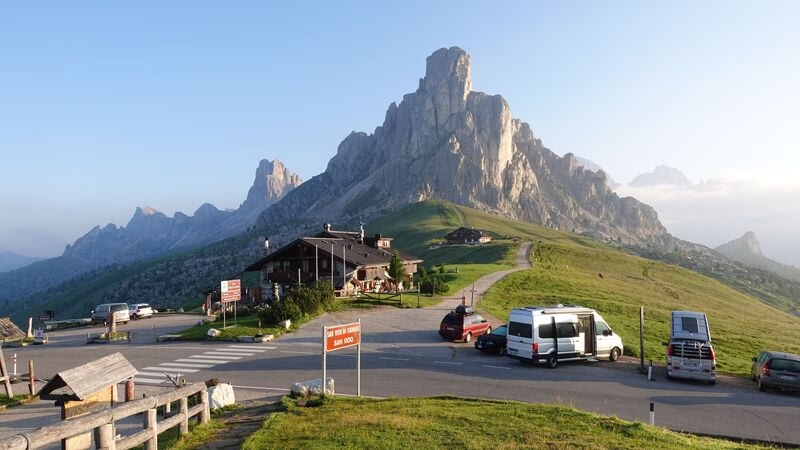
If you ride only one climb from Cortina, ride the Giau. This is not the universal opinion, and serious arguments can be made for the Fedaia’s brutality or the Falzarego’s grandeur, but the Giau possesses a combination of qualities that sets it apart from any other climb in the region. It is extraordinarily beautiful, relentlessly steep, and completely exposed from about halfway up, leaving you suspended between the valley far below and the rock faces of the Nuvolau and the Averau above in a way that feels like the mountain is testing you with its own eyes.
The climb from Cortina begins at the southern edge of town, leaving the Corso Italia behind and rising quickly through the small village of Pocol before the road begins to bite in earnest. The lower section winds through forest, the gradient averaging around eight per cent but occasionally spiking harder on the tighter corners, and for the first five or six kilometres, you are enclosed by trees and can only sense the scale of what is above. Then the treeline breaks and the full drama of the upper mountain is revealed all at once: the road switchbacking up an open grass and scree slope, the pale towers of the Nuvolau directly ahead, the valley of Cortina now a long way down to the right.
The upper section of the Giau averages over nine per cent and reaches twelve or thirteen per cent on some of the steeper ramps, and the altitude, already above 1,800 metres on the upper slopes, adds its own quiet tax on the legs. The summit at 2,236 metres is reached after approximately nine kilometres of climbing from Pocol, and the view from the top encompasses an enormous sweep of Dolomite terrain: the Marmolada glacier to the south-west, the Pelmo to the south, the Falzarego and Lagazuoi to the west, and on clear days the distant profile of the Ortler group far to the north-west.
The Rifugio Giau at the summit is a proper mountain hut, not a tourist trap, and the food served there, typically polenta, speck and local cheeses along with excellent coffee, is exactly what the body needs after the ascent. The descent on the far side, down towards Colle Santa Lucia and the Agordino valley, is steep and technical and demands full attention, but those who continue rather than turning back at the summit are rewarded with views from the southern side of the pass that are entirely different from what they have already seen, a reminder that the Dolomites look completely different depending on which direction you are approaching from.
The Giau has featured in the Giro d’Italia on numerous occasions, and its reputation among serious cyclists is well established. When the race arrives here, usually in the final week, the climb has already sorted the field, and what reaches the Giau is a small group of the best climbers in the world. To ride the same road, even at a fraction of their pace, is one of those experiences that reminds you why you started cycling in the first place.
Passo Falzarego and Valparola: The Western Gateway
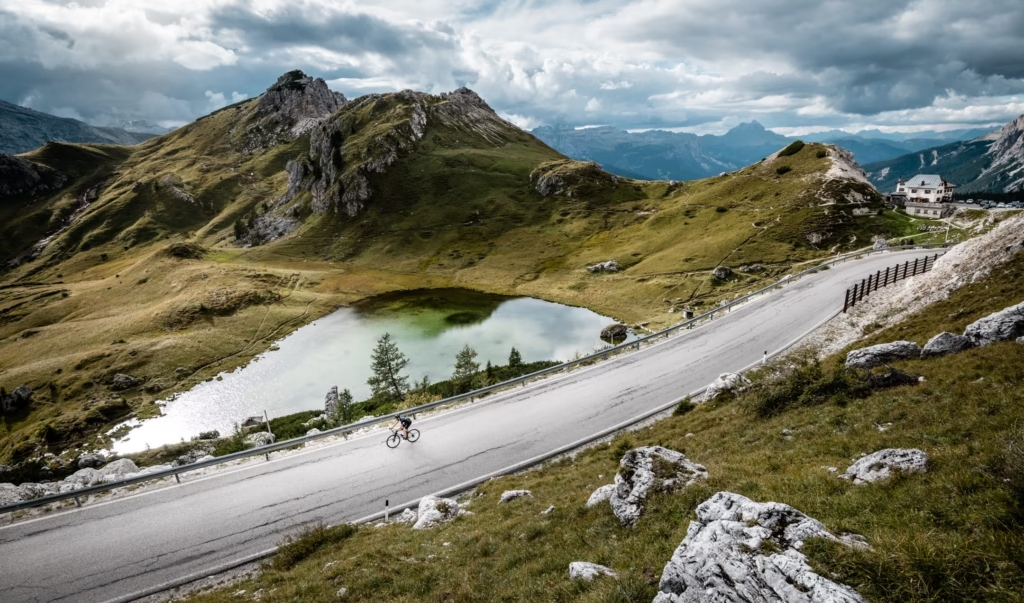
The Falzarego is the most storied of the passes immediately accessible from Cortina, a long, sweeping climb of around fourteen kilometres from the town that forms the western gateway to the Ampezzane and serves as the natural introduction to the broader world of Dolomite pass-hunting. The gradient is more consistent and more forgiving than the Giau, averaging around five per cent from the valley floor with occasional steeper sections, and the road is wide and well-surfaced, which makes it a popular choice for cyclists wanting to build into Dolomite climbing rather than being immediately overwhelmed.
The ascent from Cortina follows the main SS48 road westwards, and for the first several kilometres it shares its route with tourist traffic heading for the Arabba valley and beyond, which means it is best ridden early in the day. The road climbs through the village of Pocol, past the junction for the Giau, and then continues west along a broad shelf with the Tofane group increasingly dominant to the north and the extraordinary rock walls of the Lagazuoi rising directly above the road on the approach to the summit. The Lagazuoi, riddled with tunnels dug by Italian and Austro-Hungarian forces during the First World War, has a particular gravity on this stretch of road that you feel even without knowing the history.
The summit of the Falzarego at 2,105 metres is marked by a rifugio and a cable car station, and the views from the top extend westward to the Marmolada and southward towards the peaks of the Pelmo and the Civetta. In the Giro, the Falzarego has served as both a summit finish and a launching pad for attacks towards subsequent climbs, and the section from the summit down into the Armentarola valley and up to the Campolongo is one of the most enjoyable stretches of riding in the region, an undulating passage between passes where momentum carries you through the curves and the Dolomite scenery unfolds in continuous succession.
A short distance before the summit of the Falzarego, a smaller road branches off to the right and climbs to the Passo Valparola at 2,192 metres. This road, quieter and narrower than its neighbour, passes through the ruins of a small Austro-Hungarian fortress and reaches its summit in about four kilometres of additional climbing. The Valparola is less visited than the Falzarego, and the views from it have a rawer, less touristic quality, a genuine sense of being very high up in the mountains with very little company. Riders combining the Falzarego with the Valparola are rewarded with an extended summit section that offers one of the best viewpoints in the entire region, looking back east towards Cortina and north towards the Austrian border with the whole extraordinary topography laid out below.
Passo Tre Croci: The Quiet Eastern Road
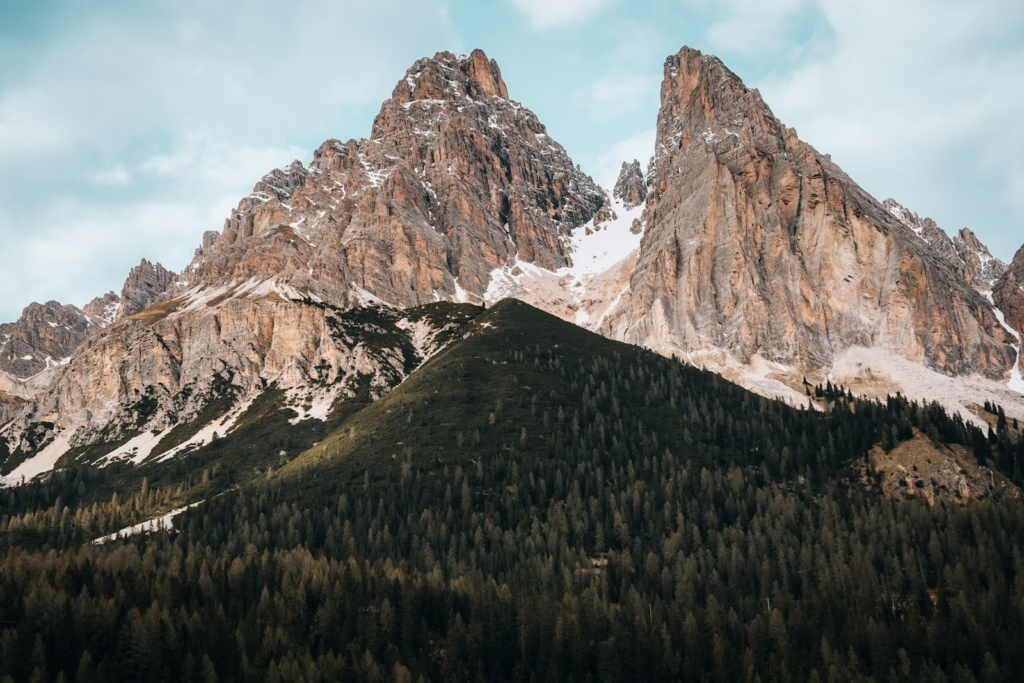
Not every climb from Cortina needs to be a battle. The Passo Tre Croci, rising to the east of town at 1,805 metres, is the most accessible of the major passes and the most appropriate introduction for cyclists arriving in Cortina for the first time, still acclimatising to the altitude and the scale of the mountains. The ascent from the town centre is around six kilometres at a modest average gradient of around four per cent, the road winding through forest with occasional clearings that offer views back towards the Cristallo massif looming above the northern edge of Cortina.
The Tre Croci does not announce itself with the drama of the Giau or the historical weight of the Falzarego. What it offers instead is something subtler: a genuinely pleasant climb through beautiful mountain forest, a well-maintained road with manageable gradient, and a summit that serves as the starting point for several excellent onward options. Beyond the pass, the road descends into the Val d’Ansiei towards Misurina and, eventually, the road to the Tre Cime di Lavaredo, one of the most famous rock formations in the Alps and accessible by bicycle on a toll road from Misurina. The climb to the Auronzo hut below the Tre Cime is steep and relentless, but the reward at the top, three enormous rock towers rising directly from the plateau, is something that photographs genuinely fail to capture.
The descent from the Tre Croci towards Misurina is fast and flowing, with long straight sections separated by well-cambered corners, and the road surface is excellent. The lake at Misurina, sitting in a wide valley with a direct view towards the Tre Cime, is one of those places where it is almost impossible not to stop and simply look. Returning to Cortina from Tre Croci offers a different perspective on the town, descending back through the trees with the valley opening below and the Tofane suddenly appearing ahead as you drop through the final kilometres.
Passo Pordoi: The Cima Coppi
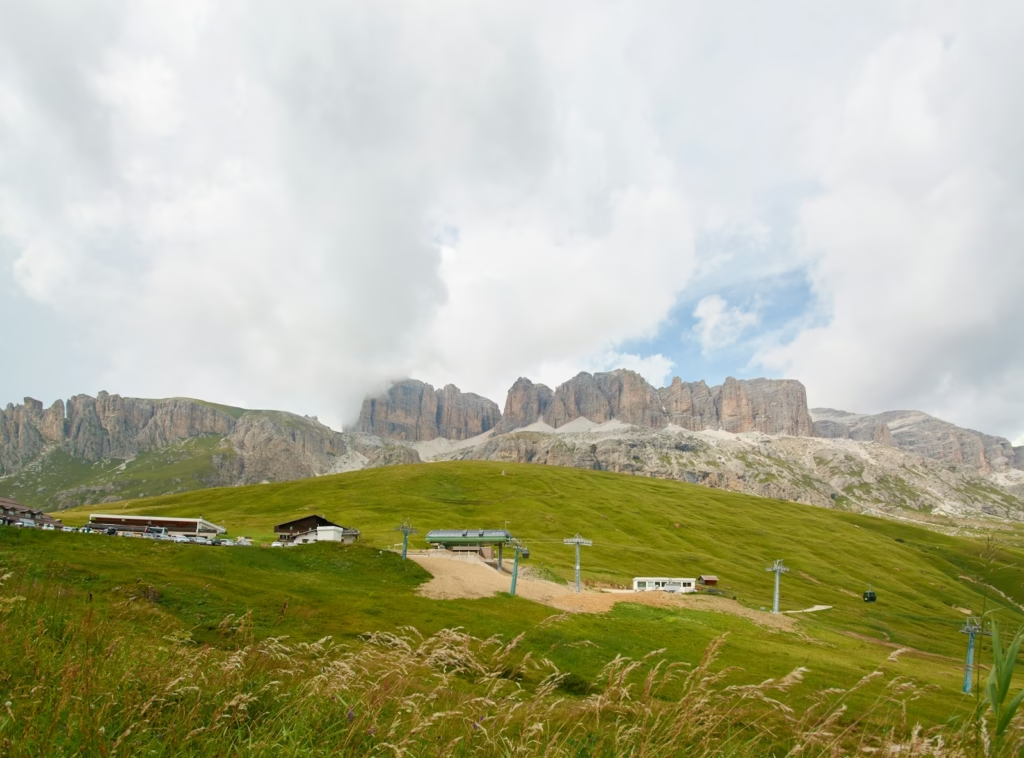
To ride to the top of the Passo Pordoi is to arrive at the highest paved pass in the Dolomites and one of the most famous summits in all of cycling. At 2,239 metres, the Pordoi has served as the Cima Coppi, the highest point of the Giro d’Italia, more times than any other climb, and the statue of Fausto Coppi that stands near the summit is one of the great monuments of the sport. To reach it from Cortina requires first crossing the Falzarego and descending into the Arabba valley, adding a substantial approach to what is already a significant climb, but the whole circuit represents one of the finest days of cycling in the Dolomites.
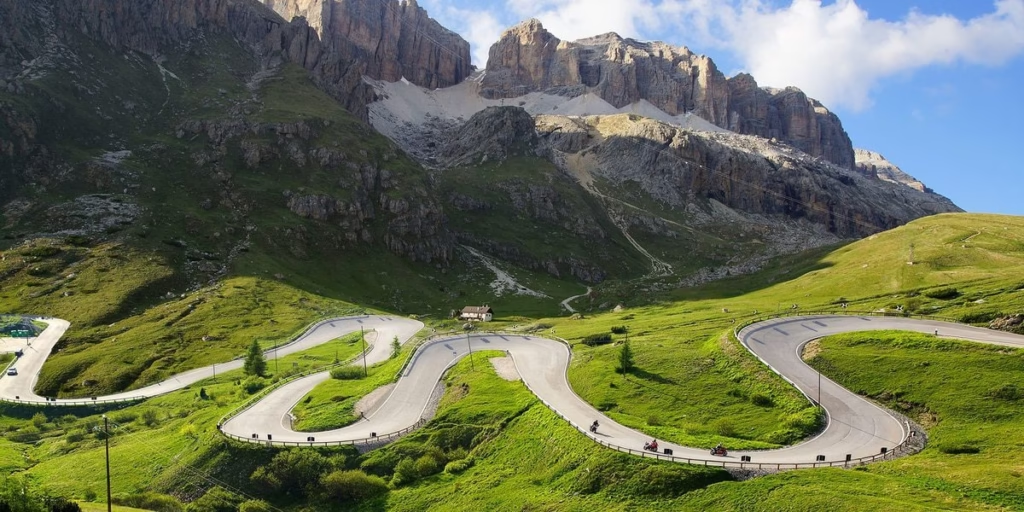
The ascent of the Pordoi from Arabba is the more celebrated side, climbing thirty-three hairpin bends in around nine kilometres at an average gradient of just under seven per cent. The hairpins are the defining feature of this climb, each one numbered in reverse from the bottom and each one offering a slightly wider view than the last as the road spirals upwards through the increasingly barren upper mountain. The tarmac here is very smooth and the road is wide enough that the hairpins can be taken at proper speed, sweeping through the corners with the valley swinging below in great arcing views.
The summit plateau of the Pordoi has a slightly otherworldly quality, flat and broad at nearly 2,300 metres with the limestone walls of the Sella massif rising directly above and the cable car station providing an incongruous industrial note. The rifugio at the top is large and well-stocked, and on a busy summer day the terrace can feel crowded with motorcyclists and tourists, which is a slight disruption to the monastic quality of the climb. In the early morning, before the coaches begin arriving, the summit has a completely different atmosphere, and sitting at the top of the Pordoi with a coffee as the sun hits the Sella towers above and the valleys begin to emerge from shadow below is a genuinely moving experience.
The descent from the Pordoi towards Canazei and the Val di Fassa is long, fast and technically demanding, with a succession of hairpins and long straight sections that require confident braking and a willingness to trust the road surface. The full circuit from Cortina over the Falzarego, down to Arabba, up the Pordoi, and back via the Campolongo represents a serious day in the mountains, covering around 90 kilometres and approximately 2,500 metres of climbing, and is best treated as a full commitment rather than an afternoon outing.
Passo Fedaia and the Marmolada Wall
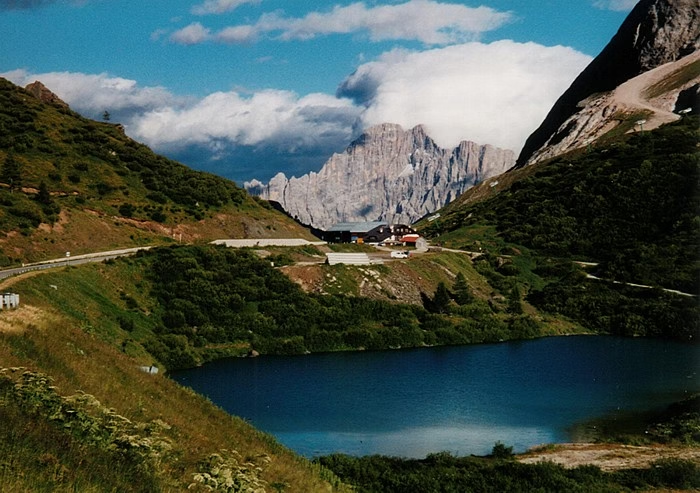
There is a particular category of climb that cyclists describe as a wall, a word chosen deliberately to distinguish a gradient that more closely resembles a piece of architecture than a road. The Passo Fedaia, approaching from the Malga Ciapela side up the flank of the Marmolada massif, belongs firmly in this category. The upper section of this ascent, rising to the Fedaia lake at 2,057 metres, averages somewhere around twelve per cent over five kilometres, with sections that regularly exceed fourteen or fifteen per cent, and it is the kind of gradient that forces cyclists of all abilities to reassess their gearing choices in advance.
The Marmolada is the highest peak in the Dolomites, rising to 3,343 metres and carrying the most southerly glacier in the Alps on its northern face, a glacier that has retreated dramatically in recent decades and now presents a far smaller ice field than the photographs in the rifugio at the top would suggest. The road to the Fedaia lake rides directly beneath the rock wall from which the glacier descends, and the view upward from the steepest sections of the climb, where the road is virtually vertical and the ice field hangs improbably above, is one of the most extraordinary perspectives in the entire region.
The Fedaia was the site of one of cycling’s most celebrated and most tragic stories. In the 1998 Giro, Marco Pantani, the last Italian to win the Tour de France, launched a devastating attack on the lower slopes of this climb and rode to the summit and beyond in a performance that seemed almost supernatural. The time gaps he created that day, in appalling weather conditions, contributed to his eventual race victory. Pantani returned here many times, drawn back to the place where he had shown what he could do at his best, and the mountains around the Fedaia and the Pordoi are where his legacy is most strongly felt among Italian cycling fans. Riders still leave jerseys and photographs at the Coppi statue on the Pordoi, a spontaneous shrine maintained by a community of people for whom the Giro and the Dolomites are deeply intertwined.
For those approaching the Fedaia from the western side, via Canazei and the Val di Fassa, the gradient is considerably more manageable, around five per cent over fourteen kilometres, making this the standard direction for cyclists combining the Fedaia with the Pordoi in a single day. The eastern approach from Malga Ciapela is reserved for those specifically seeking the hardest possible ascent, or for those wanting to replicate the Giro route from the direction the race has most frequently taken.
The Sella Ronda: A Circuit Like No Other
Any serious discussion of cycling in the Cortina region must include the Sella Ronda, the circuit of the Sella massif that links the four great passes, the Campolongo, the Pordoi, the Sella and the Gardena, in a loop of approximately sixty kilometres. This circuit is one of the great rides in European cycling, not because it is the hardest or the highest but because of the particular experience it creates: a continuous journey around a single enormous rock formation, with each pass revealing a completely different landscape on its far side and the whole circuit returning you to your starting point through a progression of views that feels carefully designed rather than geological.
The standard approach from Cortina involves crossing the Falzarego and descending to Arabba, where the Campolongo provides the first ascent of the circuit proper. The Campolongo at 1,875 metres is the shortest and gentlest of the four Sella passes, a pleasant opener that deposits you in the Badia valley before the road turns west and begins the climb to the Pordoi. After the Pordoi comes the descent to Canazei and the long, sinuous climb of the Sella, a pass of 2,240 metres reached via a series of dramatic hairpins that provide a view back towards the Marmolada that improves with every metre of altitude gained. Finally, the Gardena at 2,121 metres drops into the Val Gardena with a descent that begins almost immediately in long, fast curves and ends in the village of Selva, from where the road climbs back over the Campolongo to close the circuit.
The Sella Ronda is well established as a cycling route and the roads are consequently busy with cyclists throughout the summer season, creating a pleasant sense of shared endeavour and the frequent opportunity to compare notes with riders from across Europe taking on the same challenge. In the ski season, the same circuit is ridden as a ski touring route, and the passes are served by a network of lifts that transforms this high mountain landscape into one of the most famous skiing circuits in the Alps. The cultural layering of the Sella Ronda area, where cycling and skiing and walking and mountaineering all share the same roads and paths, gives it a vitality that single-discipline destinations lack.
-
 Photo Credit: Cor Vos
The Maratona dles Dolomites
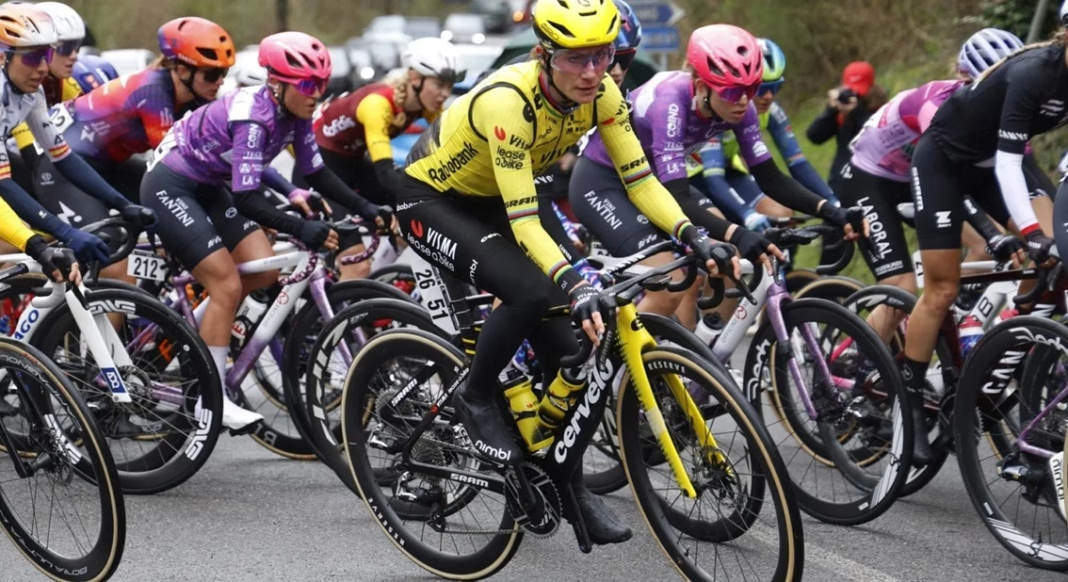
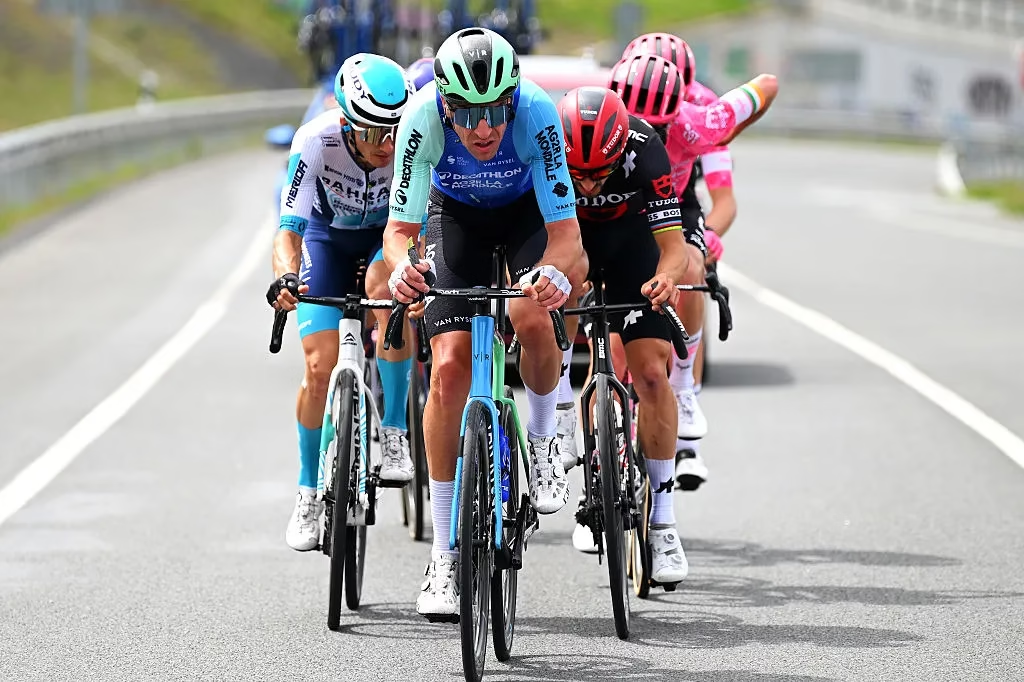
Every year on a Sunday in early July, between seven and nine thousand cyclists gather in the village of La Villa in the Alta Badia valley to take part in what is widely regarded as the most beautiful mass participation cycling event in the world. The Maratona dles Dolomites is not a race in any meaningful sense, though the competitive spirit of its participants would suggest otherwise. It is a gran fondo, a long ride through the mountains, with routes of different lengths and difficulties available and a time limit that accommodates the full spectrum of cycling ability.
The long route, known as the Maratona, covers approximately 138 kilometres and climbs seven passes, including the Giau, the Falzarego, the Valparola, the Campolongo, the Pordoi, the Sella and the Gardena, accumulating around 4,230 metres of vertical gain. This represents an extraordinary amount of climbing even by Dolomite standards, and the riders who complete it in under four and a half hours are performing at a level that puts them in genuinely elite company. The slower routes, including the Sellaronda and the shorter Maratona, cover the same landscape with fewer passes and remain entirely within reach of well-prepared recreational cyclists.
The event has been running since 1987 and the demand for places now far exceeds the supply, with entry allocated by lottery. Successful applicants receive their place notification months in advance and the preparation cycle for the event, training plans, equipment choices, travel logistics, has developed into a substantial cottage industry among Italian and international cyclists. The atmosphere on the day is unlike anything in British cycling: tens of thousands of spectators lining the roads in the early morning darkness, the passes lit by the lights of the riders ascending in long chains, the air full of cowbells and encouragement shouted in Italian, German, Ladin and a dozen other languages.
Whether or not a visit to Cortina coincides with the Maratona, the event shapes the way cyclists relate to the region throughout the year. The passes that feature on the route carry a particular prestige, and it is common to meet riders training specifically for the gran fondo on any of the major climbs from June onwards. For more information on the event and the ballot process, the official website at maratona.it provides full details.
The Ladin Culture and the Ampezzane Identity
Cortina d’Ampezzo is not entirely Italy, or at least it is not the Italy of the south or the cities. The town belongs to the Ladins, a small Romance language community of around 30,000 people spread across the valleys of the central Dolomites, whose language, Ladin, derives from the Vulgar Latin of the Roman legions and has survived in isolation for two millennia in the high mountain valleys. The cultural identity of Cortina and the surrounding Ampezzane valley is Ladin before it is Italian, and whilst Italian is the language of commerce and tourism, the oldest inhabitants will speak Ladin among themselves, the road signs are trilingual, and the festivals and traditions of the valley have a character quite distinct from anything encountered elsewhere in the country.
This cultural particularity is not merely a point of historical interest for cyclists passing through. It gives Cortina its specific quality of being simultaneously very Italian and not quite Italian at all, a place where the glamour of the Corso Italia sits alongside a deep mountain conservatism, where the rituals of the rifugio and the mountain hut have more in common with Austrian Alpenkultur than with anything from Rome or Milan, and where the relationship with the natural landscape is protective and proud rather than merely commercial. The mountains here are not just scenery. They are identity.
The food of the region reflects this ambiguity. The menus in Cortina’s restaurants mix Italian dishes with those of the Tyrolean tradition, and the cycling-specific replenishment options at the rifugi tend towards the hearty rather than the light, which is entirely appropriate given the altitude and the gradient. Canederli, large bread dumplings served in broth, are a staple of the mountain huts and provide the kind of dense caloric support that a body needs after four hours on the Giau and the Pordoi. Speck, the locally produced smoked ham, appears on virtually every menu and makes an excellent addition to a panino eaten at the top of any pass. The distinction between eating to fuel a ride and eating as an experience in itself is less clear in the Dolomites than it is in most places, which is one of the more pleasant things about cycling here.
Riding in the Giro d’Italia’s Footsteps
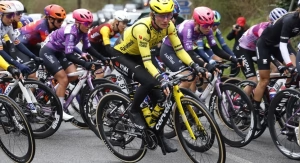
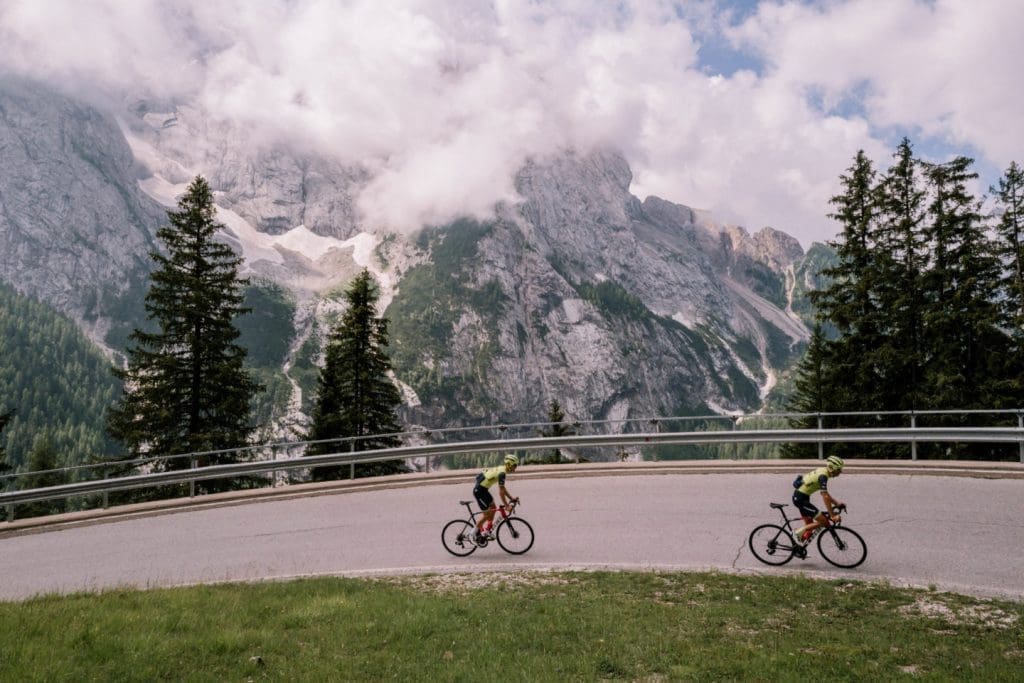
The relationship between the Dolomites and the Giro d’Italia is as old as the race itself, and the history of that relationship provides an entirely different layer of meaning to riding these roads. The Giro first crossed the Dolomite passes in 1909, just in its second edition, when the inclusion of mountain stages transformed a bike race into something approaching an ordeal, and the combination of extraordinary scenery, brutal gradients and the emotional intensity of the Italian sporting culture produced some of the race’s most celebrated moments.
Fausto Coppi climbed these roads in an era when the passes were often unpaved and the riders frequently had to carry their bikes across sections that were impassable in the wet. The famous photographs of Coppi ascending the Dolomite passes, alone, his face expressing something that might be suffering or might be a kind of ecstasy, have become iconic images of mid-century sport. The Pordoi statue shows him as he looked in those photographs, the long thin legs, the slightly hunched position, the expression of absolute concentration, and standing beside it on a clear morning with the Sella towers above and the valley below, it is not difficult to understand why the Italians regard Coppi with something approaching religious reverence.
The later generations brought their own stories. Gimondi’s battles with Merckx in the 1960s and 1970s played out partly on the Pordoi and the Giau. Moser’s hour record preparations included long training camps in the Dolomites. And then Pantani, who was born in the flatlands of Romagna but who belonged to the mountains in a way that seemed almost mystical, who attacked on the steepest sections when his rivals were already suffering, who climbed with a dancing style that made twelve per cent gradients look navigable.
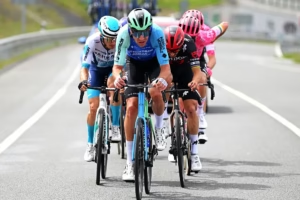
The Giro still comes to the Dolomites regularly, and when it does it transforms the already beautiful landscape into something almost impossibly charged with atmosphere. Thousands of tifosi camp on the passes for days in advance, covering the roads in painted names and messages, and the passage of the peloton through the high mountain air is accompanied by a noise and intensity that seems wildly disproportionate to the narrow, empty roads it occupies on any ordinary day. If a visit can be timed to coincide with a Giro stage finish in the region, the experience is not easily forgotten.
Practical Notes on Riding from Cortina
Cortina’s location at 1,224 metres means that acclimatisation is less of an issue than at lower altitude resorts, but the passes above 2,000 metres are a different matter, and riders planning to ascend the Pordoi or the Giau in the first day or two of a visit should be prepared for the altitude to add an unexpected tax. The body acclimatises quickly, and by the third day most riders find the upper mountain more manageable than their first ascents suggested.
Gearing is a subject that produces strong opinions among Dolomite cyclists, and the honest advice is to bring more gears than you think you will need. The standard compact chainset with a 32 or 34 tooth cassette is appropriate for the majority of the passes, but the Giau and the Fedaia from Malga Ciapela will test anyone on standard road gearing, and a rider who has never encountered double-digit gradients sustained over several kilometres may find themselves wishing for options they do not have. Electronic groupsets make the choice of gear at twelve per cent somewhat easier than mechanical systems, but the legs still have to turn whatever is offered.
The weather in the Dolomites can change with extraordinary speed. A clear morning can become a thunderstorm within an hour, and the exposure on the upper sections of the major passes means that a sudden change in conditions carries real consequences. A lightweight rain jacket and arm warmers should be carried on any day involving climbs above 2,000 metres, regardless of how clear the morning looks from Cortina. The summits are significantly cooler than the valley even on warm days, and the descent from the Pordoi or the Giau at thirty kilometres per hour in a headwind requires more insulation than the ascent.
Bike hire and service in Cortina is available at several shops in the town centre, with quality carbon road bikes available for rent by the day or week. The Cortina Cycling cortinacycling.com shop on the Corso Italia stocks a comprehensive range of equipment and can provide detailed local knowledge on road conditions, current closures and recommended routes for riders of different abilities. For organised cycling holidays based in Cortina, Dolomite Mountains offers guided rides across the major passes with support vehicles and accommodation, an excellent option for those who prefer to focus entirely on the riding rather than the logistics.
For those wanting to ride the Maratona dles Dolomites route outside of the event itself, the organisation provides GPX files for all three route variants on their website, and the roads used are public and accessible year-round, conditions permitting. The passes are typically clear of snow from late May or early June and begin to see the first autumn closures in October, though this varies significantly from year to year.
The nearest airports to Cortina are at Venice Marco Polo and Innsbruck, both approximately two hours by road. The drive from Venice on the A27 motorway and then the SS51 through the Cadore valley is straightforward, and the SS51 itself, tracing the course of the Piave river through increasingly dramatic mountain scenery, provides a preview of the Dolomite landscape that serves as both orientation and incentive for the riding ahead.
For more guides to the great cycling climbs of Europe, including our coverage of the Col du Galibier, the Mont Ventoux approaches and the Pyrenean classics, see the ProCyclingUK routes section.
-
Photo Credit: Cor Vos
What the Dolomites Ask of You
Cycling in and around Cortina d’Ampezzo is not a gentle or forgiving experience in the way that some mountain destinations manage to be. The passes ask for sustained effort, for the willingness to sit in discomfort on a steep gradient for extended periods, and for the kind of mental engagement that comes from navigating roads that were not built with the comfort of cyclists primarily in mind. What they offer in return is something that is very difficult to find anywhere else: the sensation of being genuinely small in a genuinely large landscape, of earning altitude through your own effort and then standing at 2,200 metres with the whole extraordinary world spread below and the pale limestone towers rising above, knowing that you got here on your own legs.
The Dolomites are a UNESCO World Heritage Site, recognised for geological formations of outstanding universal value, and riding through them gives a very direct understanding of why that recognition was conferred. This is not the managed, accessible beauty of a national park designed for passive appreciation. It is something rawer, more demanding, and more rewarding. The climbs are steep because the geology made them steep. The views are extraordinary because the rock is extraordinary. The experience of cycling here is inseparable from the specific character of this specific place, and no amount of description quite conveys what it feels like to round a corner on the upper Giau and find the entire Dolomite world suddenly opened up before you.
The Cortina region rewards those who return to it. The passes look different in different lights and at different times of season. The descents become more fluid as familiarity reduces caution. The rifugi begin to feel like places you belong rather than places you are visiting. And the enrosadira, seen for the first time, seems like a miracle, but seen for the fifth or sixth time, becomes something even more valuable, a signal that the day is ending and that the mountains have given you everything they had, and that tomorrow the roads will still be there and the passes will still be waiting, and you will get to do all of it again.
For more cycling content from the Dolomites and the Italian mountains, including route profiles, Strava segments and rider interviews from the Giro d’Italia, visit ProCyclingUK. For current road conditions and pass opening dates in the Dolomiti Bellunesi, check the Veneto regional roads service.