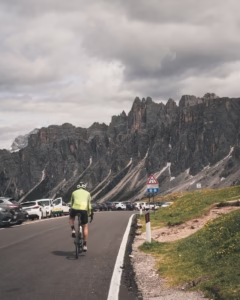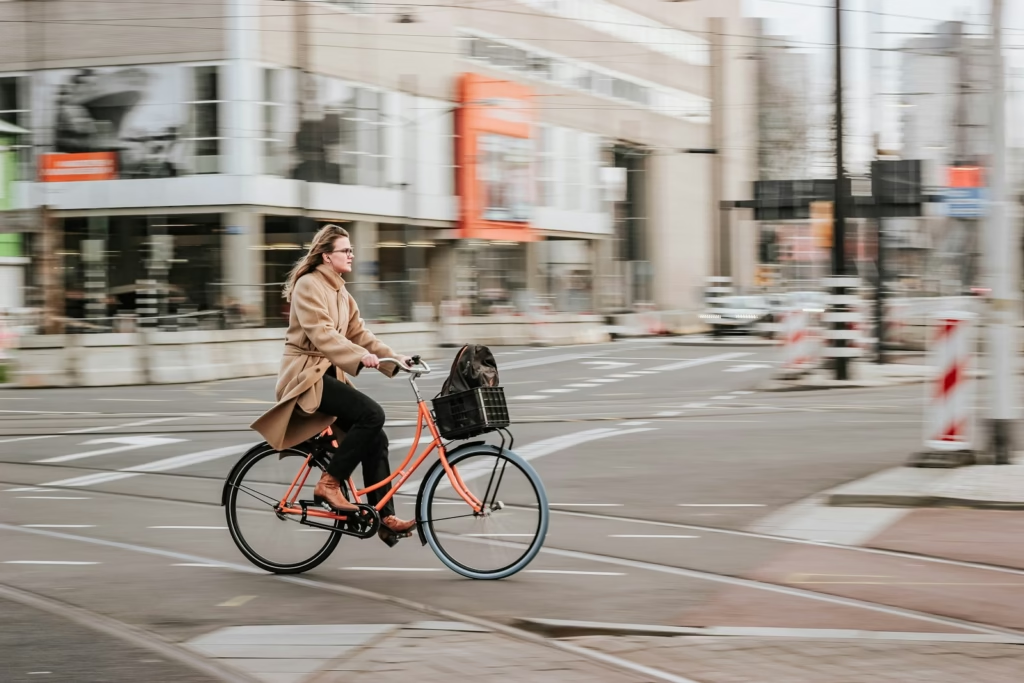
Good road positioning is one of the most important skills a cyclist can develop. It shapes how drivers behave around you, reduces the risk of common collisions and gives you more control over your experience on the road. Yet many riders, especially those new to traffic, instinctively ride too close to the kerb because it feels polite or protective. In reality, the safest place to ride is often further out.
Understanding how and why to choose your position helps you ride with clarity and confidence, turning busy roads into predictable, manageable spaces rather than stressful ones.
Why your position on the road matters
A rider who hugs the kerb often feels squeezed, rushed and constantly threatened by close passes. The edge of the road is where debris collects, where broken tarmac hides and where you become almost invisible at junctions. Moving even a small distance out changes everything. Drivers see you earlier, judge their overtakes more carefully and are far less likely to attempt risky squeezes.
Good road positioning creates space, options and time – the three ingredients that keep you safe.
The two core concepts taught in UK cycle training are the secondary and primary positions. Secondary is your cruising line, roughly a metre from the kerb, where you’re visible and in flow with traffic. Primary is the centre of the lane, used when overtaking would be unsafe or when you need to make your intentions absolutely clear. Thinking in these terms helps you read the road quickly.
Staying in the secondary position works on quiet, open roads or areas with clear visibility. The primary position is for moments when you need to prevent unsafe overtakes, such as narrowing lanes, pinch points, traffic islands or areas with parked cars. It is not an act of aggression. It is a form of communication that tells drivers that overtaking is not currently safe.
A common worry is that riding further out will annoy drivers. In practice, a predictable cyclist who holds a clear position is far easier to drive around than someone drifting or hugging the kerb. Uncertainty is what causes frustration, not assertiveness.

Reading the road: parked cars, junctions and narrow lanes
Road positioning becomes especially important when navigating parked cars. Riding too close risks encountering a suddenly opened door, a collision that even experienced riders struggle to avoid. A simple rule helps here: stay a full door’s width away. If that puts you close to the centre of the lane, that’s where you should be until the hazard ends. Drivers understand this once they see the obstruction.
Junctions and roundabouts are where the majority of bike collisions occur, and positioning is your best defence. Moving into the primary position before you reach a junction improves visibility for everyone. Drivers pulling out see you more clearly, and drivers behind you cannot creep alongside as you turn. The same principle applies to roundabouts. If you stay too far left, drivers may assume you’re exiting early. Taking the centre makes your path obvious.
Narrow lanes and pinch points are where cyclists often feel most vulnerable, yet they are also where primary position is most important. If you ride close to the kerb, you unintentionally encourage drivers to “squeeze through”. Holding the centre removes that temptation and keeps the overtake decision clear and deliberate.
Road positioning is also communication. Your line on the road tells drivers whether they should wait, whether it is safe to pass and where you intend to go. When combined with early, clear hand signals and the occasional glance over your shoulder, positioning becomes a calm, predictable exchange rather than a battle for space.
Building confidence through position
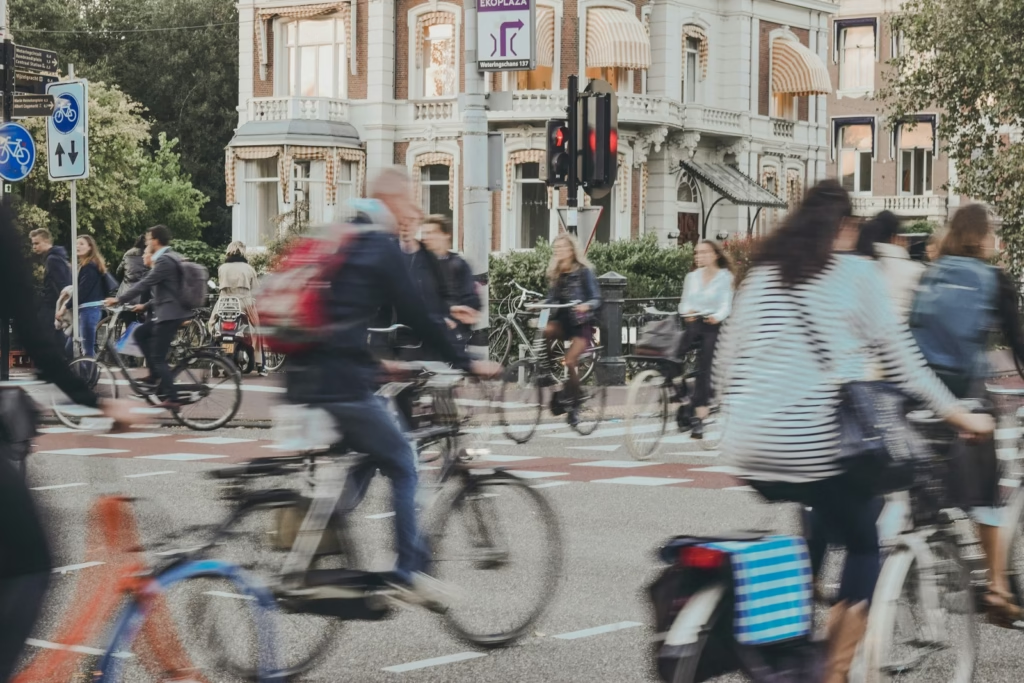
Confidence doesn’t come from bravery under pressure. It comes from knowing you have room to manoeuvre, that drivers have seen you and that your line makes sense in the context of the road. Once you feel how effective good positioning is, the nerves begin to fall away.
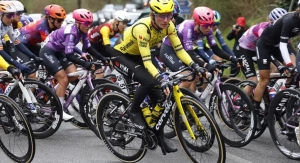
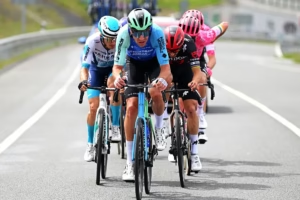
Even in group riding, these principles hold. Two-abreast riding makes the group more visible and shortens the overtaking distance, while singling out on narrow sections works best when done smoothly rather than by diving for the kerb.
The shift happens when you realise road positioning is not about claiming superiority over traffic but about shaping your environment so it works predictably. You become more visible, your intentions become clearer, and drivers behave more thoughtfully around you.
The bottom line
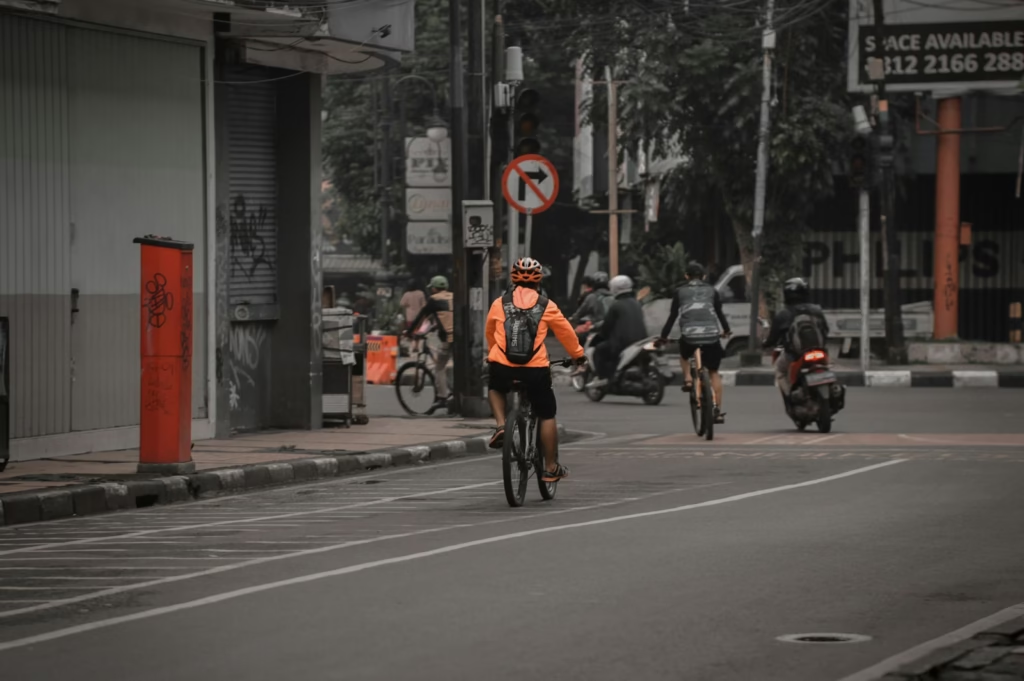
Where you ride on the road matters just as much as how well you control the bike. Staying away from the kerb, using the secondary position for everyday riding and the primary position for moments of risk, brings a sense of calm and clarity that transforms busy roads into manageable spaces.
Good positioning is not confrontation – it’s communication. It tells drivers, confidently and politely, what is safe and what is not. And once you internalise that, the road feels like a far less intimidating place.