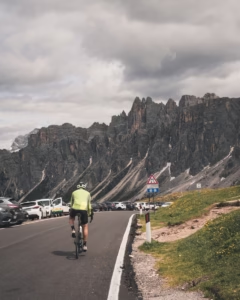
Cyclists talk endlessly about endurance and climbing legs, yet some of the biggest gains come from what you do off the bike. Strength work builds resilience, improves pedalling stability and helps you ride with more control when fatigue begins to bite. And you do not need a gym membership or expensive equipment to see those benefits. With a small amount of space and a handful of simple tools, you can develop strength that directly supports smoother, faster and more efficient riding.
This guide sets out a practical way to add strength training to your routine at home, focusing on movements that genuinely matter for cyclists and are easy to repeat week after week.
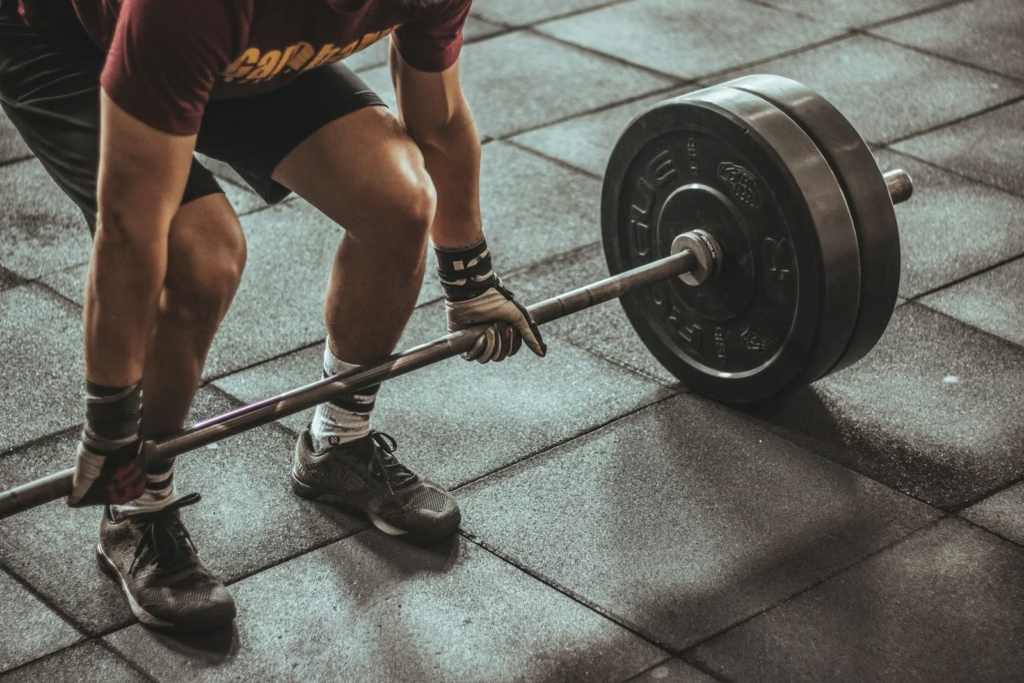
Why cyclists should care about strength
Cycling relies on repetitive motions. The same muscles fire thousands of times, which is efficient but leaves gaps in overall conditioning. Weak glutes, a soft core or tight hips can limit power transfer and make long rides feel harder than they should.
Strength training helps by:
- Improving stability so you can deliver power cleanly
- Supporting posture on long climbs and endurance rides
- Reducing niggles in the knees, hips and lower back
- Making sprinting, climbing and handling feel more controlled
The aim is not bodybuilding. It is building a stronger, more balanced foundation for every pedal stroke.
Minimal kit, big results
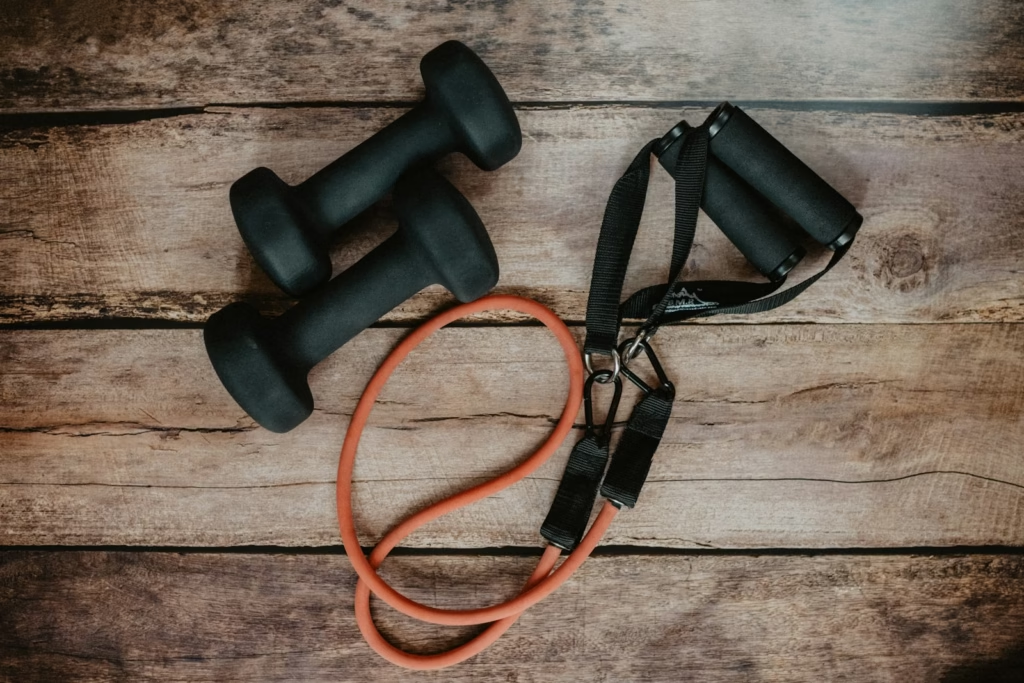
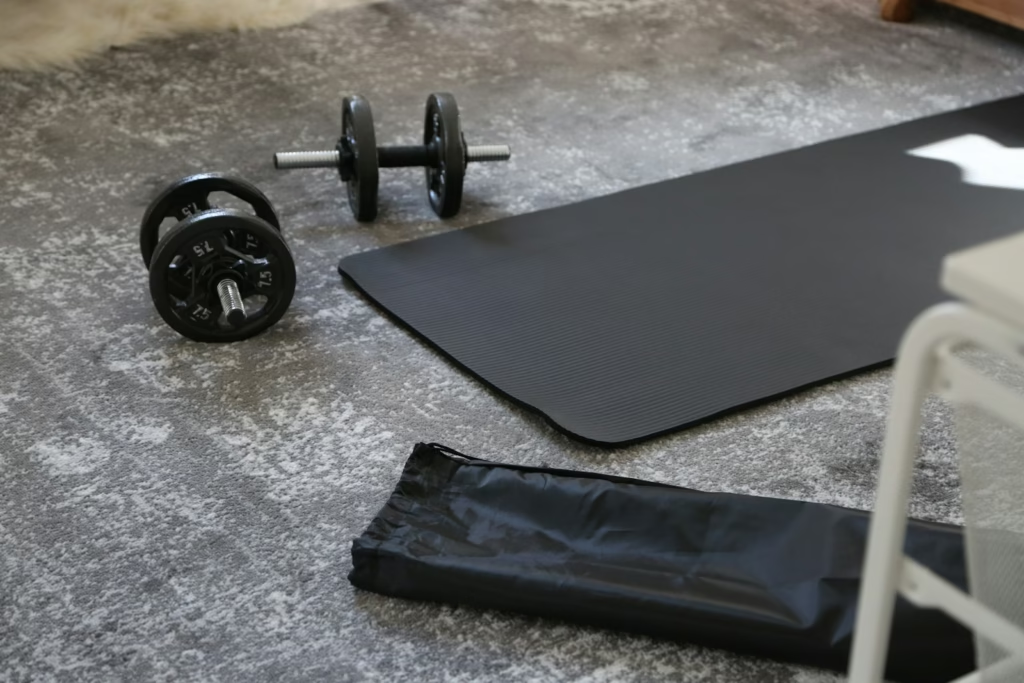
You can build an effective home routine with very little equipment:
- A resistance band or loop band
- A pair of light dumbbells or even filled water bottles
- A stable chair or step
- A mat or carpeted floor
These items allow you to train the movements that matter most: hip strength, single-leg control, core stability and upper-body support.

The movements that make the biggest difference
If you only include a handful of exercises, make them these. They target the muscles that keep you stable on the bike and protect you from fatigue-related form breakdown.
Glute bridge
Strengthens the glutes, supports hip alignment and reduces lower-back strain.
Progress to a single-leg version once the basic movement feels easy.
Split squat
One of the best exercises for cyclists because it mimics single-leg pedalling mechanics.
Move slowly, keep your torso tall and focus on balance.
Dead bug
Teaches your core to stay steady while your limbs move, which mirrors the control you need on the bike.
Resistance band lateral walk
Strengthens the small hip muscles that help your knees track straight during the pedal stroke.
Step-up
A controlled way to build climbing-specific strength without loading the spine heavily.
These movements demand very little space but offer huge returns.
How often should you train?
Two short sessions per week is enough to see progress. Each session should last around 20 to 30 minutes. This is long enough to develop strength without leaving your legs too fatigued for riding.
Keep the intensity manageable. Strength work should support your cycling, not interfere with it. If your legs feel heavy before your next ride, reduce the load or pace of the exercises.
Progress in simple stages
Strength doesn’t need complicated programming. A small, steady progression works well:
Phase one: learn the movements
Controlled tempo, light resistance and absolute focus on form.
Phase two: increase stability
Add bands or light weights and build up to higher-repetition work.
Phase three: build strength
Increase resistance or move to more challenging variations while keeping control in every rep.
This approach mirrors how the body naturally adapts: precision first, then volume, then strength.
A practical home routine for cyclists
Use this routine twice per week. It is designed to build stability, balance and usable strength without overwhelming your legs.
Warm-up
5 minutes of gentle mobility: hip circles, leg swings, light marching, torso rotation.
Main set
| Exercise | Reps | Sets | Notes |
|---|---|---|---|
| Glute bridge | 12 to 15 | 2 to 3 | Progress to single-leg when ready |
| Split squat | 8 to 12 per leg | 2 to 3 | Hold weights when confident |
| Dead bug | 10 to 12 per side | 2 to 3 | Prioritise control, not speed |
| Band lateral walk | 12 to 15 per direction | 2 | Keep hips level |
| Step-up | 8 to 12 per leg | 2 to 3 | Slow, steady tempo |
| Plank | 20 to 40 seconds | 2 | Ribs down, hips level |
Cool-down
Light stretching for hips, quads, glutes and lower back.
This routine is easy to maintain and fits neatly into any training week.
When you will feel the benefits
Riders typically notice improvements after four to six weeks:
- More stable climbing
- Reduced sway in the upper body
- Stronger, smoother pedalling
- Less fatigue on long rides
- Fewer aches around the hips and knees
The gains appear subtly at first, then more clearly on challenging days, particularly on back-to-back rides or sustained climbs.
Final thoughts
Strength training at home is one of the simplest upgrades you can make to your cycling. You do not need heavy lifting or complex routines. With minimal kit and focused movement quality, you build a stronger foundation for every ride.
The goal is not to lift the heaviest weight. It is to support the engine you build on the bike. Two short sessions each week are enough to make climbs smoother, improve control under fatigue and keep your body balanced for the demands of everyday cycling.
If you’d like, I can also write a version tailored for over-40s riders, time-crunched riders or beginners returning from injury.