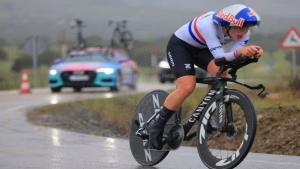
Thalita de Jong has lived through more than her share of hard seasons, but the past year has tested her in ways she never expected. The Human Powered Health rider, now 32, finished 2025 not with a final flourish of form, but with four days in hospital and yet another medical puzzle that halted her racing altogether.
What began as a year of promise – and early success – unravelled into one dominated by symptoms no one could quite explain. Now, with her health finally stabilised, De Jong is drawing a line under a turbulent campaign and looking ahead to 2026 with a mix of hope and determination.
A year that began with momentum
After a career resurgence in 2024 at Lotto Dstny, highlighted by the overall title at the Tour de l’Ardèche, De Jong arrived at Human Powered Health this season with form, confidence and clear ambitions. She delivered immediately. A determined ride at the Mallorca Challenge brought her first win of the year, and the spring saw encouraging progress before an unavoidable setback.
A crash at Trofeo Alfredo Binda left her with a broken collarbone, but even that did not seem to derail her momentum for long. With surgery done the next day and full support from her new team, she returned at the Vuelta a España Feminina just six weeks later and steadily rode herself into shape. She finished 16th overall, followed by fifth at Itzulia Women and third at Durango-Durango.
It looked like the season was back on track. Then everything changed.

The mystery illness that stopped her season
After Durango, De Jong fell sick with what initially seemed like an ordinary virus. But the symptoms worsened instead of easing.
“My inflammation values in the blood were super, super high, and I couldn’t walk ten metres without cramps or pain,” she recalled. “I’ve seen so many doctors.”
The problem was eventually identified as post-viral myositis – a rare inflammatory condition affecting the muscles. The diagnosis at least offered clarity, but only after weeks of uncertainty and rising alarm. Even once the acute phase passed, returning to racing proved complicated. De Jong started the Tour de France Femmes, made progress day by day, and then found herself back where she began.
“After the Tour, I had some rest and a little training, and then it showed up again. I still remember the date – 17 August. I woke up and felt the tension in my legs again.”
A blood test showed the inflammation markers had spiked, and she was admitted to hospital for a second time. That moment marked the end of her season.
Back to full health at last
By October, De Jong had recovered enough to complete a full battery of performance tests at Human Powered Health’s specialised facility in Wellesley. It was the first genuine indication that the worst was behind her.
Now she is focused entirely on the new year, returning to the races where she feels most at home.
“I want to go back to Mallorca and see if I can do the same as this year,” she said. “I love the races in Spain and Italy. I know the type of races that suit me.”
Durango remains unfinished business too: second two years ago, third this year. “I have to come back to win it, fight for it,” she said.
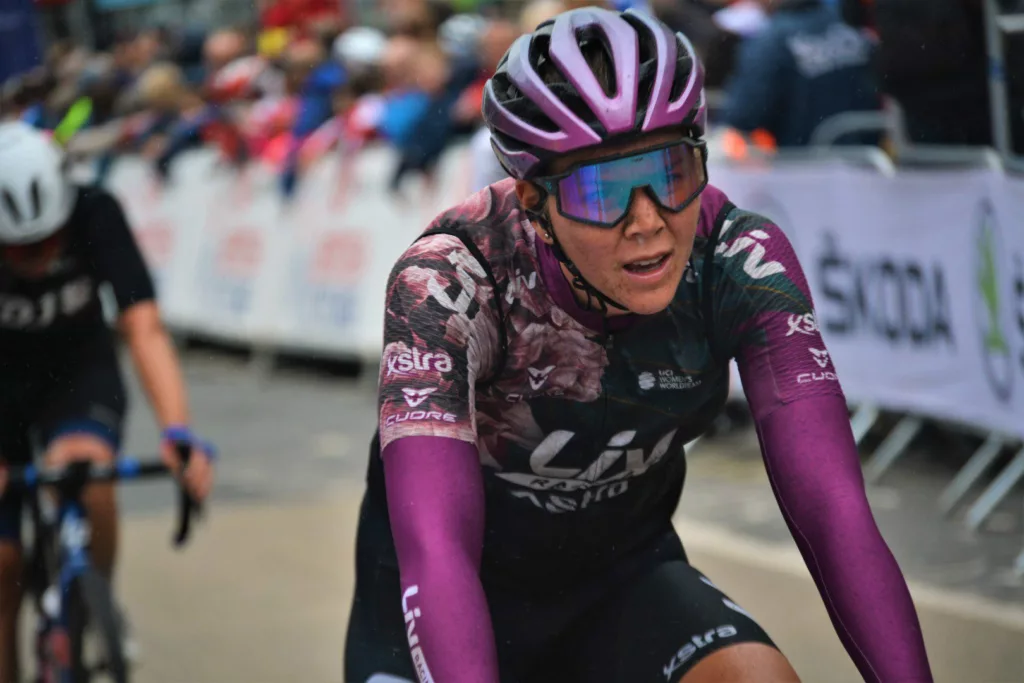
A career rebuilt more than once
De Jong’s resilience is not new. The former cyclocross world champion has already survived more comebacks than most riders face in a lifetime. After her WorldTour breakthrough in 2016, a string of injuries and illnesses nearly pushed her out of the sport entirely. She speaks openly about 2018 as the year she nearly quit.
Yet she stayed, rebuilt, and has since put together some of the finest seasons of her career. Her road palmarès now includes 11 professional wins, from the Giro Donne to the Simac Ladies Tour and her dominant run through the Tour de l’Ardèche in 2024.
A fresh start in 2026
The overriding feeling within Human Powered Health is that this year was the exception, not the rule. De Jong is healthy again, she has a training plan she trusts, and the team continues to back her fully.
“I’m really looking forward to the new year,” she said, keen for a season without interruptions after one dominated by uncertainty.
If her body finally cooperates, De Jong may yet rediscover the momentum that carried her through the best periods of her career – and finish the story that this season never allowed her to write.