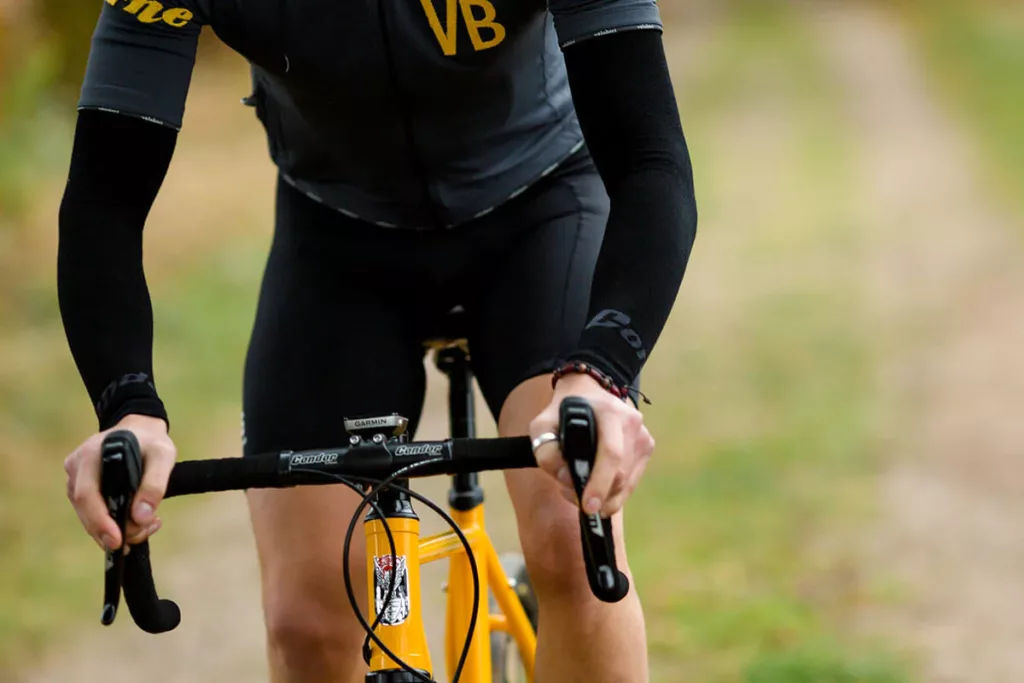
Cycling arm warmers are one of the easiest ways to make a short-sleeve jersey useful across spring, autumn and cool summer mornings. They add insulation and wind protection without forcing you to commit to a long-sleeve jersey for the whole ride, then roll small enough to fit in a pocket when the temperature rises.
In 2026 the basic design has not changed much, but fabrics have. Modern warmers range from thin UV sleeves to fleece-lined Roubaix options and water-resistant thermal versions, so choosing the right pair starts with the conditions rather than the brand.
When should you wear cycling arm warmers?
They are most useful in changeable weather around roughly 5–15°C, depending on fabric and how hard you are riding. A cool morning start followed by a warmer afternoon is the classic use case.
They also work well on long descents. Pulling arm warmers on before dropping off a mountain can be enough to take the edge off wind chill without carrying a full extra jersey.
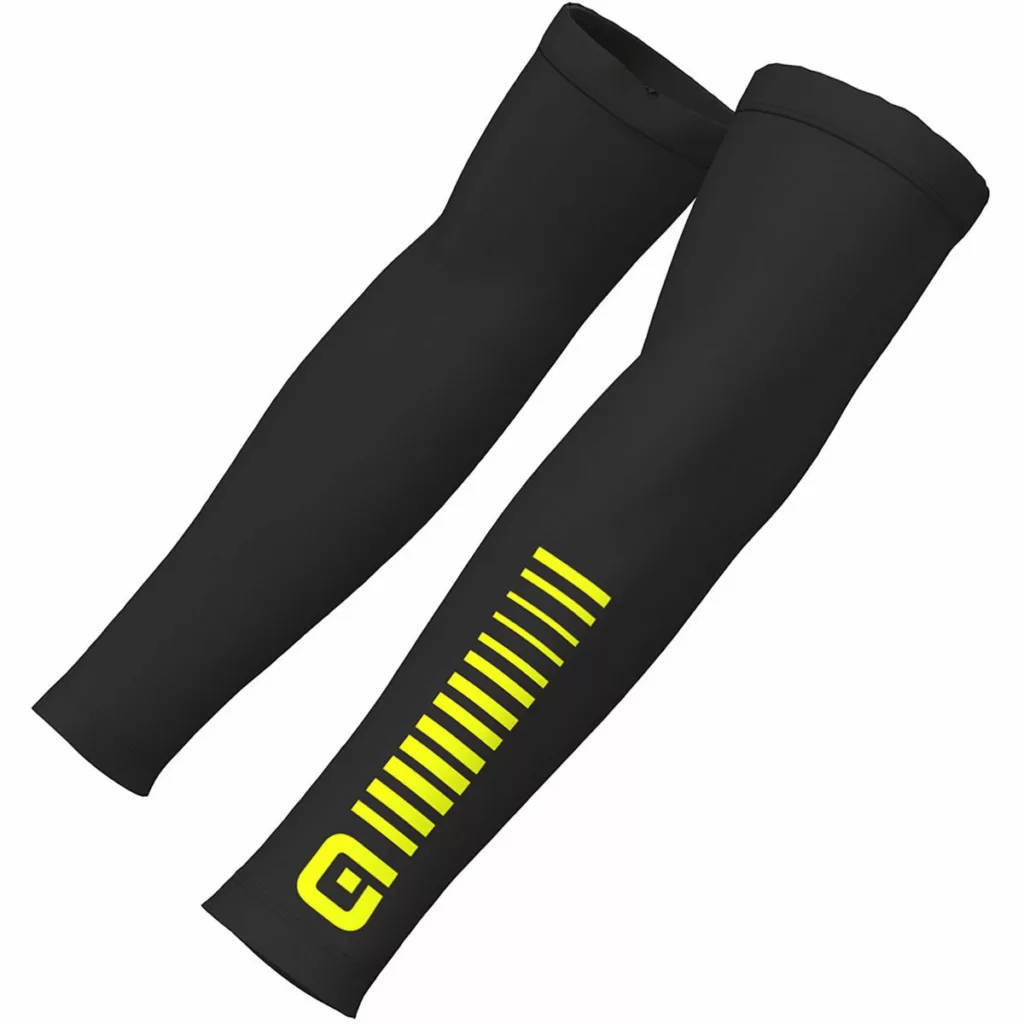
Thermal, lightweight or water-resistant?
| Type | Best use |
|---|---|
| Lightweight | Cool mornings, UV protection and summer descents |
| Thermal / Roubaix | Spring, autumn and colder starts |
| Water-resistant | Damp roads, showers and winter training |
How should arm warmers fit?
They should be close enough that the upper gripper stays under the jersey sleeve without cutting into the arm. Loose warmers slide down and flap; excessively tight ones can feel restrictive and leave uncomfortable pressure marks.
The wrist should sit neatly against the glove or skin with no large gap. In rain, overlapping layers help stop water being funnelled inside.

A current 2026 option: Le Col Arm Warmers
Le Col’s current Arm Warmers use insulating brushed fabric with a close tapered fit and grippers to hold them in place. They sit in the straightforward thermal category rather than trying to be a waterproof sleeve.
Check the current Le Col Arm Warmers.
Arm warmers vs a long-sleeve jersey
A long-sleeve jersey is better when the whole ride will be cold. Arm warmers are better when the temperature is likely to change or when you need extra protection only for the first hour and the descents.
They also make packing easier on trips because one short-sleeve jersey can cover a wider range of conditions.
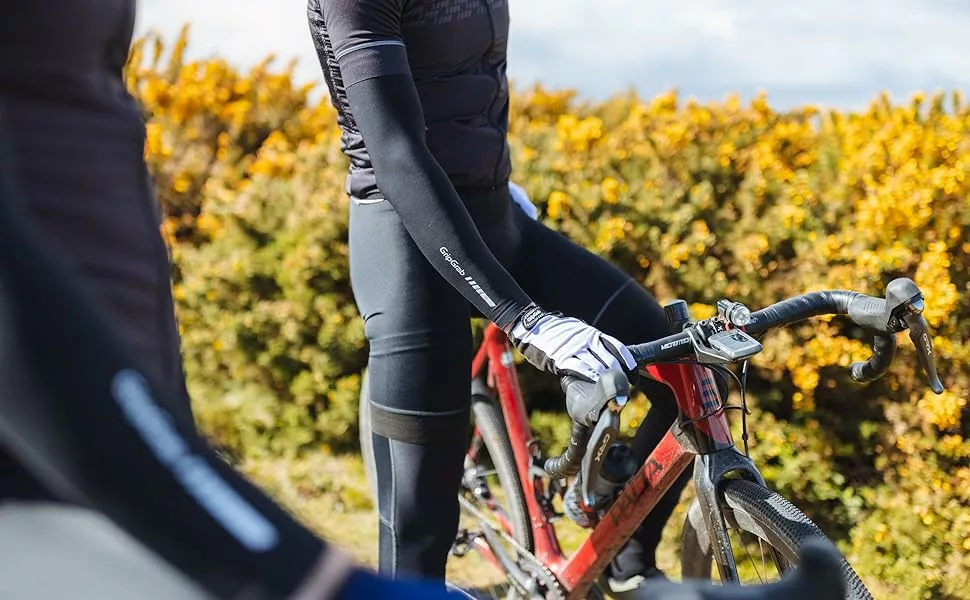
Can you wear arm warmers in rain?
Yes, but ordinary thermal warmers will eventually become wet. Water-resistant models slow that process and can feel warmer in road spray, while a waterproof jacket remains the better answer in sustained heavy rain.
How to wash arm warmers
Follow the care label, use a gentle wash and avoid fabric softener on technical stretch fabrics. Let them air dry rather than placing them on direct heat.
Are cycling arm warmers worth buying?
Yes, especially in the UK. They are cheap compared with another jersey, take almost no pocket space and solve one of the most common clothing problems: a ride starting cold and finishing warm.
-
 Photo Credit: quentinphotographiebe
 -
 Photo Credit: Getty