The Tour Auvergne – Rhône-Alpes 2026 begins on Sunday, 7th June, with a testing opening stage from Vizille to Saint-Ismier. The race may have a new name after its rebrand from the Critérium du Dauphiné, but its role remains familiar: a key June WorldTour test before the Tour de France.
Stage 1 is 146.2km long, with the route taking in repeated climbing before the run-in to Saint-Ismier. It starts at 11:15 local time, which is 10:15 BST for UK viewers. The finish is expected around 14:50 local time, or 13:50 BST, depending on the speed of the race.
UK viewers can watch the Tour Auvergne – Rhône-Alpes 2026 live through TNT Sports and HBO Max. For a full race overview, our Tour Auvergne – Rhône-Alpes 2026 full route guide breaks down all eight stages, while our Tour Auvergne – Rhône-Alpes 2026 stage 1 preview looks at the opening day’s climbing and likely contenders.
What time does Tour Auvergne – Rhône-Alpes 2026 stage 1 start?
Tour Auvergne – Rhône-Alpes 2026 stage 1 is scheduled to start at 10:15 BST on Sunday, 7th June.
The stage runs from Vizille to Saint-Ismier and should finish at around 13:50 BST. It is not a long opening day by WorldTour stage-race standards, but the climbing makes it an immediate test for the GC riders, puncheurs and strong all-rounders.
The key stage 1 details for UK viewers are:
- Date: Sunday, 7th June
- Stage: stage 1
- Route: Vizille to Saint-Ismier
- Distance: 146.2km
- Stage type: hilly
- Scheduled start: 10:15 BST
- Expected finish: around 13:50 BST
- UK live coverage: TNT Sports and HBO Max
The most important racing should come on the final climb and run-in to Saint-Ismier, but the early climbs mean the stage could already be selective before the final hour.
How can UK viewers watch Tour Auvergne – Rhône-Alpes 2026 stage 1?
UK viewers can watch Tour Auvergne – Rhône-Alpes 2026 stage 1 live through TNT Sports and HBO Max. TNT Sports is the linear TV option, while HBO Max is the streaming route for viewers watching on a laptop, mobile, tablet or smart TV.
Full broadcast details are available in our guide on how to watch Tour Auvergne – Rhône-Alpes 2026 in the UK.
This is a useful stage to watch from the start of the race, rather than just the final kilometres. The route is hard enough that teams may begin applying pressure well before the last climb, especially if they want to test rivals who have arrived short of race rhythm.
Why stage 1 is worth watching live
Stage 1 is worth watching because it does not give the peloton a soft opening. The race starts with a hilly day, repeated climbs and a finale that should suit a reduced group rather than a full bunch sprint.
That matters in a race with major GC tests still to come. A team time trial follows on stage 3, then the final weekend brings Crest-Voland, Grand Colombier and Plateau de Solaison. No contender needs to win the race on stage 1, but losing time immediately would put them under pressure before the route has properly opened up.
The first leader’s jersey is also at stake. That gives teams extra incentive to chase, control and race more aggressively than they might on a routine transition stage.
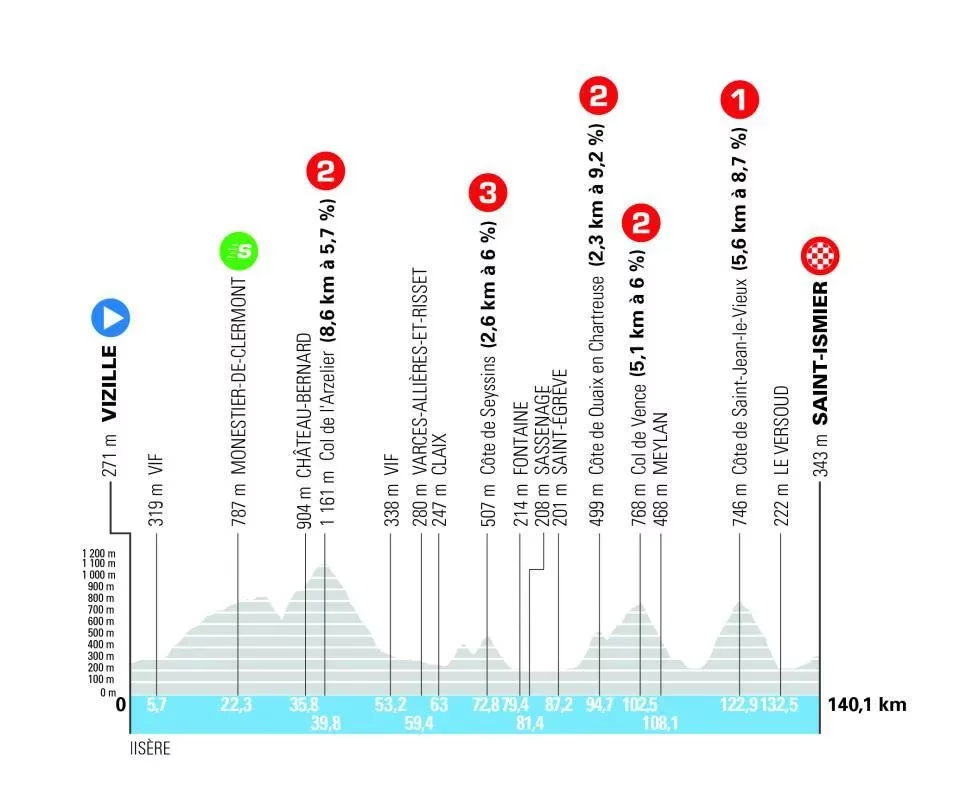
What is the route for stage 1?
Stage 1 takes the riders from Vizille to Saint-Ismier over 146.2km. The route is packed with climbing, including the Col de l’Arzelier, Côte de Seyssins, Côte de Quaix-en-Chartreuse, Col de Vence and Côte de Rousset.
The Côte de Rousset is the key late climb. It comes with around 21km remaining and is hard enough to reduce the front group if the pace is high. From there, the riders still have to descend and push on towards Saint-Ismier, so cooperation after the summit could decide whether an attack survives or whether a reduced group comes back together.
The final kilometres are not flat in the pure sprinter’s sense either. The finale rises gently enough to keep the power on, which should favour riders who still have climbing strength and a strong finishing kick.
What kind of rider can win stage 1?
The stage suits a punchy all-rounder, a climber with a fast finish, or a rider strong enough to survive the Côte de Rousset and still sprint from a reduced group.
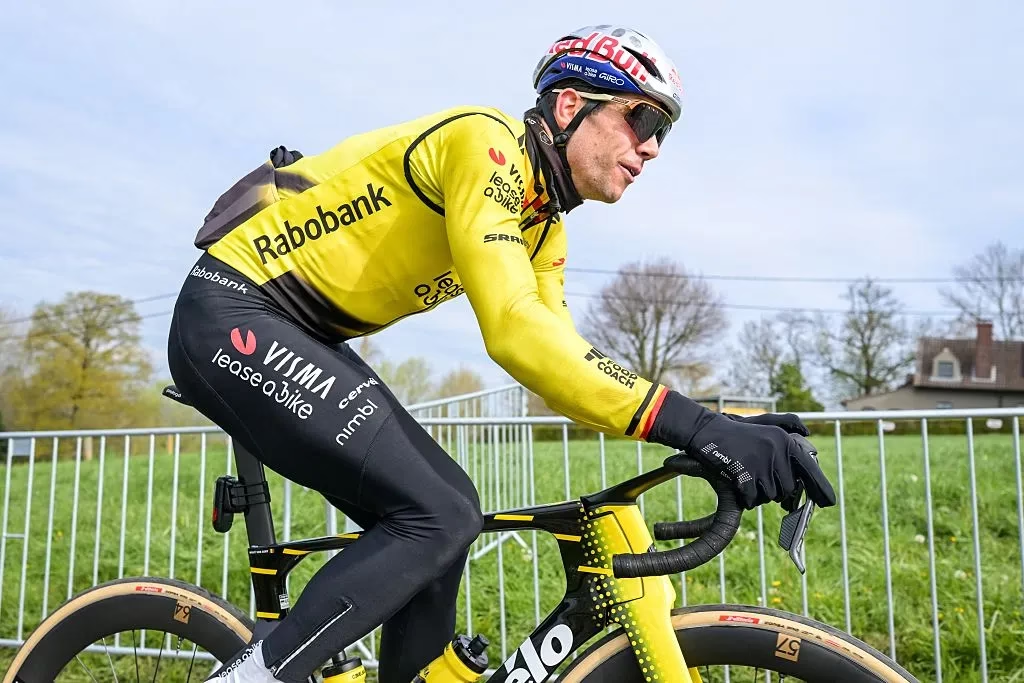
Wout van Aert is one of the obvious names if he makes it over the final climb with the leaders. A reduced group finish in Saint-Ismier would suit him well, provided the pure climbers do not distance him on the Côte de Rousset.
Michael Matthews, Toms Skujiņš, Ben Healy, Julian Alaphilippe and other attacking all-rounders also fit the shape of the stage. The GC riders should be close too, with Paul Seixas, Isaac del Toro, João Almeida, Juan Ayuso, Matteo Jorgenson, Oscar Onley, Carlos Rodríguez and Santiago Buitrago all needing to stay alert from the opening day.
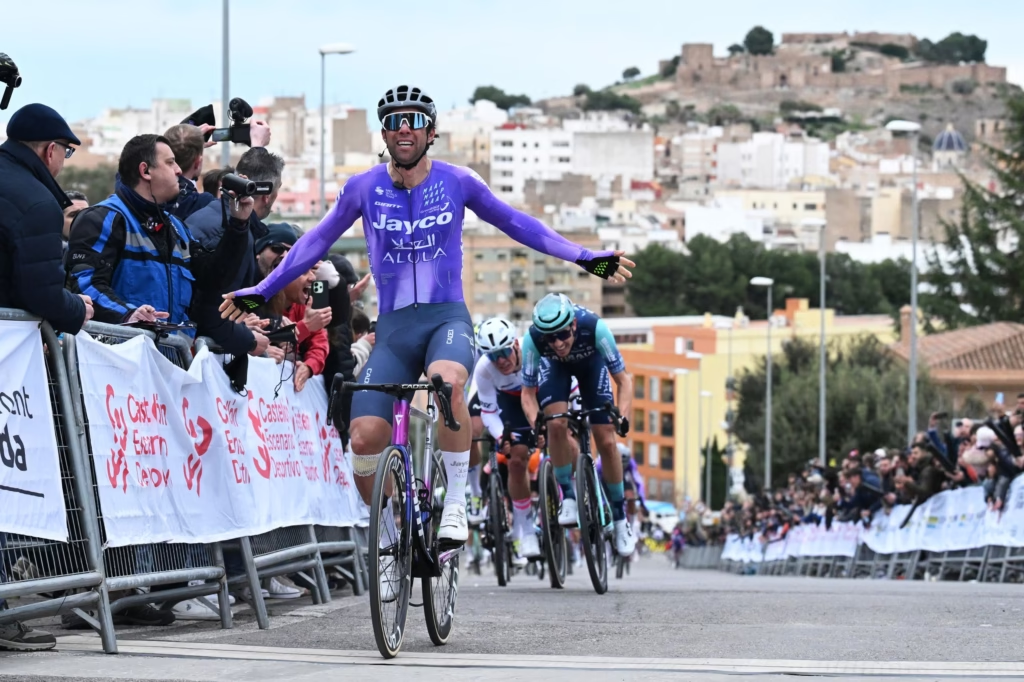 Photo Credit: Getty
Could the GC riders attack?
A full GC showdown is more likely later in the race, but stage 1 can still create early gaps. The Côte de Rousset is close enough to the finish to make attacks meaningful, and teams may use it to test rivals before the race reaches the team time trial and high mountains.
The most likely scenario is controlled aggression rather than a full GC explosion. The strongest riders will want to stay near the front, avoid splits and take note of who looks comfortable. If someone is struggling, though, the stage is hard enough for the race to become serious very quickly.
For riders targeting the overall, the main priority is avoiding a bad start. A few seconds lost on stage 1 can be recovered, but a poor day before the race has even reached Perreux or the mountains would change the whole week.
When should you tune in?
The stage starts at 10:15 BST, but the decisive racing should come later in the day. For UK viewers, tuning in from around 12:30 BST should catch the key build-up towards the final climb and the run-in to Saint-Ismier.
The expected finish is around 13:50 BST. If you only have time for the finale, the final 45 minutes should be the essential window, with the Côte de Rousset likely to decide whether the race comes down to a small group, a late attacker or a reduced sprint.
-
 Photo Credit: RCS

What comes next after stage 1?
Stage 2 takes the race from Saint-Martin-le-Vinoux to Le Puy-en-Velay over more than 230km, making it the longest day of the week. Stage 3 then brings the 28.4km team time trial around Perreux, a major early GC checkpoint before the race heads deeper into the mountain stages.
That makes stage 1 part of a demanding opening block. The race begins with climbing, follows it with endurance, then moves into a team time trial. Riders who start slowly will not have much time to settle.
Tour Auvergne – Rhône-Alpes 2026 stage 1 live viewing summary
Tour Auvergne – Rhône-Alpes 2026 stage 1 takes place on Sunday, 7th June, with 146.2km from Vizille to Saint-Ismier. The stage is scheduled to start at 10:15 BST, with the finish expected around 13:50 BST.
UK viewers can watch the stage live on TNT Sports and HBO Max. The route includes repeated climbing and a decisive late ascent of the Côte de Rousset, making this a much harder opening day than a standard sprint stage.
The race may not be won on stage 1, but it can be disrupted immediately. The first leader’s jersey, early GC positioning and the first sign of who is ready for a demanding week should all be decided in Saint-Ismier.