Stage 4 of the Tour Down Under was rewritten less than 24 hours before the start, with extreme fire danger removing Willunga Hill and cutting the day to 130.8km from Brighton to the Willunga township. The revised route still carried stress in different forms: exposed coastal roads, a double lap finishing on High Street, and oppressive heat that made position and cooling almost as important as raw speed.
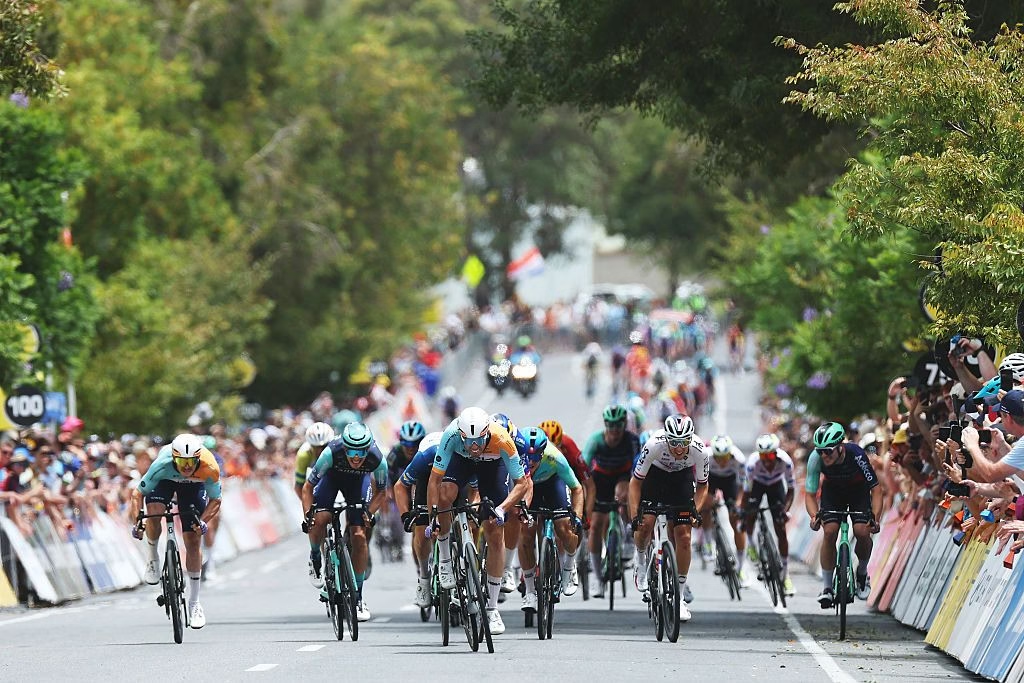
Ethan Vernon won for NSN Cycling Team from an uphill sprint that never settled into a clean, single-train run-in. After crashes and crosswind anxiety reshaped the peloton’s rhythm, Vernon launched with around 250 metres to go and held his gap to the line, taking advantage of a moment when the main lead-outs hesitated and the favourites were forced to sprint from imperfect wheels.
A revised route that replaced Willunga Hill with wind and uncertainty
Without the traditional climb, the stage became harder to read. The profile looked like a sprint day on paper, but the sequence of coastal sections and repeated approaches to the finish invited a different kind of racing, built on nervousness rather than sustained climbing pressure.
Teams were never going to treat it as straightforward. UAE Team Emirates-XRG began the stage in defensive mode with Vine leading the race, aware that a short stage in heat and wind is often where time gaps appear through accidents rather than attacks.
Early fighting for the break and a GC blow before the stage had settled
The first hour was sharp, with repeated attempts to establish a move. Rémi Cavagna, Matthew Greenwood and Luke Plapp eventually gained separation, while the bunch remained strung out behind them as teams tried to keep their leaders and sprinters ahead of any crosswind split.
The decisive incident for the overall picture came early. Jhonatan Narváez crashed and abandoned, removing Vine’s closest teammate on GC and instantly changing UAE’s calculations for the remaining stages. What had been a one-two control position turned into a simpler priority: keep the jersey safe and reduce exposure.
Cavagna, Greenwood and Plapp force a chase without ever becoming the main threat
The break’s advantage grew and shrank in waves, less because of a single organised pursuit and more because the peloton kept surging in anticipation of wind. Jayco, EF Education-EasyPost, Bahrain and Visma-Lease a Bike all spent time at the front, and Red Bull-Bora-Hansgrohe briefly increased the pressure as the roads opened up.
Plapp, the highest-placed rider on GC among the three, became a virtual leader as the gap stretched. It was never a sustainable situation, but it ensured the bunch could not fully relax. In those conditions, even a non-threatening break can create mistakes behind simply by forcing everyone to fight for the same narrow strip of sheltered road.
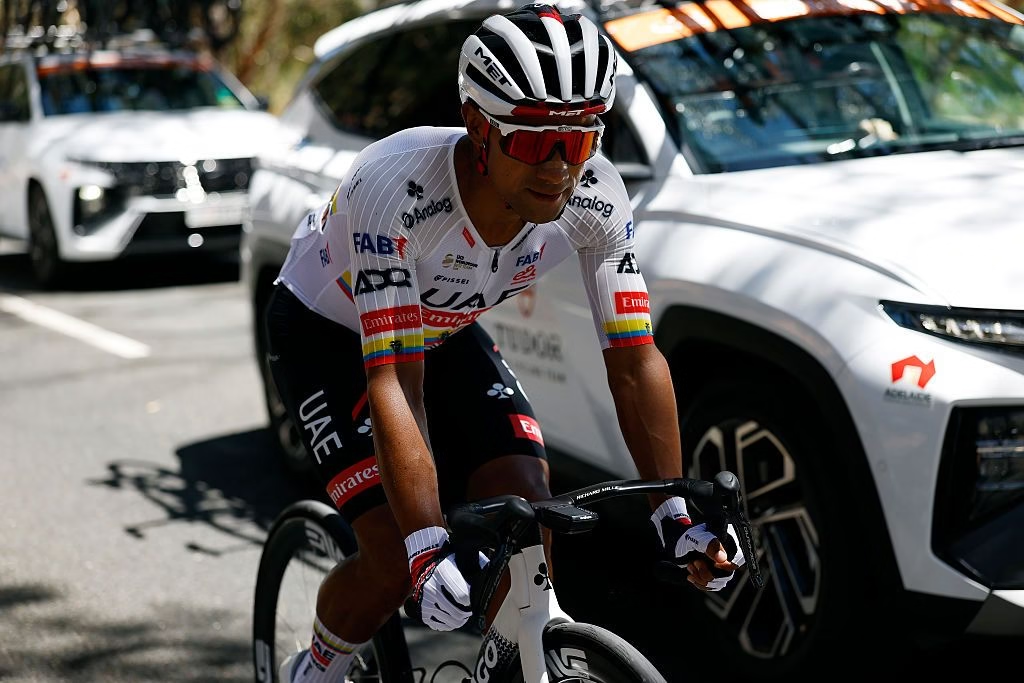 Photo Credit: Getty
Crosswinds, crashes, and a stage that kept trying to split
The expected split did not fully arrive, but the attempt to provoke it did real damage. A major crash around the second hour came as teams battled for position in the wind, briefly splitting the peloton and turning the stage into a chase and regroup exercise rather than a smooth transition towards a sprint.
The consequences were immediate. Vegard Stake Laengen and Danny van Poppel abandoned, while the knock-on effect was felt in the final. NSN lost Jake Stewart to the crash and began the second half of the stage short-handed, which made Vernon’s eventual win as much about improvisation as lead-out strength.
The second lap and the long run-in to a sprint that never found order
As the race hit the finishing circuit again, the break dwindled. Cavagna dropped back first, leaving Greenwood and Plapp to press on, then the peloton allowed them to hover just ahead of the front rather than closing them decisively. That choice summed up the day: plenty of teams wanted to be near the front, fewer were willing to fully commit to the work.
When the break was finally absorbed before the late intermediate sprint, the fighting shifted from chasing to jockeying. UAE moved up to protect Vine, while a broad mix of sprint teams tried to build trains, often blocking each other’s lines. The heat was now a factor in every decision, with riders spending energy simply to hold position and avoid getting boxed into the wind.
Vernon reads the hesitation and commits from distance
The final five kilometres were fast, tailwind-assisted, and tense, but not clean. Several trains formed and dissolved, and the anticipated control from the key sprint teams never truly arrived. Visma-Lease a Bike had moments at the front but could not keep Matthew Brennan in the right place, while Decathlon tried to take over late with Tobias Lund Andresen close to the front.
Vernon’s winning move came from recognising the brief lull that follows a disrupted lead-out. He launched with around 250 metres to go on the slight rise to the line, a committed effort on a drag that rewards a rider who can hold speed under pressure. “I kept it calm because I knew I wasn’t suffering with the heat,” he said afterwards, framing the sprint as a decision made with clear judgement rather than desperation.
Behind him, the fight for wheels turned into a frantic, late sprint rather than a controlled run to the line. Vernon’s advantage was that he created his own space. Once the gap was established, the uphill finish did the rest.
Men’s Tour Down Under Stage 4 result
Results powered by FirstCycling.com
Main photo credit: Getty