
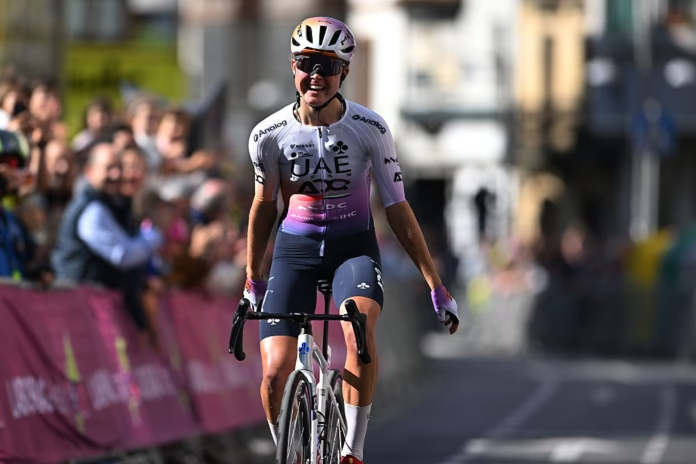
Paula Blasi took control of the 2026 Tour Féminin des Pyrénées with a dominant solo victory on stage 2, attacking on the Col du Tourmalet and carrying her advantage all the way down to Bagnères-de-Bigorre. The UAE Team ADQ rider went clear more than 10 kilometres from the summit, crested the race’s biggest climb alone, then descended without losing control of a lead that had already broken the stage open.
Dominika Włodarczyk completed a UAE Team ADQ one-two by winning the sprint from the chasing group, with Emily Dixon third for Canyon SRAM Generation. Ema Comte, Juliette Berthet and Clémence Latimier finished in the same group, all 1:59 down on Blasi, while Karolina Perekitko was distanced from the chase on the descent after helping form the main counter-move over the Tourmalet.
The result gave Blasi the stage win and the overall lead with one day remaining. With no time bonuses available, the gap on the road became the general classification margin too. Włodarczyk moved to second overall at 1:59, with Dixon, Comte, Berthet and Latimier also on the same deficit before Sunday’s final stage from Nay to Jurançon.
Tourmalet defines the stage
The second stage measured 94.9 kilometres from Arrens-Marsous to Bagnères-de-Bigorre and was built almost entirely around the Col du Tourmalet. The climb itself was 18.9 kilometres at 7.4 per cent, followed by a long descent of almost 30 kilometres to the finish. Unlike a summit finish, the Tourmalet did not end the stage, but it was still the point where the race would be decided.
That made the stage tactically awkward. Any rider who attacked on the climb had to be strong enough not only to open a gap on one of the hardest roads in the Pyrenees, but also to defend it on the descent. Waiting until the top carried the risk of running out of road, while going early meant committing to a long solo effort.
Blasi chose the second option and made it work. After her breakthrough spring, which already included Amstel Gold Race and La Vuelta Femenina, she arrived at the Tourmalet as the obvious danger rider. The rest of the field knew what was coming. Knowing it and stopping it were two very different things.
Venturelli takes early points before Blasi strikes
Before the Tourmalet became the focus, UAE Team ADQ had already been active. Federica Venturelli, second on stage 1 behind Martina Alzini, took maximum points at the intermediate sprint, briefly moving into the lead of the points classification and setting the tone for another strong day from the team.
Once the road began to climb, the bunch quickly fractured. The lower slopes of the Tourmalet stripped the race down, and the strongest climbers moved into position. UAE Team ADQ had numbers and confidence, but the decisive move came from their leader rather than through a long team squeeze.
Blasi attacked more than 10 kilometres from the summit. The move was immediate and clean. She was not testing the group or forcing others to chase. She was going for the stage, the race lead and possibly the overall title in one effort.
Behind her, the chase group formed around the riders best able to limit the damage. Berthet, Comte, Latimier, Dixon, Perekitko and Włodarczyk came together, but they were already on the back foot. Włodarczyk’s presence was tactically useful for UAE Team ADQ, giving them a rider in the chase while Blasi continued alone up front.
Chase group loses time all the way up
The group behind Blasi worked, but the gap kept growing. At around 7 kilometres from the summit, the deficit was already 1:05. By the top of the Tourmalet, Blasi’s lead was close to 1:50 over the chasers, with the rest of the field even further back.
That was the clearest measure of her climbing superiority. Berthet had experience and rhythm, Comte and Latimier were both producing strong rides, Dixon was one of the revelations of the day, and Perekitko had enough strength to stay in the counter-move over the climb. None of them could stop the gap from opening.
Włodarczyk made a move from the chasing group as Blasi’s advantage approached 2 minutes, a slightly unusual attack given her teammate was alone in front, but the Polish rider also had her own general classification position to consider. Dixon and Latimier followed, while Comte later made contact again. Berthet, who had helped shape the chase earlier, also worked her way back into the group.
The climb had already decided the stage by that point. The question was whether the chasers could reduce the gap on the descent or whether Blasi would keep extending her advantage towards Bagnères-de-Bigorre.
Blasi holds firm on the descent
Blasi did not give anything back. Alone over the summit, she descended with the same control she had shown on the climb, keeping the gap close to 2 minutes as the road dropped towards the finish. The Tourmalet had given her the gap, but the descent confirmed the win.
Behind, the chase group continued to change shape. Włodarczyk again tried to get clear on the descent, looking to secure second place and strengthen UAE Team ADQ’s hold on the race. She was brought back with under 9 kilometres remaining, while Perekitko lost contact and dropped out of the group.
That left Włodarczyk, Dixon, Comte, Berthet and Latimier to contest second place. The stage win was long gone, but the podium, the top of the general classification and the team result were still at stake.
Blasi reached Bagnères-de-Bigorre alone and had time to celebrate properly. She crossed the line 1:59 clear, turning the Tourmalet stage into a race-defining ride. It was her fourth victory of the season and another marker in what has become one of the standout breakthrough campaigns in the women’s peloton.
UAE Team ADQ complete the one-two
The sprint for second gave UAE Team ADQ the result they had been working towards all day. Włodarczyk used her finishing speed to beat Dixon and secure second place on the stage, completing a one-two for the team and moving into second overall behind Blasi.
Dixon’s third place was a significant result for Canyon SRAM Generation, especially on a stage defined by one of the most famous climbs in cycling. Comte also impressed for Cofidis, backing up the team’s stage 1 success with a strong climbing performance a day after Alzini had taken the opening leader’s jersey. Berthet and Latimier completed the front group, with Latimier’s ride one of the more eye-catching performances from outside the WorldTour squads.
The next group finished 3:46 behind Blasi, with Quinty Schoens, Usoa Ostolaza, Yuliia Biriukova and Eisen Malou rounding out the top 10. Ostolaza, winner of the previous two editions of the Tour Féminin des Pyrénées, remained in the race but lost too much time to stay in contention for a third consecutive overall title unless Sunday produces major upheaval.
Blasi takes command before final stage
This was the kind of performance that confirmed Blasi’s 2026 season has moved beyond surprise. Her Vuelta Femenina victory showed she could win a major stage race under pressure, Amstel Gold Race showed her one-day range, and the Tourmalet showed again that when the road climbs long enough, she can create differences few riders can answer.
The race is not officially over, but Blasi’s 1:59 lead gives her control before the final stage. Sunday’s 114.4-kilometre route from Nay to Jurançon is punchy rather than mountainous, which should make it harder for her rivals to overturn such a margin without an exceptional tactical race.
For UAE Team ADQ, the day was close to perfect. Venturelli took points early, Blasi won the stage and took the leader’s jersey, and Włodarczyk secured second on the stage and second overall. The team now has the strongest rider in the race, a near-two-minute lead, and another rider sitting directly behind her on GC.
The Tourmalet was expected to decide the Tour Féminin des Pyrénées, and Blasi made sure it did. She attacked early, climbed away from everyone, descended without giving back time, and reached Bagnères-de-Bigorre with the race firmly in her hands.
Tour Féminin des Pyrénées 2026 stage 2 result
| Position | Rider | Team | Time/gap |
|---|---|---|---|
| 1 | Paula Blasi | UAE Team ADQ | 2:42:15 |
| 2 | Dominika Włodarczyk | UAE Team ADQ | +1:59 |
| 3 | Emily Dixon | Canyon SRAM Generation | +1:59 |
| 4 | Ema Comte | Cofidis Women Team | +1:59 |
| 5 | Juliette Berthet | FDJ United-SUEZ | +1:59 |
| 6 | Clémence Latimier | Ma Petite Entreprise | +1:59 |
| 7 | Quinty Schoens | VolkerWessels Cycling Team | +3:46 |
| 8 | Usoa Ostolaza | Laboral Kutxa-Fundación Euskadi | +3:46 |
| 9 | Yuliia Biriukova | Laboral Kutxa-Fundación Euskadi | +3:46 |
| 10 | Malou Eisen | VolkerWessels Cycling Team | +3:46 |

