
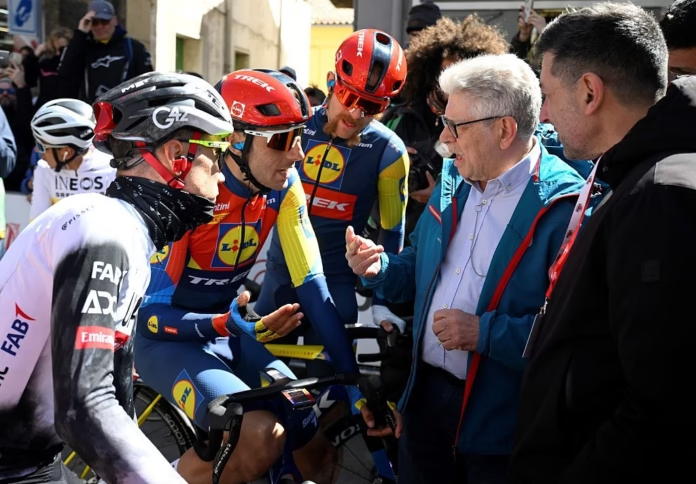
Volta Ciclista a Catalunya 2026 has the sort of startlist that instantly raises the level of the race. Jonas Vingegaard, João Almeida and Remco Evenepoel are the obvious headline names, but they are far from the whole story. Tom Pidcock is here. So are Enric Mas, Carlos Rodriguez, Mattias Skjelmose, Mikel Landa, Richard Carapaz and Ben O’Connor, plus a second line of younger climbers who could still change the shape of the week if the favourites hesitate.
The route gives them that chance too. The opening three stages should keep the race tense without deciding much, then Vallter, Coll de Pal and Queralt should push the real climbers to the front before Barcelona closes the week with its usual short, aggressive sting.
That route shape matters because Catalunya is rarely won by the biggest name alone. It is won by the rider who handles the transition from caution to commitment best. The first three stages are awkward rather than decisive. Stage 4 at Vallter is the first proper sorting point. Stage 5 to Coll de Pal is the hardest test of the week. Stage 6 to Queralt means nobody gets a soft reset after that. Then stage 7 in Barcelona remains dangerous enough that a close GC can still be attacked on the last day.
If you want the route logic behind these names first, the Volta Ciclista a Catalunya 2026 full route guide is the best place to start. If you want the team depth and tactical layers behind the favourites, the Volta Ciclista a Catalunya 2026 team-by-team guide shows where the race could become more complicated than a simple three-way duel.
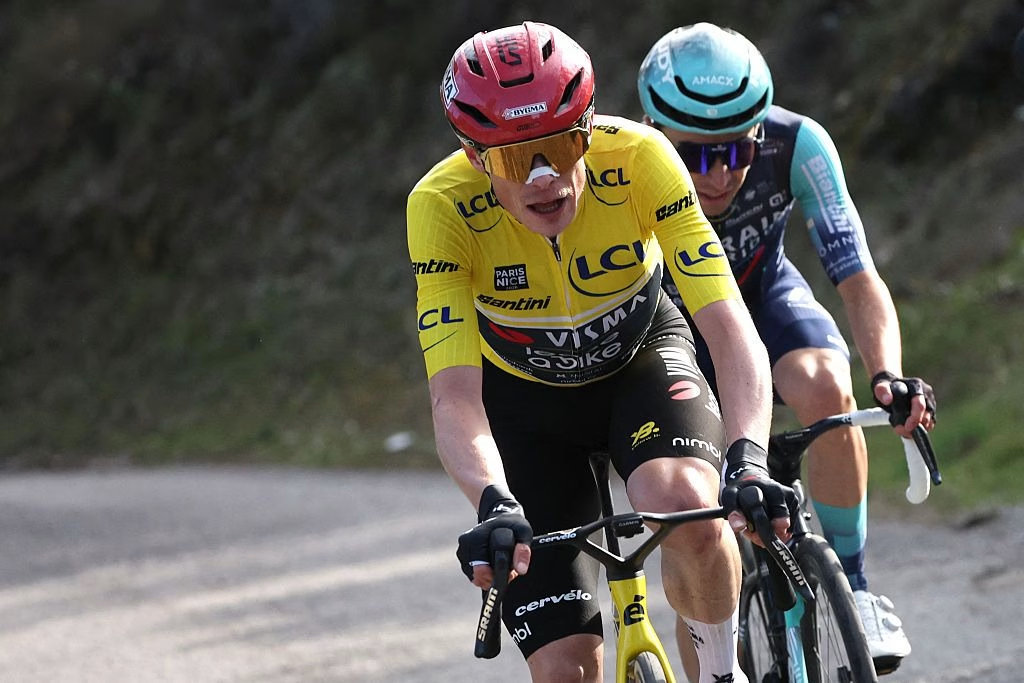
Jonas Vingegaard starts as the reference point
It is hard to look beyond Jonas Vingegaard as the rider everyone else has to measure themselves against. Catalunya’s mountain block looks exactly the kind of terrain where he can take control if he is close to his best. There are three summit finishes, one brutally hard queen stage, and a route that should reward the kind of calm accumulation he does so well.
What makes him even more dangerous is that Team Visma | Lease a Bike have brought enough climbing support to stop him being isolated too early. Sepp Kuss, Wilco Kelderman, Bart Lemmen and others mean the team can control the race if they need to, but also have enough depth to ride it aggressively if another team tries to make things strange. Catalunya can sometimes reward layered attacks and shifting pressure rather than one giant show of force. Visma are one of the few teams who can comfortably handle either script.
João Almeida may be the cleanest route fit
If Vingegaard is the strongest all-round favourite, João Almeida may be the rider who fits this route most naturally. Catalunya often rewards riders who can stay close every day rather than produce one spectacular mountain-stage knockout, and few riders in the field are better at that than Almeida. He tends to ride these weeks with a very high floor. He rarely disintegrates, rarely overreaches too early, and usually turns repeated hard stages into a test of who can keep matching him.
The bigger strength of UAE Team Emirates-XRG is that the team around him is strong enough to do more than ride passively for one leader. Jay Vine can be devastating if a mountain stage opens early. Brandon McNulty gives them another credible all-round card. Marc Soler is exactly the sort of rider who can turn a controlled mountain day into something stranger and less comfortable.
Even if he is not the flashiest rider in the race, Almeida looks like one of the safest podium calls and one of the most credible winners if the gradients do not create huge gaps in one blow.
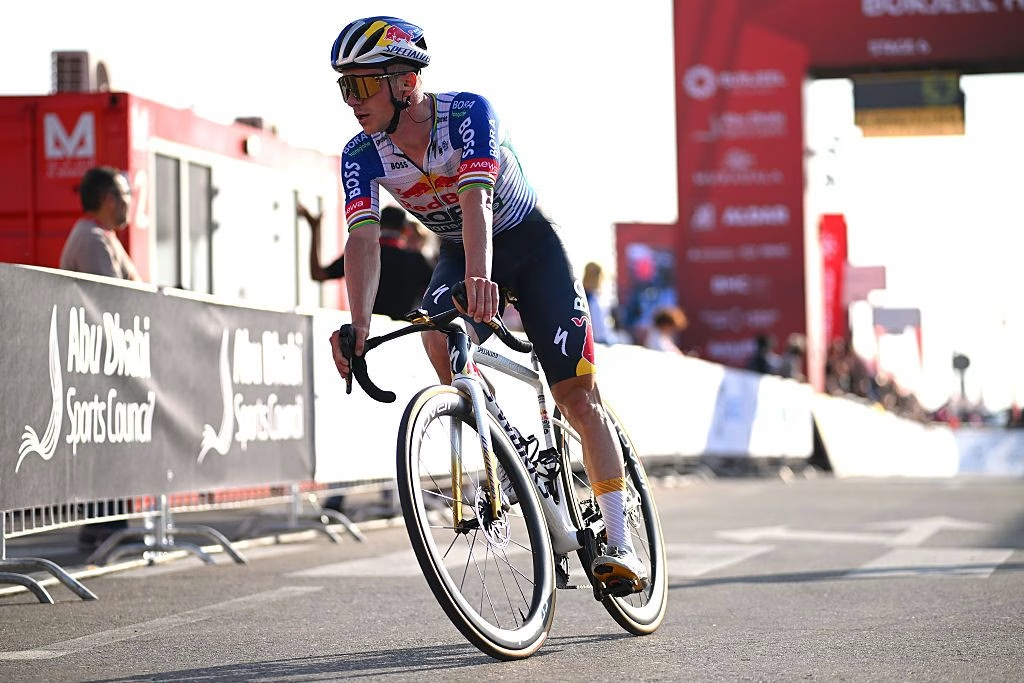
Remco Evenepoel is the great uncertainty
Normally, Remco Evenepoel would sit right alongside Vingegaard and Almeida as one of the obvious top-tier favourites. In pure talent terms, he still does. The issue is not quality. It is uncertainty.
If he starts and is close to full condition, he is a genuine race winner. Catalunya’s first three stages should allow him to settle in, and if he is sharp enough by Vallter he has the climbing quality and race-winning aggression to take the race on directly. But if he arrives slightly compromised, this route is too hard for anyone to bluff their way through. A slightly below-par Evenepoel is not the same proposition as a fully loaded one, especially with Vingegaard and Almeida here.
He is still one of the leading contenders, but he is also the contender surrounded by the biggest pre-race question mark.
Tom Pidcock could make the race unpredictable
Tom Pidcock is not the safest overall pick here, but he may be one of the riders most capable of changing the feel of the race. Catalunya suits riders who can exploit awkward stages, attack from unusual moments and still survive in the mountains, and Pidcock remains one of the best in the field at turning a predictable race into something else.
The question is whether that adds up to a podium over a full week against riders like Vingegaard and Almeida. That is harder to see. But if the GC gaps stay tight into Barcelona, or if one of the mountain stages opens up earlier than expected, Pidcock becomes the sort of rider everyone else needs to watch closely.
He may not have the same week-long certainty as the top GC men, but he has routes to winning stages and routes to disrupting the overall.
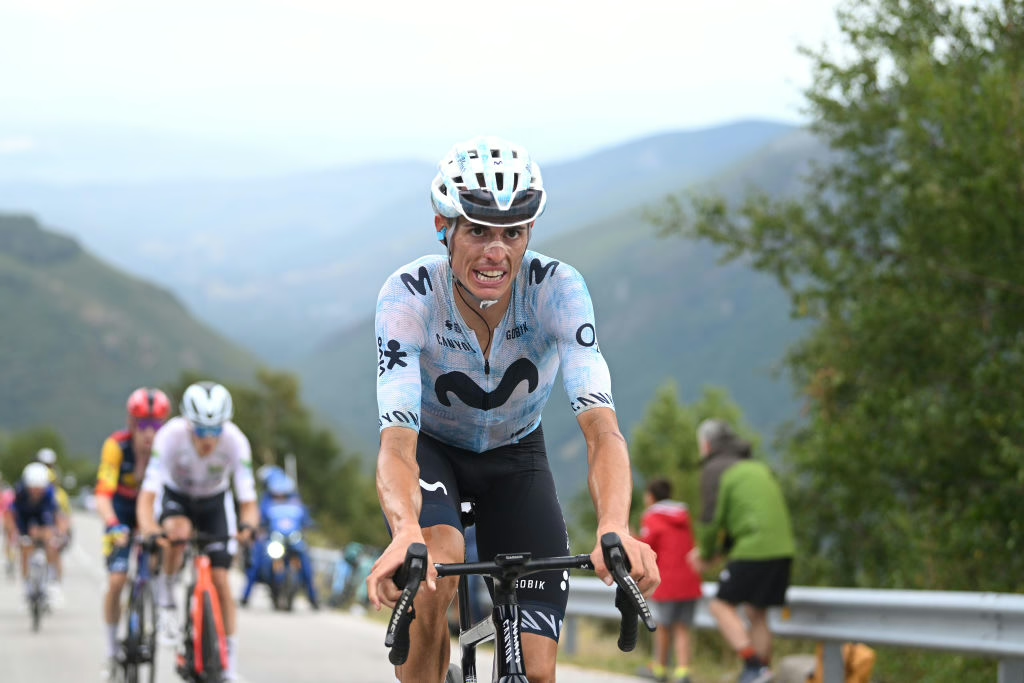 Photo Credit: Getty
The second line of GC contenders is deep
Enric Mas, Carlos Rodriguez, Mattias Skjelmose, Mikel Landa, Richard Carapaz and Ben O’Connor all sit in that dangerous second tier where a podium is realistic and a win becomes realistic if one or two bigger names falter. Catalunya is exactly the sort of race where that can happen.
Mas should like the route. He is rarely the rider who takes a race by the throat, but he is very good at staying in contention until others begin to crack. Carlos Rodriguez has the profile for this week too, particularly if INEOS Grenadiers can keep him protected through the opening stages. Skjelmose gives Lidl-Trek a serious GC card, with enough punch and climbing consistency to be relevant across the full week. Landa always makes sense in this race, and Carapaz is the rider in this group most likely to choose aggression over patience if he senses a chance. O’Connor, meanwhile, is exactly the type of rider who can keep climbing into the top five while flashier riders take bigger risks.
That group matters because the route is hard enough to expose weakness, but not necessarily in a neat, one-dimensional way. If the biggest favourites mark each other too closely, the riders just beneath them in the hierarchy can still make this a much more complicated race than expected.
Florian Lipowitz, Lenny Martinez and the younger climbers could shift the hierarchy
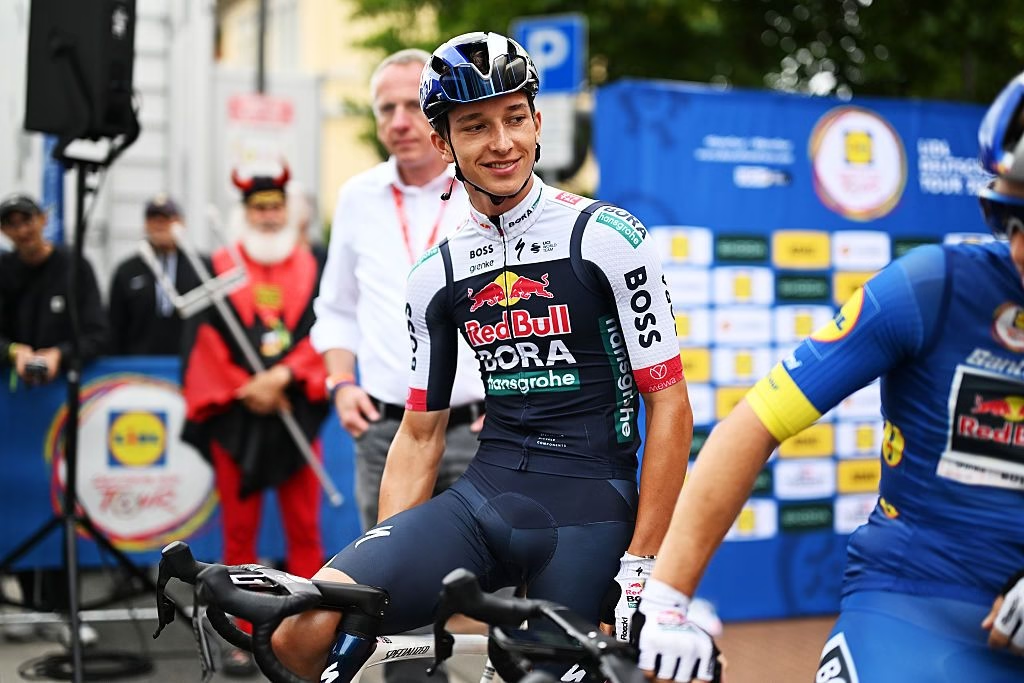
One of the most interesting aspects of this Catalunya startlist is how many younger or still-rising climbers have been placed around the established leaders. Florian Lipowitz has already outgrown the label of mere support rider and now looks like a legitimate contender in his own right in a race like this. Lenny Martinez remains one of the most explosive young climbers in the field, and if Bahrain Victorious choose to give him room alongside Santiago Buitrago, he could shape one of the summit finishes.
There are others too. Cian Uijtdebroeks, Jørgen Nordhagen, Matthew Riccitello and Paul Double are all here with different levels of pressure and possibilities attached to them. Not all of them are realistic podium candidates in this field, but races like Catalunya are where the next layer of hierarchy often becomes visible. A top-10 here can mean much more than a top-10 on paper.
The mountain stages should decide it, but not all at once
The easiest mistake with this race is to assume one climb settles everything. Catalunya does not always work like that. Vallter should establish the first real hierarchy. Coll de Pal is the stage most likely to create serious gaps. Queralt then arrives at the precise moment the race is already tired, which can make it more dangerous than it first appears. Barcelona, finally, is the stage nobody should dismiss if the GC remains close.
That sequence is why riders like Almeida and Mas feel so natural for the route, and why riders like Vingegaard still stand out as the benchmark. It is not just about climbing explosively once. It is about repeating the effort, day after day, without leaving a weak point exposed.
-
 Photo Credit: Billy Ceusters / Getty Images

Final verdict
Jonas Vingegaard starts as the reference point. João Almeida looks like the cleanest route fit if the race becomes a matter of repeated consistency. Remco Evenepoel would be right there with them in pure ability terms, but the uncertainty around his preparation stops the picture from feeling fully straightforward.
Behind them, Tom Pidcock, Enric Mas, Carlos Rodriguez, Mattias Skjelmose, Richard Carapaz, Mikel Landa and Ben O’Connor give the race enough depth that any mistake at the top could be punished immediately.
So the simplest way to frame Volta Ciclista a Catalunya 2026 is this: Vingegaard is the man to beat, Almeida is the most obvious rider to beat him, and Evenepoel is the great uncertainty who could still change the whole script if he arrives right. Everything behind that should be complicated enough to make the week worth watching.
For the wider race picture, the Volta Ciclista a Catalunya 2026 team-by-team guide and Volta Ciclista a Catalunya 2026 full route guide are the best next reads.

