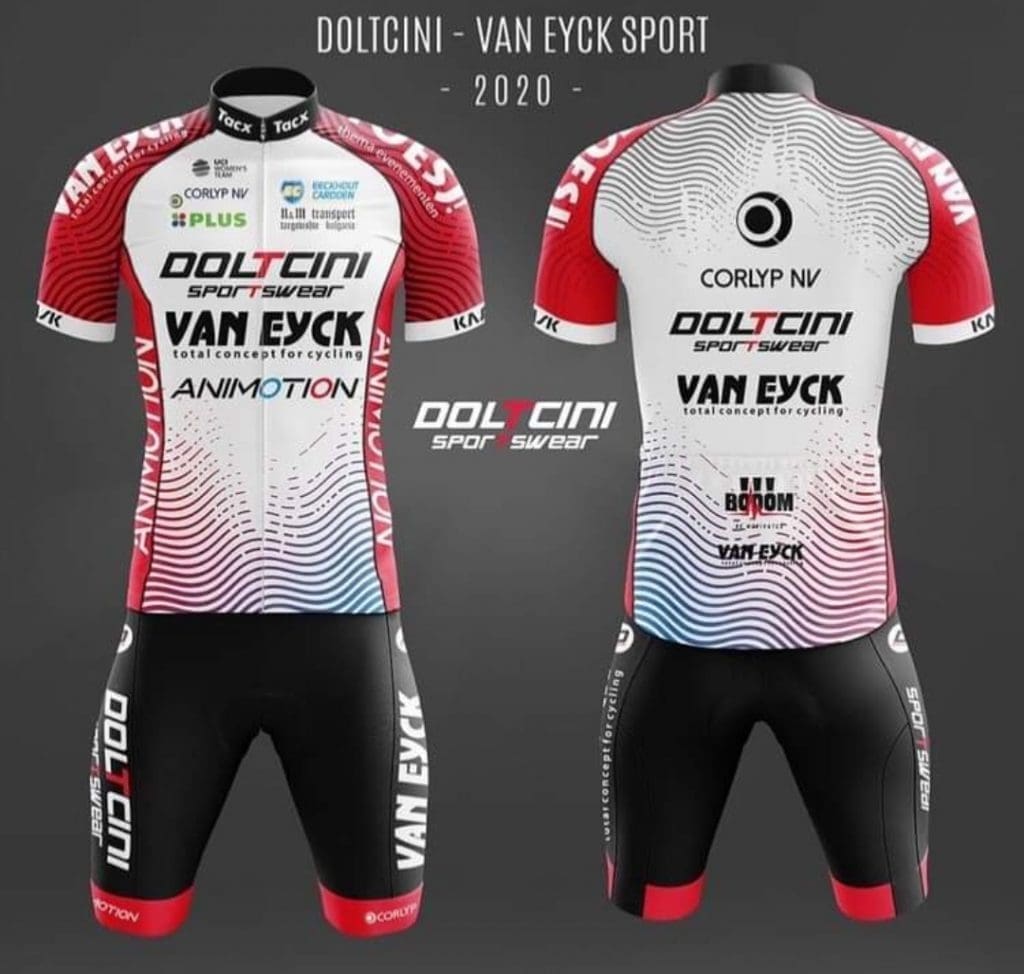
Vuelta a Burgos Féminas gave Doltcini-Van Eyck Sport a little bit of everything in 2019. There was an aggressive opening stage, a hard uphill finish in difficult weather, a selective third day that split the field, and another demanding hilly stage to close the race. By the end of it, the team had placed two riders inside the top 10 overall, with Tetiana Riabchenko finishing 6th and Daniela Reis 10th. That made it a strong week, even without a stage podium.
What made the race especially encouraging was how those results were built. This was not a case of one isolated performance carrying the whole week. Reis gave the team an immediate foothold in the race on the opening day, while Riabchenko grew into the event and turned steady, well-judged climbing performances into a real general classification result.
Stage 1 – Daniela Reis gets into the decisive move
The first stage brought mixed emotions, but it also delivered the team’s most aggressive ride of the race. A group of 12 riders managed to break clear of the peloton, and Daniela Reis was in exactly the right place when it happened. That mattered because the move stayed away to the finish, giving Doltcini-Van Eyck Sport an early presence at the sharp end of the race.
Reis crossed the line in 8th, which immediately put the team on the right side of the overall classification. There were frustrations elsewhere on the stage. Mieke Docx did not finish, while Marion Sicot suffered a puncture at precisely the wrong moment, just as the key move was forming. Sicot still made it home in 54th, with Tetiana Riabchenko 55th and Anisha Vekemans 71st.
So while the stage delivered a clear positive through Reis, it also left the sense that the team might have had even more to show with a cleaner run through the crucial moment.
Stage 2 – Riabchenko begins to emerge
The second stage was harder, with hills, rain and wind shaping the day before a finish on a steep 2km climb that ramped up to 15 per cent. Even without big attacks, it was always likely to be selective because the finish itself asked a sharp question.
That kind of finale suited Riabchenko. She crossed the line in 12th and began to look like the team’s strongest card for the overall standings. Reis followed in 20th, Marion Sicot was 43rd and Vekemans 78th.
It was not a dramatic stage in terms of time gaps, but it was an important one in the context of the race. Riabchenko showed she could stay close when the road tilted up, and the team came through the day still holding two useful positions in the overall picture.
Stage 3 – the race splits and the GC shape becomes clear
The third stage was one of the key days of the week. On a hilly route, the field broke apart and small gaps opened up almost everywhere across the result sheet. These are often the most important stages in races like Burgos because they reward riders who can keep responding when the pace surges again and again.
Riabchenko handled that well and finished 7th on the stage, just 12 seconds down on the winner. That was the clearest sign yet that she could turn this race into a meaningful GC result. Reis finished 16th and Sicot 43rd, while Anisha Vekemans unfortunately had to abandon.
Even with the loss of a rider, this was one of the team’s strongest days of the race because their overall ambitions were no longer just theoretical. Riabchenko had moved into a genuine top-10 position, and Reis was still holding her own.
Stage 4 – defending the week’s work
The final stage brought another hilly course, so there was still work to do. Burgos is not the kind of race where a strong position is safe until the line. Riders still have to make the right selections and avoid drifting backwards when the road gets harder late on.
Doltcini-Van Eyck Sport managed that well enough. Riabchenko finished 14th and Reis 19th, both staying in the peloton and protecting the overall positions they had spent the week building. Sicot lost some time and came home 60th, but by then the more important story for the team was in the GC.
Riabchenko secured 6th overall, Reis finished 10th, and Sicot ended the race 54th. For a team that had started the race by getting Reis into the decisive move on stage 1, it was a coherent and productive four days.
Why Burgos was a successful race for Doltcini-Van Eyck Sport
What made this Vuelta a Burgos particularly positive for the team was the balance of the performance. Reis gave them initiative at the start of the race. Riabchenko then built on that as the terrain became more selective. Together, they gave Doltcini-Van Eyck Sport two riders in the final top 10, which is the kind of result that reflects both individual quality and collective depth.
There were setbacks along the way, with Docx not finishing the opening stage and Vekemans abandoning later in the race, but the team still managed to keep the week under control. On a route shaped by hills, weather and repeated small selections, that was no small thing.
This was not a Vuelta a Burgos built around one spectacular moment. It was built through smart positioning, consistency and making the most of the terrain when it mattered. That is often how good stage races are ridden, and in 2019 Doltcini-Van Eyck Sport did enough to come away with a result that deserved to be recognised.
Results powered by FirstCycling.com