The race that mattered in Spain on Sunday was the Vuelta CV Feminas, 94.7 kilometres from Bétera into Valencia over lumpy terrain that rarely lets a one-day field settle into a clean rhythm. It was short, sharp, and full of the kind of repeated accelerations that turn a “reduced sprint” into a guessing game.
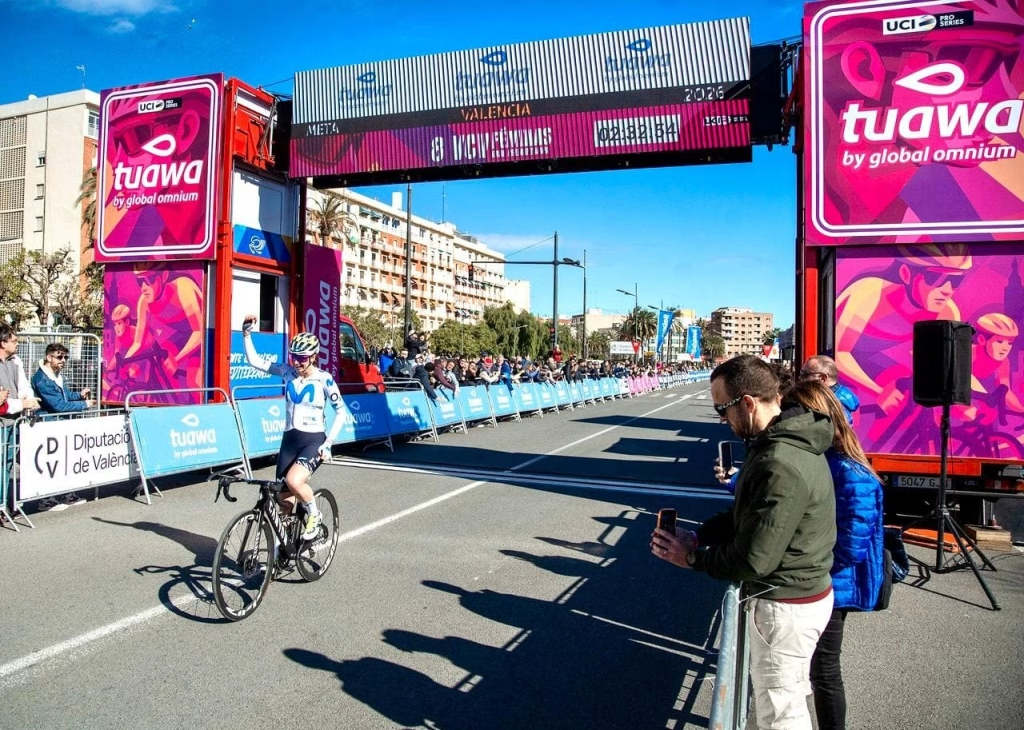
Movistar came with two obvious cards, the fast finish of Cat Ferguson if the race stayed together, and the punch and timing of Liane Lippert if it didn’t. In the final kilometres, they stopped waiting for the sprint scenario and chose the one move that ended the debate. Lippert attacked with roughly four kilometres to go, carved out a gap in the hesitation, and then held it to the line for her first win of 2026.
An early break gains room but never the freedom to relax
The opening phase followed the familiar pattern for a 1.Pro one-day race that starts rolling straight away. Three riders slipped clear early and, crucially, the peloton let the gap grow without ever letting it become comfortable.
Femke van Goethem of Citymesh-Customm was the most notable name in that early move, joined by Noémie Abgrall and Agua Marina Espínola. The advantage rose steadily, but the bunch kept it on a tight leash. There was no sense of a day-long escape being gifted a proper chance, more a controlled allowance while the favourites waited for the terrain to do its work.
That mattered because it shaped how the middle of the race was raced. The break were always visible, always close enough to be brought back once the big teams committed, and always vulnerable to what came next, the day’s decisive climb.
Puerto del Garbí blows the race apart and creates the first real selection
The decisive moment of the race arrived on the Puerto del Garbí, the second and final categorised climb, where the tempo changes from nervous to ruthless. The break began to splinter there, with Abgrall the strongest of the trio as the gradient did its sorting. But the bigger story was behind, where the favourites started to punch holes in the peloton.
A counter group formed out of the thinning bunch and it was a serious one. Lippert was there. Pauliena Rooijakkers was there in her first race for her new team. Urška Žigart appeared in the mix, as did Lore De Schepper. The message was simple, the climb was not just a place to “follow”, it was a place to force the race into smaller, sharper pieces.
By the time the descent began, the race had already been reduced to something like an elite selection. Abgrall’s time at the front was done, and after the summit and the drop back down, around twenty riders remained in the front group, the break absorbed and the hierarchy rewritten.
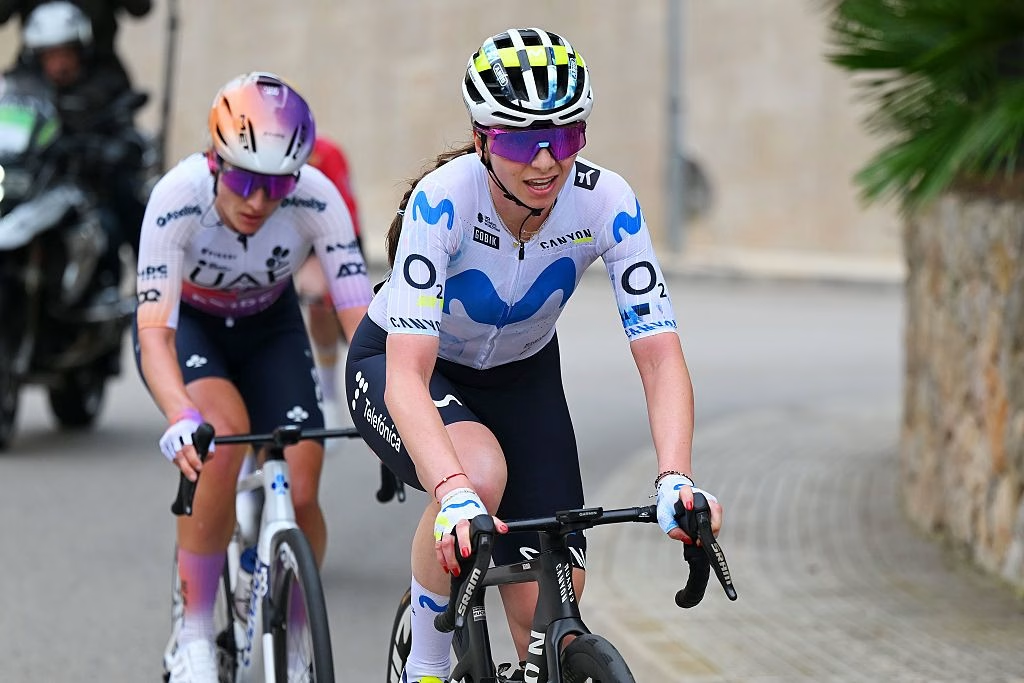 Photo Credit: Getty
A tense valley section, no clear control, and a race begging for an attack
Once the road flattened again, the race should have stabilised, but it didn’t. No one team truly owned the front. That lack of authority created a dangerous kind of racing, repeated surges, short-lived separations, and constant reorganisation as riders tried to anticipate rather than react.
That suited the opportunists. Attacks kept coming because the situation invited them, a group small enough to be anxious, but large enough to make cooperation unreliable. Riders who wanted a sprint could not guarantee one. Riders who wanted to avoid Ferguson’s finishing speed had every reason to keep the pace jagged and force Movistar to work.
Movistar work for Ferguson, then pivot to Lippert when the finale fractures
Movistar’s initial posture suggested they were happy to take the sprint path. Ferguson looked like the clean favourite if the race arrived together, and Lippert, alongside Sara Martín, did the kind of controlled work that keeps a reduced group intact long enough for a fast finisher to be delivered.
But the final kilometres were too volatile for a neat plan. The attacks returned in a wave, riders sensing that this was the last chance to avoid being lined up and beaten. When Martín’s long effort began to fade and the front group started to look at each other, Movistar recognised the moment for what it was, a small window of uncertainty.
Lippert hit it.
She accelerated with around four kilometres remaining, opened a gap immediately, and crucially, kept pushing when the group behind tried to decide who should respond. That hesitation was her oxygen. With each second of doubt, Lippert’s advantage became harder to close, because the chasing group was full of riders who wanted the sprint, and equally full of riders who wanted someone else to do the chasing.
Lippert holds the solo and Valencia watches her finish it off
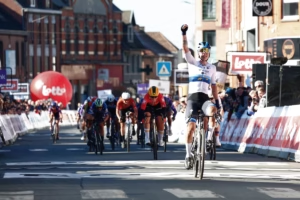
Once she was clear, the task became simple in concept and brutal in practice. Keep the effort steady, stay aerodynamic, don’t give the chasers a rhythm. Lippert did exactly that, holding her advantage through the final run-in and reaching the line with enough room to celebrate properly rather than simply survive.
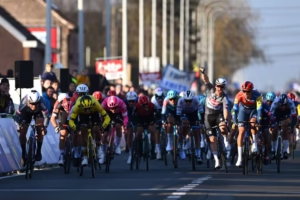
Behind, the group finally arrived for the sprint for the remaining podium places. Shari Bossuyt won that kick for second, beating Ferguson, who still made it a strong Movistar day by taking third and underlining that even with the sprint taken away, the team’s plan had still been built on real strength rather than hope.
Further back, there were strong rides from several riders who had survived the Garbí selection and the constant late attacks, with multiple Dutch riders inside the top ten and a race that felt fast from the moment it became serious.
2026 Vuelta CV Feminas result
[results]