A cycling VO2 max test measures how much oxygen you can use during a progressively harder effort. It can establish an aerobic-fitness baseline, but the useful outcome is knowing what to do with the result. A score without an explanation of the protocol, your training and the limitations tells only part of the story.
What a laboratory test measures
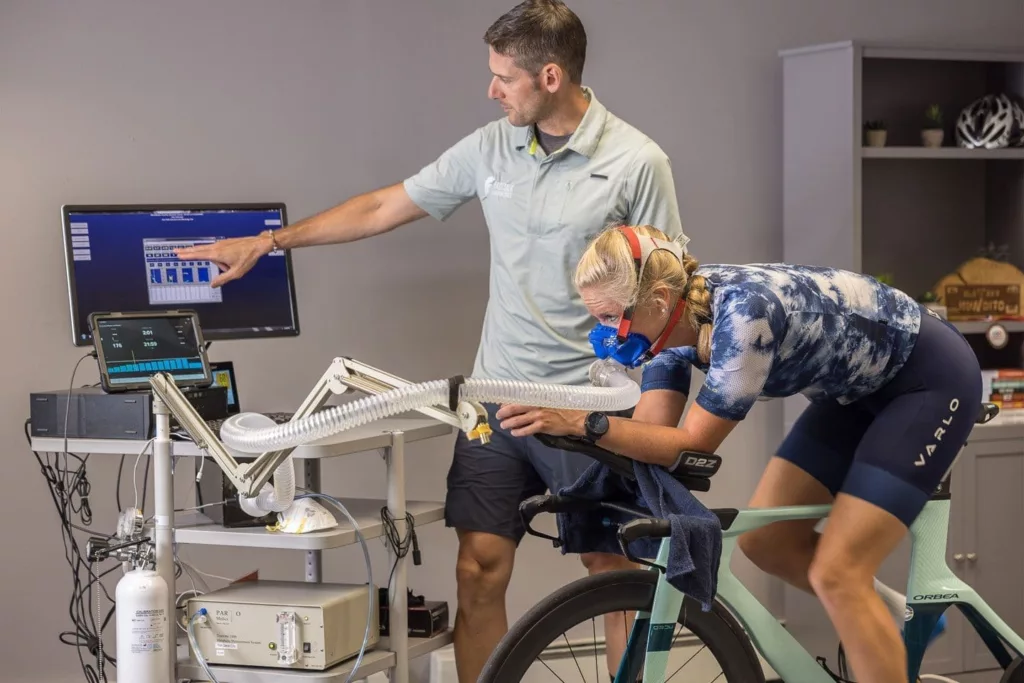
You usually ride an exercise bike or ergometer while wearing a mask connected to gas-analysis equipment. Resistance increases until you reach your limit. The equipment measures respiratory gases, rather than estimating oxygen uptake solely from heart rate or speed.
Results may be expressed as litres per minute or relative to body mass in millilitres per kilogram per minute. The relative figure can change when body mass changes, even if absolute oxygen uptake does not. Ask which measure is being compared when you look at progress between tests.
Some reports use VO2 peak, meaning the highest oxygen uptake observed in that test. Whether a result is described as peak or maximum depends on the protocol and criteria used. A cycling test is also more specific to cycling than a treadmill test.
What else should the appointment include?
Ask whether the service measures only maximal oxygen uptake or also includes lactate or ventilatory thresholds, efficiency and a training consultation. Those are related assessments, but they are not automatically part of every VO2 max booking. A broader physiological profile may answer more useful questions about pacing than a single maximum value.
The report should explain how any training zones were established. Zones derived from thresholds, percentages of maximum heart rate and percentages of FTP are different systems. Understand which one your coach or app uses before transferring numbers between them.

VO2 max is not FTP
VO2 max describes oxygen uptake; FTP is a power-based training concept. Riders with similar oxygen uptake can produce different sustainable power because efficiency, the fraction of aerobic capacity they can maintain and other factors differ. There is no reliable universal conversion from a VO2 max score to FTP.
Our guide to professional cyclists’ FTP and power estimates provides context for comparing performance figures. Lab oxygen uptake, measured power and estimated climbing power should remain distinct.
When testing is useful
Testing works best when it addresses a question: whether a training block changed aerobic capacity, how to set intensities, or where a broader profile suggests a limitation. Agree that question with the tester before booking.
For a repeat test, use a comparable protocol and preparation. Recent hard training, illness, sleep, nutrition and motivation can affect performance on the day. Treat small changes cautiously and ask about measurement variability rather than assuming every change reflects a meaningful adaptation.
Preparing for the appointment
Follow the laboratory’s instructions on food, drink, caffeine and exercise beforehand. Do not impose a generic fasting rule that conflicts with the protocol. Tell staff about relevant symptoms, conditions and medication, and complete their health screening honestly. Do not change prescribed medication for a fitness test without medical advice.
Bring the requested clothing and shoes, and check whether you can use your own pedals or bike. A maximal test is demanding; speak to the provider about postponing if you feel unwell. Performance testing is not a substitute for assessment of unexplained chest pain, fainting or unusual breathlessness.
Using the result
Connect the findings to a manageable programme and judge progress alongside how you ride and recover. Our Mallorca 312 training guide shows how training can reflect the demands of a long event. Device estimates can show trends, but they are not the same measurement as laboratory gas analysis. Keep notes about the method and conditions whenever you compare results.