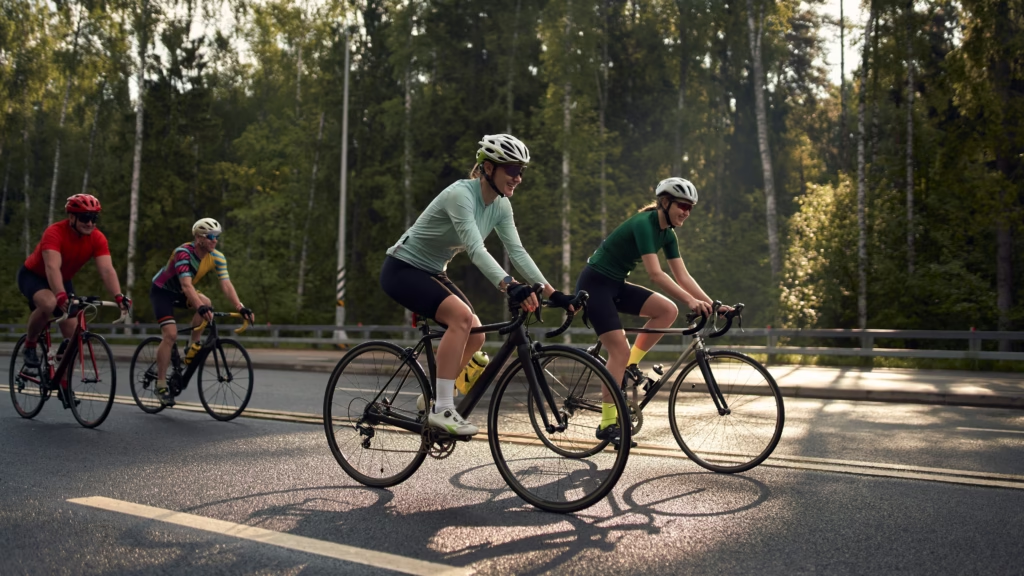
You do not need a pro-level race bike to start road cycling in the UK. What you really need is a bike that fits you, feels stable on rough British roads, copes with the weather and suits the kind of rides you actually plan to do.
Once you strip away the noise about carbon, aero and electronic shifting, the picture becomes much clearer. Let’s walk through it step by step.
Begin with the riding, not the bike
Before you think about frame material or groupsets, be honest about how you expect to ride.
Are you picturing evening spins of an hour or two on local lanes, or long Sunday rides with a club? Is the big goal a sportive like RideLondon, or do you mainly want to commute and get fitter along the way? Most new riders in the UK want some mixture of all of that – fitness, social rides and a couple of bigger events each year.
For that rider, the best starting point is almost always an endurance road bike or a road-leaning all-road bike. These are designed around comfort, stable handling and versatility rather than pure racing. They sit you a little more upright, take wider tyres and feel calmer on broken tarmac. You can still ride them fast, but you are not fighting the position on every ride.
Dedicated race bikes have their place, especially if you are already very fit and know you want to race, but they are less forgiving and not really built with British back roads in mind.
How much should you spend?
There is no single correct number, but there are clear brackets where the value changes.
- Under about £500, you are often looking at older models, heavy frames or supermarket-level bikes. They will roll, and they are fine if the main goal is simply trying drop bars, but you are likely to compromise on weight, long-term durability and the quality of the parts.
- Between roughly £500 and £1,200 is the real sweet spot for a first “proper” road bike. Expect a good aluminium frame, usually with a carbon fork, sensible gearing and branded components that will stand up to British weather.
- From £1,200 to £2,000, you step into lighter frames, better wheels and higher-tier groupsets. This is still “normal person” territory, and if the budget allows, it gives you a bike that can happily handle fast club rides and big sportives for years.
If you can use a Cycle to Work scheme through your employer, it is worth doing the maths. Spreading the cost and saving tax can pull a mid-range endurance bike into reach without feeling reckless.
What type of road bike suits the UK best?
Most beginners will be happiest on one of three broad styles.
Endurance road bike
This is the default choice for a new UK road rider. The position is slightly more upright, the wheelbase is a touch longer and there is usually space for 28 mm or 30 mm tyres. The handling is steady rather than twitchy, and many models will take mudguards. It is the bike you can ride for three hours on rough lanes and still feel human at the café.
Race-style road bike
Here the front end is lower, the reach is longer and the whole frame feels more direct. If you are flexible, already in good condition and determined to ride hard and fast, it can work. If you are not sure, it is very easy to end up a little too stretched and uncomfortable, especially on British roads that are rarely smooth.
All-road or light gravel bike
These bikes blur the line between road and gravel. They will usually clear 35 mm or wider tyres, have slightly slacker handling and often come with extra mounts for guards, racks and bags. Fit them with 30–32 mm slick tyres, and they make very capable UK road bikes, particularly if your local riding includes lanes, towpaths and bridleways.
If your aim is a mix of fitness rides, club runs, and the odd event, an aluminium endurance bike with a carbon fork is the simplest answer.
Frame material and fit – what actually matters
It is easy to get hung up on carbon versus aluminium, but at this stage, fit matters far more than material.
For a first road bike, an aluminium frame with a carbon fork is a very sensible baseline. Aluminium offers good value and reasonable weight. Paired with a carbon fork and wider tyres, it can handle rough surfaces well enough for most riders. Steel frames still exist and can ride beautifully, but they are often a little heavier. Carbon can be lighter and more comfortable, but at beginner price points, you are often paying more without fully using the advantage.
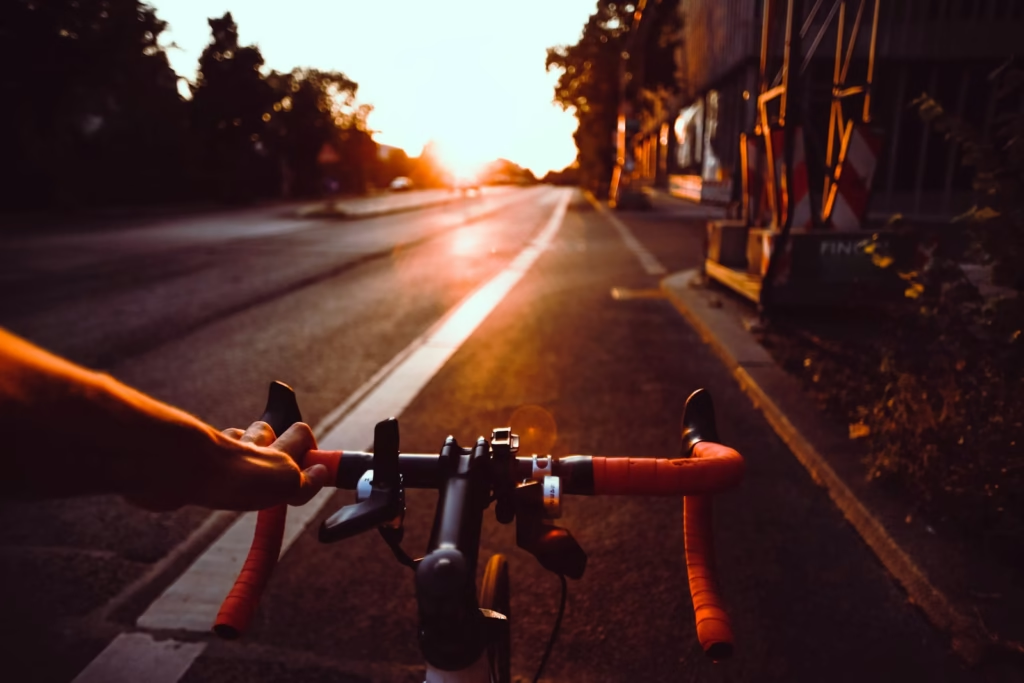
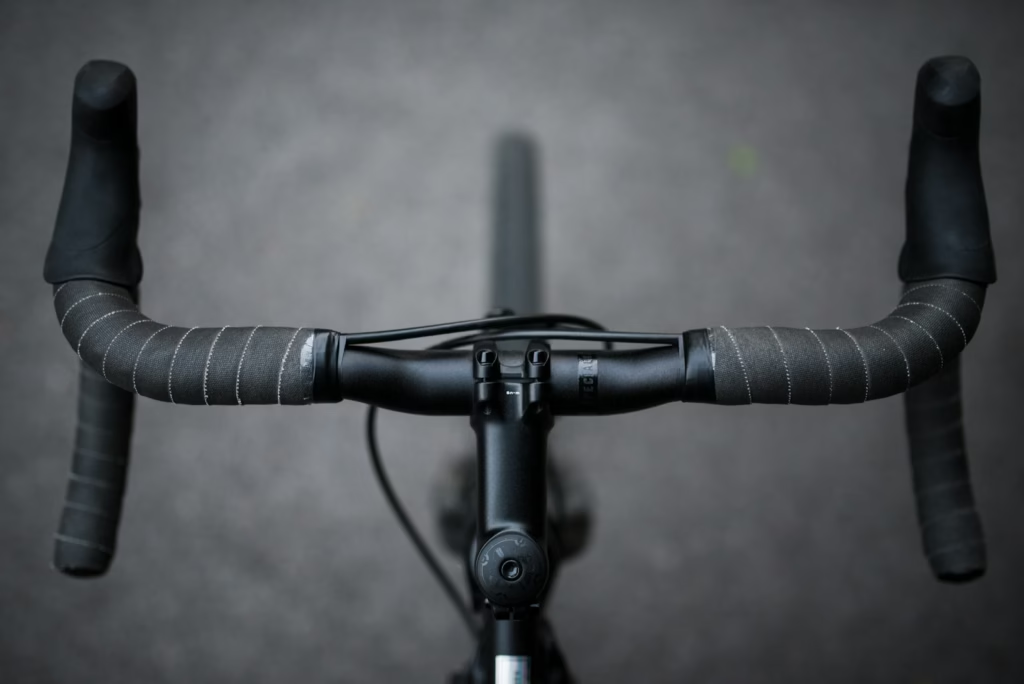
Fit is where you win or lose long-term. When you sit on the bike, you should be able to rest your hands on the hoods with a slight bend in your elbows, not locked out and not hunched. Your back angle should feel natural, not forced. If you feel stretched or cramped just riding around the car park, that will only get worse an hour into a ride.
Brand size charts are a useful guide, but they are not a substitute for sitting on the bike. If you can, get a shop to check the size and make basic adjustments to saddle height and stem position. Women’s-specific frames can be helpful for some riders, offering shorter reach and different finishing kit, but plenty of women are perfectly comfortable on “unisex” bikes. The right answer is whatever fits you best.
Gearing, brakes and tyres – the key choices
You do not need to memorise groupset hierarchies. Focus on what the parts allow you to do.
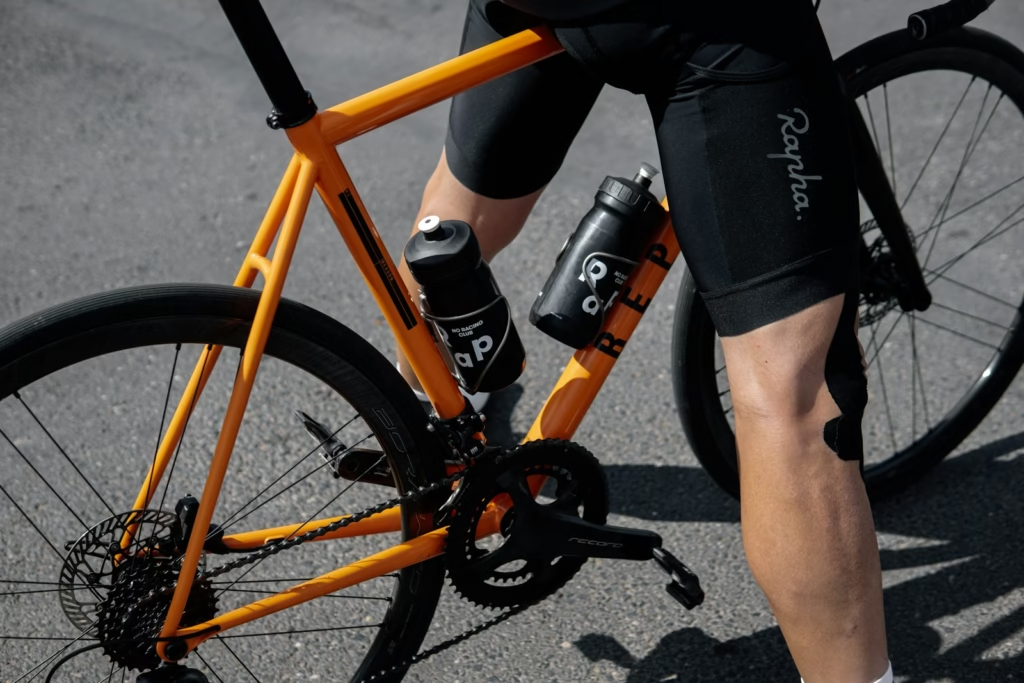
On gearing, the goal is simple: you want to be able to climb without grinding to a halt. A compact chainset, usually with 50 and 34 tooth chainrings, paired with a wide-range cassette such as 11–30 or 11–32, gives you a low enough gear for steep British climbs but still enough range for fast descents and flatter group riding.
Brakes are one area where modern tech is genuinely worthwhile in the UK. Disc brakes give you better control and more consistent stopping in the wet than rim brakes. Hydraulic systems feel the nicest at the lever, but mechanical discs are perfectly acceptable at the entry level. Rim brakes still work and can be absolutely fine if the rest of the bike is good value, but if you are buying new with an eye on year-round riding, discs are the more future-proof choice.
Tyres are where comfort really starts. The difference between a harsh 25 mm tyre at high pressure and a 28 or 30 mm tyre run a bit softer on a broken lane is huge. Wider tyres grip better, rattle you less and help protect your wheels. Ideally, look for a bike that takes at least 28 mm rubber and has decent puncture protection. If the frame has more clearance, you can always go wider later.
New or used – which route is better?
A lot of riders get their first serious road bike second-hand, and if you choose well, it can be great value. For the same money as a new entry-level bike, you might get a frame and groupset that were mid-range or higher when new.
The trade-off is that you need to be more careful. On a used bike, check the frame for cracks, dents or suspicious paint lines, make sure the wheels spin smoothly and look for badly worn teeth or rust on the chain and cassette. It is perfectly reasonable to ask for service history or receipts for major work. If you are unsure, paying a local bike shop to inspect the bike before you buy is a good investment.
Buying new from a reputable shop or brand costs more, but you get a warranty, new components and a bike that has been assembled by a mechanic. For a lot of people who are not mechanically minded, that peace of mind is worth the difference.
Do not forget the UK conditions
A UK road bike has to deal with more than a summer Sunday loop.
Road surfaces can be rough and full of potholes, so stability and tyre clearance matter. Wider tyres at lower pressures, slightly more relaxed geometry and a solid wheelset make far more difference in this context than saving a few hundred grams of frame weight.
Weather pushes you towards disc brakes and proper guards. If you ride through winter or join club rides, mudguards go from nice-to-have to almost essential. Many endurance frames now have discreet mounts that accept full-length guards, making cold, wet rides far more tolerable.
If the bike will double as a commuter, think about where you will carry your stuff and where the bike will live. Racks, bike-packing style bags, decent lights and a reliable lock should all be part of the overall plan.
A simple checklist for your first UK road bike
Rather than chasing a specific model name, work down this list:
- Endurance or all-road geometry that feels stable and comfortable
- Aluminium frame with a carbon fork, unless you have a clear reason to go carbon
- Disc brakes, ideally hydraulic, especially if you will ride year-round
- Compact chainset with a wide-range cassette so you have genuinely easy gears
- Clearance for at least 28 mm tyres, preferably 30–32 mm
- Fixings for mudguards, and possibly a rack if commuting is a priority
- A size that lets you ride for an hour without your back, neck or hands complaining
If a bike ticks those boxes and fits your budget, it is almost certainly a good starting point, regardless of exactly what the logo on the downtube says.
From there, the important thing is not whether the bike is “perfect”, but whether it gets you out the door and keeps you wanting to ride. Once you have a season or two of British miles in your legs, you will know far more clearly whether you want something racier, lighter, more off-road capable – or whether that first bike has quietly become exactly what you need.
For other beginner’s guides, read more on this page.