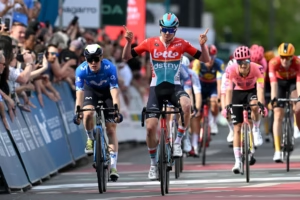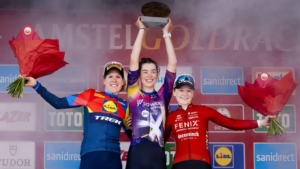
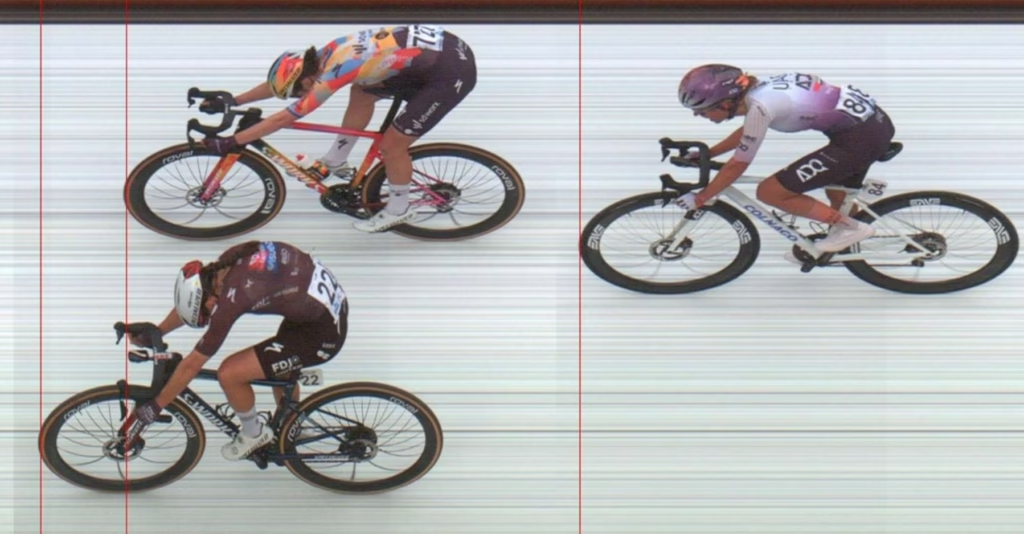
Brabantse Pijl Women 2026 did exactly what this race often does. It sat between the cobbled Classics and the Ardennes, but refused to behave like a quiet transition race. Célia Gery took the biggest win of her young career in Overijse, sprinting past Mischa Bredewold and Silvia Persico after Anna van der Breggen and Loes Adegeest were caught inside the final kilometres.
The result gave FDJ-Suez another major spring storyline and added a sharper edge to the form picture before Amstel Gold Race, La Flèche Wallonne Femmes and Liège-Bastogne-Liège Femmes.
For readers following the wider spring sequence, this analysis sits naturally alongside ProCyclingUK’s Brabantse Pijl Women 2026 route guide, the Amstel Gold Race Women 2026 route guide and the updated season form guide after Women’s Paris-Roubaix 2026.
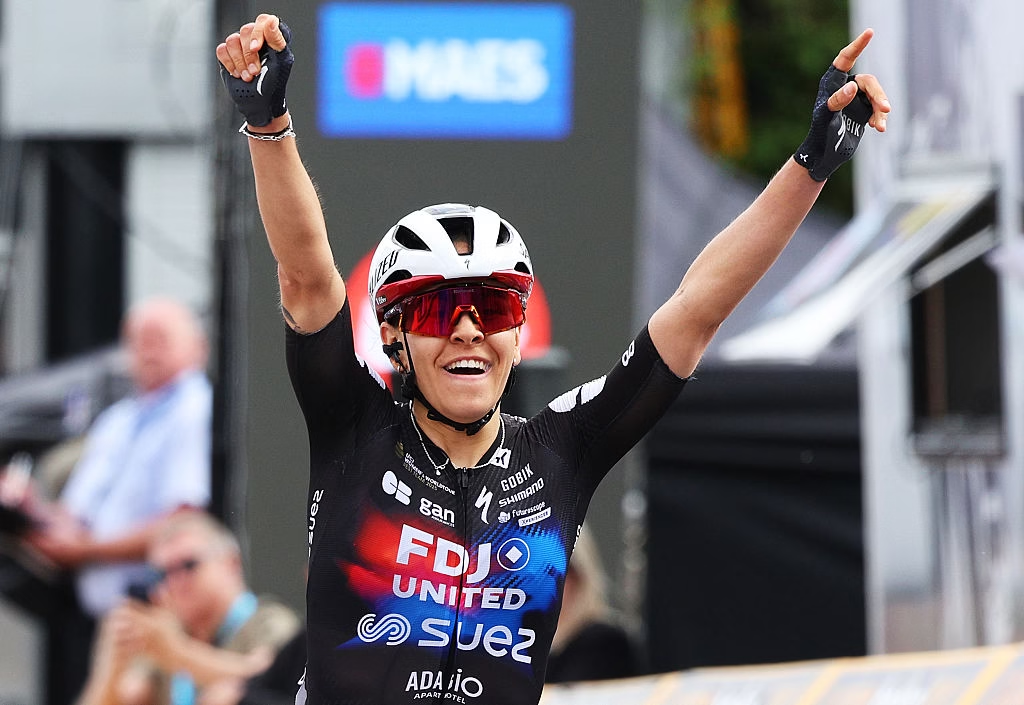 Photo Credit: Getty
Célia Gery gives FDJ-Suez another spring card
Gery’s win was not only a breakthrough result for a young rider. It also reinforced one of the clearest themes of the women’s spring: FDJ-Suez are no longer defined by one obvious route to victory. Demi Vollering’s Tour of Flanders win gave them the biggest selective Classics statement of the year, Franziska Koch then won Paris-Roubaix Femmes, and now Gery has added Brabantse Pijl Women with a perfectly judged sprint from a reduced group.
That spread of winners changes how rivals have to race them. FDJ-Suez can lean into Vollering when the route becomes more selective, but they also have riders capable of influencing the race before the obvious favourites move. Gery’s win came from a finale where the race had already been stretched by attacks, rather than from a controlled bunch sprint. That versatility becomes useful across the Ardennes, where races are often shaped long before the final climb or final sprint.
It also gives Gery a different status. Before this, she was already an interesting young rider in a strong team. After Brabantse Pijl Women, she is a rider who has proved she can finish a hard one-day race against serious opposition. For a team trying to carry momentum through April, that is more than a useful supporting result.
SD Worx-Protime still have strength, but not always the cleanest execution
Second place for Mischa Bredewold and the late move from Anna van der Breggen showed that SD Worx-Protime are still central to the shape of these races. Van der Breggen bridged to Loes Adegeest in the final phase, and the pair looked capable of contesting the win before being caught very late. Bredewold then nearly finished the job from the reduced group, only to be beaten by Gery at the line.
That leaves SD Worx-Protime with a mixed reading. The strength is clearly there. They placed riders into decisive positions and still had Bredewold ready for the sprint after the late catch. The problem is that the race slipped away anyway. In a team as strong as theirs, that kind of finale always invites tactical scrutiny.
It also feeds into the wider spring picture. SD Worx-Protime remain one of the teams with the depth to shape races before the final climb, but the results have not always matched the amount of control they can exert. With Amstel Gold Race Women and La Flèche Wallonne Femmes coming quickly, that tension becomes one of the more interesting team-level storylines.
Loes Adegeest turns aggression into relevance
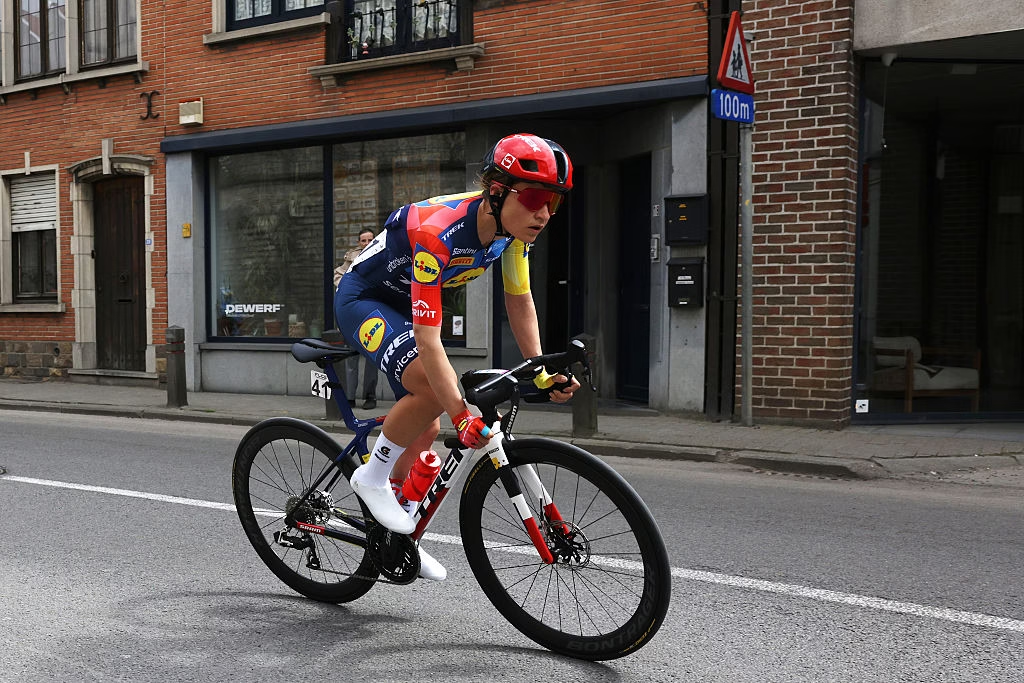
Adegeest’s ride should not be lost beneath the final sprint. She was part of the decisive late story and helped force the chase into a difficult position before being caught close to the finish. In this part of the calendar, that kind of aggression can be a strong signal. Brabantse Pijl Women often rewards riders who are willing to go early enough to make the favourites respond.
For Lidl-Trek, it was another sign that they can shape races even when the final result does not become a win. Adegeest’s move with Van der Breggen made the finale more complicated for everyone behind. In the Ardennes, that ability to force hesitation can be just as valuable as having a pure uphill finisher.
Silvia Persico keeps building towards the right races
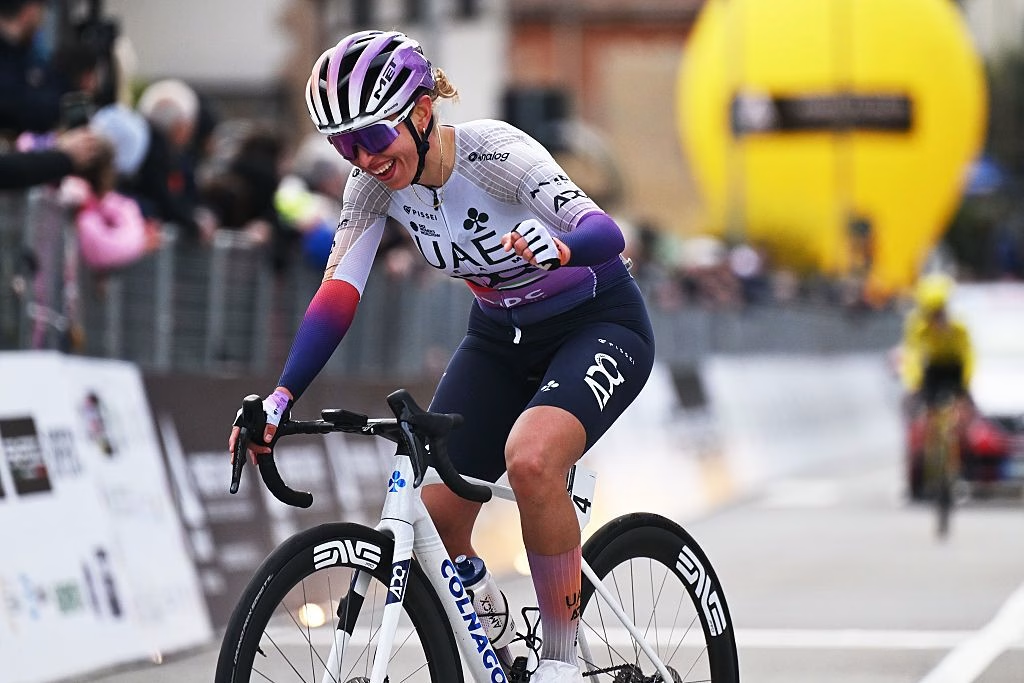
Persico’s third place was a useful marker before the Ardennes. She has the right blend for this period of the season: punch, resilience, tactical awareness and enough finishing speed to punish a small group if she reaches the final kilometres in contention. Brabantse Pijl Women is not identical to Amstel or Flèche, but it asks enough related questions to make the result meaningful.
Her podium also underlines why this race works as a form guide. It is selective enough to reward proper condition, but not so extreme that only one rider type can survive. Persico coming through here suggests she should be watched closely in races where repeated climbs and positioning matter more than a single long mountain effort.
The race confirmed the value of the bridge races
Brabantse Pijl Women sometimes gets described as a race between bigger events, but that undersells its importance. It is not a cobbled Classic in the pure sense, and it is not yet one of the main Ardennes races either. Its value comes from sitting in between. Riders arrive with different kinds of form, teams test different tactical options, and the route exposes who can still respond after a demanding spring.
The 2026 edition did that well. The climbs and repeated ramps around Overijse created enough pressure for attacks, but the race still came back together just enough for a reduced sprint. That combination told us more than a straightforward solo win or a routine bunch finish would have done. It showed which teams could animate the race, which riders had the legs to survive the decisive phase, and which young names can now be taken more seriously.
-
 Photo Credit: Getty


What it means before Amstel, Flèche and Liège
The biggest lesson before the Ardennes is that the form picture is broadening rather than narrowing. Vollering remains the strongest name for the hardest selective races, Koch’s Paris-Roubaix win changed her status completely, and now Gery has added another FDJ-Suez win in a race that suits riders with punch and timing. FDJ-Suez enter the Ardennes with options, confidence and momentum.
SD Worx-Protime still look strong enough to win any of the next races, but Brabantse Pijl Women showed again that strength alone does not guarantee control. Visma, Lidl-Trek, UAE Team ADQ, Fenix-Premier Tech and others will all have seen that the race can be made awkward if the strongest teams are forced into layered decisions.
For Amstel Gold Race Women especially, that feels relevant. Amstel is longer, more repetitive and more tactically unstable, but it rewards many of the same qualities: positioning, punch, patience and the ability to read when the race has genuinely turned. Brabantse Pijl Women did not predict the Ardennes outright, but it sharpened the list of riders and teams worth watching.
The simple version
Brabantse Pijl Women 2026 means three things for the season. First, FDJ-Suez are now winning in multiple ways, with Célia Gery joining Vollering and Koch as part of a remarkable spring run. Second, SD Worx-Protime remain powerful but still have tactical questions to answer after another race where they shaped the finale without winning it. Third, the form guide before the Ardennes has become deeper, with Gery, Persico, Bredewold and Adegeest all strengthening their cases before the next wave of hilly one-day races.