British weather has a sense of humour. You can leave the house in weak sunshine, get soaked in a sudden shower and finish your ride in a stiff crosswind, all in the space of an hour. That is why what you wear on the bike matters just as much as which bike you ride.
The aim is not to own everything, but to build a small, flexible wardrobe that you can mix and match as the seasons change. Think in layers, not outfits, and you will be able to ride comfortably most of the year.
Let’s walk through it, season by season, with a UK lens.
The core idea: layers, not single solutions
Whatever the season, the principles are the same:
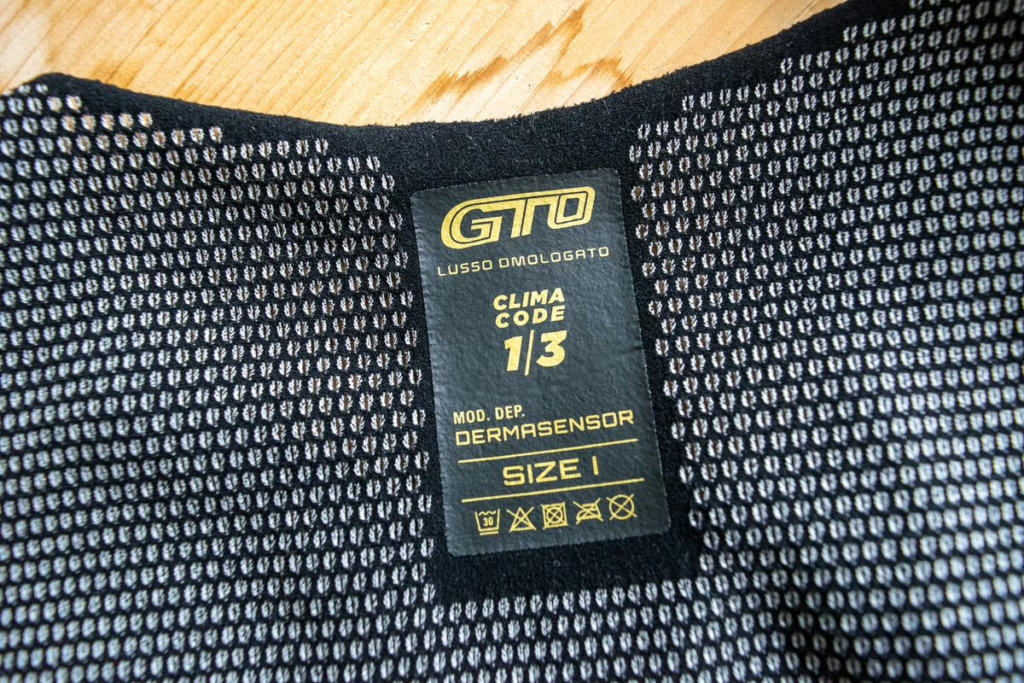
- A base layer to move sweat away from your skin
- A mid layer that adds insulation when you need it
- An outer layer that blocks wind and, when necessary, rain
Accessories then fine-tune the system: gloves, overshoes, caps, arm and leg warmers. Those small items often make the difference between a good ride and a miserable one.
You do not need a completely different wardrobe for every season. A good gilet, a decent waterproof, and arm and leg warmers can extend the life of simple summer kit well into spring and autumn.
Spring: learning to trust the forecast (a little)
Spring in Britain is changeable rather than mild. You can see everything from near-winter mornings to almost-summer afternoons in the same week.
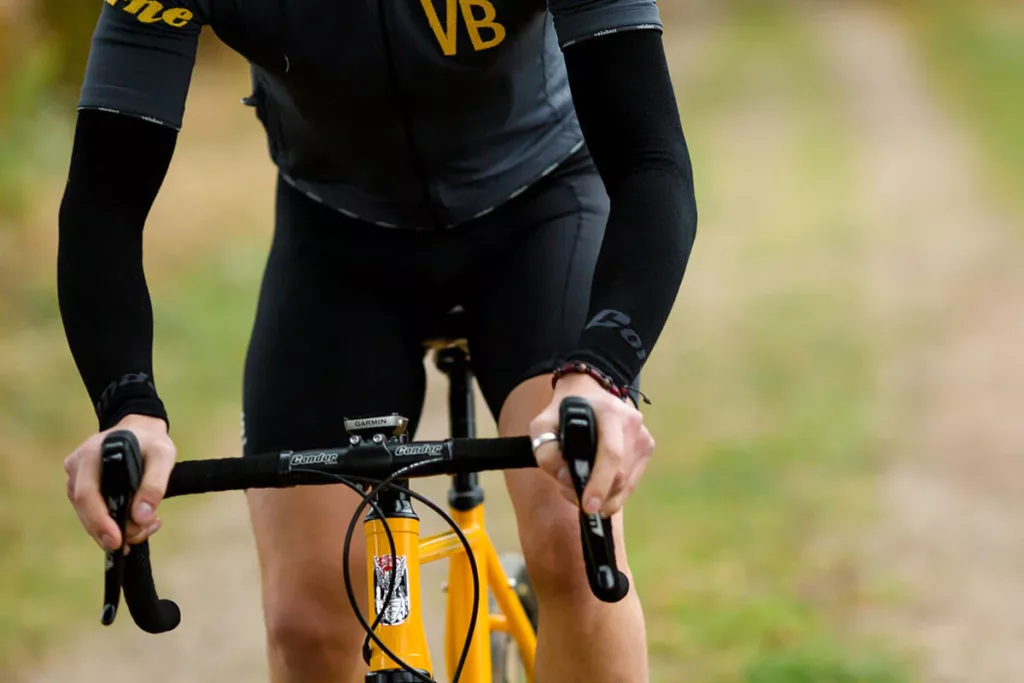
For typical spring days in the 8–15°C range, a simple system works well:
- A short-sleeve jersey with a light base layer underneath
- Arm warmers and either leg warmers or 3/4 tights
- A gilet or light windproof jacket that you can zip up on descents and stuff in a pocket when it warms up
On colder or windier days, swap the jersey for a light long-sleeve thermal and keep the gilet in play. A thin skull cap or headband under the helmet makes a big difference if there is a chill in the air.
Gloves can be tricky here. Full winter gloves will feel overkill on milder days, but bare hands get cold quickly in wind and showers. A mid-weight, windproof glove that still lets you shift and brake easily is the sweet spot.
Spring is also when you first remember how grim cold, wet feet can be. If the forecast is damp, water-resistant overshoes over your normal shoes are worth the faff.
Summer: not just shorts and a jersey
Summer in the UK is more about changeable warmth than guaranteed heat. Many rides still start cool and end warm, or vice versa if a sea breeze and cloud roll in.
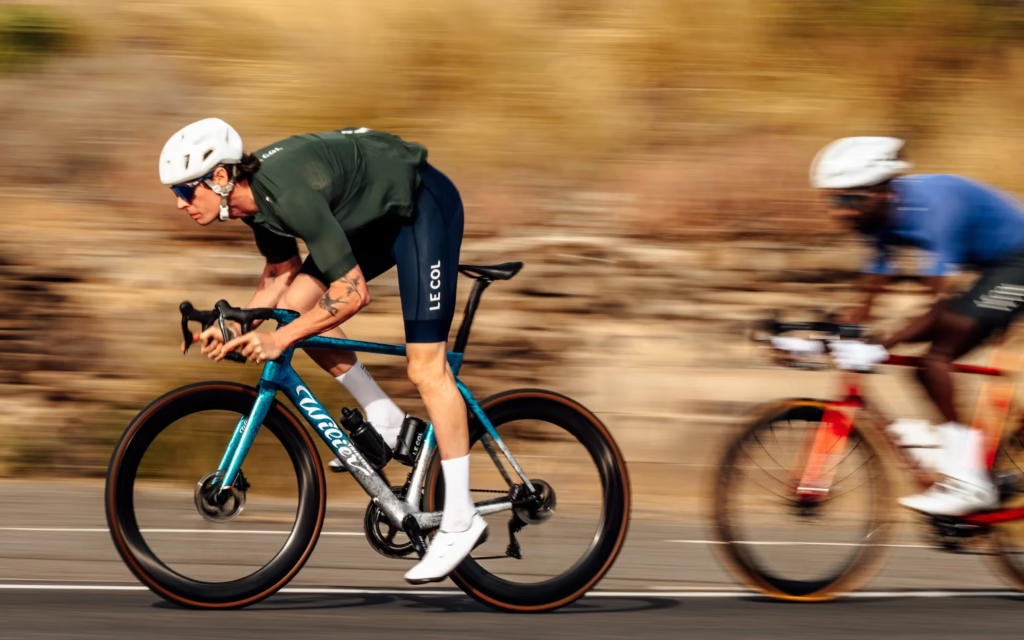
On genuinely warm days, the classic setup is enough:
- Short-sleeve jersey
- Bib shorts
- Thin summer socks
The detail that matters is fabric and ventilation. Lighter, more breathable jerseys with mesh panels help when the temperature creeps up, especially on climbs. Dark colours look sharp but absorb more heat in strong sun, so a lighter option in the drawer is no bad thing.
Even in summer, a gilet or packable windproof earns its place. Long descents after sweaty climbs can turn chilly quickly. A paper-thin shell that lives in a pocket and weighs very little is an easy win.
Two often-overlooked points:
- Sun protection: The UK sun is deceptive. A cap with a small peak under the helmet helps for low sun and glare; sunscreen on neck, ears and the backs of hands is worth the habit.
- Showers: If a day looks unstable, a genuinely packable waterproof can save a ride. Aim for something light enough to carry that still has taped seams rather than relying on “showerproof” alone.
Summer gloves divide opinion. Some riders go without, others prefer light mitts for grip and crash protection. The right answer is whatever keeps you comfortable on your bar tape for a few hours.
Autumn: stretch your summer kit
Autumn is essentially spring in reverse, often with more leaves and more rain. The key is to stretch your summer wardrobe with a few smart additions rather than starting from scratch.
A lot of autumn riding can be handled by:
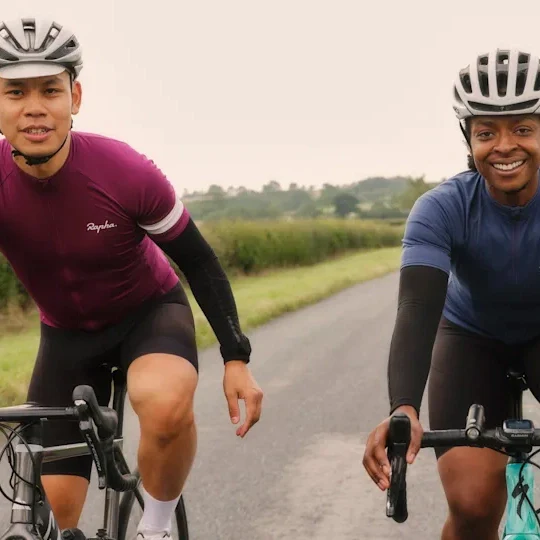
- Summer bib shorts plus leg warmers
- Short-sleeve jersey, base layer and arm warmers
- A windproof gilet or light softshell
On cooler or damp days, swap in a light thermal long-sleeve jersey or a softshell with a brushed inner. You want enough insulation to stay warm when you are moving, but not so much that you overheat on every climb.
Autumn is when a decent waterproof starts to feel essential rather than optional. A reliable, breathable rain jacket with proper cuffs and a dropped tail for road spray is worth investing in if you plan to ride through the wet months. It should fit closely enough not to flap wildly but still allow for a layer or two underneath.
Feet and hands need more thought now. Thin overshoes become regulars, and mid-weight gloves will see almost daily use. If you are someone who gets cold extremities quickly, look for slightly thicker socks that still fit your shoes without creating hot spots.
Road spray becomes a factor too. Mudguards on the bike help your clothing far more than any fabric treatment alone.
Winter: staying warm without boiling
British winters are more about wet and windy cold than extreme deep-freeze. The challenge is to stay warm and dry enough without turning yourself into a boil-in-the-bag meal.
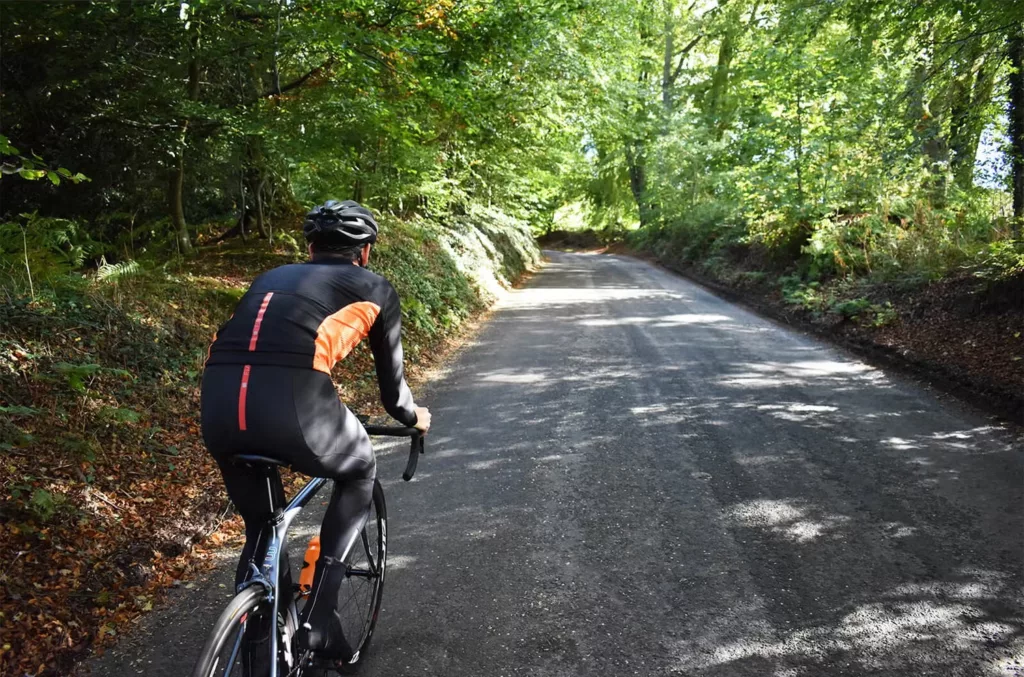
A typical winter road setup for 0–8°C might look like:
- A thermal base layer (merino or synthetic)
- A proper winter jacket that is windproof on the front, warm but breathable on the back
- Thermal bib tights or shorts plus warm leg warmers
- Winter gloves with enough insulation to keep feeling in your fingers
- Thermal overshoes to keep wind and road spray off your feet
The front of your body is where you need the most protection. A good winter jacket blocks wind and sheds light rain, but also has vents or more breathable panels so you do not soak yourself from the inside. If you regularly ride in heavy rain, you may need to add a fully waterproof shell over the top; otherwise, many winter jackets are “water resistant” enough for typical showers.
Head and neck coverage make an outsized difference. A thin buff around the neck that you can pull up, and a thermal cap under the helmet, transform how you feel on cold descents. Just make sure you can still see and hear clearly.
Gloves are worth some trial and error. Too thin and your hands go numb, too thick and you cannot brake or shift confidently. Look for a glove that is windproof and water-resistant rather than trying to be completely waterproof. In heavy rain, nothing stays totally dry; the goal is to stay warm in spite of that.
Remember that you still warm up once you are moving. If you are perfectly toasty standing on the driveway, you are probably overdressed. Aim to feel slightly cool at the start, then settle into comfort after ten minutes of riding.
Accessories that work all year
A handful of items earn their keep in every season and are worth prioritising if you are building a wardrobe from scratch.
- Gilet: The most versatile single piece you can own. Great for chilly starts, long descents, breezy days and shoulder seasons.
- Arm and leg warmers: Turn summer kit into spring and autumn kit. Easy to remove mid-ride and stash in a pocket.
- Cap or headband: Sun and sweat protection in summer, warmth and wind block in cooler months.
- Gloves in two weights: A lighter pair for spring and autumn, a properly insulated pair for winter.
- Overshoes: One lighter, more windproof pair and, if you ride through winter, a thicker pair for truly cold days.
Lights are not clothing, but in British conditions, they might as well be treated as part of your standard kit. Even in summer, a murky sky or shaded lane can make you hard to spot without them.
Building a small, smart kit drawer
You do not need an overflowing wardrobe to ride comfortably year-round in the UK. A realistic starting capsule looks something like:
- 2 short-sleeve jerseys
- 1 long-sleeve thermal jersey or light jacket
- 1 pair of bib shorts, 1 pair of thermal bibs or leg warmers
- 1 gilet
- 1 decent waterproof jacket
- 1 set of arm warmers, 1 set of leg warmers
- 2 pairs of gloves (mid-weight and winter)
- 1 pair of overshoes (plus a warmer pair if you ride deep into winter)
- A couple of base layers in different weights
From there, you add and upgrade as you discover what kind of rider you are. Some people invest early in a top-tier winter jacket because they love cold, long rides. Others buy more lightweight jerseys because they mostly ride on summer evenings.
The important thing is to treat British weather as something to plan for, not just put up with. Dress with a bit of thought, pack one more layer than seems strictly necessary, and you quickly reach the point where you look out of the window, see grey skies and wet roads, and think “right, what do I need today?” rather than “maybe I will skip it”.