Women’s Ronde van Brugge 2026 is one of the most interesting route stories of the spring because it is not simply a new edition of an existing race. It is a race with a new name, a new map and, with that, a new set of tactical questions.
For years, this event made sense through Brugge, De Panne and De Moeren. That was the old grammar of the race. Flat roads, exposed terrain, long nervous stretches and the constant sense that the wind could do more damage than the profile ever admitted. In 2026, that changes. The race is now Women’s Ronde van Brugge, it starts and finishes in Brugge, and the old pull toward the coast is gone.
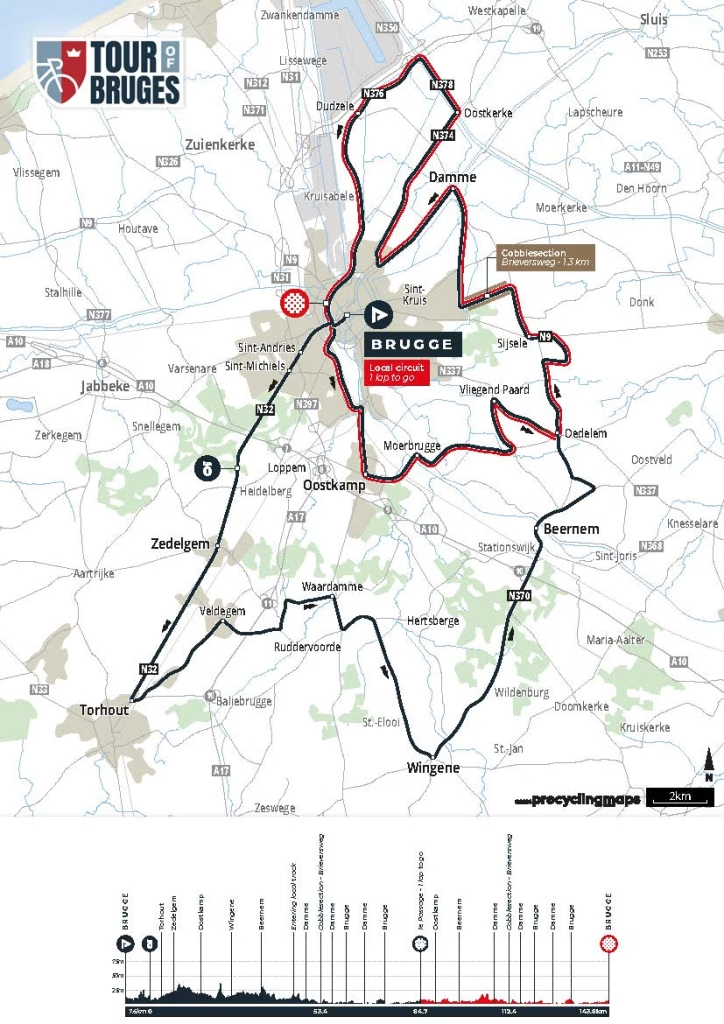
That matters because this is not just a cosmetic rebrand. It is a route reset. The race no longer heads for De Panne, and the flat, windswept danger of De Moeren disappears with it. In its place comes a Brugge-centred structure that should still keep the race fast and nervous, but in a different way.
If you want the wider historical context first, ProCyclingUK’s A brief history of Women’s Ronde van Brugge explains how the event moved from Three Days of Bruges-De Panne, to Classic Brugge-De Panne, and now to a race built fully around Brugge.
What has changed for 2026?
The defining change is simple enough: De Panne is gone, and De Moeren is gone with it.
That was the old race’s key image and, in many editions, its key tactical feature. De Moeren gave the event a sense of menace even before the wind had actually done anything. Riders, teams and fans all knew where to look. If the conditions bit there, the race could split beyond repair. If they did not, the tension still remained because everyone knew the danger point was coming.
The 2026 race no longer works like that. Rather than dragging the peloton toward a known coastal flashpoint, the route now stays tied to Brugge. The event becomes more self-contained, more loop-based, and in that sense a little less geographically dramatic. But that does not make it less interesting. It simply changes the nature of the pressure.
Where does the race start and finish?
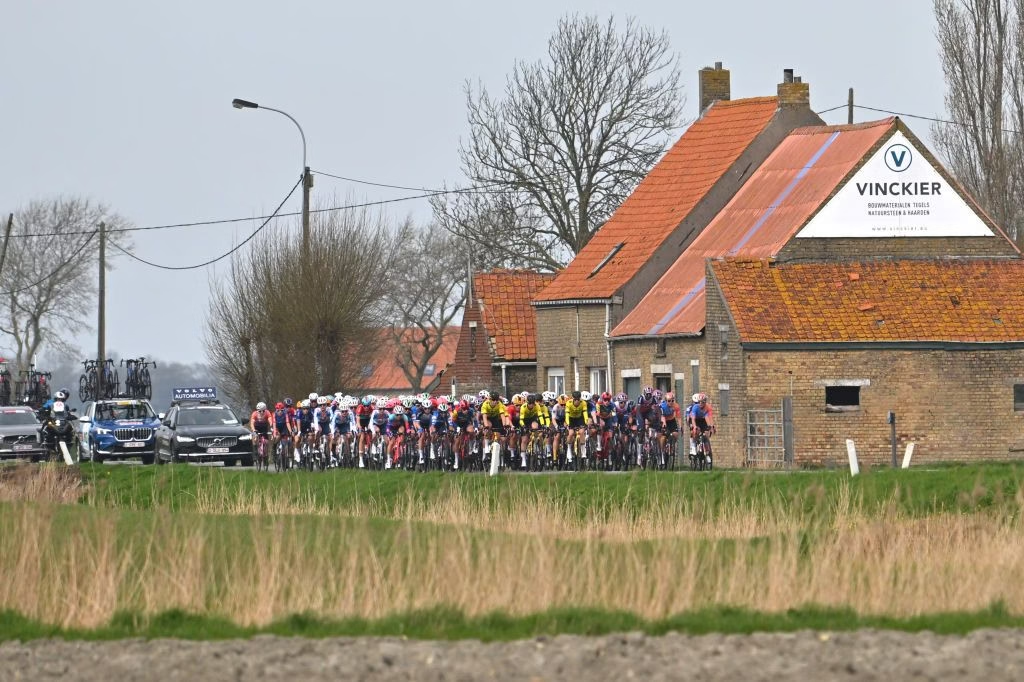
The women’s race starts in Brugge and finishes in Brugge.
That alone alters the feel of the day. The old race had direction. It was always travelling somewhere, and that destination carried much of the event’s character. The new race is more centred on the city itself, and that means the tension is likely to build through repetition, positioning and localised pressure rather than through one long movement toward the coast.
For a new fan, that can actually make the race easier to follow. The old Brugge-De Panne identity was memorable because of De Moeren, but it was also highly dependent on weather and geography. The new format may be a little less iconic at first glance, but it should be more readable in terms of who is controlling the race and where the peloton is starting to come under strain.
How long is Women’s Ronde van Brugge 2026?
The race distance is 143.8 km.
That is still more than enough road for the race to develop proper tension. This has never been a race built around one giant obstacle or one decisive climb. Even in its old form, it worked through sustained nervousness, repeated strain and the question of whether the strongest sprint teams could keep their shape deep into the day.
That basic logic should remain. What changes is the way the stress arrives. The route no longer relies on the coastal plains to produce selection. Instead, the selection may come through the repeated demands of a Brugge-centred race where position and race management matter just as much as raw speed.
What kind of race should the new route create?
This is the most interesting question, because the old answer no longer fully applies.
The previous Brugge-De Panne identity was very clear. It was a race for fast riders, but specifically for fast riders who could survive exposed roads and the threat of echelons. The 2026 version should still suit durable sprinters and powerful finishers, but the route now seems more likely to create tension through movement and organisation rather than through one famous wind corridor.
That could slightly rebalance the race. In the old format, the strongest crosswind teams could turn De Moeren into a weapon. In the new format, the advantage may shift a little more toward squads that can control positioning and keep several riders at the front through a tighter, more urban race shape.
The race may still finish in a sprint, but if it does, it may be reached by a different route pressure than before.
What does that mean for rider type?
Women’s Ronde van Brugge should still favour durable sprinters and powerful fast finishers.
That is the important continuity. This is still not a race for pure climbers, and it still sits in that useful spring middle ground where speed matters, but only after a rider has survived a hard Belgian one-day event. What may change slightly is the emphasis. The old route rewarded riders and teams who could cope with open-road wind stress in a very specific way. The new route may lean a little more toward those who thrive on positioning, repeated reshaping of the bunch and the ability to stay calm while the race keeps tightening.
That is one reason the event still fits naturally in programmes like Shari Bossuyt’s 2026 spring Classics programme. It remains exactly the sort of race where a rider with speed after stress can be highly relevant.
-
 Photo Credit: Getty

Why does the route still matter so much if De Moeren is gone?
Because removing the old key feature does not make the race neutral. It simply changes the terms of the race.
That is what makes 2026 so intriguing. Under the old identity, everyone knew where to look. If the wind was up in De Moeren, the race could explode there. If it was calmer, the event often drifted back toward a more controlled sprint story. The Brugge-based version removes that familiar reference point. Riders and teams now have to learn a slightly different version of the race, and that uncertainty has value in itself.
In that sense, Women’s Ronde van Brugge 2026 is not only a new route. It is a new tactical problem.
How is it different from the old Classic Brugge-De Panne?
The cleanest answer is this: the old race was defined by its pull toward the coast, while the new race is defined by staying around Brugge.
Classic Brugge-De Panne Women built its drama through geography. It moved toward a known danger zone, and everyone understood what that meant. Women’s Ronde van Brugge 2026 looks more self-contained and, in some ways, more modern in structure. The race is no longer asking whether the coastal plains will tear it apart. It is asking what sort of pressure a Brugge-centred route can create instead.
That does not make it less interesting. It simply makes it less familiar.
There is a useful parallel there with other Belgian one-day races that are easier to read through repetition and pressure rather than through one giant moment. ProCyclingUK’s Beginner’s guide to Dwars door Vlaanderen Women 2026 and Beginner’s guide to Scheldeprijs Women 2026 show two very different versions of that same spring logic.
What should new fans watch for?
The easiest way to watch Women’s Ronde van Brugge 2026 is to forget the old version for a moment and focus on what the new one is trying to become.
Watch how teams handle the repeated race shape around Brugge. Watch which squads keep numbers at the front as the race tightens. Watch whether the bunch still carries that same nervous, stretched-out feeling the old race often had, or whether the new format creates a different sort of tension.
That is where the real interest lies. The old race asked one very famous question. The new race may ask several smaller ones, and the answer may only emerge later in the day.
For a new fan, that actually makes 2026 a good entry point. Everyone is learning the new version of the race together.
So what should you expect from Women’s Ronde van Brugge 2026?
Expect a race that still makes sense for the fastest and toughest finishers, but gets there in a different way from the old Brugge-De Panne model.
Expect Brugge to matter more than ever.
Expect a race that loses one of spring’s most famous danger zones, but gains a new tactical uncertainty in return.
And expect one of the more quietly fascinating route resets of the 2026 women’s calendar. Women’s Ronde van Brugge is no longer the race to De Panne. That is exactly why its new route is worth paying attention to.