
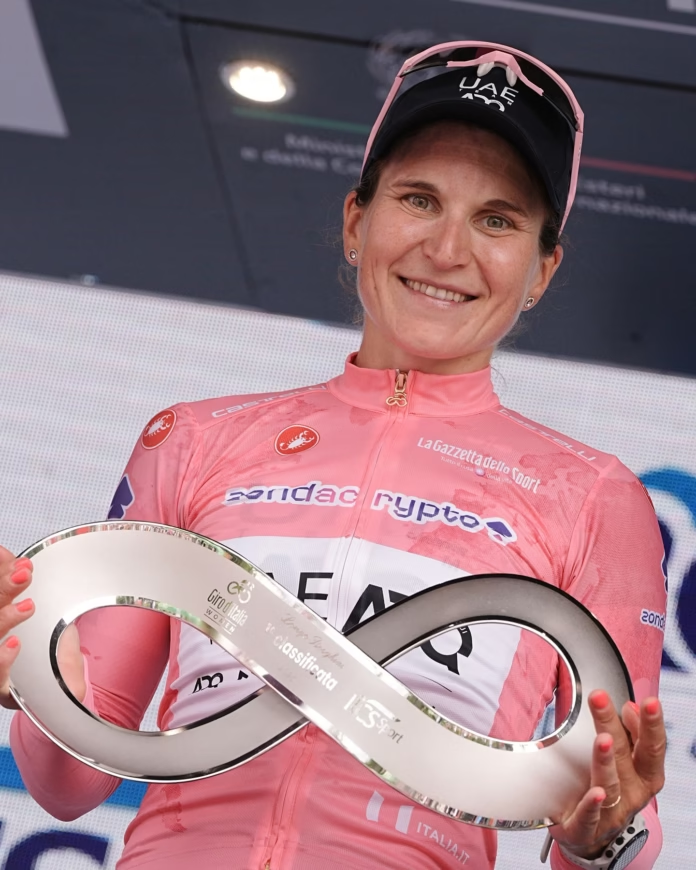
Canyon-SRAM zondacrypto is facing an uncomfortable sponsorship situation after title sponsor Zondacrypto became caught up in an escalating legal, financial and political controversy in Poland.
The Polish cryptocurrency exchange is reportedly the subject of a judicial investigation into alleged fraud and money laundering, while Polish authorities and media reports have also raised questions around alleged political links and alleged Russian organised crime connections. Zondacrypto has denied allegations of Russian mafia links, and its chief executive Przemysław Kral has previously described claims around those connections as “absurd”. The company has also denied reports that it lacked sufficient operating funds.
The situation has created uncertainty for Canyon-SRAM, which has raced under the Canyon-SRAM zondacrypto name since the start of 2025. Escape Collective has reported that the team says it remains in an “ongoing contractual relationship” with Zondacrypto, while also stating that it carried out due diligence before entering the partnership.
 Photo Credit: Canyon SRAM
Zondacrypto scrutiny now reaches cycling
The issue is no longer confined to the financial pages. Zondacrypto’s name appears prominently in cycling through its title sponsorship of Canyon-SRAM zondacrypto, its support of the team’s development structure and its wider presence in the sport.
The company is also tied into race sponsorship. The Giro d’Italia Women lists the Maglia Rosa, the race leader’s jersey, as sponsored by Zondacrypto, while Canyon-SRAM zondacrypto is also among the teams set to take part in the 2026 edition.
That creates a complicated picture. On one level, Canyon-SRAM is continuing to operate as a WorldTour team, with the Zondacrypto name still part of its official identity. On another, the sponsor’s wider position is now being questioned by prosecutors, politicians and media reports across Europe.
Italian outlet Tuttobici has reported that the matter could have repercussions across sport, noting Zondacrypto’s visibility on the Canyon-SRAM jersey and its previous or current links with major cycling properties, including the Giro d’Italia and Tour de Suisse.
Polish investigation raises wider concerns
Polish prosecutors have reportedly opened an investigation into suspected fraud and money laundering linked to Zondacrypto. According to reports cited by The Insider and Polish Radio, Poland’s Justice Minister Waldemar Żurek said authorities had received increasing reports from citizens who were allegedly unable to withdraw funds from the platform. The Katowice prosecutor’s office has reportedly put alleged damages at at least 350 million zloty, around €83 million.
There are also political dimensions to the case. Reports from Poland have linked the controversy to debates around cryptocurrency regulation, lobbying and alleged connections to political figures. Prime Minister Donald Tusk has publicly raised concerns around alleged Russian links, while Zondacrypto and Kral have denied those claims.
TVP World, citing reporting by Gazeta Wyborcza and Poland’s Internal Security Agency, has reported allegations that control of the company was acquired in 2018 by the Tambovskaya Bratva, a Russian organised crime group. Those claims remain allegations and have not been proven in court. Kral has denied any connection to Russian mafia structures.
What it means for Canyon-SRAM
For Canyon-SRAM, the immediate issue appears to be reputational and commercial rather than sporting. The team has continued racing under its current name, and there has been no public indication that its WorldTour status or race programme is directly affected.
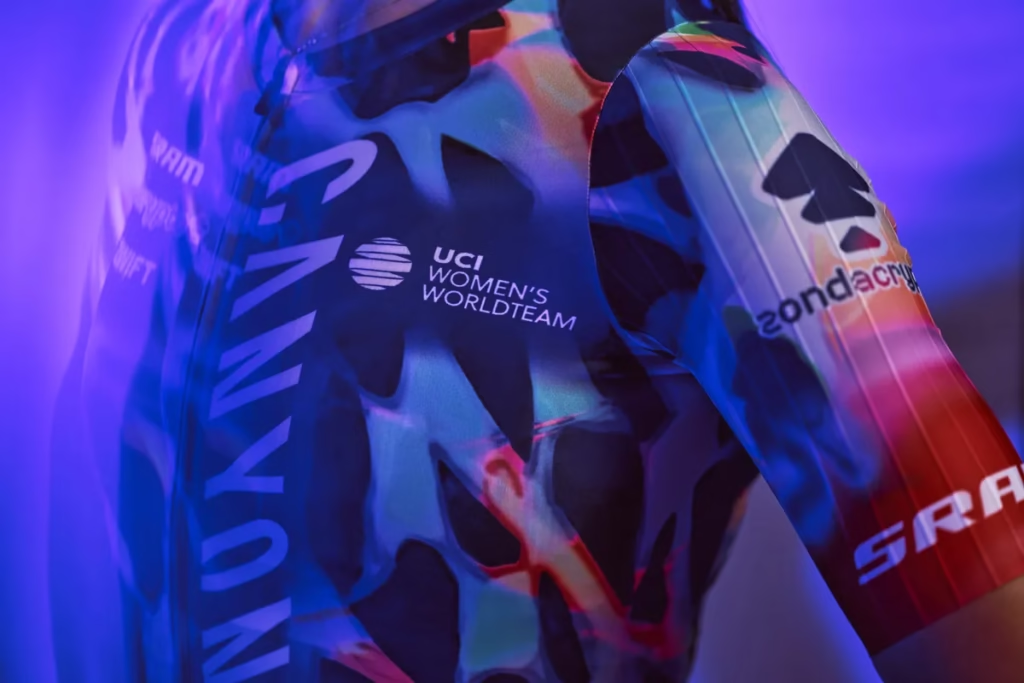
The sponsorship was announced as a three-year title partnership from 2025 to 2027, making Zondacrypto a central part of the team’s public identity. The company’s branding also sits on one of the most recognisable kits in the women’s peloton, made more visible by the team’s 2026 “Luminous” kit launch ahead of its 10th anniversary season.
There is also a separate rider-facing element. Escape Collective reported that Kasia Niewiadoma-Phinney, Tiffany Cromwell and Agnieszka Skalniak-Sójka had personal brand ambassador agreements with Zondacrypto. Canyon-SRAM told the outlet it was not in a position to comment on those individual agreements.
The legal position around those athlete agreements is not clear from the available public information, and it would be wrong to assume wrongdoing by any rider or the team. The risk, at this stage, is one of association and uncertainty.
Cycling has previous experience of cryptocurrency sponsorships becoming unstable. Nexthash failed to meet its obligations to the men’s Qhubeka-Nexthash team, contributing to that WorldTour squad’s collapse. That does not mean the same outcome will follow here, but it explains why a title sponsor’s financial and legal position matters so much in professional cycling.
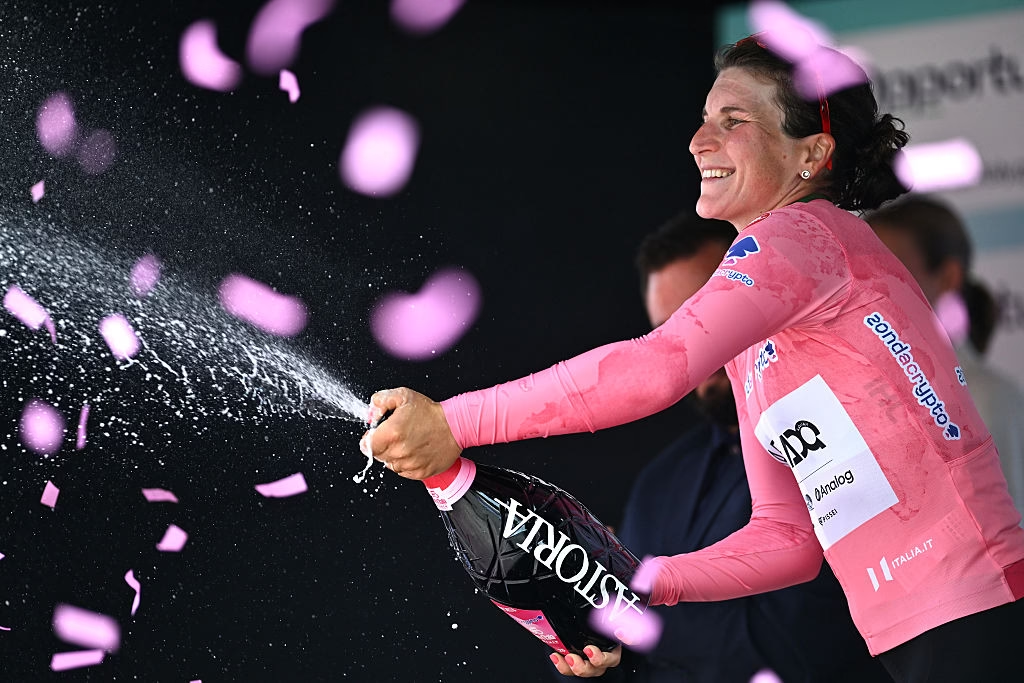 Photo Credit: Getty
Giro d’Italia Women visibility adds another layer
The timing is awkward for women’s cycling because the Giro d’Italia Women is approaching, and Zondacrypto has several points of visibility around the race.
Canyon-SRAM zondacrypto is listed among the teams for the 2026 Giro d’Italia Women. Separately, the race’s official symbols page lists the Maglia Rosa as sponsored by Zondacrypto, meaning the company’s brand is attached not only to one team but also to the leader’s jersey of one of the sport’s biggest stage races.
That raises presentation and reputational questions if the investigation continues to develop. Race organisers and team management may face scrutiny over branding, contractual obligations and whether any sponsor visibility needs to be reviewed. There is no public evidence at this stage that the Giro d’Italia Women intends to make any change, and the race’s official material still lists Zondacrypto in connection with the Maglia Rosa.
For Canyon-SRAM, the question is similar but sharper. The team is not simply carrying a small sponsor logo. It is racing with Zondacrypto as part of its registered team name, which makes the uncertainty harder to separate from its sporting identity.

Zondacrypto denies key allegations
Any report on the matter needs to separate what is established from what remains alleged.
It is established through multiple reports that Polish prosecutors have opened an investigation into alleged fraud and money laundering. It is also established that media reports and Polish political figures have raised allegations around Russian links and possible organised crime involvement. Those claims have not been proven in court. Zondacrypto’s chief executive has denied Russian mafia links, and the company has pushed back against claims around its financial position.
It is also established that Canyon-SRAM says it remains in an ongoing contractual relationship with Zondacrypto. What is not yet clear is whether that position can remain unchanged if the company’s legal and financial problems deepen.
The uncertainty leaves Canyon-SRAM in an uncomfortable position at one of the most important points of the season. The team has a roster built around some of the strongest riders in the women’s peloton, including Tour de France Femmes winner Kasia Niewiadoma-Phinney, and it continues to race as normal. The question is whether the Zondacrypto name can remain a stable part of that structure while the sponsor faces intensifying scrutiny away from the road.

