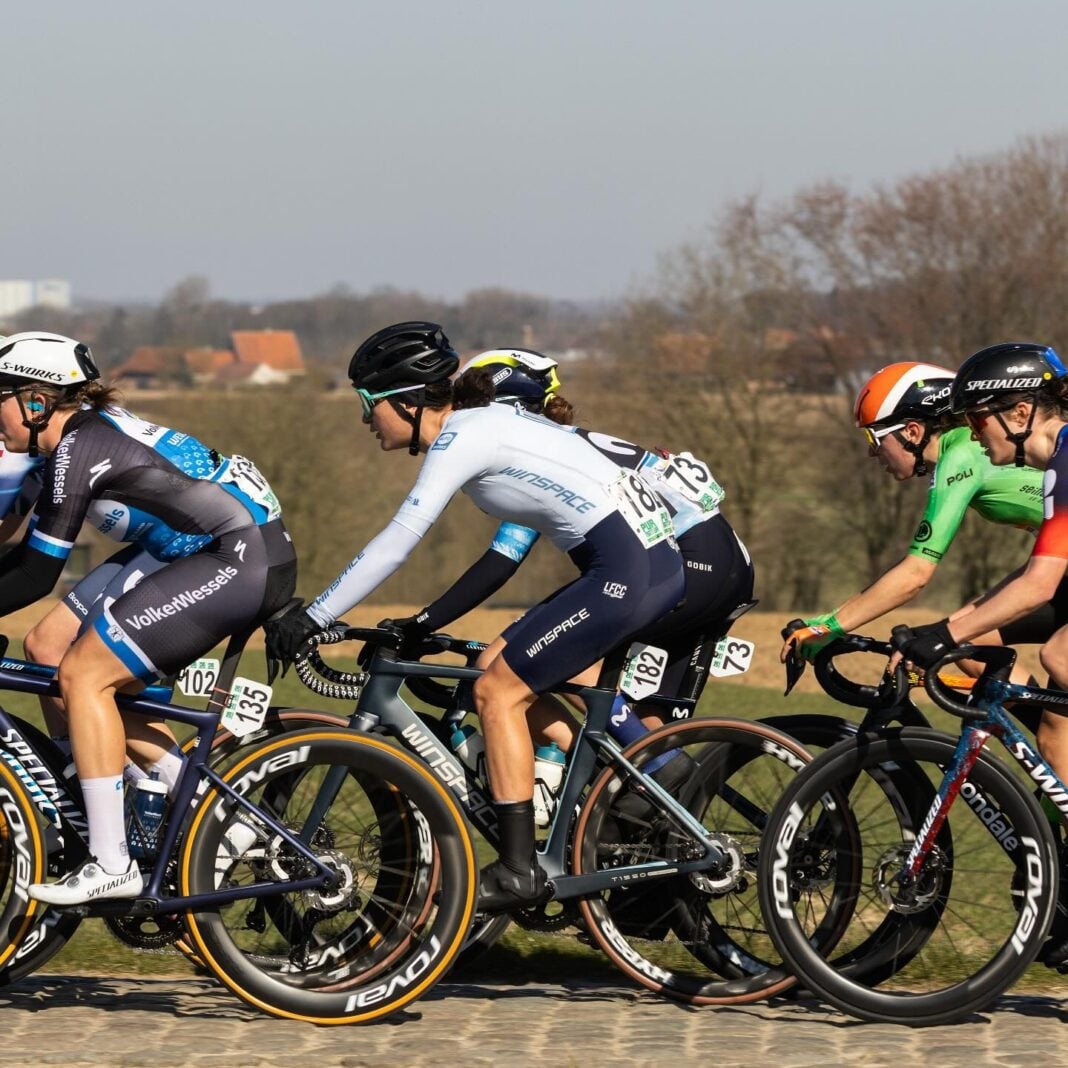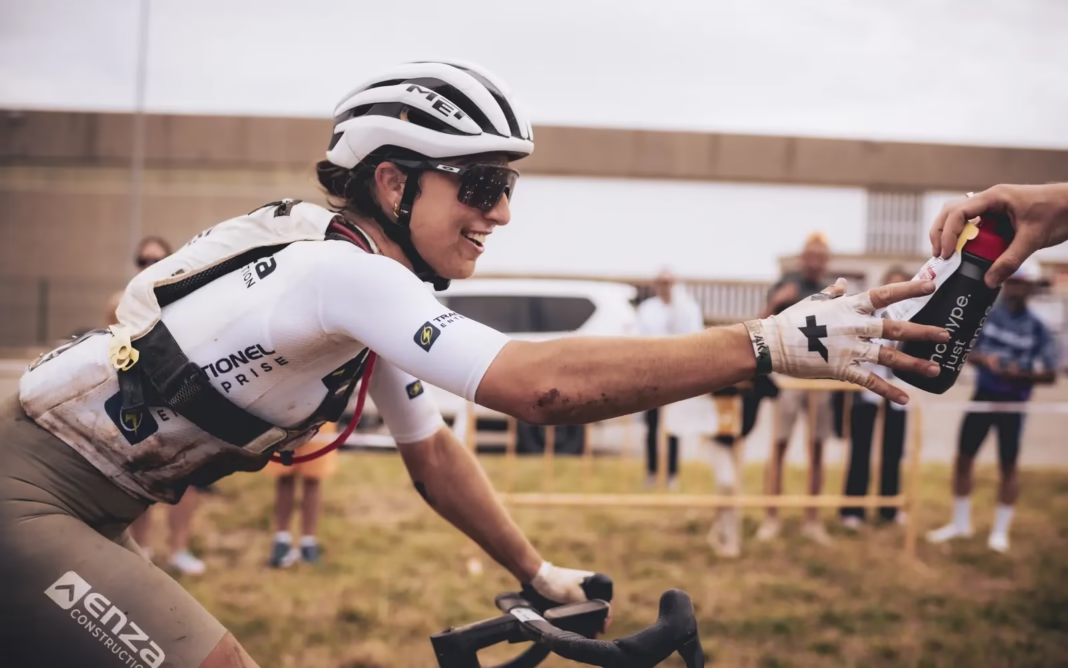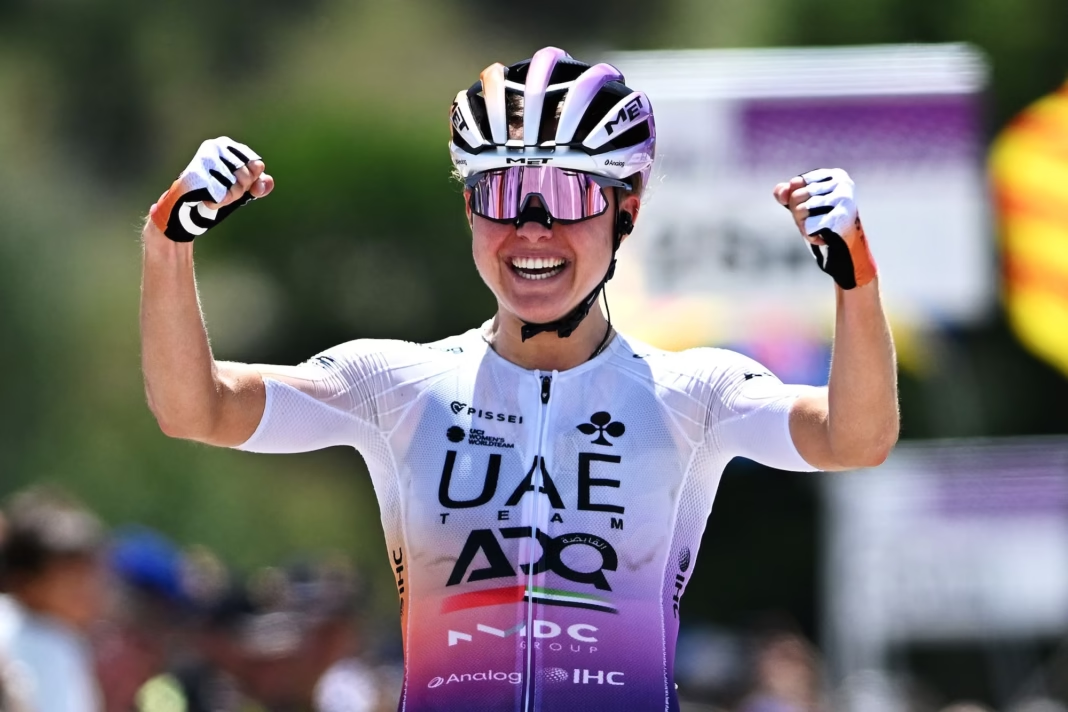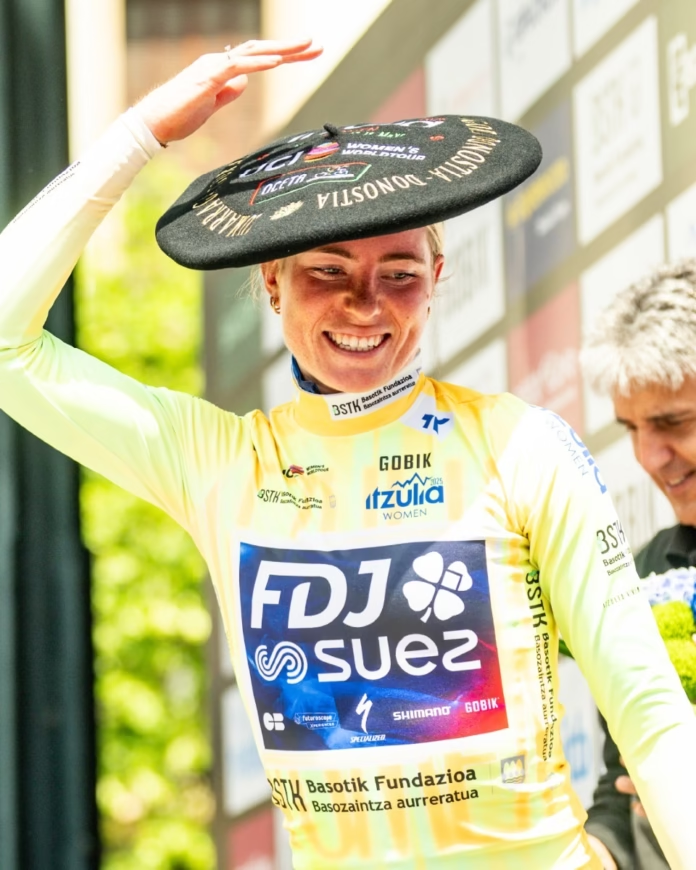
Itzulia Women has quickly built one of the clearest identities in the Women’s WorldTour because it does not need a long route to create a hard race. In just three days, it consistently delivers the kind of repeated climbing, technical roads and aggressive pacing that can turn a compact stage race into a demanding test of positioning, resilience and tactical sharpness. That gives it a different feel from the longer Grand Tours and helps make it one of the most intense stage races of the spring.
The Basque Country is central to that identity. These are not roads that allow riders to settle into rhythm for long, and the climbs tend to come in chains rather than as isolated set pieces. Itzulia Women therefore suits riders who can cope with repeated accelerations, read racing instinctively and still find a decisive move late in the stage. The result is usually a race that remains open for longer than the short format might suggest.
 Photo Credit: Naikefotosport
Recent editions have shown how broad that winning profile can be, as long as the rider has the climbing depth and race sense to handle the terrain. Demi Vollering won both the 2025 and 2024 editions, confirming how well the race suits an elite puncheur-climber with full control over short stage-race efforts. Marlen Reusser won in 2023 through a different kind of authority, using strength and timing rather than simply waiting for one final uphill showdown. That range is part of what makes Itzulia Women so compelling.
For 2026, the race again keeps to its three-stage format, but there is very little softness in the design. The route starts in Zarautz, moves through Abadiño and finishes in Donostia, with 372.4 kilometres and 14 classified climbs spread across the three days. There is no obvious sprint procession and no single stage that makes the others irrelevant. Instead, the race looks built around cumulative pressure, where every day can reshape the general classification.
Previous Winners
2025
Demi Vollering
2024
Demi Vollering
2023
Marlen Reusser
2026 Itzulia Women route
The 2026 Itzulia Women route covers three stages from Friday 15th May to Sunday 17th May, starting in Zarautz and ending in Donostia. The race totals 372.4 kilometres and packs in 14 classified climbs, which is exactly the sort of ratio that gives Itzulia Women its distinctive feel. It is a short stage race, but not a gentle one. Every day carries enough climbing and enough awkward terrain to force teams into decisions rather than passive control.
What stands out most is the balance across the three stages. The opening day already looks selective, the second stage is the longest and arguably the hardest in pure accumulation terms, and the final stage around Donostia uses some of the most recognisable roads in Basque racing. That should keep the GC alive throughout, because riders will not be able to sit quietly and wait for one single summit finish to sort everything out. This route rewards the rider who can keep producing across the whole weekend.
Stage 1
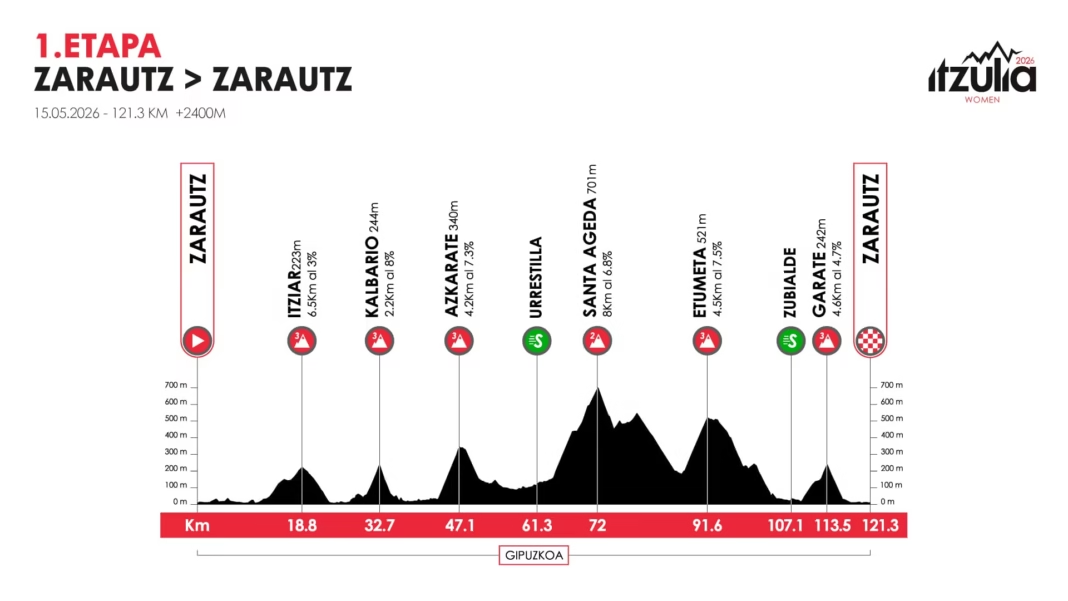
Stage 1 starts and finishes in Zarautz over 121.3 kilometres and includes six third-category climbs. There is no single major mountain here, but that is almost beside the point. The route is built on constant climbing and unrest, which should make it difficult for any team to keep the race calm. It looks like the kind of opener that can expose form immediately and create gaps through repeated pressure rather than one knockout blow.
Stage 2
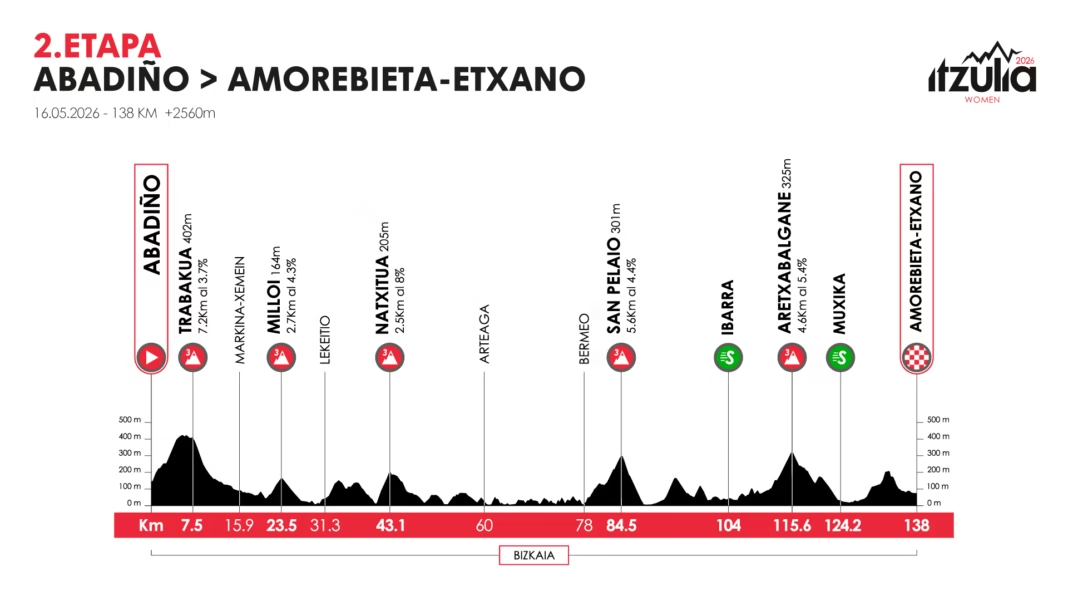
From Abadiño to Amorebieta-Etxano, Stage 2 is the longest day of the race and the one that may put the field under the greatest sustained strain. The route includes five third-category climbs and enough accumulated elevation to make it a serious GC day even without a summit finish. The individual climbs are not decisive in isolation, but their sequence can tighten the race and reward teams willing to attack through numbers rather than wait for the final kilometres.
Stage 3
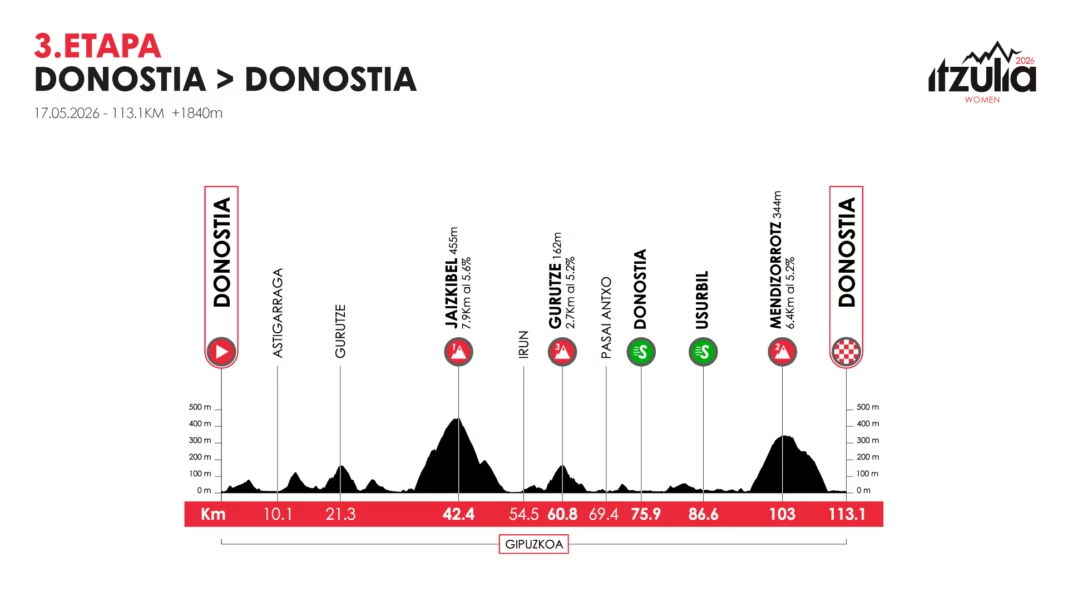
The final stage around Donostia is shorter at 113.1 kilometres but still looks like a proper decider. Jaizkibel and Mendizorrotz are the headline climbs, with the latter coming close enough to the finish to shape the final GC outcome. That makes the last day particularly dangerous for anyone defending a narrow lead. The stage should reward riders who can combine climbing punch with tactical nerve, because the race may still be close enough for late moves to decide everything.
2026 Itzulia Women live TV coverage
Race Date: Friday 15th May to Sunday 17th May 2026
United Kingdom
Live coverage is available via TNT Sports and HBO Max.
International broadcasters
Across much of Europe, coverage is available via HBO Max, with linear coverage also carried on Warner Bros. Discovery channels in some markets. In the Basque Country, the race is available via EITB. In Spain, coverage is typically carried via RTVE. In the United States and Canada, coverage is available via FloBikes.
2026 Itzulia Women startlist

2026 Itzulia Women Contenders

A reliable Itzulia GC profile sits with FDJ United-SUEZ, largely because the team arrive with riders who have already delivered strong overall finishes here. Juliette Berthet has a podium and two top-10s from just two starts, which is an excellent strike rate in a stage race where gaps are often small and consistency matters. Evita Muzic brings similar depth, two top-10s from four starts, and fits the style of racing where steady climbing and clean positioning are rewarded across the week. If the GC fight becomes tactical rather than purely about time gaps, Marie Le Net is a useful stage card on lumpy days, while Lauren Dickson gives them another rider who can still finish well from reduced groups when stages end fast after hard racing.
Two riders with proven Itzulia top-10 consistency gives Movistar a shape that always matters in the Basque Country. Liane Lippert has two top-10s from three starts and thrives on repeated punchy efforts, exactly the kind of terrain Itzulia serves up across multiple days. Olivia Baril has two top-10s from four starts and is often at her best when the race fractures and reforms rather than staying controlled. That pairing gives Movistar the option to apply pressure rather than simply follow, and in Itzulia, where time gaps often come from positioning and persistence as much as one decisive climb, that depth can decide the GC outcome.
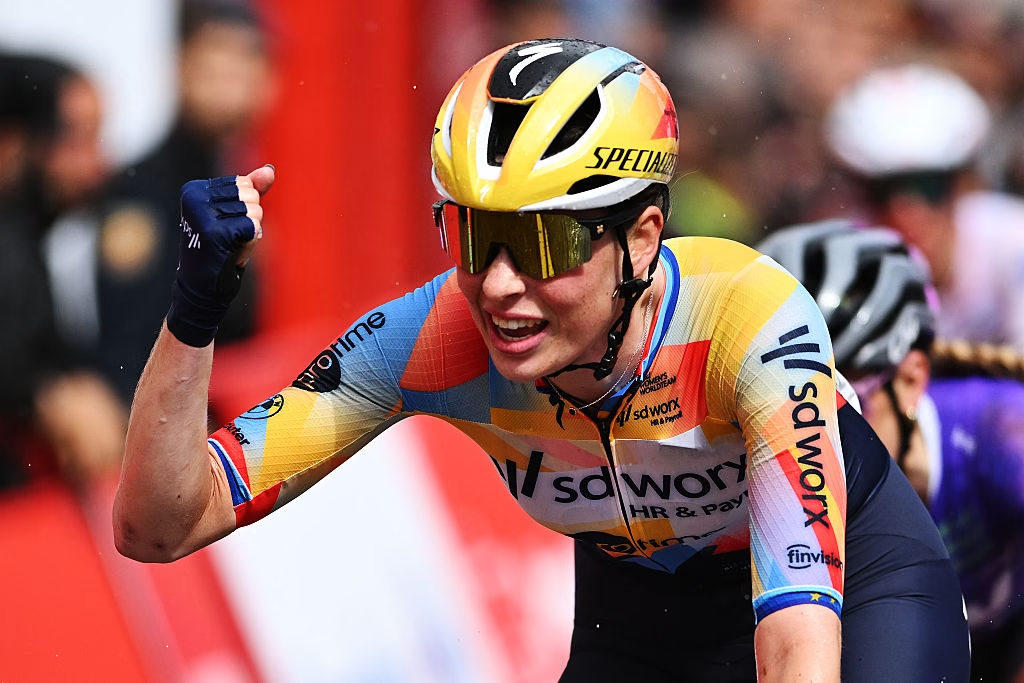
Few riders have a more convincing Itzulia record than Mischa Bredewold, and her results explain why Team SD Worx-Protime are so dangerous here. Two podiums and two top-10s from three starts, plus four stage wins, is a statement in a race that rarely gives repeat success unless the rider fits the terrain perfectly. Bredewold’s best route is a week where stages are selective enough to strip away pure sprinters, then finish from reduced groups where she can still deliver speed. If the climbing bites harder, Blanka Vas becomes more relevant as a rider who can survive repeated selections and still finish strongly, while Steffi Häberlin provides depth for the attritional phases where position and resilience decide who is even allowed to contest the finish.
A week shaped by endurance and damage limitation rather than a single summit showdown tends to suit AG Insurance-Soudal, because they have riders built for steady climbing across multiple days. Ashleigh Moolman-Pasio is the obvious anchor for that approach, the rider most likely to hold firm when the pace is high and the race becomes a cumulative test. Justine Ghekiere already has a top-10 from her only Itzulia start, a useful marker that she handles this particular rhythm, and she becomes more dangerous if the week includes a stage where the GC teams hesitate and a committed group can take time. If a stage ends from a reduced sprint after hard racing, Letizia Borghesi is the rider who can still finish strongly once the field has been thinned.
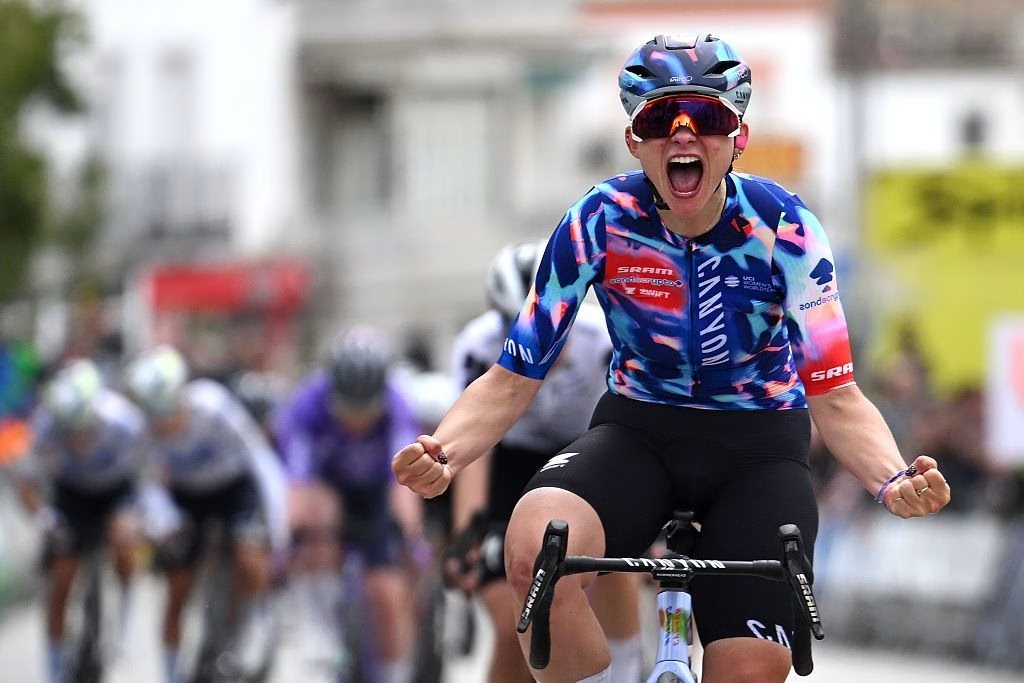
A team without a single obvious headline GC leader can still have a strong Itzulia if it brings depth and options, and Canyon SRAM fit that profile. Antonia Niedermaier already has a top-10 from her only start, which is a strong sign of immediate course fit for a rider still early in her career. Soraya Paladin gives them a reliable option for stages that end from reduced groups, while Chiara Consonni adds a finishing card if one of the stages ends in a fast reduced sprint rather than a pure climbers’ day. On a course where time gaps can come from splits, timing and positioning as much as raw climbing, having several riders who can survive into the key group is a genuine strength.
Repeated hard stages and a daily fight for position are where Lidl-Trek can grind out both stage results and a solid overall, because their line-up is built for resilience rather than one big moment. Shirin van Anrooij is the rider most likely to thrive if the stages are raced aggressively and the GC battle becomes a sequence of selections, not a single showdown. Riejanne Markus adds experience for the chaotic days, while Ricarda Bauernfeind gives them another rider capable of surviving deep into the hardest stages. It is also a useful course marker that Loes Adegeest has already landed a top-10 in her only start here, which matters if a stage finishes from a reduced group rather than a pure climbing battle.
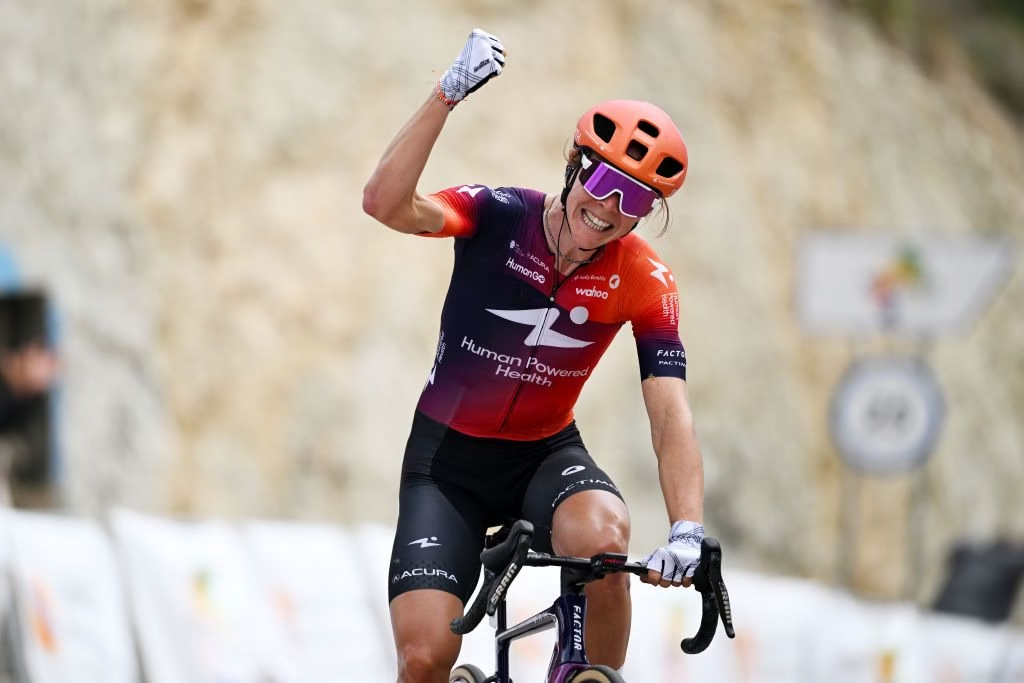
If the week becomes a survival contest rather than a pure climbing shootout, Human Powered Health are well placed to turn that into results, because their best riders tend to improve as the race gets harder. Thalita de Jong already has two top-10s from two starts, a perfect return so far in a stage race that punishes riders who misjudge their effort early. Mona Mitterwallner is the interesting variable, because if she is climbing well enough to stay with the main GC group she can turn the race into an endurance test rather than a punchy acceleration battle. The stage-hunting angle is also clear, because Petra Stiasny can be a real threat on the days where a long-range move survives and the GC teams hesitate behind.
Home roads often push a team into racing more on instinct than calculation, and that tends to suit Laboral Kutxa-Fundacion Euskadi. Paula Patiño has a top-10 history here, which is a useful marker that she can survive the rhythm of the week and still finish in the right group. Usoa Ostolaza gives them the punch and climbing ability to animate the hardest stages, especially if the decisive move is made on a transition rather than a summit finish. When Itzulia becomes tactical, being the team willing to commit early is often the difference between being visible and actually winning a stage.

A rider who can quietly move up the classification as the week wears on is Katrine Aalerud, and that makes Uno-X Mobility worth watching if Itzulia is raced hard enough to reward steady climbers. Aalerud fits a race where time is gained through consistent pacing across multiple stages rather than one big attack, and those riders often become more relevant after the first tough day has already removed some of the punchier names.
Clear Itzulia pedigree matters more than it does in many stage races, because the margins are small and the roads are often narrow and chaotic, which is where Cofidis Women Team can profit through Nikola Noskova. If stages are decided by who survives into a reduced group rather than by pure climbers only, Noskova is exactly the type who can keep appearing near the front. A week like this rewards riders who avoid losing time on the messy days, then take opportunities when the race shape becomes tactical.
A top-10 history here gives Liv AlUla Jayco a realistic pathway to a strong week through consistency and selective finishing. Ella Wyllie already has a top-10 at Itzulia, which is a useful indicator that she handles the race rhythm and can still be present when stages are decided late. If a stage ends in a reduced sprint, Wyllie becomes the rider most likely to turn survival into a result, while Noa Jansen and Mackenzie Coupland add support for the positioning-heavy days where being in the right split is often more important than having the single biggest attack.
Top 3 Prediction
⦿ Mischa Bredewold
⦿ Karlijn Swinkels
⦿ Juliette Berthet
-
 Photo Credit: quentinphotographiebe
 -
 Photo Credit: Getty