
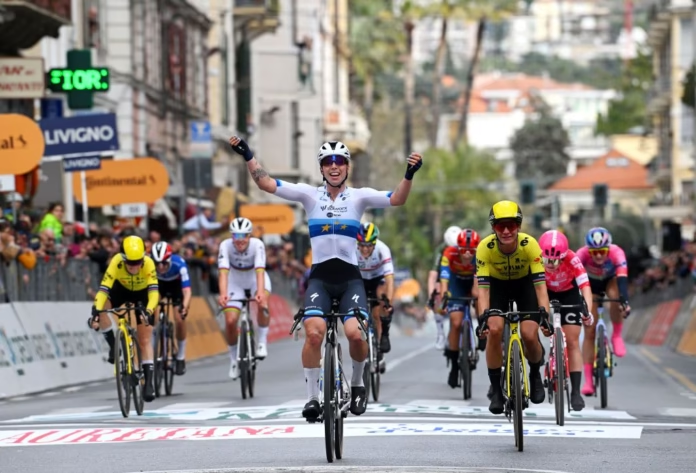
The return of Milan-San Remo Donne has quickly re-established one of the most iconic challenges in women’s cycling. Built on the same principles that define the men’s race, extreme distance, gradual accumulation of fatigue, and a decisive late sequence, it stands apart from the rest of the calendar. Unlike races shaped by repeated climbs or technical circuits, Milan-San Remo is about restraint, timing, and the ability to deliver a decisive effort after hours of controlled intensity.
What makes the race unique is the way it compresses its defining moments into the final kilometres. For much of the day, the peloton rides in a state of controlled tension, conserving energy while positioning for what is to come. Then the Cipressa and the Poggio arrive in quick succession, and the race transforms. Climbers attempt to force separation, puncheurs look to bridge, and sprinters fight to hold position, knowing that any hesitation can be decisive.
 Photo Credit: LaPresse
Recent editions have shown that there is no single winning formula. A well-timed attack on the Poggio can succeed if the pace is high enough to prevent organised chasing, but equally, small groups can reform on the descent and sprint for victory on the Via Roma. That balance between aggression and control makes Milan-San Remo Donne one of the most tactically complex races of the season, where both individual strength and team execution are tested over a prolonged distance.
The 2026 edition follows that same blueprint. The early kilometres through northern Italy serve primarily to build fatigue, but they also demand constant awareness as teams fight for position ahead of the decisive climbs. Once the race reaches the Ligurian coast, the tension builds steadily towards the Cipressa, before the Poggio provides the final opportunity to reshape the race. From there, the descent and flat run into San Remo determine whether the winner comes from a solo move, a small group, or a reduced sprint.
-
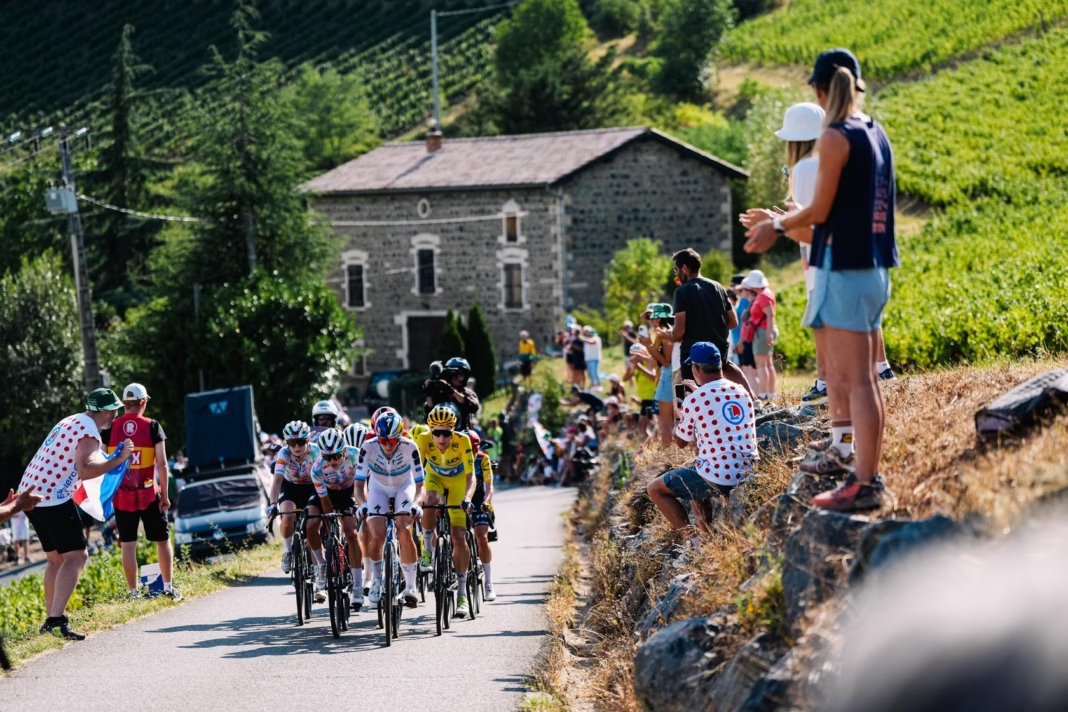
 Photo Credit: A.S.O./Billy Ceusters
Previous Winner
2025
Lorena Wiebes
2026 Milan-San Remo Donne route
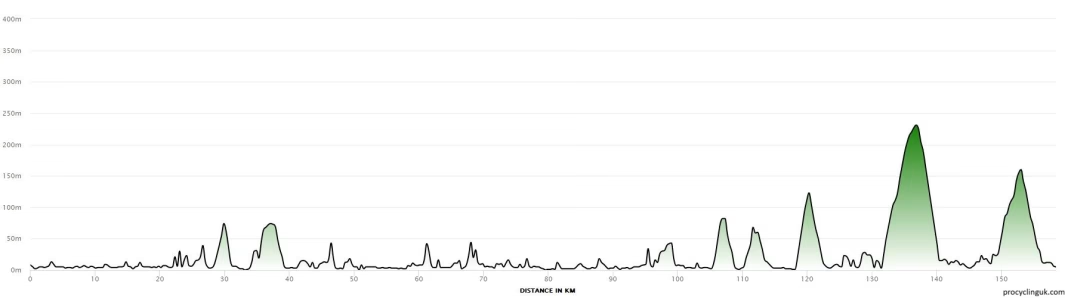
The route mirrors the structure that has defined Milan-San Remo for generations. Long, relatively flat kilometres gradually give way to the Ligurian coastline, where positioning becomes increasingly important ahead of the decisive climbs. The Cipressa provides the first real selection point, long enough to test endurance but often ridden at a pace that keeps a reduced peloton intact.
The Poggio di San Remo is where the race is most often decided. Short, sharp, and positioned close to the finish, it invites explosive attacks from riders willing to commit fully. Those who crest with an advantage must still navigate a fast, technical descent before the final run-in along the Via Roma. If a group reforms, the finish rewards riders who can combine endurance with a powerful sprint after a long day in the saddle.
2026 Milan-San Remo Donne live TV coverage
Race Date: Saturday 21st March 2026
United Kingdom
Live on Discovery+, Max and TNT Sports
International broadcasters
In Europe, coverage is available via Discovery+ and Max. In Italy, the race is typically broadcast on RAI. In the United States, coverage is available via FloBikes.
2026 Milan-San Remo Donne startlist

2026 Milan-San Remo Donne Contenders
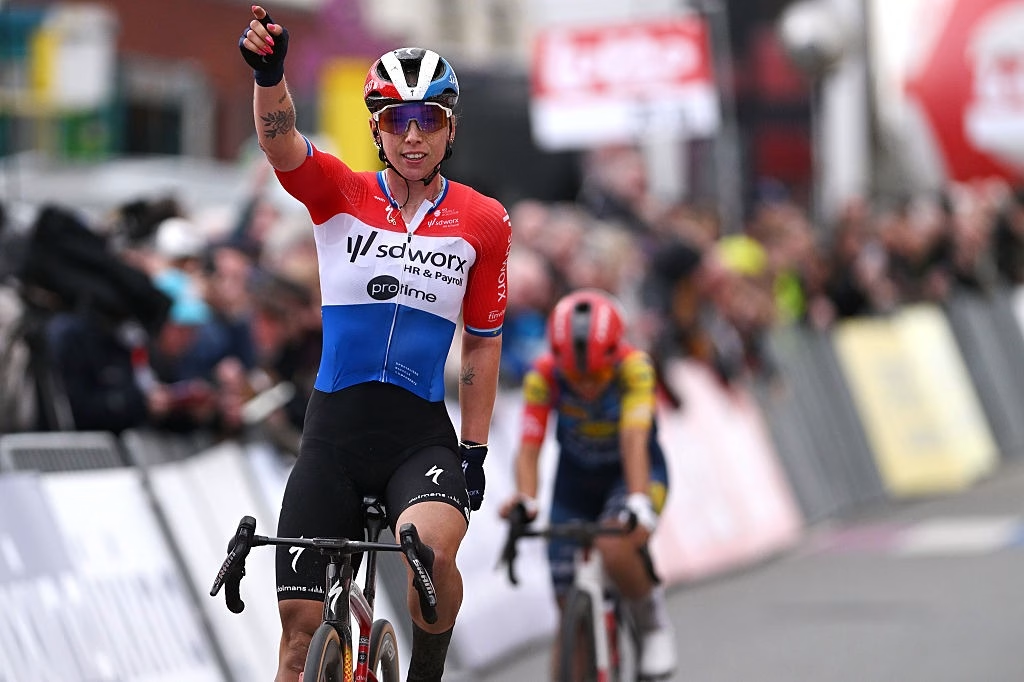
Milan-San Remo Donne is still defined by one uncomfortable truth. If Lorena Wiebes reaches Via Roma with the front group, she is the rider most likely to win, and 2025 proved it. She took the sprint ahead of Marianne Vos and Noemi Rüegg, with Demi Vollering 4th in the same group and Elisa Balsamo 7th. That is why the Cipressa and Poggio matter so much. They are not just climbs on the route; they are the last two real chances to stop the race from becoming a sprint that everyone can see coming. The race still bends around SD Worx-Protime, because they arrive with the fastest sprint and one of the most dangerous riders to carry into a reduced finale. Lotte Kopecky is central to the tactical game. She finished 9th last year in the front group and won Nokere Koerse this week, which is a useful reminder that she can survive the Poggio and still be there at the end, even when she is heavily marked. In 2026, Kopecky is the rider SD Worx can use to harden the Poggio and reduce the group, which increases the chance that Wiebes reaches the line with fewer rivals and less organisation around them. If the group becomes small enough that sprint trains no longer exist, Kopecky also becomes a direct win route in her own right. The extra card is Blanka Vas, who was 27th last year but has the punch and resilience to matter if the Poggio turns into repeated accelerations rather than a steady tempo.
If one team has the depth to turn the Cipressa into the start of the finale, it is UAE Team ADQ. Elisa Longo Borghini is the obvious reference point because she still finished 11th in the 2025 front group, even in an edition that did not fully explode. That tells you she can be present when it matters, and it also tells you that simply waiting for the Poggio is not enough if the goal is to beat Wiebes. UAE’s best script is to use the Cipressa as a long pressure climb that strips away helpers and isolates the fast finishers before the Poggio begins. That is where their depth matters. Dominika Wlodarczyk can keep the pace high and cover counters, Silvia Persico is a reliable bridge rider if the race splits and reforms, and Mavi Garcia is a threat if the race becomes a steady endurance squeeze rather than a one-hit attack. If the race does not split cleanly, UAE still have sprint insurance in Eleonora Gasparrini, a rider who can turn a reduced sprint into a podium if she survives the Poggio in contact.

EF Education-Oatly already have the most useful reference point of all, because Noemi Rüegg finished 3rd last year, which proves she can survive both climbs and still sprint at the end of 160 kilometres. That makes the team tactically interesting, because they can race with confidence rather than hope. The structure is clear. Rüegg is the finish card if the race comes back together. The other pieces are how they try to stop it from becoming too controlled. Magdeleine Vallieres and Cédrine Kerbaol were both in the chase group at 55 seconds last year, which is the part of the race where a committed move can still change everything if the leaders hesitate and the chase disorganises. In 2026, their best use is as riders who commit earlier, either helping harden the Cipressa to soften the group, or backing the move over the Poggio summit and driving the descent so it does not come back.
FDJ United-SUEZ have a slightly different problem to solve, because they proved last year they can get riders into the decisive phase, but they did not turn that into a winning position. Demi Vollering was 4th, and it is hard not to read that as a cue to race more aggressively this time. If Vollering wants to win, she cannot arrive at Via Roma with Wiebes still there. That means using the Cipressa as a squeeze rather than a settling climb, then attacking the Poggio early enough that the descent is taken at full speed. The team also have a strong supporting rider in Juliette Berthet, 8th last year, which signals she can survive the key moments and still finish well if the sprint is reduced. Ally Wollaston adds another angle again, because she can win from a selective sprint if the group is still large enough, which makes FDJ less predictable than a pure all-in attack team.
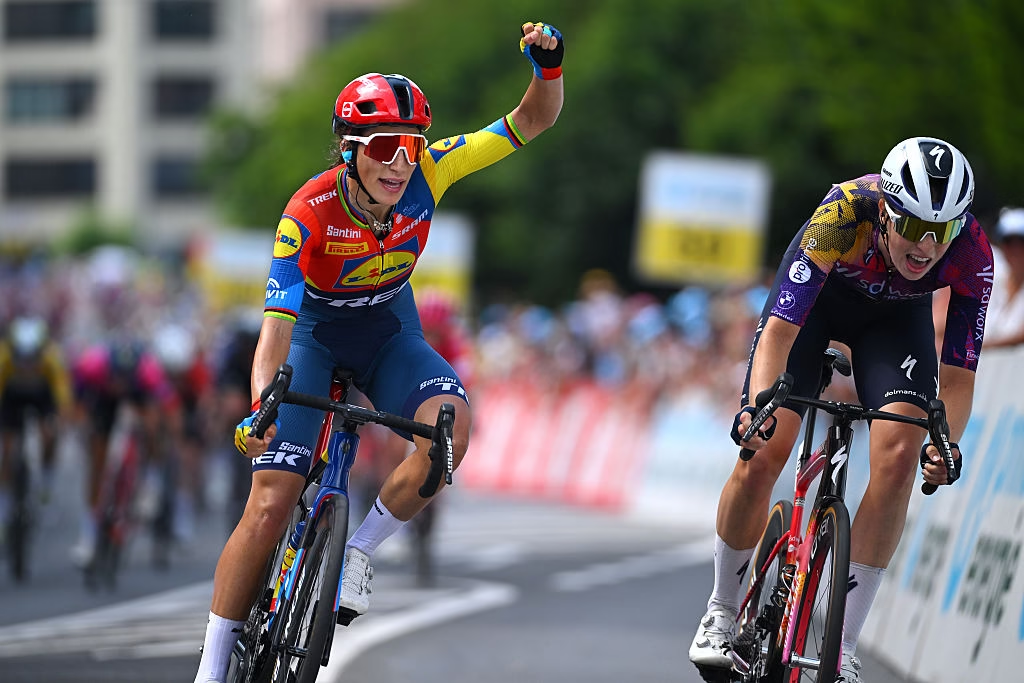
For Lidl-Trek, the most important data point is that Elisa Balsamo was 7th last year in the front group. That is the crucial detail. It means she can get over the Poggio with the contenders and still sprint for a big result on Via Roma. If the race is controlled and Wiebes is still there, Balsamo is racing for the podium. If the race is hard enough to drop Wiebes, Balsamo becomes a genuine winning-level finisher. The other piece is how they help shape the climbs. Niamh Fisher-Black was 29th in the chase group last year, which suggests she can survive the key terrain and contribute to making the Cipressa and Poggio hard enough to give Balsamo a clearer sprint. Margot Vanpachtenbeke was 19th, another useful reference point that she can get through the crucial climbs and remain present when the race splits into its final groups.
Fenix-Premier Tech are the simplest team to read because their whole finale points to one rider. Puck Pieterse was 10th last year in the front group, which proves she can make the same selection as the very best. The way she wins, however, is not by waiting for Via Roma. Pieterse is at her most dangerous when the Poggio becomes a fight of repeated accelerations, and the descent is taken with full commitment, because that is how you turn a small gap into a winning move rather than a caught move.
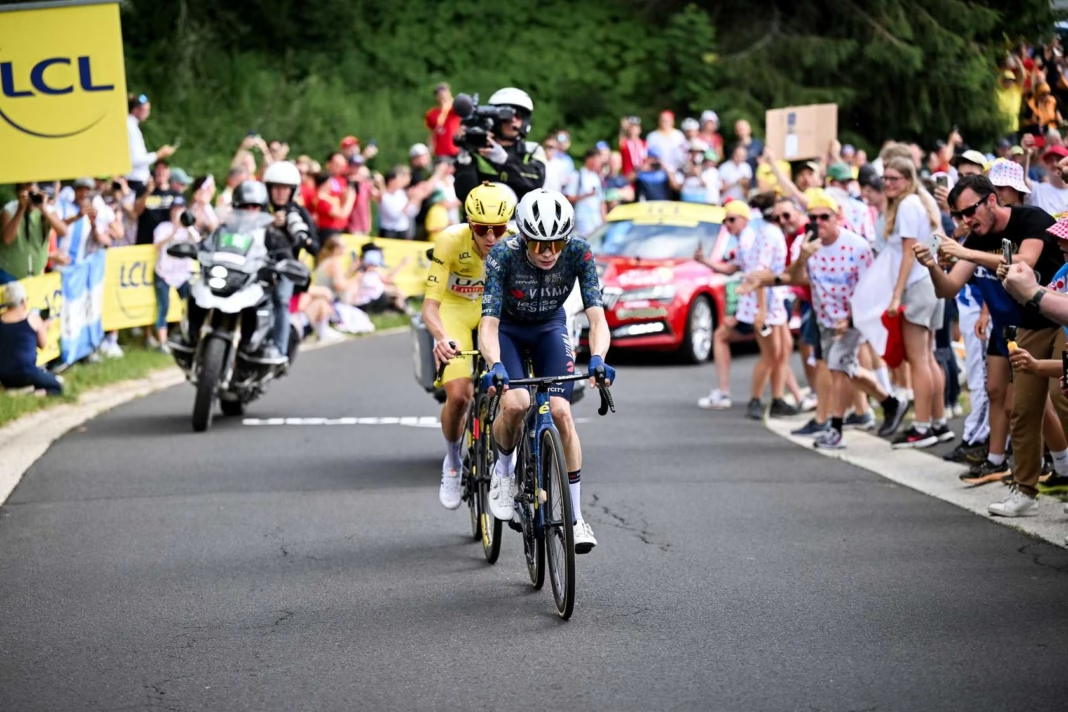
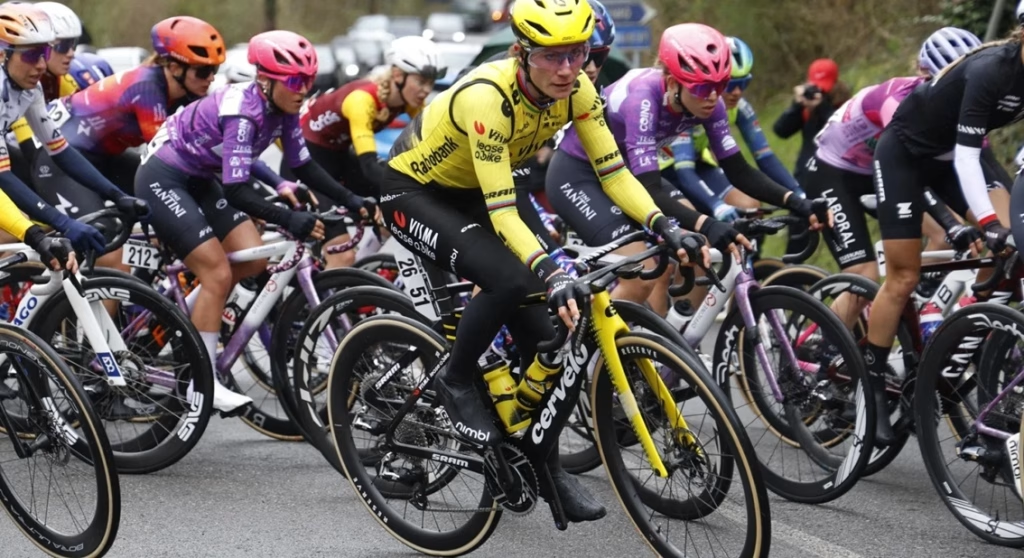 Photo Credit: Cor Vos
Marianne Vos is the obvious leader at Team Visma | Lease a Bike, because 2nd in 2025 is not just a podium, it is a clear reference point for how this race often plays out. She survived both climbs in the front group, then still had the speed to contest the sprint on Via Roma. Vos also changes how the finale is raced. Teams are less likely to gamble on a soft regroup after the Poggio if she is there, because she can win a reduced sprint, and she rarely misses the right wheels when the road tilts up.
Canyon SRAM have the advantage of being able to race the Cipressa and Poggio with two different endgames in mind. Kasia Niewiadoma-Phinney is the rider most likely to force an anti-sprint script, because a controlled run to Via Roma is rarely her best winning scenario. That’s what we saw at Omloop het Nieuwsblad already this season. The Cipressa is where a long squeeze can isolate the sprinters, and the Poggio is where she needs a move that carries over the top, not just a test of legs. At the same time, Chiara Consonni is the reason the finale becomes awkward if she survives in contact, because a strong sprint card in the front group discourages other teams from working too hard on the descent and flat run-in. With Soraya Paladin alongside them, Canyon also have a third rider who can cover moves and still finish well if the front group is reduced and disorganised.

Liv AlUla Jayco look increasingly interesting the more likely the race is to come back together after the Poggio, because they have multiple ways to win the sprint without needing a perfect lead-out. Ruby Roseman-Gannon is the clearest finisher if the front group is still sizeable, but the run-in is messy, the type of San Remo sprint where timing and wheel choice matter as much as raw speed. Letizia Paternoster gives them another fast option if the group is bigger than expected, but she may not survive the Poggio. While Monica Trinca Colonel becomes relevant if the Poggio is raced aggressively enough to create a small split that keeps pushing over the top. If the group hesitates, she is the type who commits to the descent and makes it hurt immediately.
Movistar’s story is simpler and sharper when it is built around one rider, and here that rider is Cat Ferguson. The key question is whether she crests the Poggio with the front group, because if she does, she has the speed and composure to win from a reduced sprint, and the instinct to go with the decisive move if it is an attack rather than a regroup. Arlenis Sierra in support matters because it gives Movistar a second sprint card if the group is larger than expected, and it also changes the chase dynamic if Ferguson is in a small move ahead. Rivals are less willing to tow a team to the line when they know two fast riders are sitting on.
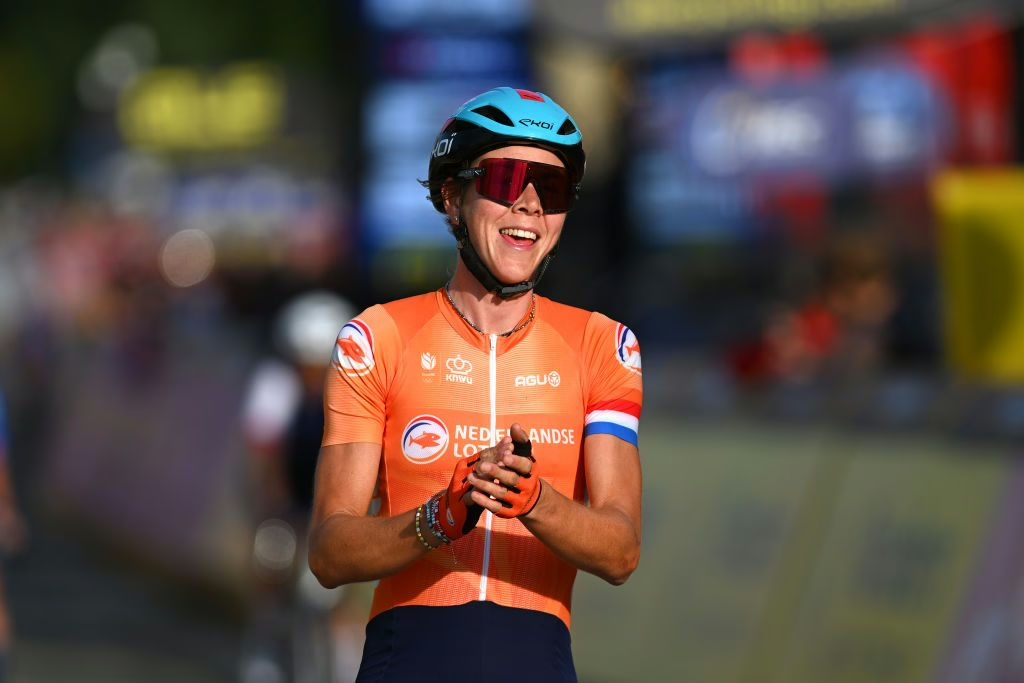
Thalita de Jong is worth including because she fits the San Remo profile that often pays off: survive the climbs, stay calm through the chaos, then still be capable of finishing strongly when others are close to empty. If the Cipressa and Poggio are ridden hard but not explosively, riders who can keep responding and still arrive with something to use become disproportionately valuable. De Jong is also the sort of rider who can exploit hesitation over the top of the Poggio, committing to the descent and the run-in rather than waiting for sprint teams to reorganise.
Finally, if the race splits on the Poggio and turns into a committed chase on the descent and the flat, Pfeiffer Georgi is one of the riders who can make that small group work. Her 16th last year shows she was close enough to profit if the race had split a little harder or the chase behind had hesitated for longer.
Top 3 Prediction
⦿ Lorena Wiebes
⦿ Demi Vollering
⦿ Lotte Kopecky

