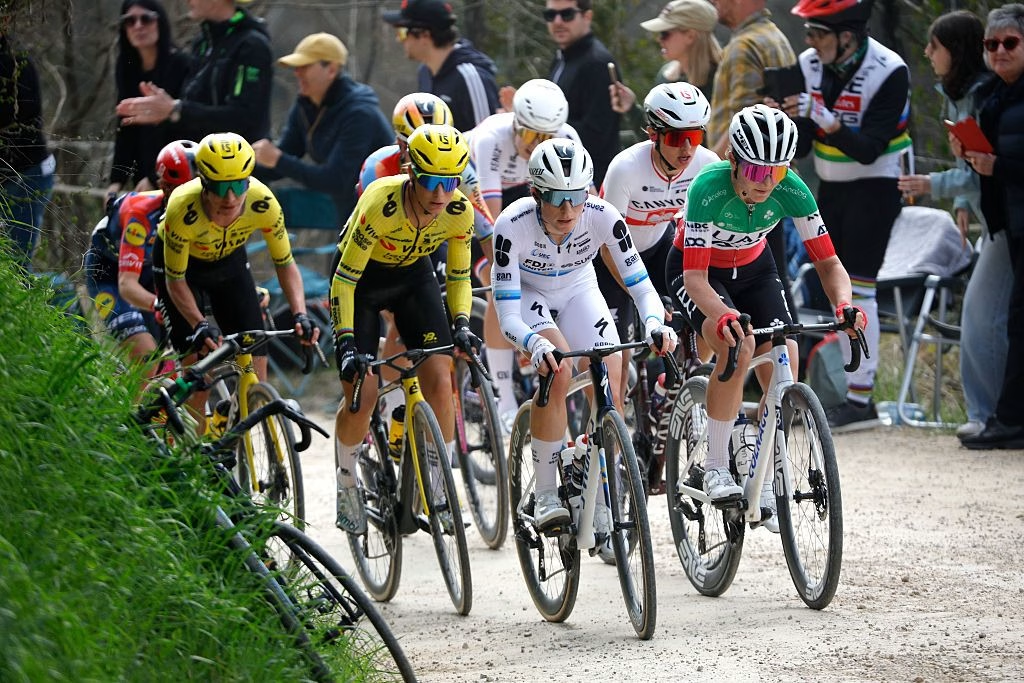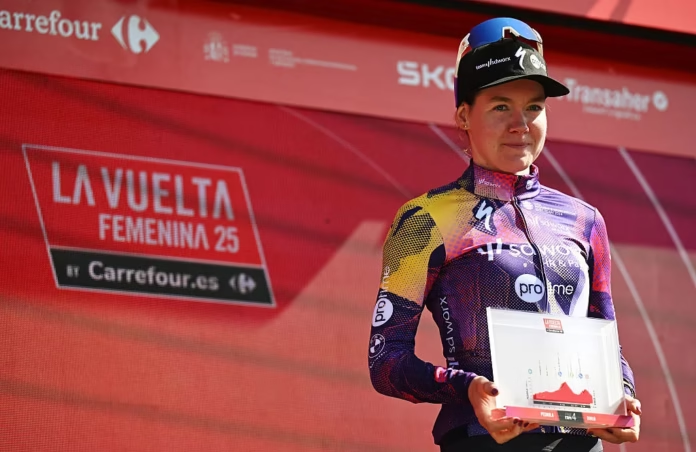
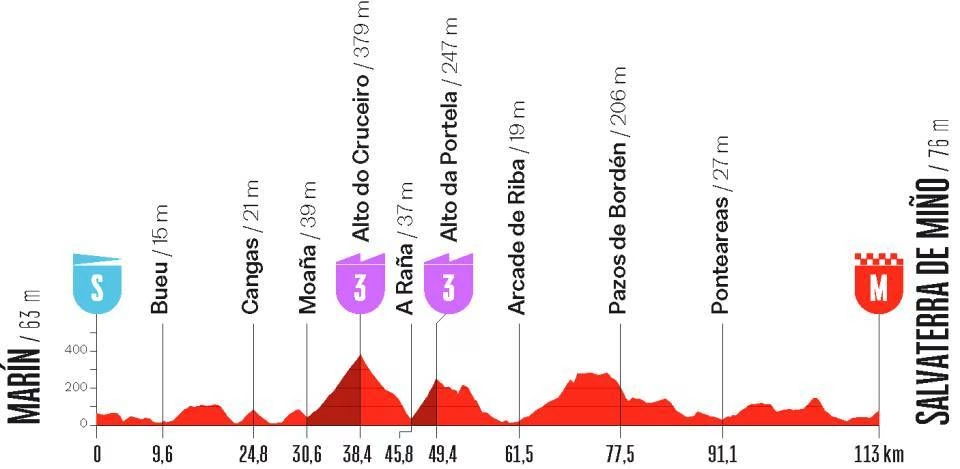
La Vuelta Femenina 2026 opens on Sunday, 3rd May, with a stage that looks modest on paper but should still create immediate pressure in the general classification. The race begins in Marín and covers 113.9km to Salvaterra de Miño, with a rolling profile, two categorised climbs and an uphill finish that is sharp enough to reward timing, punch and positioning.
This is not the kind of opening day where the biggest favourites can simply switch off and wait for the high mountains. The route is hilly throughout, carries around 1,800 metres of climbing, and ends with a finale that should punish anyone who arrives poorly placed or with the wrong rider in front. The first red jersey of the week is very much there to be won.
What sort of stage is it?
Stage 1 is officially classed as hilly, and that feels right. It is not a summit finish, and it is not one for the pure climbers alone, but it is also much too hard to treat as a straightforward sprint stage. The route from Marín to Salvaterra de Miño includes two third-category climbs in the middle part of the day before the riders tackle a constantly wearing succession of undulations on the run towards the finish.
That should matter because this first stage is not only about who can survive the climbs. It is also about how much energy the teams spend trying to control the race before the final kilometre. If the bunch arrives intact, it will still be a reduced group rather than a true full field sprint.
Where could the stage be decided?
The two listed climbs come far enough from the finish that they may not decide the stage on their own, but they should shape it. They will soften the peloton, encourage attacks from teams that want a more selective opener, and make it harder for the pure sprint trains to keep the race under control all afternoon.
The key moment, though, should come right at the end. The run-in to Salvaterra de Miño is not completely flat, and the final kilometre includes around 400 metres at roughly 6% before the road levels out. That makes it awkward rather than brutal. Riders who go too early could stall, but riders who wait too long may find themselves boxed in once the gradient eases.
It has the feel of a finish where timing matters just as much as raw speed. A fast finisher with a strong uphill kick should be favoured, especially if her team can keep her near the front into that final rise.
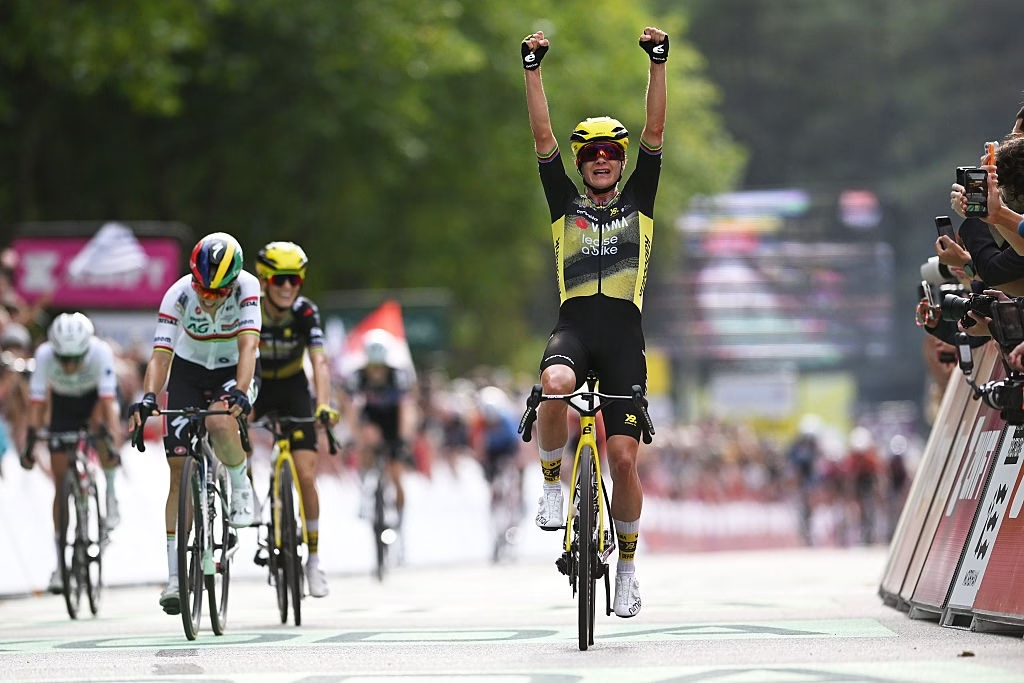 Photo Credit: Getty
Which riders should suit this opener?
This sort of first stage tends to reward a mixed skill set. The ideal rider is someone who can climb just well enough to survive the middle of the stage, cope with repeated changes of rhythm, and still sprint strongly from a reduced group.
Marianne Vos stands out immediately for that reason. On a day that is too hard for some of the flatter-stage specialists and not hard enough for the pure climbers to ride clear with confidence, she fits the profile of a rider who can read the finale and finish the job. If Team Visma | Lease a Bike can keep things under control without overcommitting too early, this is the kind of opening stage she can win.
Lotte Kopecky is another obvious name for the wider race, though this finish may be slightly less selective than she would ideally want. Still, when the first red jersey is available and the route offers repeated chances for splits, her team may choose to make the stage harder rather than leave it to a punchy sprint.
Noemi Rüegg also comes into the conversation on a finish like this. She does not need a major climb to make an impact and, if the race is hard enough before the last kilometre, she has the kind of acceleration and race craft to take time or even the stage itself.
Kasia Niewiadoma-Phinney should also be watched closely. She has been one of the most reliable riders in these hilly one day and stage race finishes when the bunch is reduced, and the pace is erratic. If the front group is small enough, she becomes more dangerous.
There is also room here for a rider like Puck Pieterse if the race stays compact but selective. She has the explosiveness for a sharp finish and the confidence to commit early if she senses hesitation behind.
What should the teams do?
The opening day of a Grand Tour often produces nervous racing because nobody wants to lose the race in the first couple of hours. That usually means a strong fight for the breakaway, then a long phase where the bigger teams try to keep the route under some form of control without burning through riders they will need later in the week.
That balancing act matters here. A team built around a finisher for this stage will want the break close, but not so close that repeated attacks in the final 30km become dangerous. A team built around overall ambitions might prefer a harder race, especially if that makes the finale more selective and removes some of the quicker finishers.
There is a real chance this becomes one of those opening stages where several teams all half-control the race, no one fully commits, and the finale becomes more chaotic than expected. That would suit opportunists and puncheurs more than the riders who need a long, clean lead-out.
What is the most likely scenario?
The most likely outcome is a reduced bunch sprint rather than a solo move or a long range attack staying clear. The route is hard enough to thin the peloton, but the climbs are not severe enough to guarantee lasting separation between the main favourites before the finale. The uphill drag in the last kilometre should then sort the remaining contenders one more time.
That makes positioning absolutely central. The rider who begins the final 400 metres too far back may never get another chance. Equally, the rider who opens up first on the slope risks fading once the road flattens and the speed rises again.
Prediction
This looks like a very good opening stage for Marianne Vos. She has the experience, the punch and the finishing instinct to handle a reduced uphill sprint, and Stage 1 has exactly the kind of awkward shape that often rewards her. Others may try to make the race harder before the finish, but if it comes back together in time, she remains the rider to beat.
The stage should not create massive time gaps, but it could still shuffle the first general classification significantly. That alone makes it a far more important opener than a simple first glance at the profile might suggest.