The 2025 season did not reshape the Women’s WorldTour through dominance or collapse, but through pressure. Pressure on budgets, pressure on development pipelines, and pressure on teams to justify depth in an increasingly professionalised peloton. While the top tier of results remained concentrated among familiar names, the middle of the sport shifted noticeably. Roles tightened. Opportunities narrowed. And for many riders, progress came not from results alone, but from recognising structural limits within their teams.
That context matters when assessing the transfer market ahead of 2026. This was not a winter defined by headline-grabbing moves or ideological reinvention. Instead, it was shaped by correction. Teams recalibrated squad balance, reduced duplication of rider profiles, and in several cases responded directly to financial reality rather than competitive ambition. Riders, in turn, moved less for prestige and more for clarity.
Some transfers reflect tactical fine-tuning. Others reveal deeper fault lines, particularly where budgets have tightened or development pathways have become congested. In the case of Team Picnic PostNL, the churn speaks as loudly as the arrivals. Elsewhere, teams such as Lidl-Trek and FDJ United-SUEZ have quietly restructured around durability and role definition rather than star power.
Taken together, these moves outline what 2026 is likely to become. A season less about transformation and more about execution. Riders stepping into cleaner roles. Teams aiming to extract marginal gains from better fit rather than bigger names. And a peloton where opportunity, rather than reputation, may prove the decisive currency.
2026 Women’s WorldTour Transfers by team
Lidl-Trek
Lidl-Trek’s transfer business for 2026 is understated but purposeful, reinforcing a squad that has already proven capable of winning across terrain without becoming dependent on a single race type.
Loes Adegeest arrives from FDJ-SUEZ as a rider whose value has long outstripped her palmarès. Adegeest has built her career on reliability in demanding race situations, particularly in one-day races where positioning, timing and composure matter more than raw speed. At FDJ-SUEZ, she was part of a crowded ecosystem of similar profiles, often sharing responsibility rather than owning it. Lidl-Trek offers a clearer pathway. In 2026, Adegeest should find herself more consistently positioned as a finisher in reduced sprints and attritional races, especially in the northern Classics and transitional WorldTour events.
Ricarda Bauernfeind’s move from Canyon SRAM zondacrypto is one of the most strategically significant transfers of the off-season. Her time at Canyon was productive but increasingly constrained by internal competition for GC leadership and climbing roles. Bauernfeind remains one of the most tactically intelligent stage race riders of her generation, combining climbing resilience with the ability to read race flow. Lidl-Trek can offer her something Canyon increasingly could not: space. In 2026, expect her to feature more prominently in stage race general classifications and medium-mountain stages where consistency is rewarded.

Margot Vanpachtenbeke steps up from VolkerWessels with momentum built on aggressive racing rather than protected leadership. Her strength lies in her willingness to commit early and race instinctively, qualities Lidl-Trek have increasingly valued as the peloton becomes more controlled. While she is unlikely to be a focal point immediately, her presence strengthens the team’s ability to animate races rather than simply respond to them.
The addition of Marine Lenehan is clearly a long-term investment. With no immediate pressure to deliver results, her integration reflects Lidl-Trek’s confidence in its development environment. 2026 should be viewed as a foundation year, focused on adaptation rather than expectation.
Taken together, Lidl-Trek have not altered their identity, but refined it. The 2026 squad looks deeper, more flexible, and better aligned with a calendar that increasingly rewards teams capable of winning in multiple ways.

FDJ United-SUEZ
FDJ United-SUEZ approach 2026 with a squad that feels more balanced than it did twelve months earlier, addressing depth rather than headline gaps.
Sofia Bertizzolo arrives from UAE Team ADQ as a rider whose experience has become increasingly valuable in a peloton where race control is more sophisticated each year. Bertizzolo’s career has been defined by adaptability. She can sprint from reduced groups, survive hard days, and support leaders deep into races. FDJ have lacked exactly this kind of connective tissue at times in 2025, particularly when races fractured early. In 2026, Bertizzolo should be a stabilising presence across Classics and stage races alike.
The signing of Franziska Koch from Team Picnic PostNL is inseparable from Picnic’s broader contraction. Koch leaves a team under financial strain, where rider roles became less secure and opportunities more fragmented. At FDJ United-SUEZ, she joins a structure that values clarity and preparation. Koch’s strength lies in her consistency and tactical discipline, traits that often go unnoticed until they are absent. Expect her to play a visible role in controlling races and supporting leaders, with occasional personal results when race situations allow.
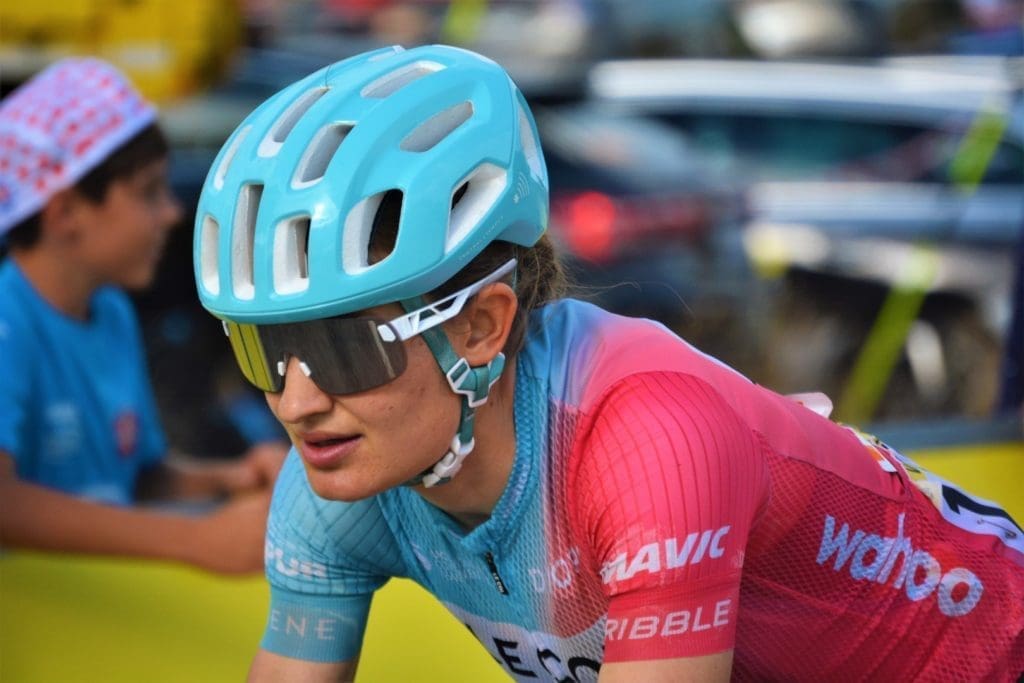
Eva van Agt moves from Team Visma | Lease a Bike after several seasons shaped primarily by service. Her career to date suggests a rider capable of more than she has been allowed to show. FDJ United-SUEZ provide an environment where controlled aggression is encouraged, and van Agt could rediscover the freedom to attack in one-day races and rolling stages in 2026.
Finally, Lauren Dickson represents the future-facing side of FDJ’s recruitment. Moving up from a development environment, she enters a team that has consistently shown patience with younger riders. Her 2026 season should be judged on integration rather than results, but the pathway is clear.
FDJ United-SUEZ have not chased reinvention. Instead, they have reinforced the structure that underpins their success, ensuring that leadership is supported by depth rather than exposed by it.
 Photo Credit: St Michel-Preference Home-Auber93
Team Picnic PostNL
Team Picnic PostNL’s transfer window is impossible to analyse without acknowledging the financial reality that shaped it. Budget constraints did not merely influence recruitment. They defined it.
The departures of Francesca Barale to Movistar, Megan Jastrab to UAE Team ADQ, Franziska Koch to FDJ United-SUEZ, and Nienke Vinke to Team SD Worx-Protime represent a clear loss of established WorldTour calibre. Each of those riders occupied meaningful roles within the squad, and in different ways outgrew what Picnic could realistically offer going forward.
Rather than attempting to replace like-for-like, Picnic have pivoted decisively towards development.

The incoming group is extensive: Megan Arens, Robyn Clay, Audrey De Keersmaeker, Lucie Fityus, Daniela Hezinova, Gaia Masetti, Dilyxine Miermont, and Mia Griffin. The common thread is potential rather than polish. Several arrive from continental or development teams, others from smaller WorldTour environments where progression stalled.
This is not a roster built for immediate return on investment. It is a calculated reset. In 2026, Picnic PostNL are unlikely to feature prominently in WorldTour victory tallies. Instead, success will be measured through adaptation, retention, and incremental performance gains. The risk is obvious. So is the opportunity. If even a fraction of this cohort progresses as hoped, Picnic could re-emerge in future seasons with a distinct, internally developed identity.
For now, 2026 looks like a season of survival and groundwork rather than ambition.
Movistar Team
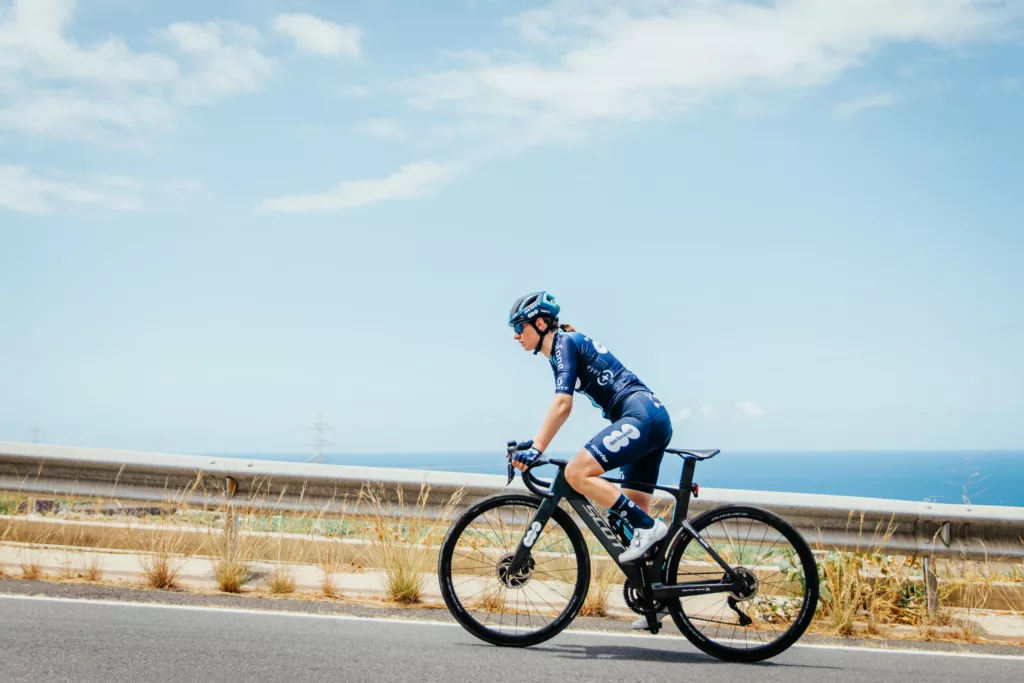
Movistar’s 2026 transfer activity reflects a team refining its middle layer rather than reshaping its leadership core. The emphasis is on riders who can grow into responsibility rather than immediately demand it.
Francesca Barale arrives from Team Picnic PostNL at a pivotal point in her career. Long viewed as a rider with strong fundamentals, Barale’s progression stalled slightly within Picnic’s increasingly unstable structure in 2025. Her move feels less about escaping results pressure and more about entering a clearer tactical environment. Movistar have a proven record of turning solid all-rounders into reliable contributors across stage races and one-day events. In 2026, Barale should benefit from defined expectations, particularly in hilly Classics and transitional stages where her endurance and race reading come to the fore.
Paula Ostiz represents the other side of Movistar’s strategy. Her step up from junior racing, after a stint at the team as a stagiaire, is not about immediate output but long-term cultivation. Movistar have been selective in recent years about which young riders they fast-track, and Ostiz’s inclusion suggests confidence in both her physical trajectory and mentality. The 2026 season should be about exposure rather than results, but her presence adds depth and future optionality to the squad.
Movistar’s transfer window may lack headline appeal, but it reinforces a structure built on sustainability. For 2026, the objective appears to be continuity with incremental strengthening rather than radical change.
AG Insurance-Soudal Team
AG Insurance-Soudal have quietly made one of the most coherent single-rider signings of the transfer window, targeting a profile that fits their racing philosophy precisely.
Letizia Borghesi moves from EF Education-Oatly after several seasons where her role oscillated between opportunity and obligation. Borghesi thrives in hard races, particularly those that blur the line between sprint and survival. Her ability to handle repeated accelerations, technical finales, and selective terrain makes her especially valuable in modern one-day racing. At AG Insurance-Soudal, she should find a more stable platform to convert that consistency into results.
The move also makes sense structurally. AG Insurance-Soudal have leaned heavily on collective strength and race intelligence rather than raw dominance. Borghesi complements that approach perfectly. In 2026, she could emerge as a protected finisher in reduced sprints and a genuine contender in attritional Classics where race positioning and durability decide outcomes.
This is not a signing built on hype. It is built on fit, and those are often the transfers that deliver the most quietly effective returns.

Human Powered Health
Human Powered Health’s 2026 recruitment suggests a team intent on broadening its tactical toolkit rather than specialising further. The incoming riders add depth across climbing, endurance, and aggressive race scenarios.
Nina Buijsman comes from FDJ-Suez, and Marta Jaskulska from Ceratizit Pro Cycling Team, a squad where leadership opportunities became increasingly constrained. Buijsman’s strength lies in her consistency and ability to survive difficult terrain, while Jaskulska offers a more punchy, aggressive profile. Together, they give Human Powered Health more flexibility in races that fragment early or reward repeated attacking.
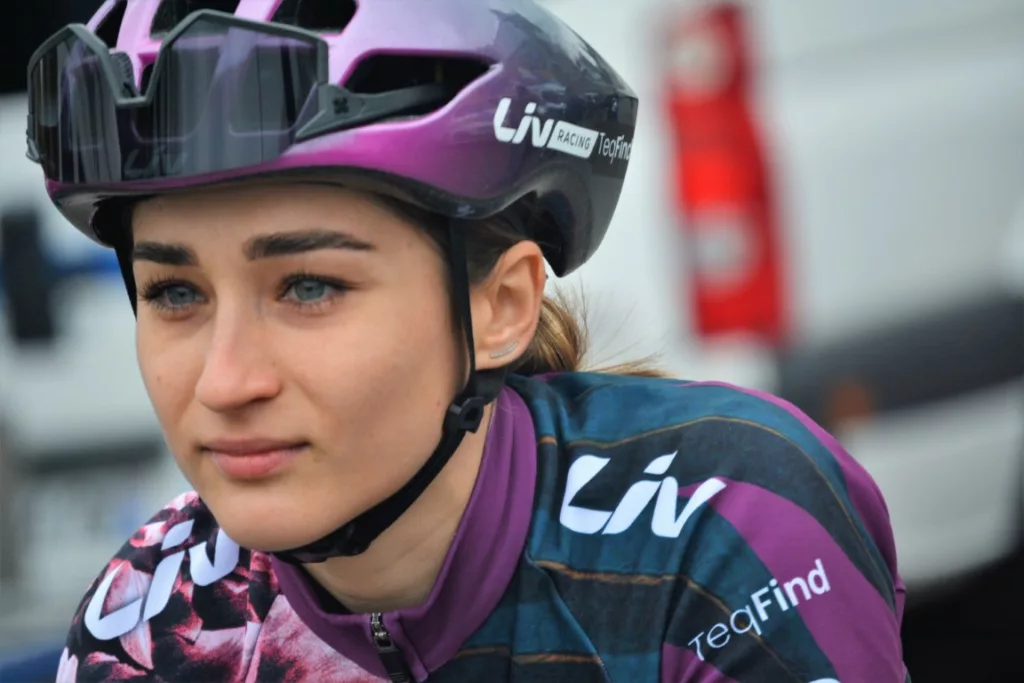
Jente Koops, stepping up from NXTG Racing, fits neatly into the team’s development-conscious approach. Her racing style suggests a rider comfortable with initiative rather than passive roles, something Human Powered Health have encouraged in recent seasons.
Titia Ryo, moving from Arkea-B&B Hotels, brings experience and adaptability. She has often been at her best in unpredictable races where structure breaks down, and that makes her a useful asset in a peloton increasingly shaped by aggressive early racing.
Finally, Petra Stiasny adds a clear climbing dimension. Her move from Roland Le Dévoluy strengthens Human Powered Health’s options in stage races with genuine elevation. While not a GC leader in the traditional sense, Stiasny offers the team the ability to influence mountain stages rather than merely survive them.
Collectively, these signings do not point towards a single 2026 objective. Instead, they suggest a team-building optionality. More scenarios covered. More races animated. And more riders capable of stepping forward when opportunity presents itself.

UAE Team ADQ
UAE Team ADQ’s transfer activity ahead of 2026 reflects a team moving from aspiration towards execution. Rather than pursuing wholesale change, the focus has been on experience, continuity, and reinforcing areas that have previously lacked authority.
The most resonant move is the return of Mavi Garcia, who rejoins UAE Team ADQ, having led the squad during its formative WorldTour seasons between 2020 and 2022. In that period, Garcia was not only the team’s most reliable performer but its competitive reference point, regularly anchoring the squad in stage races and providing legitimacy at the highest level. Her return feels both strategic and symbolic. UAE Team ADQ are no longer a developing project, and Garcia no longer needs to define the team’s identity. Instead, she returns as an experienced stage race leader capable of elevating ambition and providing on-road authority. In 2026, she immediately strengthens the team’s GC prospects on rolling and medium-mountain terrain.
That direction is reinforced by the signing of Pauliena Rooijakkers from Fenix-Deceuninck. Rooijakkers has built a reputation on consistency, recovery, and resilience rather than explosive highs. At Fenix, she was often a dependable presence without being the focal point. UAE Team ADQ should offer her greater clarity and support around GC objectives. In 2026, she looks well placed to become a regular top-ten contender in stage races where cumulative fatigue shapes the classification.
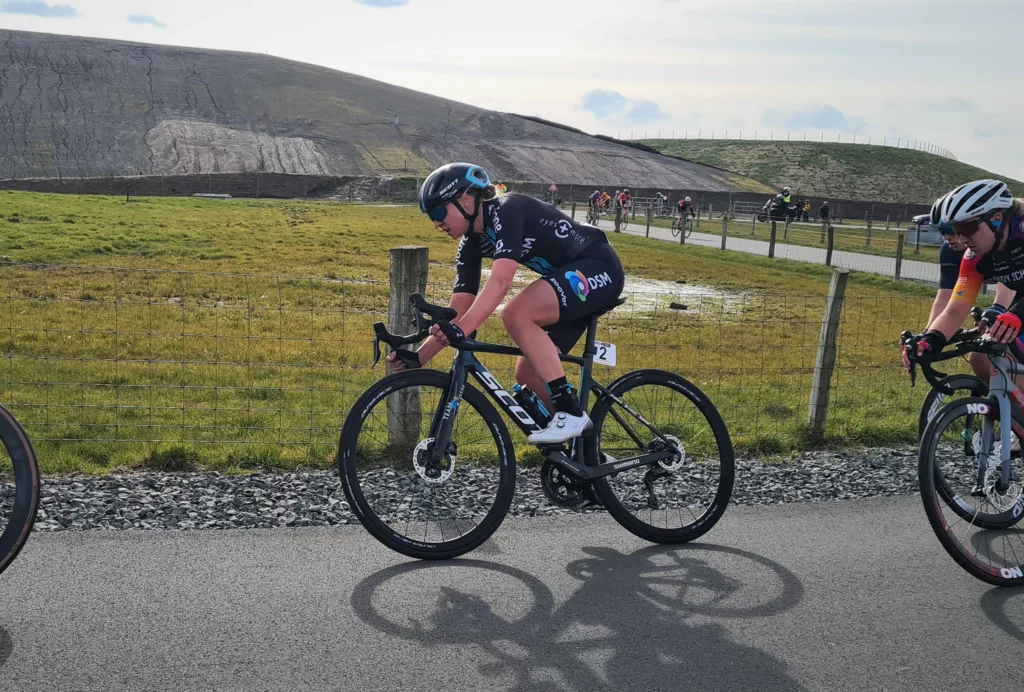
Megan Jastrab’s arrival from Team Picnic PostNL reflects a different strategic calculation. Her move comes after a period of instability at Picnic, where budget pressure and squad turnover made it difficult to establish a clear sprint programme. Jastrab’s power remains unquestioned, but her WorldTour career has yet to settle into a defined trajectory. UAE Team ADQ can offer a more structured sprint environment, and 2026 may prove decisive in determining whether she can consistently convert potential into results.
Completing the intake is Federica Venturelli, promoted from the UAE Development Team. Her progression has been carefully managed, and her step up feels earned rather than speculative. Venturelli brings composure and race intelligence beyond her years, particularly in stage race settings. In 2026, the emphasis should be on integration rather than expectation, but her presence deepens the squad’s options considerably.

Uno-X Mobility
Uno-X Mobility continue to follow a clearly defined path, prioritising development, cohesion, and cultural fit over immediate impact. Their 2026 recruitment reinforces that identity rather than challenging it.
Jelena Eric arrives from Movistar Team after several seasons spent largely in support roles. Her experience at the WorldTour level should translate well within the Uno-X structure, where tactical discipline and collective execution are highly valued. Eric may find greater freedom to influence races directly, particularly in early breakaways or aggressive transitional stages.
The signing of Sigrid Ytterhus Haugset from Team Coop-Repsol represents a natural progression within the Scandinavian development ecosystem. Her trajectory has been steady, built on durability and incremental improvement rather than headline results. In 2026, she is likely to operate as a support rider with room to grow, especially in stage races.

The arrival of Laura Tomasi from Laboral Kutxa-Fundacion Euskadi adds endurance and reliability. Tomasi strengthens Uno-X’s capacity to remain competitive deep into hard races, particularly on lumpy terrain.
Francesca Pellegrini steps up from the UAE Development Team, bringing a strong engine and a willingness to race proactively. Uno-X have consistently rewarded riders who take initiative, and Pellegrini’s style aligns well with that philosophy.
Finally, Alessia Vigilia, moving from FDJ-SUEZ, joins in search of opportunity rather than security. At Uno-X, she may find more scope to test herself in breakaways and secondary race scenarios. For 2026, Uno-X’s objective remains clear: continued progression, visible cohesion, and selective impact rather than breakthrough dominance.

Team Visma | Lease a Bike
Team Visma | Lease a Bike has once again approached the transfer market with restraint, targeting specific profiles that enhance structural strength rather than disrupt hierarchy.
Daniek Hengeveld joins from Ceratizit Pro Cycling Team as a rider known for reliability and tactical awareness. She has repeatedly demonstrated an ability to support leaders across varied terrain, and Visma’s highly structured racing model should suit her strengths. In 2026, Hengeveld looks set to become a dependable component in both stage races and one-day events.
Sarah Van Dam, also arriving from Ceratizit, brings upward momentum. Her recent progression suggests a rider growing in confidence, particularly in selective finishes. At Visma, opportunities to ride for personal results may be limited initially, but her adaptability makes her a valuable asset across a long and demanding season.
The signing of Katharina Sadnik is clearly future-oriented. With limited exposure at the WorldTour level, her inclusion reflects Visma’s confidence in their development systems. The 2026 season should be viewed as an apprenticeship, focused on learning race rhythm and integrating into one of the most demanding environments in the peloton.
As ever, Team Visma | Lease a Bike has not sought reinvention. Instead, they have reinforced the foundations that allow their leaders to operate with precision. In 2026, this looks like a squad designed to reduce vulnerability rather than chase attention.
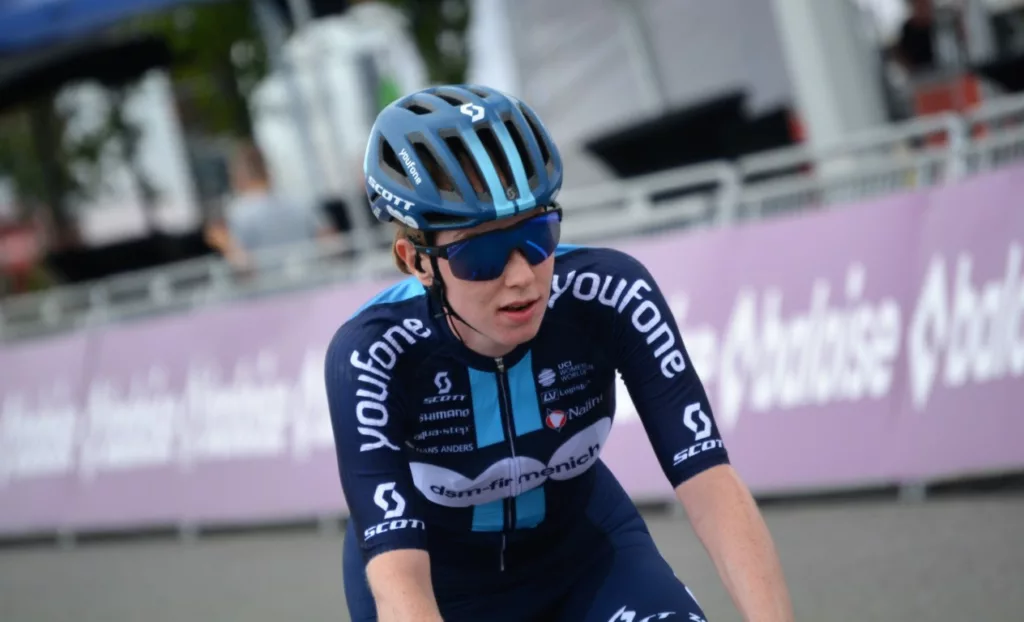
Team SD Worx-Protime
Team SD Worx-Protime rarely need to recruit out of necessity. Their transfer activity is usually about marginal refinement, and that remains the case heading into 2026.
Nienke Vinke moves across from Team Picnic PostNL at a moment when her trajectory is still trending upwards. Picnic’s financial constraints and squad turnover made long-term planning difficult, and her move to SD Worx-Protime offers stability and exposure to a winning environment. Vinke’s strengths lie in her resilience on rolling terrain and her ability to stay present as races harden. While leadership opportunities will be scarce, the step up in structure could elevate her performance ceiling.

The arrival of Valentina Cavallar from Arkea-B&B Hotels fits that pattern. Cavallar has developed into a dependable climber, capable of contributing across a wide range of race scenarios. At SD Worx-Protime, she is unlikely to be given protected leadership, but her endurance and tactical awareness make her well-suited to supporting the team’s leaders deep into races. In 2026, her role will be about reinforcing control rather than chasing personal results.
SD Worx-Protime’s recruitment here is not about change. It is about ensuring that dominance is underpinned by depth. In 2026, that approach looks set to continue.

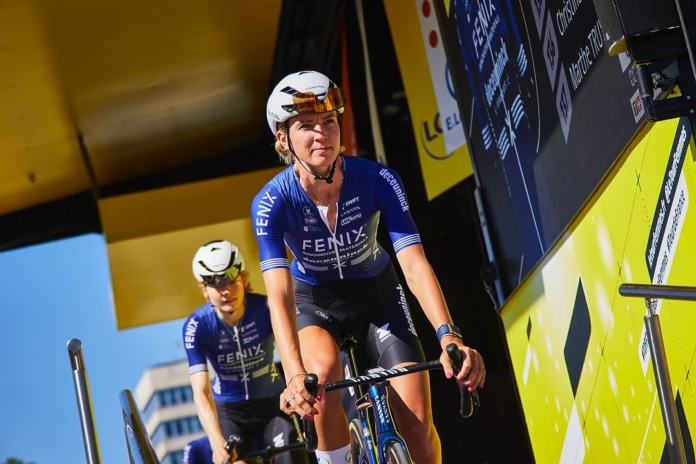
Fenix-Premier Tech
Fenix-Premier Tech’s transfer window reinforces their identity as a team that values progression and internal promotion, while selectively adding riders ready for the next step.
The signing of Mylène de Zoete from Ceratizit Pro Cycling Team reflects a desire to add experience without compromising development. De Zoete brings reliability and adaptability, offering Fenix a rider capable of contributing across terrain and race types.

Lotte Claes arrives from Arkea-B&B Hotels with a reputation for aggressive racing and tactical bravery. Her willingness to animate races aligns well with Fenix’s philosophy, particularly in one-day events where opportunism is rewarded. In 2026, she should find an environment that encourages initiative rather than restraint.
Two promotions from the development structure, Fien Van Eynde and Xaydee Van Sinaey, underline Fenix’s commitment to continuity. Both riders have been shaped within the same system, and their step up feels like a natural extension rather than a gamble. The expectation for 2026 should be steady integration, but their familiarity with the team’s racing culture could allow for quicker adaptation than typical first-year WorldTour riders.
Fenix-Premier Tech’s recruitment suggests patience rather than urgency. The goal remains long-term competitiveness built through internal alignment.
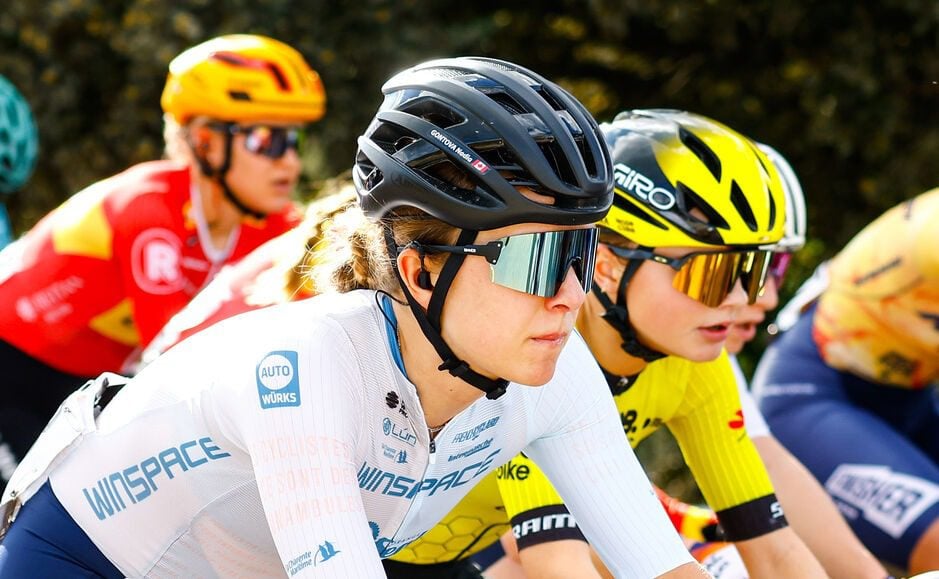 Photo Credit: Sprint Cycling Agency
Liv AlUla Jayco
Liv AlUla Jayco’s 2026 intake is defined by continuity and internal trust, promoting riders who already understand the team’s structure and expectations.
Mackenzie Coupland steps up from the Liv AlUla Jayco Women’s Continental Team after a period of consistent development. Her progression reflects the team’s belief in its own pipeline, and in 2026, she should benefit from a familiar environment that prevents steep adaptation curves.
The same applies to Noa Jansen, who also moves up from the continental programme. Her development has been steady, and her inclusion strengthens Liv’s depth, particularly in support roles across stage races.
Nadia Gontova, arriving from Winspace Orange Seal, adds a slightly different profile. She brings aggression and willingness to race from distance, qualities that could complement Liv’s more structured approach in selected events.
Completing the group is Matilde Vitillo, another internal promotion. Vitillo has already shown an ability to contribute across terrain, and her step up feels like a reward for progression rather than potential alone. In 2026, Liv AlUla Jayco appear focused on continuity, aiming to extract greater performance from familiar systems rather than reinventing them.

EF Education-Oatly
EF Education-Oatly’s transfer window ahead of 2026 is notable not for star power, but for volume and intent. The team have leaned heavily into expansion, adding a wide range of rider profiles that collectively point towards flexibility rather than specialisation.
Auke De Buysser arrives from NXTG Racing as a rider whose progression has been steady rather than explosive. EF Education-Oatly have often been a strong fit for riders making this particular step, offering freedom to race and an environment that rewards initiative. In 2026, De Buysser is likely to be used across varied terrain, particularly in races where aggression from distance is encouraged.
The signing of Stina Kagevi from Team Coop-Repsol follows a similar logic. Her development has been built on durability and consistency, traits that translate well into EF’s racing philosophy. She should find opportunity in stage races and harder one-day events where persistence matters more than peak power.
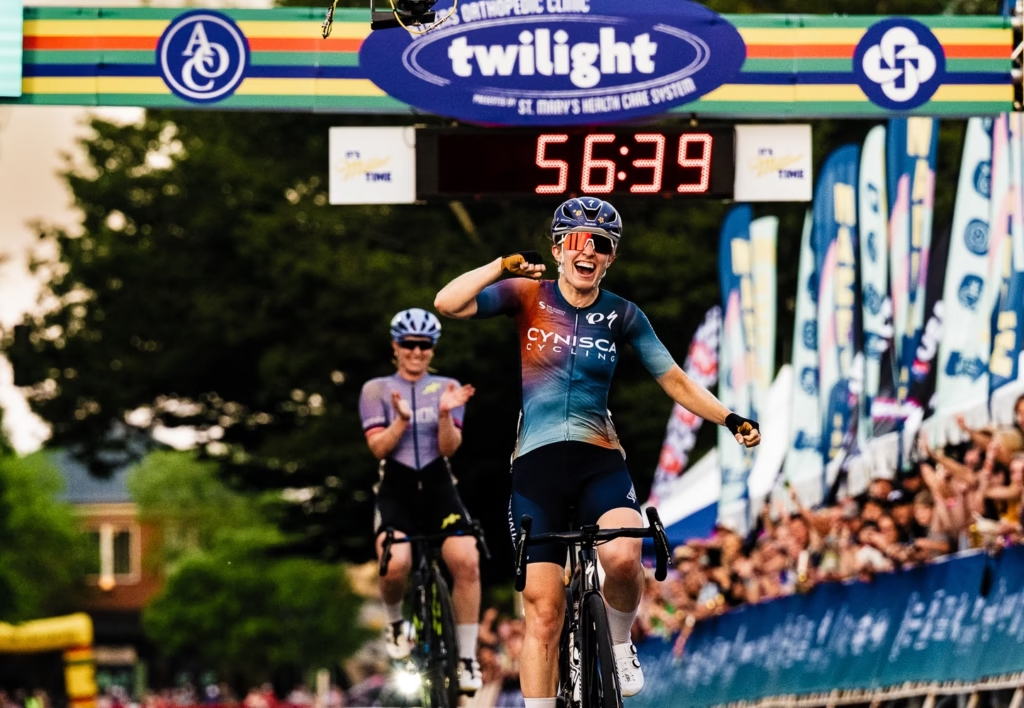
Alexis Magner, moving up from Cynisca Cycling, brings a more established presence. Her experience and tactical awareness add value across a long season, particularly in controlling chaotic race phases. Magner may not be a focal point, but she strengthens the team’s collective intelligence.
Solbjørk Minke Anderson, arriving from Uno-X Mobility, is one of the more intriguing additions. Her time at Uno-X provided a strong foundation in disciplined racing, and EF Education-Oatly may offer her a broader range of roles. In 2026, she could emerge as a useful option in selective finishes and transitional stages.

Both Caoimhe O’Brien and Alice Towers arrive from smaller programmes, Cynisca Cycling and Canyon SRAM zondacrypto, respectively, but at different career moments. O’Brien is still in a formative phase, while Towers makes the move after several seasons in a highly structured environment. For Towers in particular, the shift to EF Education-Oatly could prove liberating. Her ability to race instinctively and cope with attritional terrain aligns well with the team’s ethos, and 2026 may allow her to reassert herself more consistently.
Finally, Stina Kagevi and Auke De Buysser underline EF’s willingness to invest in riders who may not yet be finished products but fit the team’s long-term vision.
Overall, EF Education-Oatly appear less concerned with defining a single competitive identity for 2026 and more focused on creating optionality. The squad looks equipped to race aggressively, adapt to varied scenarios, and give multiple riders space to develop. Results may be uneven, but the underlying structure suggests a team comfortable with experimentation and growth.