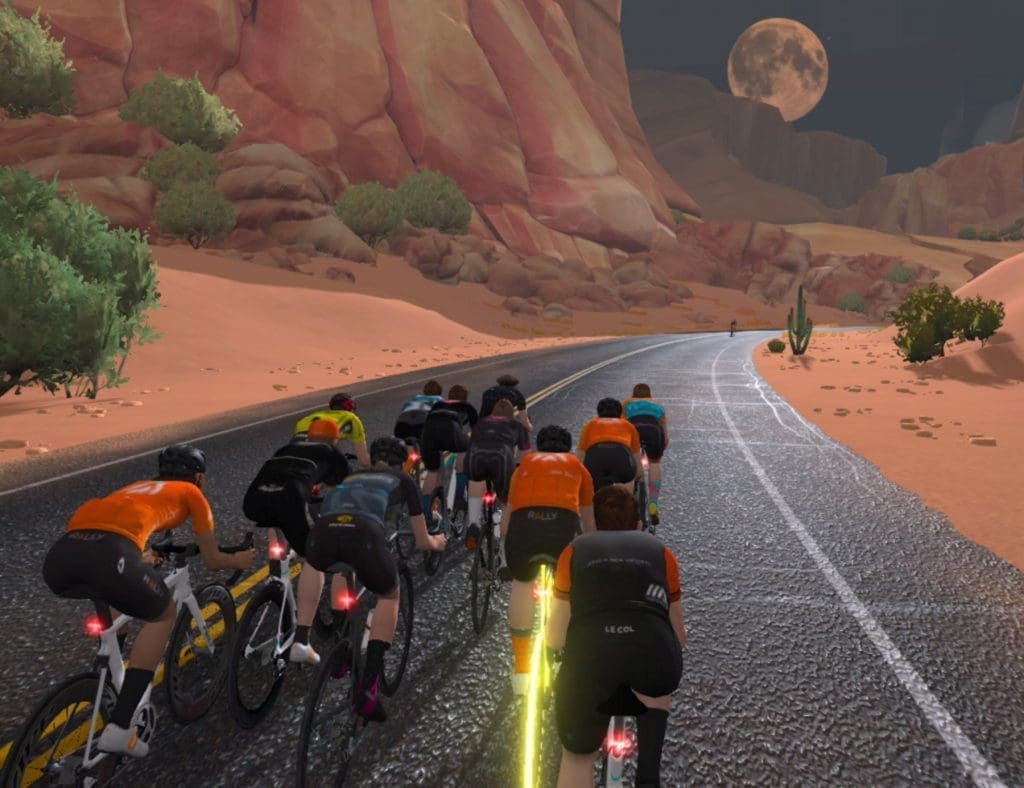
Indoor cycling used to have a very definite season. Once the clocks changed and the British weather became sufficiently unpleasant, the turbo trainer came out. Spring arrived, the bike went back outside and the trainer disappeared into a corner until winter returned.
Zwift has changed that calculation. A modern smart trainer can automatically control resistance, structured workouts remove many of the compromises of training outside, racing runs throughout the year and there is almost always somebody available for a group ride. Indoor riding is no longer simply the bad-weather alternative.
There is a cost involved, particularly when the roads outside are dry and the evenings are long, so cancelling Zwift for the summer can still make sense for some riders. But there are also good reasons to keep it running for all 12 months.
If you’re new to the platform, our Zwift guide and review covers the basic setup, while riders comparing platforms can also read our Zwift versus MyWhoosh comparison.
6 reasons to keep your Zwift subscription all year round
1. Structured workouts without interruptions
Doing a genuinely controlled workout on the road can be surprisingly difficult. You might have a beautifully planned threshold interval ahead of you, only to reach a roundabout after four minutes, catch a line of traffic after six or have to stop completely at a junction.
Then there are descents, potholes, traffic lights and the small matter of paying attention to where you are going. Even on good training roads, maintaining an exact power target for a long interval can require compromises.
Zwift removes most of those variables. Pair it with a compatible smart trainer and ERG mode can automatically adjust the resistance to hold the required power during a workout. You pedal, the trainer handles the resistance and the interval continues until it is finished.
That makes the indoor trainer useful even on a perfect summer evening. If the objective is a tightly controlled threshold, VO2 max or recovery session rather than simply getting outside on the bike, the turbo can still be the better tool.
Modern direct-drive trainers have also made the experience considerably better than the old fixed-resistance turbo. They are quieter, measure power directly and can respond to changes in gradient or workout intensity. Compare current direct-drive smart trainers on Amazon UK.

2. It is remarkably time-efficient
There is a difference between having an hour available to ride and getting an hour of useful cycling completed.
Ride outside and that hour also has to absorb getting dressed, checking the bike, negotiating local roads and getting clear of suburban traffic before the useful part of the session begins. Depending on where you live, the first and final 15 minutes can contain very little uninterrupted training.
Indoor riding compresses the whole process. Put your kit on, fill a bottle, switch on the fan and you can be working within a few minutes. A 45-minute slot really can contain close to 45 minutes of riding.
That becomes useful well beyond winter. An early meeting, family commitments, limited daylight or simply a busy day can all turn Zwift into the difference between completing a session and abandoning it.
The hardware has become easier to leave permanently set up as well. Dedicated systems such as Zwift Ride remove the need to keep taking a road bike on and off the trainer, while a tablet can provide a much simpler display than maintaining a dedicated computer. Our guide to the best tablets for Zwift in 2026 looks at the current options.
3. Zwift racing is available almost whenever you want it
Racing remains one of Zwift’s strongest arguments for staying subscribed outside the traditional indoor season.
You do not need to drive to a circuit, pay an entry fee for every race or worry about crashing in a bunch. Find an event that fits your available time, join the start pen and a few minutes later you can be trying to hold a wheel against riders from around the world.
The racing itself has developed considerably since Zwift’s early years. There are flat criteriums, climbing races, time trials, team competitions and longer road events, while Zwift’s current racing programme includes regular TT, Crit and Epic formats. The Zwift Racing League adds another layer for riders who want organised team competition.
Racing is also far more tactical than simply riding at the highest watts per kilogram you can sustain. Drafting matters, positioning before a climb matters, PowerUps can change the finish and going too deep during the opening few minutes can leave you paying for it long before the line.
Our Zwift racing tactics guide covers those basics in more detail. If you are completely new to esports cycling, our updated guide to how virtual cycling racing works explains the equipment, platforms and mechanics behind it.
4. Indoor riding does not have to be solitary
The traditional turbo trainer was largely a solo experience. You stared at the wall, watched television or listened to music and waited for the numbers on the stopwatch to tick down.
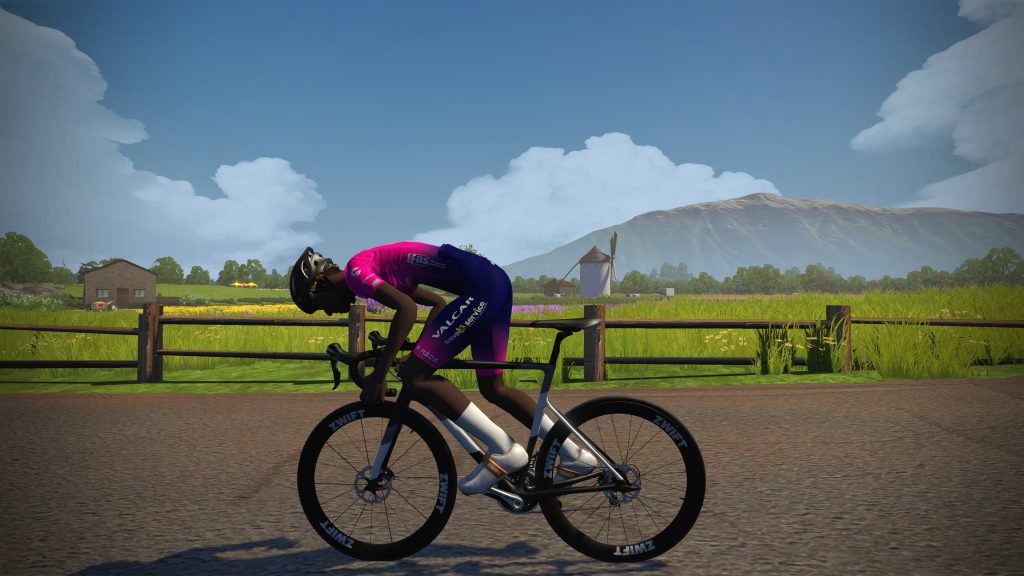
Zwift turns that into something much more social. Group rides take place throughout the day, riders can follow one another through Zwift Companion and Ride Ons provide the platform’s equivalent of a quick acknowledgement from somebody riding alongside you.
Regular riders soon begin recognising names. Join the same organised ride each week and it starts to feel much closer to a club run, only without everybody needing to live within riding distance of the same café.
Not every group ride is a race either. RoboPacers provide another easy way to ride at a broadly consistent pace with other people around you, while organised recovery and endurance rides give you somewhere to sit in a group without turning every session into an unofficial World Championship.
Zwift Companion has become much more useful away from the bike too. Events, routes, workouts and other activities can be planned in advance, while recent updates have put greater emphasis on tracking progress and deciding what to ride next.
5. Zwift has become part of the wider cycling world
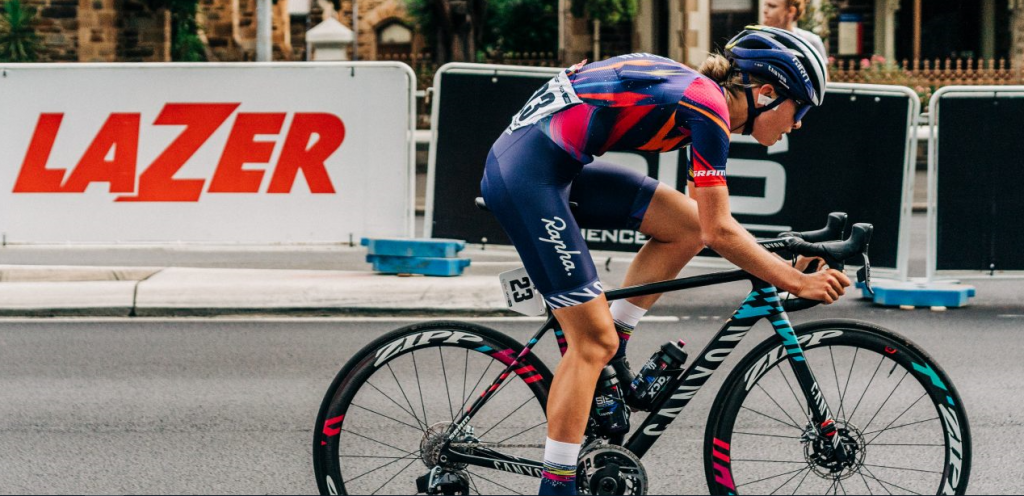
The old version of this article focused heavily on Zwift Academy, and with good reason. For several years the programme offered one of the strangest routes into professional cycling: produce exceptional numbers indoors, survive the selection process and potentially emerge with a professional contract.
Leah Thorvilson became the first women’s winner in 2016, followed by riders including Tanja Erath, Ella Harris, Jessica Pratt and Neve Bradbury. The men’s programme later produced riders including Jay Vine and Luca Vergallito, showing that talent identified through indoor testing could translate into results on the road.
The programme changed over time, with later winners joining development teams rather than stepping directly into the top-level squads. The most recent completed edition produced contracts for Australian Emily Dixon and Canadian Noah Ramsay for the 2025 season.
Zwift Academy itself is therefore no longer quite the simple annual selling point it was when this article was first written, but its legacy illustrates how much indoor cycling has changed. Zwift is no longer a game sitting separately from professional cycling. WorldTour riders train on it, races attract specialists, teams use virtual platforms and riders discovered online have gone on to build professional careers.
You can trace the earlier winners and what happened after they earned their contracts in our feature on Zwift Academy champions and where they went next.
6. It makes indoor training much easier to enjoy
This is probably the simplest reason, but it matters.
Zwift gives you things to do. Routes to complete, levels to reach, bikes and equipment to unlock, group rides to join, races to enter and structured workouts to finish. A session that would otherwise consist of staring at a power number can instead have some kind of immediate objective.
That use of rewards is deliberate. As we explored in our look at how gamification is reshaping cycling training, digital goals can make repetitive training feel more rewarding and give riders another reason to maintain consistency.
Zwift has pushed further in that direction with personalised recommendations that use your recent riding and preferred activities to suggest workouts, routes and rides. It means opening the app without a plan no longer has to end with ten minutes scrolling through menus trying to decide what to do.
There is still the occasional FTP test waiting to ruin an otherwise pleasant evening, but even that comes with the satisfaction of seeing whether the work has actually paid off.
Is Zwift worth keeping through the summer?
That depends on how you ride. Someone who uses Zwift exclusively because snow or ice makes outdoor cycling impossible may get very little value from it between May and September. Zwift allows memberships to be cancelled or temporarily paused, so there is no requirement to keep paying simply to preserve your account history.
For riders using it as a training tool rather than a winter substitute, the argument is stronger. Structured intervals are easier to control indoors, short sessions become much more efficient and racing or group riding is available regardless of weather, traffic or daylight.
It can also complement outdoor cycling rather than replace it. Do the enjoyable endurance miles outside, save the tightly controlled intervals for the trainer and use Zwift when the alternative is missing the ride completely.
That is probably the biggest change since Zwift first appeared. The question is no longer whether indoor riding can replace cycling outside. It is where indoor riding fits alongside it.
If that mix works for you, you can join or return to Zwift here.