
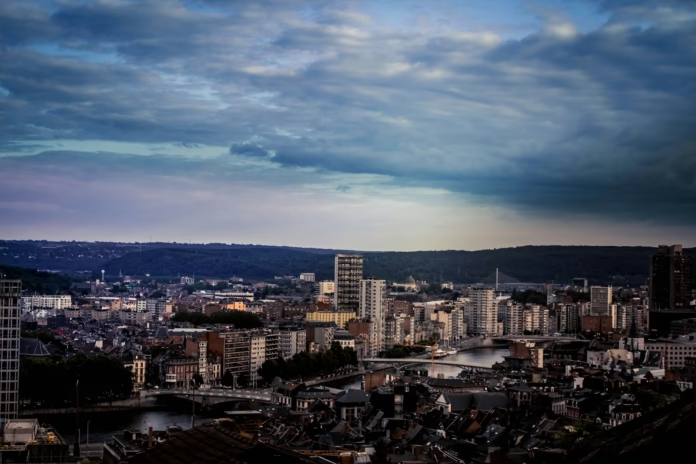
Liège reveals itself slowly from the saddle. The river sits low and quiet in the morning, the streets carrying a faint industrial echo that feels appropriate for a city built on work rather than postcard charm. There is weight to this place, not just in history, but in atmosphere. The Ardennes do not announce themselves with drama at first. They creep closer, tightening the roads, hardening the gradients, asking for attention long before they ask for strength.
Rolling out of the city, the transition is almost deceptive. Urban edges blur into wooded lanes, the road beginning to rise without ceremony. This is classic Liège-Bastogne-Liège terrain, where nothing is long enough to settle into and nothing is easy enough to ignore. The legs are asked to respond again and again, rarely given the luxury of rhythm.
Leaving Liège and finding the Ardennes
The first climbs arrive early, short and abrupt, testing whether you are awake and honest with yourself. Côte de Saint-Roch sets the tone. Barely a kilometre in length, it pitches up sharply, the kind of climb that punishes impatience more than weakness. There is no scenery to distract you here, just houses pressed close to the road and the sensation of effort arriving sooner than planned.
Beyond Saint-Roch, the roads fold in on themselves. Côte de Wanne introduces a different kind of challenge. Longer, steadier, and deceptive, it drains energy quietly. The gradient is manageable on paper, but the Ardennes rarely ride like numbers suggest. The road surface shifts, the light changes under trees, and fatigue begins to layer rather than spike.
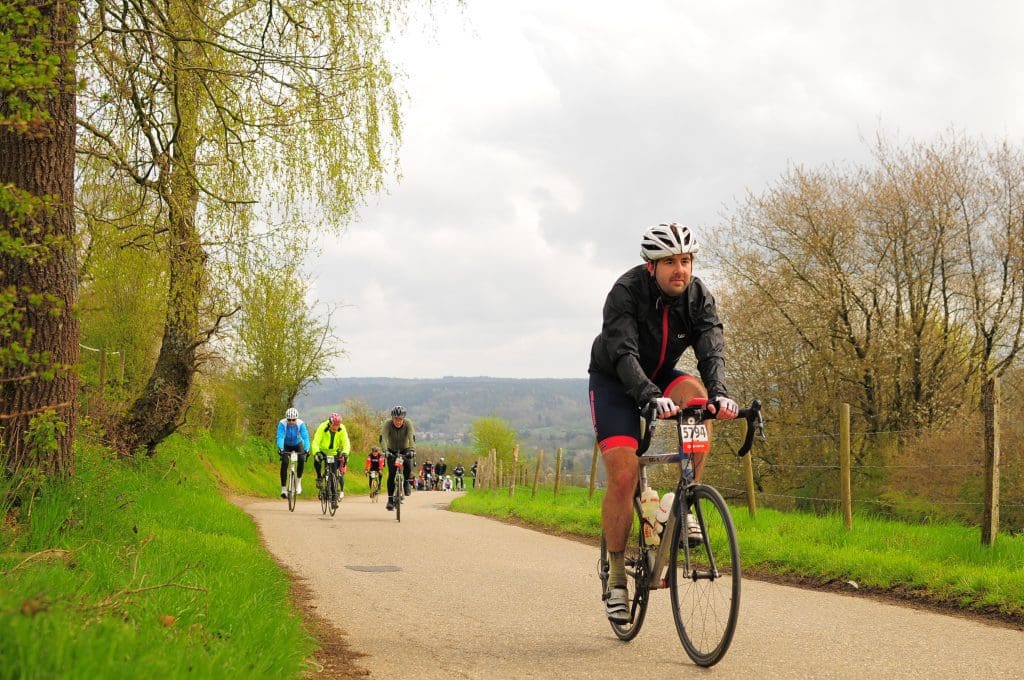
Climbing through racing history
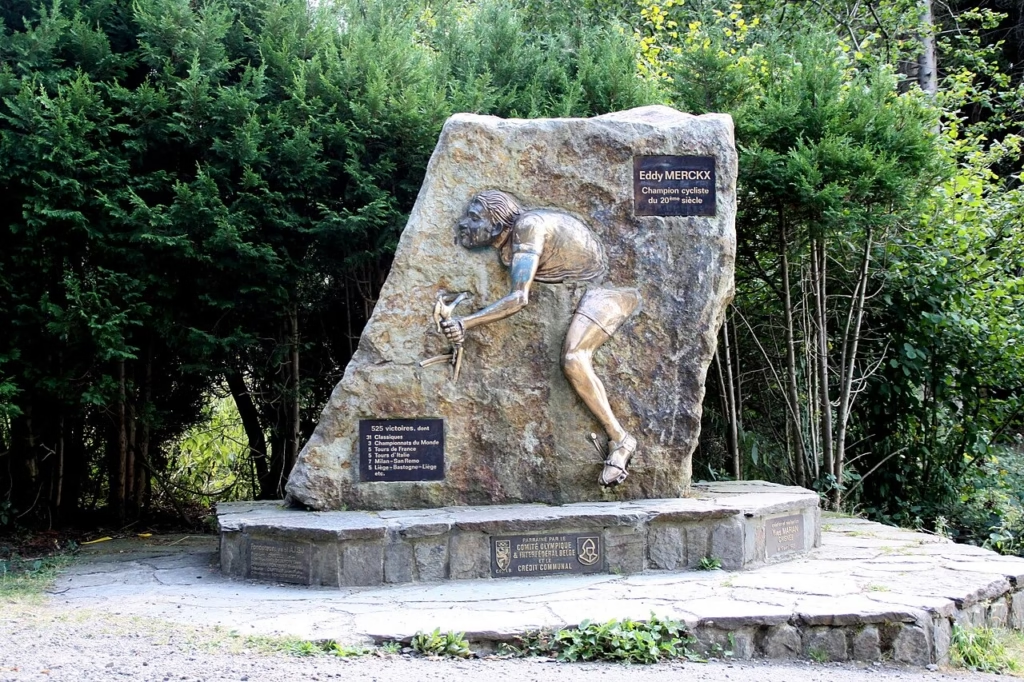
Côte de Stockeu is impossible to ignore. Short, brutally steep, and unapologetic, it feels like a test designed to expose any weakness still hiding. The Eddy Merckx memorial halfway up adds a moment of reflection mid-effort, a reminder that suffering here is part of a much longer story. The climb demands commitment, with gradients that force you out of the saddle whether you planned to or not.
Côte de Haute-Levée follows with a different rhythm. Longer and more sustained, it encourages a seated effort, legs turning steadily while the road climbs through dense forest. This is where fatigue becomes structural, not dramatic, settling into the body in a way that reshapes how everything afterwards feels.
Rosier does not need to shout. It simply keeps going, a quiet accumulation of metres that chips away at strength. By the time the road finally levels, the body feels reshaped by the effort, lighter in some ways, heavier in others.
Passing Spa without stopping
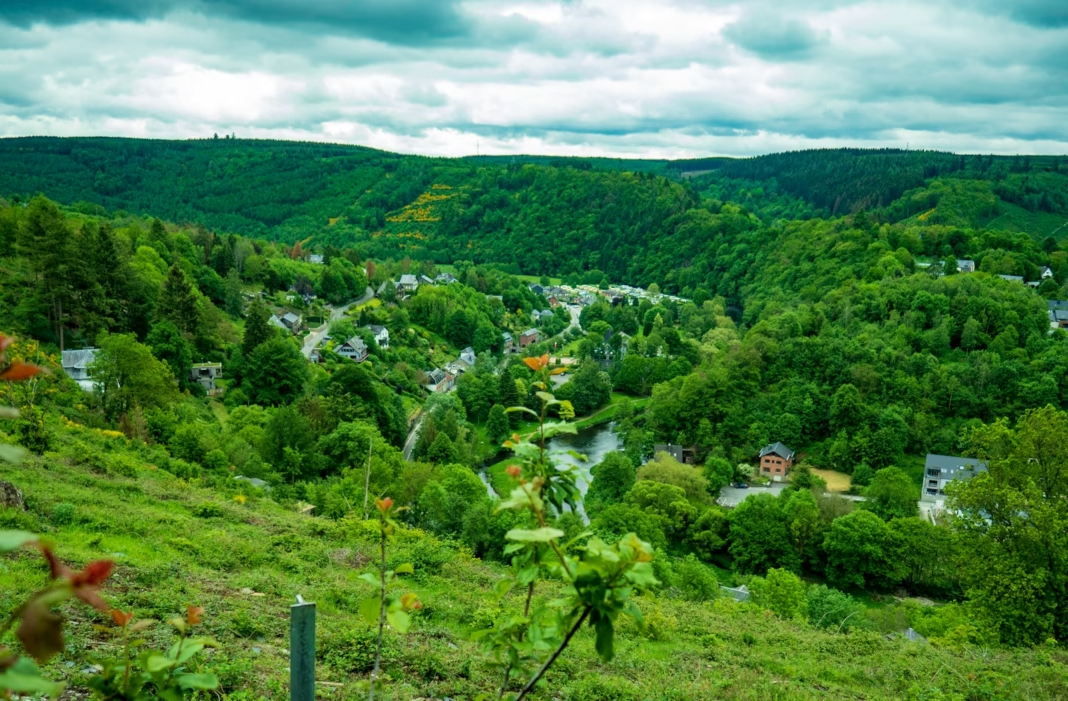
The road towards Spa carries a subtle shift in mood. The forest opens slightly, the air cools, and the sense of place sharpens. Passing near the Spa-Francorchamps circuit without turning in feels deliberate. There is no need to visit. The presence is enough. The knowledge that this ribbon of tarmac shares space with one of motorsport’s most famous venues adds texture without demanding attention.
Here, the riding briefly softens. Not flat, never flat, but less insistent. It is a moment to reset, to eat, to drink, to recognise that the hardest decisions are still ahead.
The decisive climbs begin
Côte de la Redoute announces the shift into the race’s decisive phase, even on an ordinary riding day. The road narrows, crowds replaced by silence, and the gradient ramps immediately. There is no easing in. At around 1.6 kilometres and averaging close to ten per cent, with brutal pitches well beyond that, it demands everything at once.
The surface feels unforgiving under tired legs, the climb biting hardest where the road kinks and steepens. It is impossible not to think of attacks launched here, of races detonated on these slopes. The climb finishes abruptly, leaving you slightly disoriented, effort still echoing in your legs as the road continues to rise gently beyond.
Côte des Forges follows later, shorter and punchier, a reminder that even late in the day the Ardennes are not finished with you. It is the kind of climb that feels manageable until suddenly it does not, arriving after enough accumulated fatigue to make its modest length feel cruel.
Roche-aux-Faucons and the edge of exhaustion
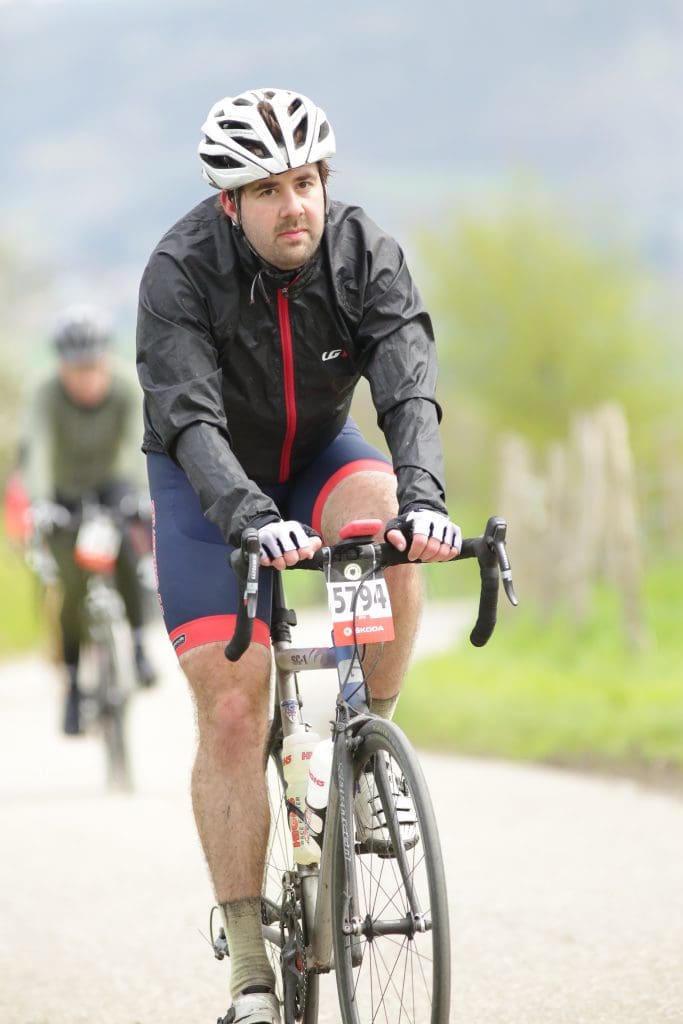
Côte de la Roche-aux-Faucons feels different. Late in the ride, it carries consequence. At just over a kilometre and averaging around eleven per cent, it demands one final act of defiance. The gradient bites immediately, easing only briefly before kicking again near the top. The race is now won and lost on this climb, but for me it’s just about cresting the summit. For a countryside climb, the summit forms a natural barrier as you find yourself into city streets once over the top.
This is where the body negotiates honestly. There is no racing instinct to lean on, no crowd to lift you, just the knowledge that this is the last real test. Cresting it brings relief rather than triumph, a sense of having survived rather than conquered.
Saint-Nicolas and the weight of history
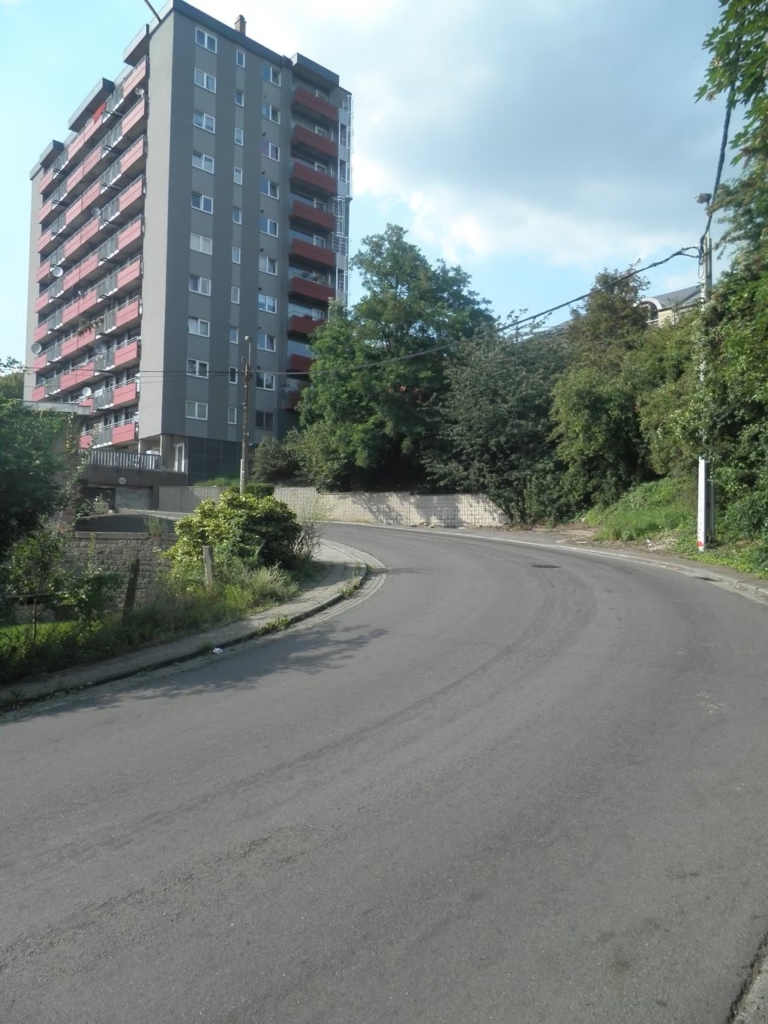
The Côte de Saint-Nicolas no longer shapes Liège-Bastogne-Liège in a tactical sense, but its presence still matters. Riding it feels like stepping into a different chapter of the race’s history. The climb cuts through a dense residential area, lined with modest houses, the road rising steeply towards an estate built to house Italian miners after the Second World War.
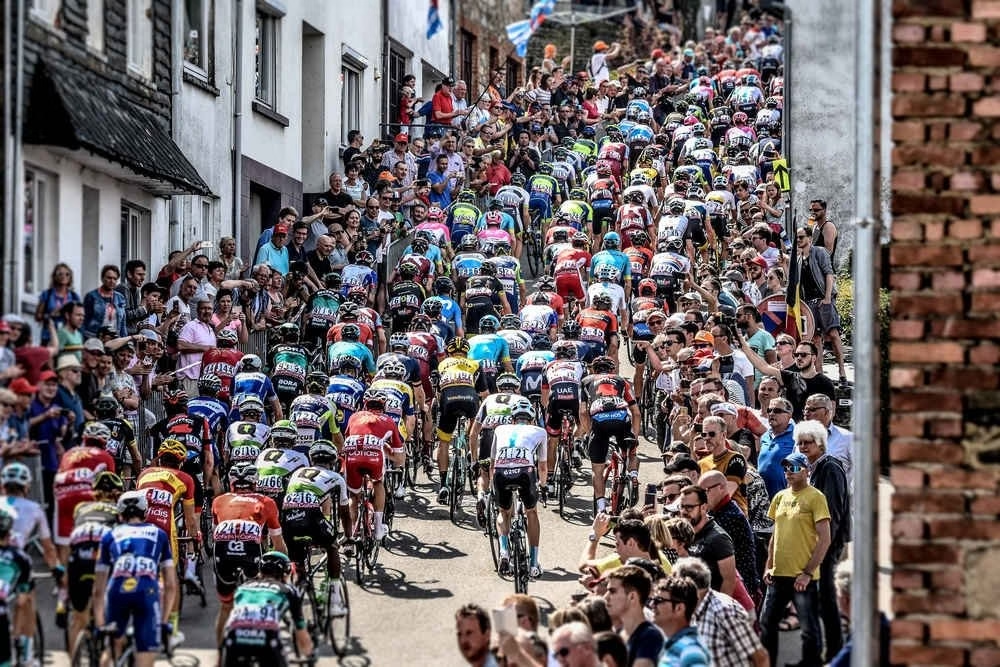
It is not a beautiful climb in the conventional sense. There are no sweeping views, no dramatic scenery. What it carries instead is memory. Countless editions of the race have passed over this tarmac, crowds once packed tight along its edges, the noise echoing between buildings. Riding it now is quieter, but no less meaningful.
Returning to Liège
The roads soften as Liège comes back into view. The city feels heavier now, legs dulled by repeated efforts, concentration worn thin. The river appears again, calm and indifferent, as if nothing of note has happened.
There is satisfaction in this kind of ride that is difficult to explain. Not joy exactly, but completeness. The Ardennes do not flatter, and Liège-Bastogne-Liège roads do not offer redemption through scenery or flow. What they offer is honesty. Short climbs, steep ramps, little recovery. A landscape that demands respect rather than admiration.
Practical information
Location
Liège sits in eastern Belgium, at the gateway to the Ardennes. Spa lies to the south-east, connected by rolling and often demanding roads that form the backbone of Liège-Bastogne-Liège.
Riding
Routes linking Liège and Spa take in many of the race’s most famous climbs, including Côte de Saint-Roch, Wanne, Stockeu, Haute-Levée, La Redoute, Des Forges and Roche-aux-Faucons. Expect repeated short climbs, steep gradients, narrow roads and limited recovery between efforts.
When to go
Spring brings the atmosphere of the Classics, but also variable weather. Late spring and early autumn offer more stable conditions, though rain is always a possibility. Roads can be damp and shaded in forested sections.
Accommodation
Liège offers a range of city-based accommodation suited to early starts, while Spa provides quieter options closer to the heart of the Ardennes. Staying just outside the city allows faster access to the climbing roads without extended urban riding, while Spa works well as a base for multi-day exploration of the region’s classic ascents.

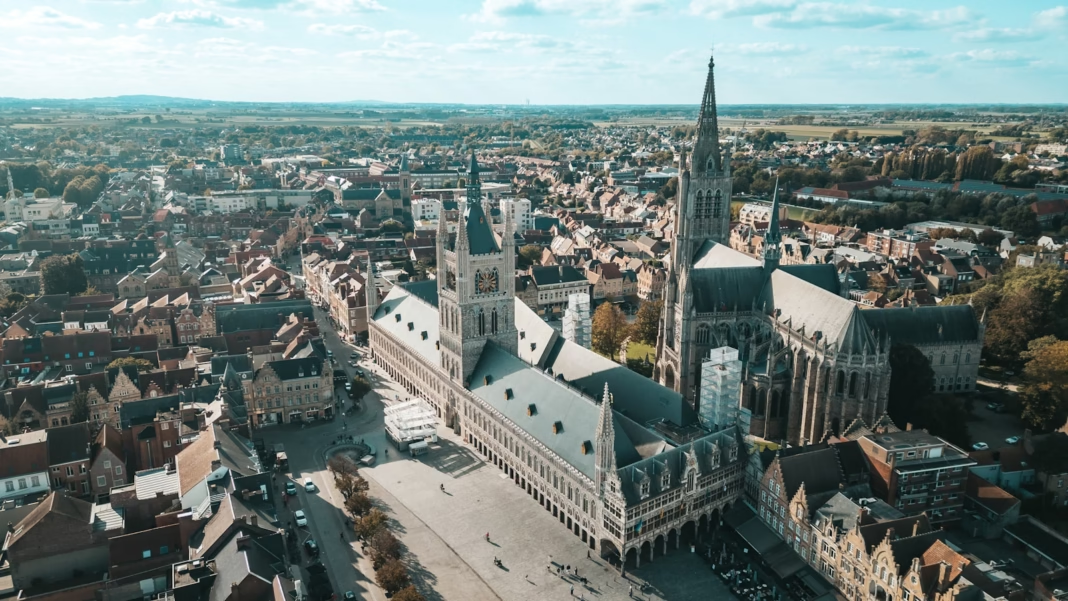
Want more Belgian ride ideas like this? Head to our Cycling in Belgium hub for the best bases, classic cobbled routes, key climbs, and practical planning tips across Flanders and the Ardennes.

