
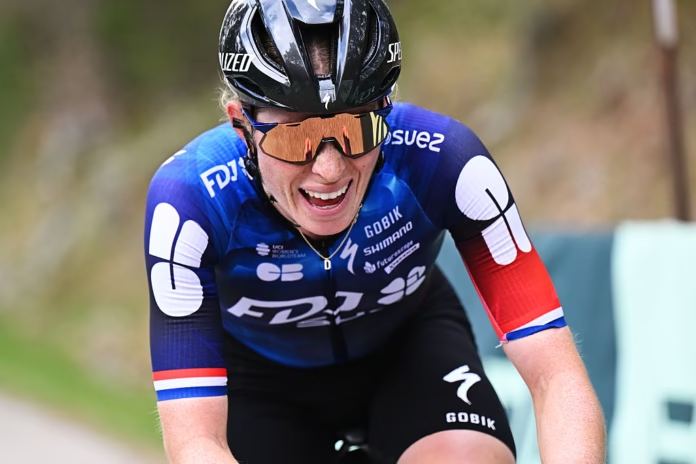
The end of the 2026 season is shaping up as a genuinely influential contract moment in the women’s peloton. The list of riders whose deals expire is long and, crucially, it contains both established leaders and a deep layer of high-value specialists: world-class sprinters, proven climbers, time trial engines, and the kind of road captains who quietly hold a Classics campaign together.
Teams will try to reduce risk wherever they can. If a rider is central to a project, the preference is usually to renew early, protect performance stability, and stop rivals from starting conversations mid-season. But the reality is that some riders will want a new environment, some will chase leadership they cannot get where they are, and anyone born in the 1980s will at least be weighing up whether 2027 is the right time to step away.
Below is a focused shortlist of the biggest 2026 contract expiries, highlighting the riders most likely to shape the 2027 market – even if it’s just renewals – and the teams that may need to react.
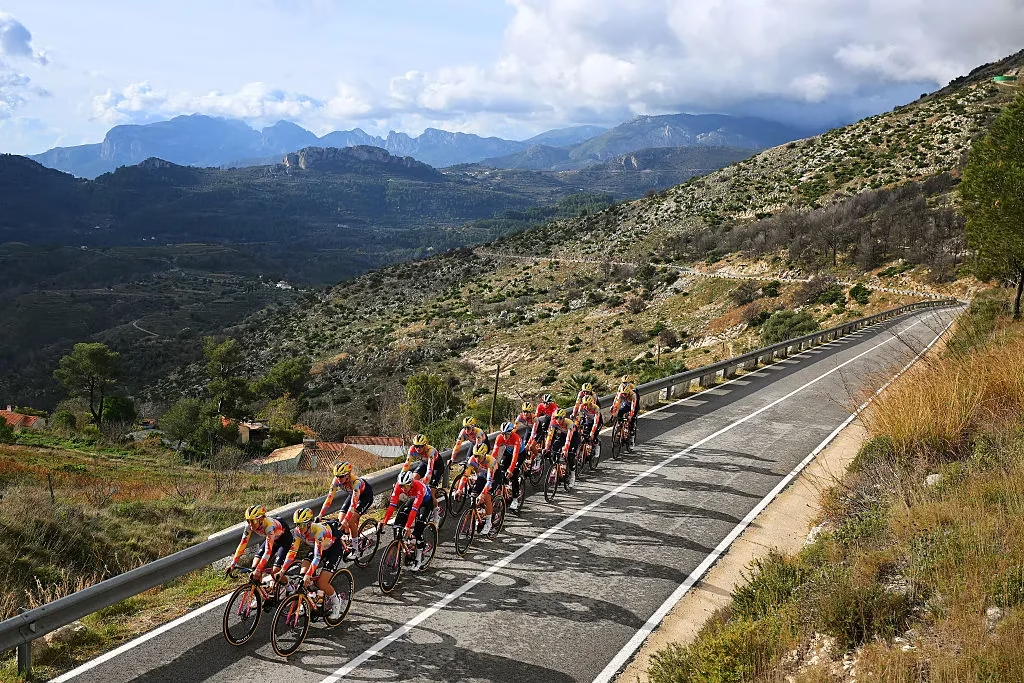
Why 2026 expiry matters more than usual
There are three overlapping dynamics that can turn an ordinary contract year into a reshaping year.
- Leadership scarcity: there are only so many true Grand Tour GC leaders, and even fewer who can win on multiple terrain types.
- Role inflation: lead-out riders, experienced domestiques, and tactical captains are increasingly valued because races are faster, more selective, and less controllable.
- Retirement timing: riders in their late 30s and early 40s do not all retire at once, but a single winter can bring a cluster of decisions, especially after a heavy Olympic or Worlds cycle.
In women’s racing, where teams often commit fully to one protected leader per objective, a single signing or departure can quickly change the whole shape of a season.
That sets up a market where the very top names are obvious targets, but the second tier of “wins you a race day by day” riders can be just as hotly contested.

Retirement watch: riders born in the 1980s who will be deciding their next chapter
These names are not all guaranteed to retire, but they are the riders most likely to treat 2026 as a final contract decision point, rather than a straightforward extension.
- Ashleigh Moolman-Pasio: still valuable as a climber and all-round stage race asset, but 2027 would be deep into veteran territory. If she continues, it is likely to be on terms that fit her preferred role and calendar.
- Mavi Garcia: if she is still producing elite climbing performances, she will have options, but she will also have every reason to ask whether another full season is worthwhile.
- Amanda Spratt: this is a rider whose value is obvious to any stage race programme, but it is also realistic that 2026 becomes a decision year. If the motivation and the body are aligned, a short renewal makes sense. If not, retirement is plausible.
- Tiffany Cromwell: versatile and experienced, but this is the age bracket where riders often pivot into broader roles or step away.
- Lucinda Brand: still an elite performer in demanding races. If she continues, a one-year extension model would not be surprising.
- Alena Amialiusik: the archetypal experienced support rider who may choose to stop once the body says “enough”.
- Brodie Chapman: not in the 1980s cohort, but still a rider for whom this contract can define the next phase. She has spoken during 2026 about possibly stopping when this deal ends, yet the direction now appears to be continuing, with the 2028 Olympics a potential long-term target.
If you are looking for the most likely “end of an era” outcomes from this group, Moolman-Pasio and Garcia naturally lead the conversation, with Spratt also a key watch name.
 Photo Credit: Getty
The top 15 biggest expiring contracts who could move for 2027
This is not a prediction that all 15 will leave. It is a ranking weighted towards riders whose skill-set is hardest to replace, rather than a simple “best rider” list.
1. Demi Vollering (FDJ United-SUEZ)
A rider who can anchor a Grand Tour GC campaign, win on summit finishes, and still influence one-day racing. Whether FDJ United-SUEZ can lock this down early matters not just for them, but for every team that wants a clear GC identity.
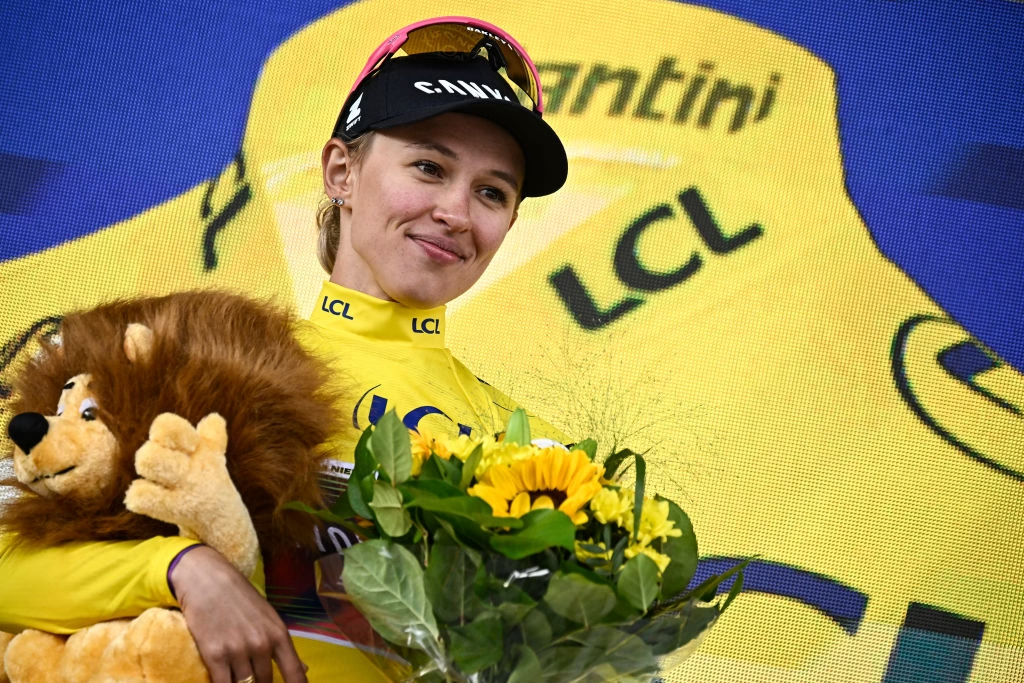
2. Kasia Niewiadoma-Phinney (Canyon SRAM zondacrypto)
A reliable stage racer and Classics threat who elevates a whole squad’s options. If she becomes available, multiple teams can sell her a leadership storyline immediately, especially if she wants a slightly different tactical setup around her.

3. Chloé Dygert (Canyon SRAM zondacrypto)
A rare talent because she changes what a team can do in time trials, hard flat races, and aggressive one-day scenarios. She is not a simple replacement job for the market.
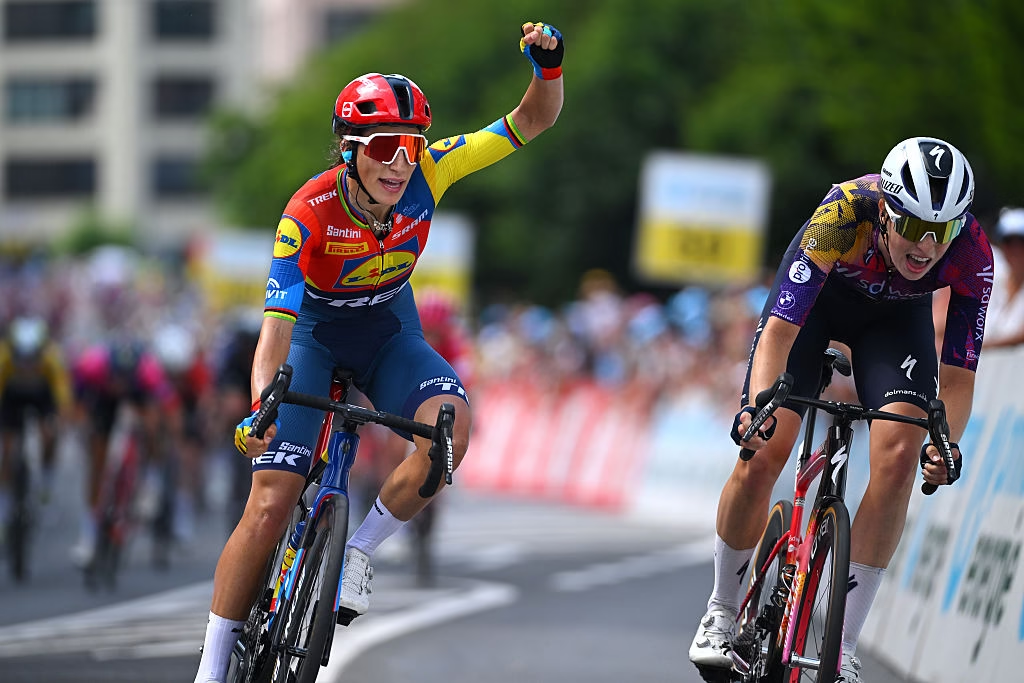
4. Elisa Balsamo (Lidl-Trek)
Top sprinters are always in demand, but a sprinter who can handle tougher finals and still win is a franchise rider. Lidl-Trek will want security here, because rebuilding a lead-out and sprint identity is a multi-season process. She is also one of the few sprinters who can consistently go toe-to-toe with the very fastest riders in the world.

5. Sarah Gigante (AG Insurance-Soudal Team)
A high-ceiling climber and stage race leader profile. If Gigante is available, it becomes a straight fight between projects that can offer protected leadership, climbing support, and a calendar built around stage races.
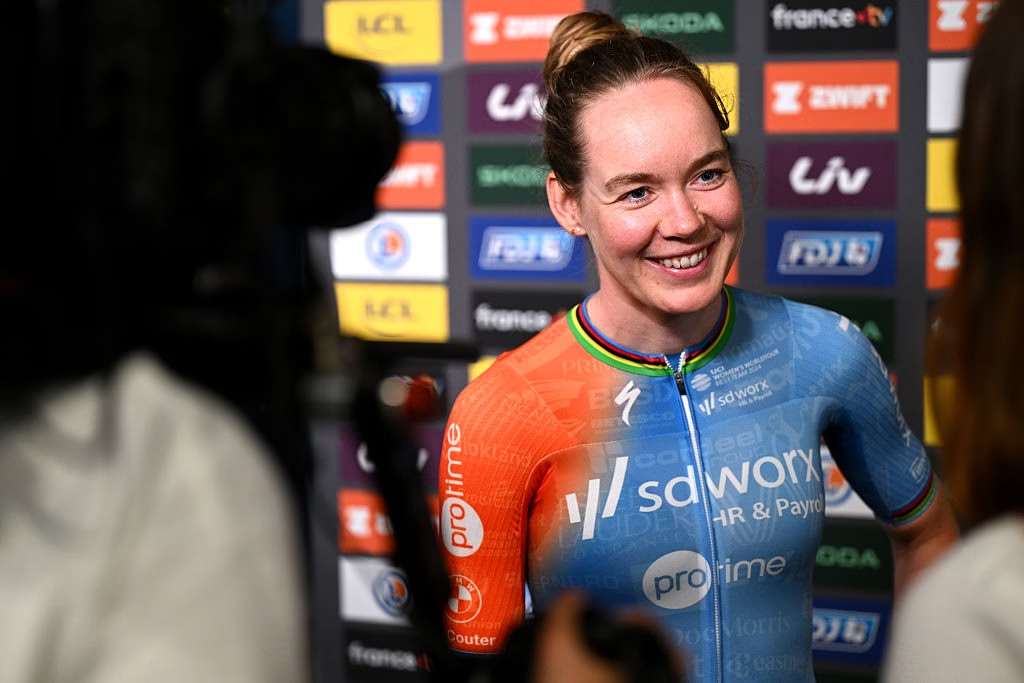
6. Anna van der Breggen (Team SD Worx-Protime)
It is difficult to imagine van der Breggen on another team, so this is less about transfers and more about intent. If she wants to keep racing, Team SD Worx-Protime have every reason to make it work. If she does not, no amount of market interest changes the outcome.

7. Cecilie Uttrup Ludwig (Canyon SRAM zondacrypto)
The most valuable aspect here is optionality. Uttrup Ludwig can be a protected rider on selective terrain, a stage hunter, and a chaos agent in one-day races.

8. Kristen Faulkner (EF Education-Oatly)
A rider who can win from aggression and convert chaotic race dynamics into results. If she moves, it could be driven by leadership clarity, programme focus, and what kind of support she wants in the biggest one-day races.

9. Letizia Paternoster (Liv AlUla Jayco)
Fast, resilient, and valuable across a wide range of finales. If she is not locked in early, she becomes a serious target for teams wanting a sprint-capable rider who can survive hard racing and contest reduced bunch finishes.

10. Elise Chabbey (FDJ United-SUEZ)
Chabbey is the kind of rider teams chase because she upgrades everything: breakaways, hilly one-day races, stage race control, and the “glue work” that keeps leaders in position.
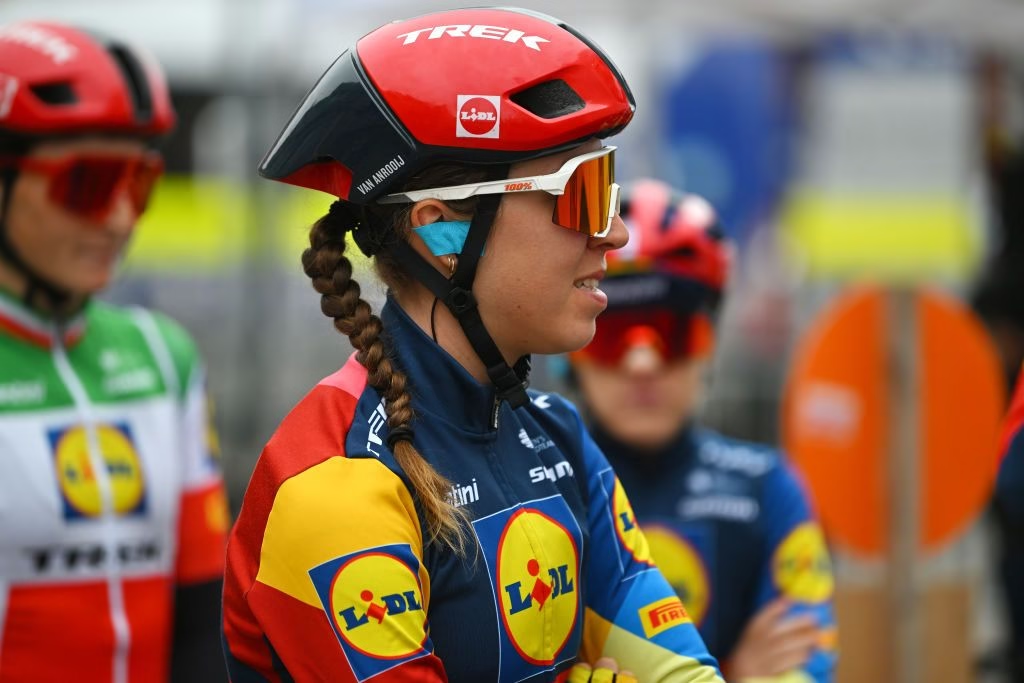 Photo Credit: Getty
11. Shirin van Anrooij (Lidl-Trek)
A modern multi-surface talent with major upside, already capable of influencing hard one-day racing when the pace stays high for hours. Teams invest heavily in riders like this because they see a multi-year arc, and because versatility across Classics-style terrain is one of the hardest things to recruit.
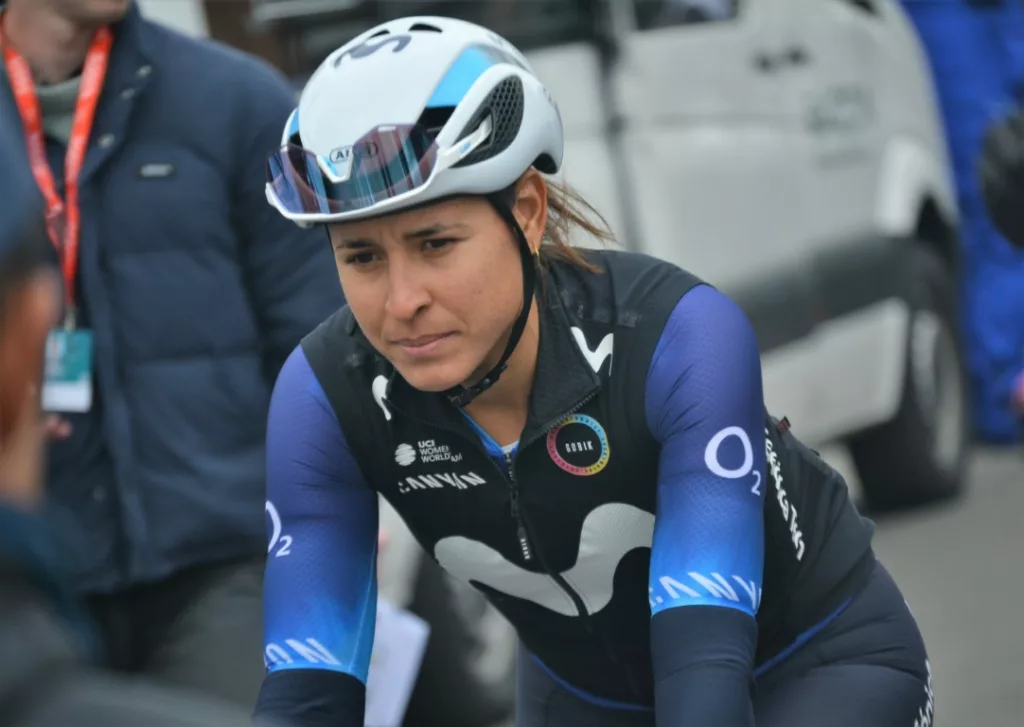
12. Arlenis Sierra (Movistar Team)
Sierra is in her first season back since becoming a mother, so her current level is harder to project than usual. The ceiling is proven, but the question for 2027 is how quickly she returns to it. That uncertainty cuts both ways. If she starts converting results quickly, she becomes an immediate impact signing. If it takes longer, stability and a calendar that supports a steady rebuild may be more appealing than a disruptive move.
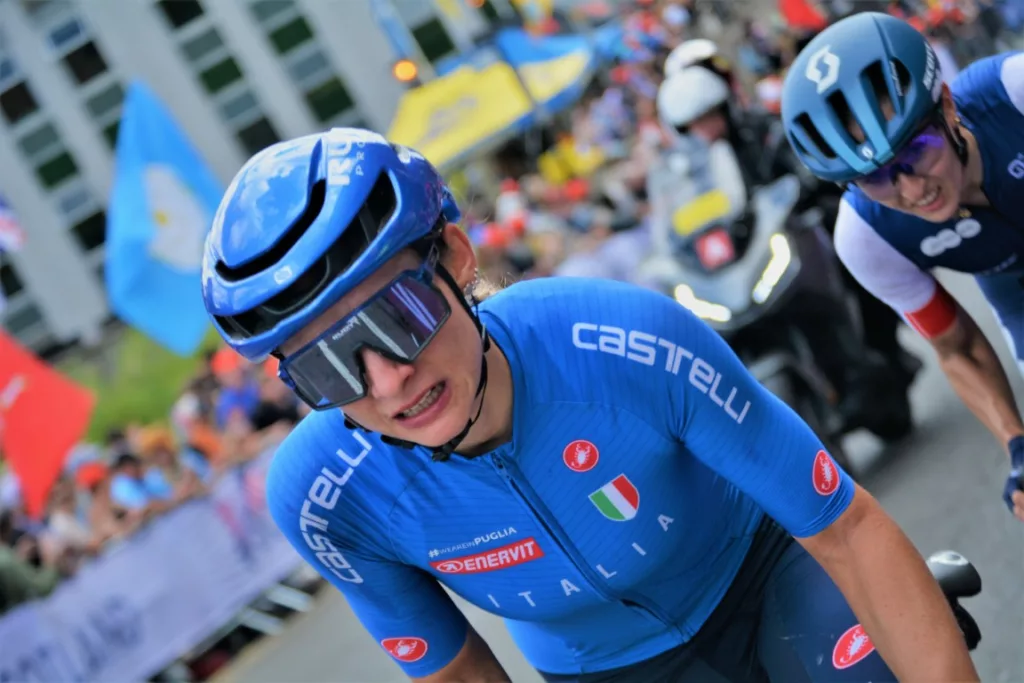
13. Chiara Consonni (Canyon SRAM zondacrypto)
Consonni’s inclusion in the top tier is about how hard it is to buy a ready-made sprint upgrade. She is a legitimate winning threat in her own right, even if she is not Lorena Wiebes. In pure sprint terms, she sits just below the very top tier led by Wiebes and Balsamo, and she is in the conversation with Charlotte Kool as one of the peloton’s next-best finishers. For teams that want to sharpen their sprint system, she brings both speed and the tactical instinct to navigate chaotic finales. You are not just signing a finisher, you are signing a rider who makes everyone else’s sprint role more effective.
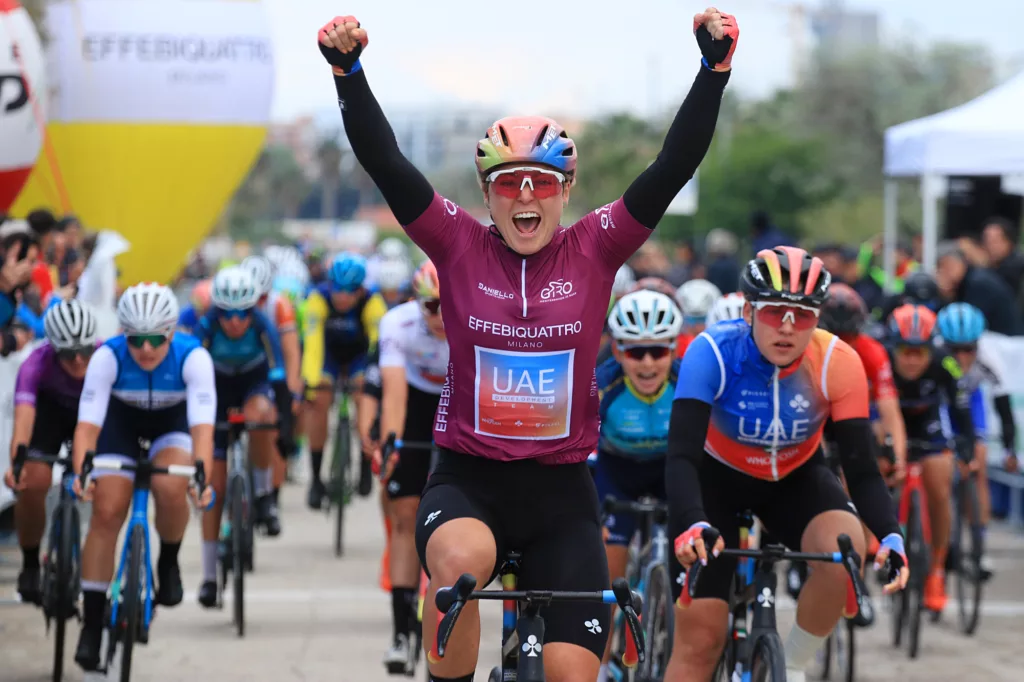
14. Lara Gillespie (UAE Team ADQ)
A rider who fits the current trend: fast, tough, and increasingly capable of surviving selective race days. If she becomes available, she strengthens both sprint options and broader race-day flexibility.
 Photo Credit: Florian Frison
15. Erica Magnaldi (UAE Team ADQ)
Climbing depth is never cheap, and it is often the difference between a GC plan and a GC reality. Magnaldi offers stage race utility and day-to-day stability across hilly terrain, and teams with GC ambitions often build their support structure around riders exactly like her.
The interesting secondary-market names that could decide major races in 2027
If you are a team manager, you do not only look at the headliners. You look at which riders can change how your team races on a Thursday in Belgium, or on a windy stage when you need calm decision-making.

- Georgia Baker (Liv AlUla Jayco): experienced speed and race craft, potentially valuable to teams building a sprint structure.
- Floortje Mackaij (Movistar Team): the kind of rider who can cover moves, guide leaders, and still produce results.
- Gladys Verhulst-Wild (AG Insurance-Soudal Team): a consistent finisher profile who can convert chaotic sprints into top results.
- Amanda Spratt (Lidl-Trek): experience and stage race positioning nous that can stabilise a GC project, if she decides to continue.
- Lucinda Brand (Lidl-Trek): her contract story is likely to be more about whether she continues, and in what role, than a straightforward inter-team transfer.
- Ashleigh Moolman-Pasio (AG Insurance-Soudal Team): she could be a high-impact short-term signing if she wants one last chance, but a continuation with her current project also fits.
- Brodie Chapman (UAE Team ADQ): now seemingly more inclined to extend her career, potentially with 2028 in mind, which keeps her in play as a high-value stage race support rider.
 Photo Credit: Getty
What to watch as the 2026 season develops
The contract market rarely announces itself with one headline. It usually reveals its shape through small signals that add up, and 2026 will be no different. If you want to understand who is genuinely “in play” for 2027, this is where to look.
Start with calendar intent. When a rider is staying put, their programme often looks stable, almost conservative. When they are weighing options, you tend to see experimentation. A Classics rider adds stage races, a stage racer leans into one-day leadership, and a sprinter rides a tougher spring to prove survivability. Those decisions are not always about performance. They are often about messaging: showing the market what you can still do, and what you want to be paid to do next.
Watch team behaviour as much as rider behaviour. If a team begins signing younger riders with similar skill sets, it can be succession planning, but it can also be leverage. A new neo-pro sprinter arriving does not mean the established finisher is leaving, but it does mean the team is building an alternative. That matters when negotiations turn into hard conversations about salary, leadership, and protected race days.
Leadership clarity is the next tell. Riders move when the hierarchy becomes crowded or vague. If a team has two GC leaders, one often ends up with a compromised calendar and half-leadership status. If a sprint squad has two finishers, the lead-out becomes split, and neither gets full commitment. The riders most likely to explore the market are the ones who can credibly argue that they will win more if they are the undisputed option.
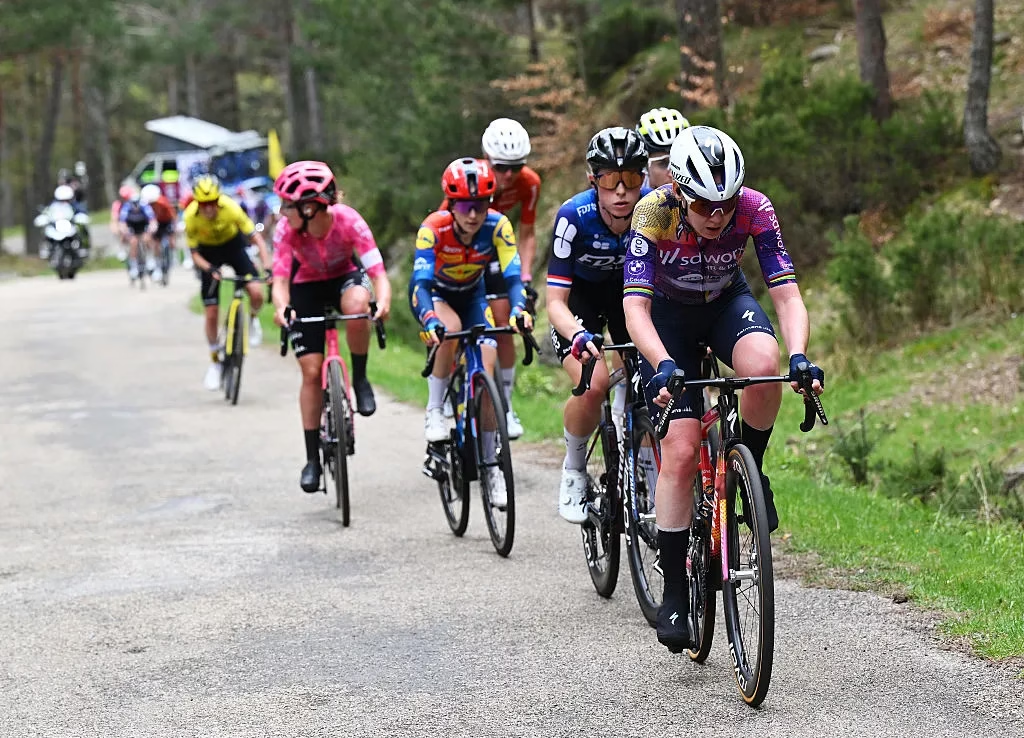
For the very biggest names, timing is everything. A rider like Demi Vollering does not need to wait for late-season results to create demand. The market builds around her regardless. But if her situation is still unresolved deep into 2026, other teams will not just be interested; they will start shaping their whole recruitment strategy around the possibility. That is when dominoes fall: one GC signing changes which climbers are recruited, which time trial riders are targeted, and which domestiques get offered extensions.
The “return to level” storyline will be one of the most important subplots to read correctly. Arlenis Sierra is the clearest example in this list because she is in her first season back since becoming a mother, which means external observers have less certainty about her ceiling than usual. That uncertainty can create opportunity. If she starts converting results quickly, it raises her leverage. If it takes longer, the most appealing offers may be the ones built around patience, role clarity, and a programme designed to rebuild confidence rather than demand instant wins.
Finally, keep a close eye on the retirement layer, because it can change the whole landscape overnight. Riders in the late 30s bracket do not only weigh results, but they also weigh fatigue, motivation, and what life looks like away from racing. Moolman-Pasio and Garcia are obvious watch names because the decision is not purely competitive anymore. Amanda Spratt remains a key one too, because even if she still has value to offer, she is at the career stage where personal priorities can become decisive.
If even one of those experienced leaders decides to stop, it creates immediate vacancies: not just a rider slot, but a role slot. Teams then have to choose whether to replace like-for-like or change the entire direction of the project. That is where the secondary market becomes decisive. A team that loses a road captain might sign a headline rider, but it still needs someone to guide positioning, manage race stress, and keep a leader calm when plans unravel.
This is why the end of 2026 feels consequential. It is not only about transfers and star signings. It is about how teams protect their identity, how riders fight for the roles they want, and how the next generation takes over when the current one decides it has done enough.
The clearest signal will not always be a rumour or an announcement. It will be how teams race, who gets protected, and which riders are being quietly positioned as the future before the contracts even hit the negotiating table. If the biggest names delay renewals, the 2026 season will not just be a fight for results; it will be a rolling audition for who gets leadership and leverage in 2027.

