George Hincapie is often reduced to a single job title, the trusted domestique, but that framing only tells part of the story. Yes, he spent years doing the unglamorous work that wins Tours, yet he was also a genuine classics force in his own right, and one of the most durable American riders of his generation.
Born in Queens, New York, on 29 June 1973, Hincapie entered the sport early and progressed fast enough to earn a rare opportunity for an American at the time: a full European apprenticeship, inside teams that raced aggressively and expected riders to learn by surviving.
Motorola to US Postal, a fast education in how the peloton really works
George Hincapie turned professional in 1994 with Motorola, then moved to the US Postal structure in 1997. The sequence matters because it placed him in a racing culture where responsibility was not optional. If you were strong, you were used. If you were reliable, you became essential.
Over time, his role crystallised into something more specific than “support rider”. He became a stabiliser for big days, a rider teams could deploy to reduce risk and impose order. In modern terms, he was a road captain in the making long before the label became fashionable.
What George Hincapie repeatedly offered was controllable power, and that is a currency in Grand Tours and classics alike.
Why George Hincapie was more than the domestique label
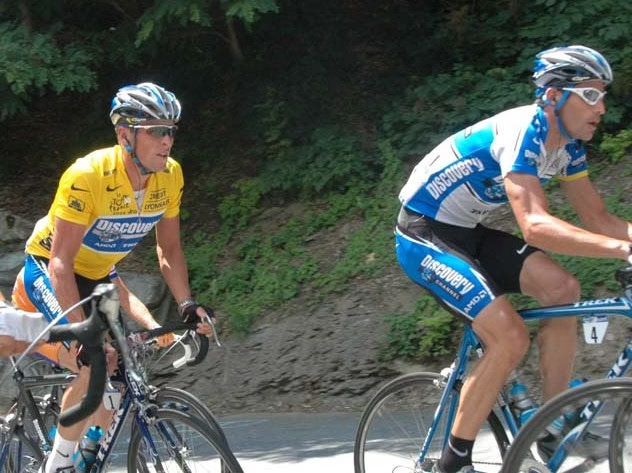
The best domestiques are not simply strong. They are repeatably strong, tactically calm, and willing to spend their best matches for someone else. George Hincapie embodied that, and it is why he was trusted in the most stressful race situations.
A good way to understand his value is to break the job down into its real components:
- Positioning and protection in nervous terrain, crosswinds, and narrowed roads
- Pacing to keep breaks within reach, blunt attacks, or steady a leader into key climbs
- Decision-making under pressure, turning team plans into workable choices on the road
That is the work viewers notice only when it goes wrong. Hincapie’s reputation was built because, more often than not, it did not go wrong.
The classics, where he could race for himself
If the Tour de France years made him famous as a lieutenant, the spring classics proved he was not limited to that role. Hincapie was built for the cobbled calendar: big engine, solid handling, and the ability to keep producing power when the race turns into a series of hard accelerations rather than a smooth rhythm.
His defining one-day win was Gent-Wevelgem in 2001, a result that carried extra significance because it made him the first American winner of the race.
Then there is Paris-Roubaix in 2005, where he finished 2nd, the kind of result that does not happen by accident. Roubaix punishes poor choices and weak form with brutal honesty. A podium there is evidence of both.
He also won Kuurne-Brussels-Kuurne in 2005, backing up the idea that his classics pedigree was real, not occasional.
The personal reward, a Tour de France stage win at last
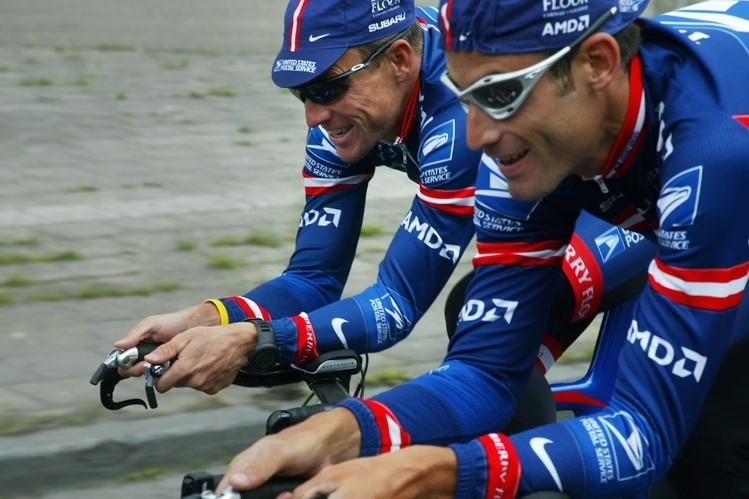
For a rider who spent so many seasons riding for others, Hincapie’s Tour de France stage win in 2005 remains one of the most satisfying storylines of that era. It arrived on Stage 15, finishing at Saint-Lary-Soulan, Pla d’Adet, after a day in the Pyrenees that rewarded opportunism as much as strength.
The significance was not that it suddenly redefined him as a Tour contender. It was that, after years of sacrificing personal chances for team objectives, he still had the level to win when the race finally allowed it.
Longevity, national titles, and what that consistency meant
Hincapie raced professionally from 1994 to 2012, spanning multiple team eras and the sport’s shift in training, equipment, and race dynamics. That sort of longevity tends to come from two things: a body that holds up, and a mentality that teams trust.
Domestique narratives can obscure the fact that he also delivered in national competition, winning the US road race title three times, in 1998, 2006, and 2009.
The era he rode in, and the complicated record that remains
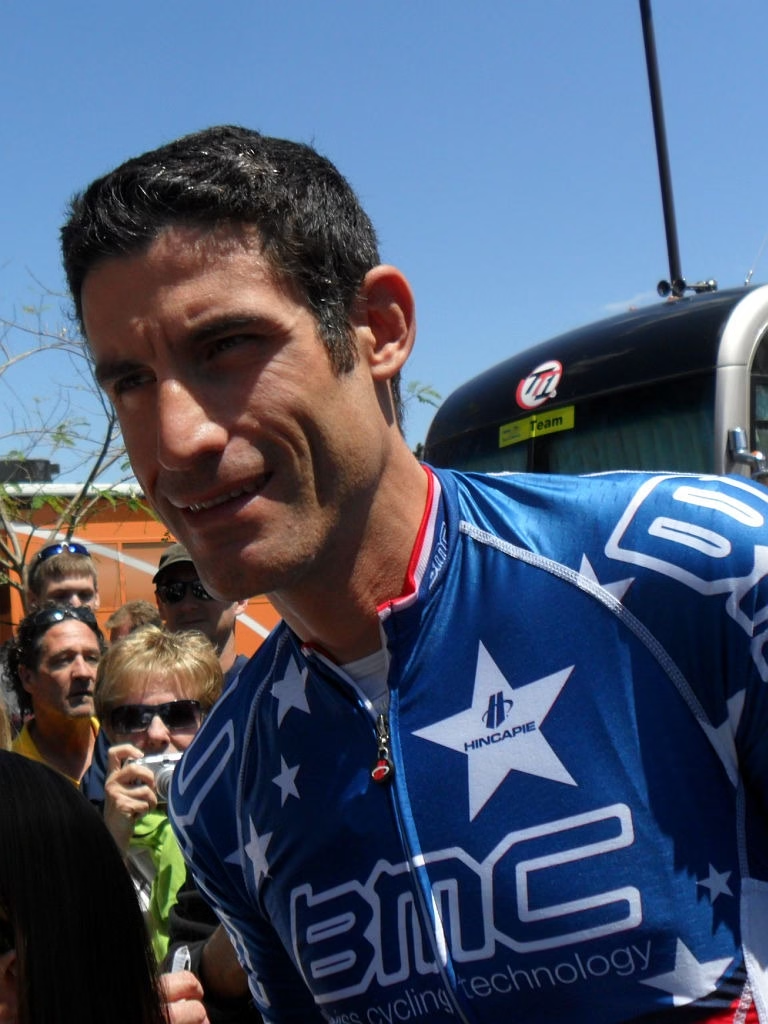
No profile of a rider from Hincapie’s generation is complete without acknowledging the sport’s most scrutinised period. In October 2012, he publicly admitted to using banned substances during part of his career and cooperated with USADA during its investigation.
That admission complicates the way the period is remembered, and it should. At the same time, it does not erase the underlying truth of what he was as a rider: a classics specialist with genuine results, and a support rider trusted at the highest level for almost two decades.
Quick profile
- Born: 29 June 1973, Queens, New York
- Professional career: 1994 to 2012
- Signature wins: Gent-Wevelgem (2001), Kuurne-Brussels-Kuurne (2005), Tour de France Stage 15 (2005)
- US road race champion: 1998, 2006, 2009
-
 Photo Credit: Canyon SRAM (supplied media release)
 -
 Photo Credit: Park Tool