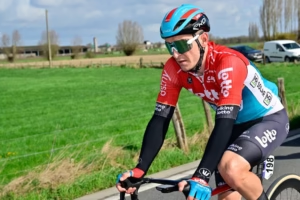
A year ago, the UAE Tour again played its familiar role in the early-season hierarchy, a race where sprint trains sharpen their timing on wide, fast roads, and general classification ambitions are tested against the clock and the first sustained climbing of the year. In 2025, the organisers pointed to top-level winners in both events, with Tadej Pogacar taking the men’s race and Elisa Longo Borghini winning the women’s edition, a reminder that the desert stage race has become a serious proving ground rather than a simple seasonal warm-up.
For 2026, that balance is being pushed further. The routes for the UAE Tour and UAE Tour Women have been presented with two clear headline features, the addition of a new summit finish on Jebel Mobrah in the men’s race and the return of the decisive Jebel Hafeet finales that have repeatedly shaped overall victory in both events.
Key points
- The UAE Tour Women runs from February 5th to February 8th, with the men’s UAE Tour from February 16th to February 22nd.
- The men’s race includes two summit finishes, Jebel Mobrah and Jebel Hafeet, plus a 12.2km individual time trial.
- The women’s race again builds through three sprint stages to a summit finish on Jebel Hafeet.
- Organisers say the UAE Tour’s status has been lifted within the UCI points structure, positioning it alongside the most prestigious one-week stage races.
UAE Tour 2026 (men)
Stage list
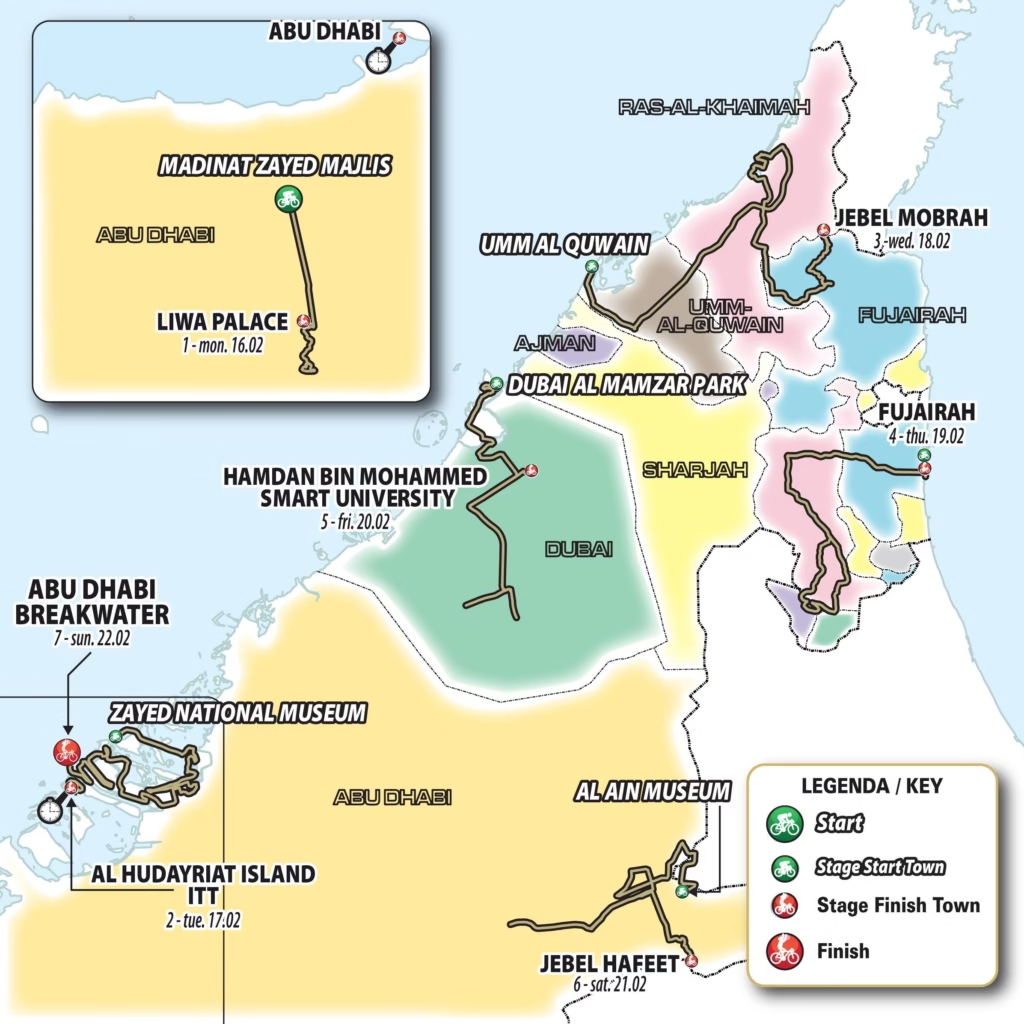
- Stage 1 (February 16th): Madinat Zayed Majlis – Liwa Palace, 144km
- Stage 2 (February 17th): Al Hudayriyat Island ITT, 12.2km
- Stage 3 (February 18th): Umm al Quwain – Jebel Mobrah, 183km
- Stage 4 (February 19th): Fujairah – Fujairah, 182km
- Stage 5 (February 20th): Dubai Al Mamzar Park – Hamdan Bin Mohammed Smart University, 166km
- Stage 6 (February 21st): Al Ain Museum – Jebel Hafeet, 168km
- Stage 7 (February 22nd): Zayed National Museum – Abu Dhabi Breakwater, 149km
How the race is likely to be decided
The most important shift is that the race now offers two genuinely selective climbing days rather than one definitive summit finish. That matters because it changes how teams can distribute their efforts and how much early time can be clawed back or defended. It also makes the overall narrative less predictable, because Jebel Mobrah and Jebel Hafeet demand different types of climbing.
The stage 2 time trial at Al Hudayriyat Island is short, flat, and designed for speed rather than technical difficulty. It will still establish early gaps, but it is more likely to create a sorting of contenders than to settle the general classification outright. The impact is often tactical: a few seconds gained or lost can shape how aggressively teams ride when the climbing arrives, and it can force riders into risk management on the exposed road stages where splits have historically come fast.
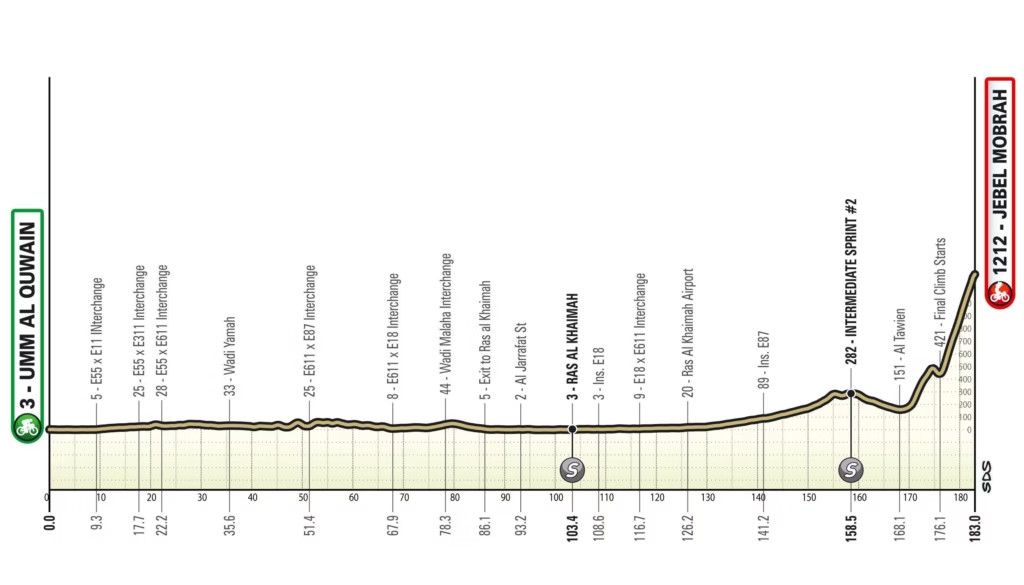
Stage 3 is where the route turns sharper. The introduction of Jebel Mobrah gives the race a more explosive mountain finish, with the climb described as long and increasingly steep, including a closing section where gradients stay consistently severe. That should encourage attacking riding rather than pure pacing, especially if a strong team senses an opportunity to isolate rivals early in the year.
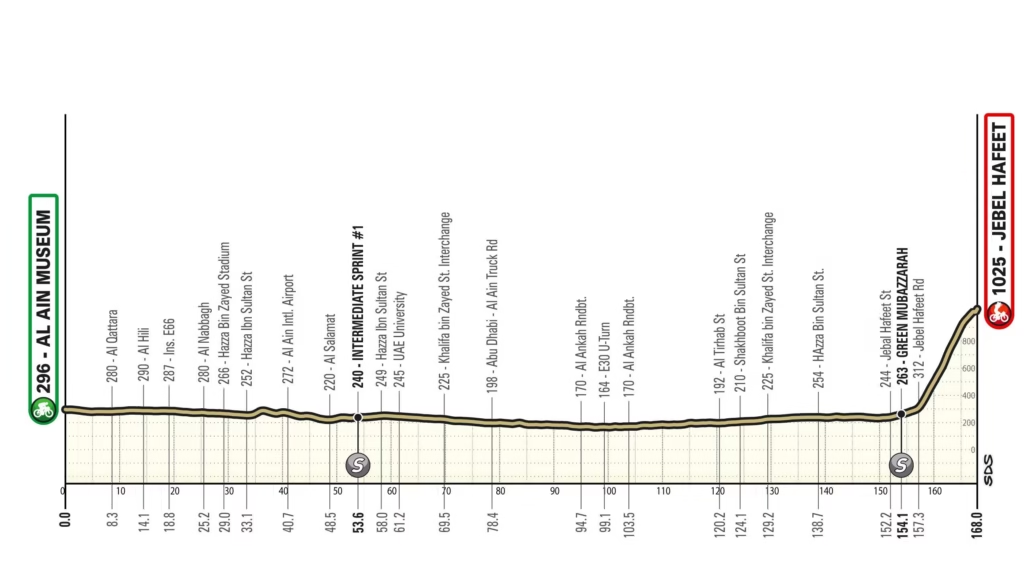
Stage 6 returns to the classic verdict of Jebel Hafeet, a steadier climb that tends to reward rhythm, sustained power, and control. With Mobrah already in the legs, Hafeet becomes less of a single decisive moment and more of a final examination, the place where a rider either confirms dominance or salvages time after mistakes elsewhere.
Between those summit finishes, stages 1, 4, 5 and 7 sit in familiar UAE Tour territory. They look like sprint stages on paper, but their real danger is not the finish itself, it is the race before the finish. Wide roads, open desert, and wind direction can turn a routine day into a split-and-chase scenario in minutes. For general classification riders, this is where the race can be lost without ever being dropped on a climb.
UAE Tour Women 2026
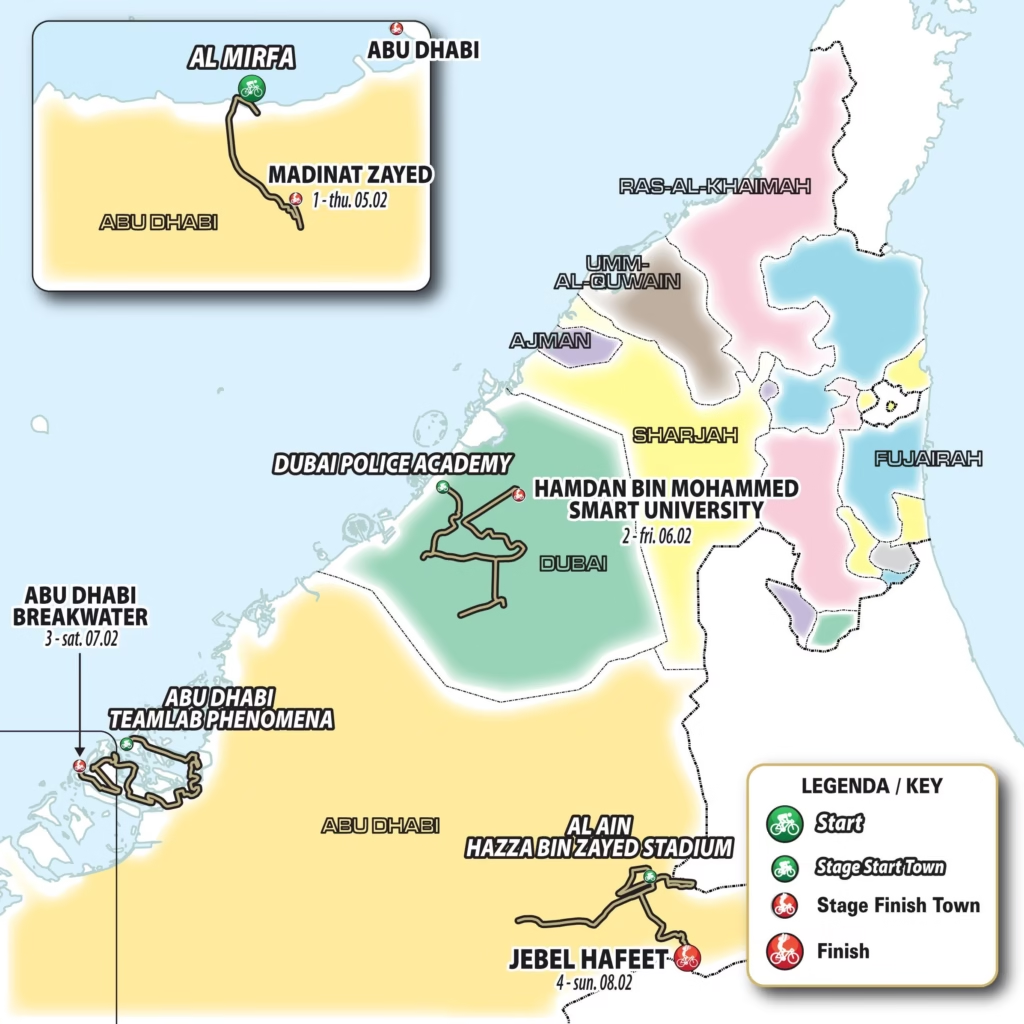
Stage list
- Stage 1 (February 5th): Al Mirfa – Madinat Zayed, 111km
- Stage 2 (February 6th): Dubai Police Academy – Hamdan Bin Mohamed Smart University, 145km
- Stage 3 (February 7th): Abu Dhabi TeamLab Phenomena – Abu Dhabi Breakwater, 121km
- Stage 4 (February 8th): Al Ain Hazza Bin Zayed Stadium – Jebel Hafeet, 156km
How the women’s race should unfold
The women’s route continues to follow a clear structure, three days where sprint teams can realistically aim to control the finish, followed by one day that invites a pure climbing decision. That design tends to produce two overlapping battles across the week, the stage-hunter’s race for wins and seconds, and the general classification rider’s patient build towards a single, decisive climb.
The early stages are not automatically calm, even if they look built for fast finishes. The same environmental risks apply, and a general classification hopeful who is caught on the wrong side of a split can see their week unravel before the mountains arrive. The key for contenders is positioning, conserving matches, and reaching the foot of Jebel Hafeet with both teammates and time intact.
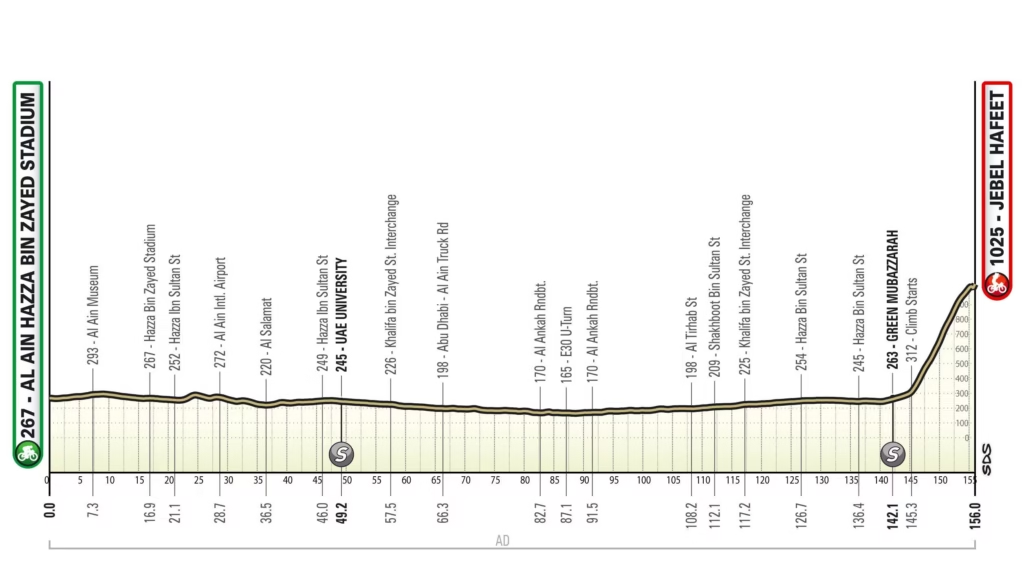
Stage 4 then asks the direct question. The climb is long enough to create meaningful gaps without needing explosive accelerations, and it typically rewards riders who can hold a hard tempo rather than those relying on a single short move. That makes it a natural stage for a strong team to impose structure, but also a stage where one well-timed attack can still be decisive if the favourites hesitate.
Names already being mentioned
Organisers have already flagged a high-profile expected field on the men’s side, with Jonas Vingegaard, Remco Evenepoel, Isaac del Toro and Jonathan Milan among those anticipated to start. For the women’s race, Elisa Longo Borghini is listed as the 2025 winner and Lorena Wiebes is described as confirmed, setting up the familiar tension between sprint dominance early and a climbing verdict on the final day.