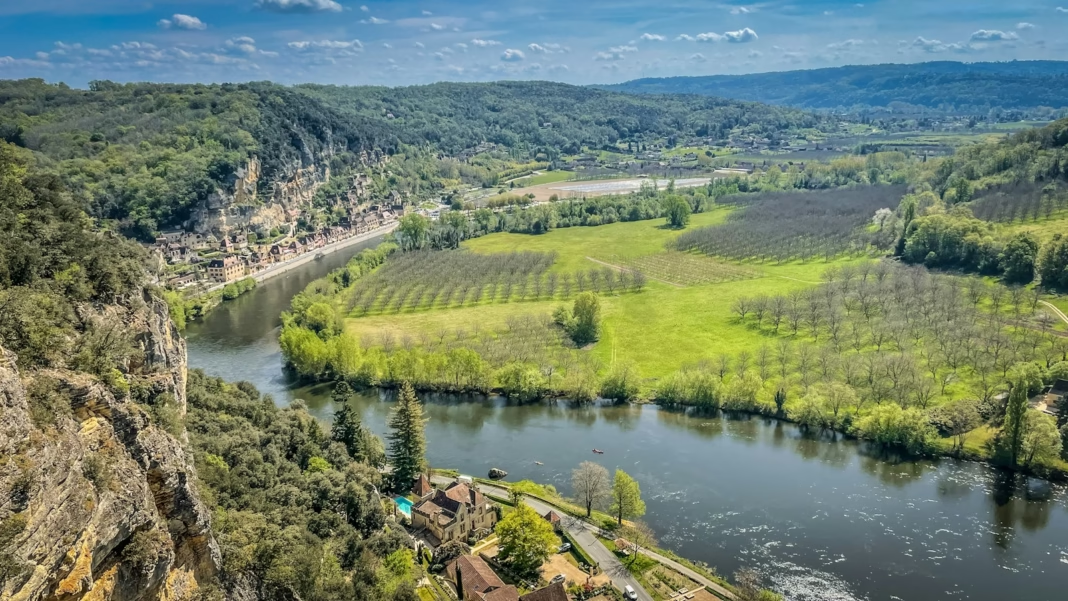
The central Pyrenees, with the valley town of Argelès-Gazost at its heart, represents cycling’s most hallowed ground. Here, where the Gave de Pau river carves through ancient valleys beneath peaks soaring above 2,000 metres, lies the densest concentration of legendary Tour de France climbs anywhere in the world. Within a 30-kilometre radius of this unassuming market town, you can tackle the Tourmalet, Aubisque, Soulor, Hautacam, and Luz Ardiden, names that resonate through cycling history like a pantheon of giants. For those who view climbing not merely as suffering but as pilgrimage, the central Pyrenees offers an unparalleled journey through landscapes where Coppi, Merckx, Hinault, and more recently Vingegaard and Pogačar have written their legends in sweat and perseverance.
Much like exploring iconic cycling destinations worldwide, the Pyrenees reward those willing to embrace the challenge of sustained climbing, where every metre of elevation gain brings you closer to cycling’s mythical summits and the rarefied air where champions are forged.
The Central Pyrenees: Geography and Character
The Hautes-Pyrénées department forms the heart of the French Pyrenees, a region where the mountains rise most dramatically from their foothills. Unlike the Alps, where valleys often separate distinct massifs, the Pyrenees form a continuous wall along the French-Spanish border, creating a unique topography where roads must cross high passes to move between north-south-oriented valleys.
The central Pyrenees display a compact clustering of major climbs concentrated within a remarkably small area. Four primary valleys radiate from the region, the Gave de Pau, Gave de Cauterets, Vallée du Louron, and Vallée d’Aure, each providing access to legendary ascents. Valley floors sit at 400-700 metres elevation, whilst summits soar to between 1,400 and 2,115 metres. The Atlantic weather patterns bring moisture that feeds the lush valleys and ensures snowfall above 1,800 metres from November through May. The cultural landscape speaks to centuries of mountain life, with traditional Pyrenean villages, summer pasture (estive) culture, and sheep farming heritage still evident throughout.
The geology differs markedly from the Alps. The Pyrenees are older, with more rounded summits and fewer dramatic spires. The rock is predominantly limestone and granite, creating a distinctive landscape character where summer wildflower meadows blanket high pastures, and marmots whistle warnings from boulder fields.
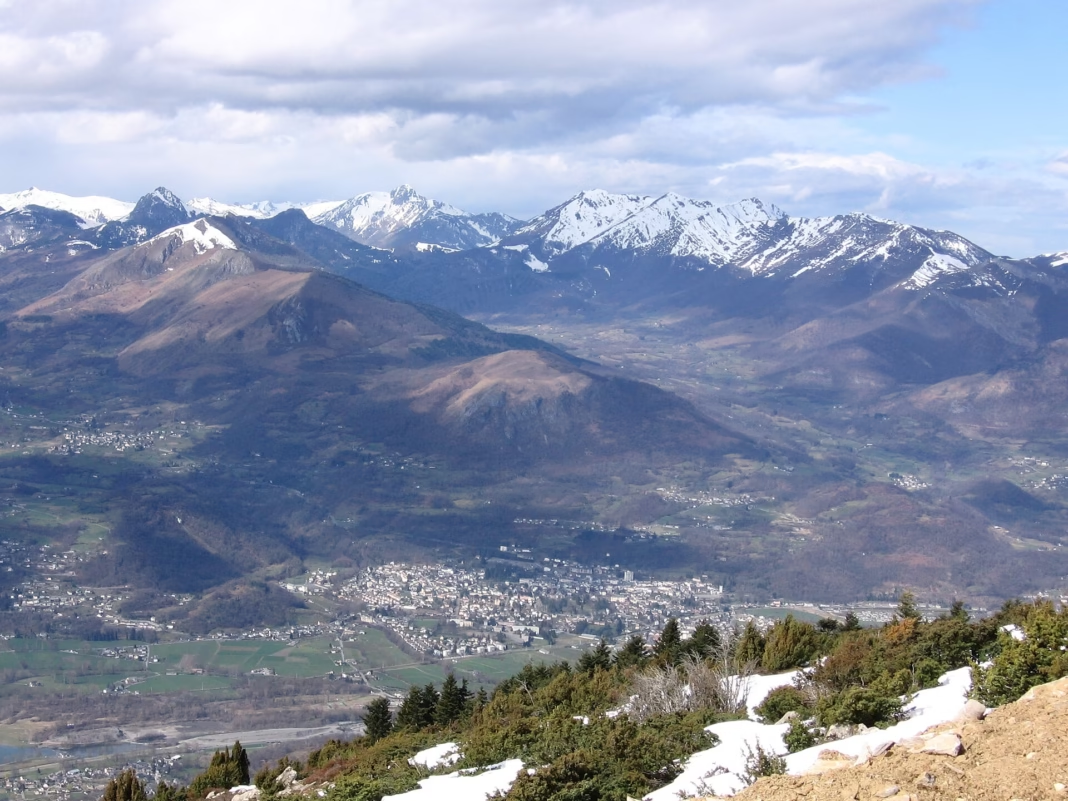
Argelès-Gazost: The Cyclist’s Capital
Positioned at 460 metres elevation, where the Gave de Pau meets smaller tributaries, Argelès-Gazost (population 3,200) functions as the strategic base for central Pyrenees cycling. Its position offers unparalleled access to the region’s greatest climbs whilst maintaining valley-floor comfort and full-service amenities.
Why Argelès-Gazost?
The town occupies the perfect geographical position. Hautacam lies just 15 minutes away via the D918, whilst the Col du Soulor approach through Arrens-Marsous requires only 20 minutes of valley riding. The Tourmalet’s western approach via Luz-Saint-Sauveur sits 25 minutes distant, Cauterets and the Pont d’Espagne 30 minutes, and even the Col d’Aubisque approach via Eaux-Bonnes can be reached within 35 minutes.
Beyond geography, Argelès offers an authentic Pyrenean character without tourist-resort artificiality. The Thursday market fills Place Ourout with regional produce: Tomme de Pyrénées cheese, Bayonne ham, mountain honey, and seasonal vegetables. Belle Époque buildings from the town’s 19th-century spa heyday line central streets. Cafés understand cyclists’ needs, offering early breakfasts and tolerating mud-splattered lycra.
The Valley System
Understanding the valley structure clarifies route planning. Argelès sits at the confluence where multiple valleys meet, creating natural routes toward major climbs. The Vallée d’Argelès heads north toward Lourdes in a descending route, whilst the Vallée du Gave de Pau runs east toward Luz-Saint-Sauveur, providing access to both Tourmalet and Luz Ardiden. Southward, the Val d’Azun leads toward Arrens-Marsous, the gateway to Soulor and Aubisque, and westward routes branch toward Lourdes before continuing to Eaux-Bonnes for the Aubisque’s northern approach.
The Legendary Climbs: A Cyclist’s Pantheon
The central Pyrenees’ reputation rests on five iconic ascents, each offering distinct character and challenge. Understanding their profiles, history, and tactical approach transforms these from mere roads into meaningful experiences.
Col du Tourmalet: The Giant of the Pyrenees
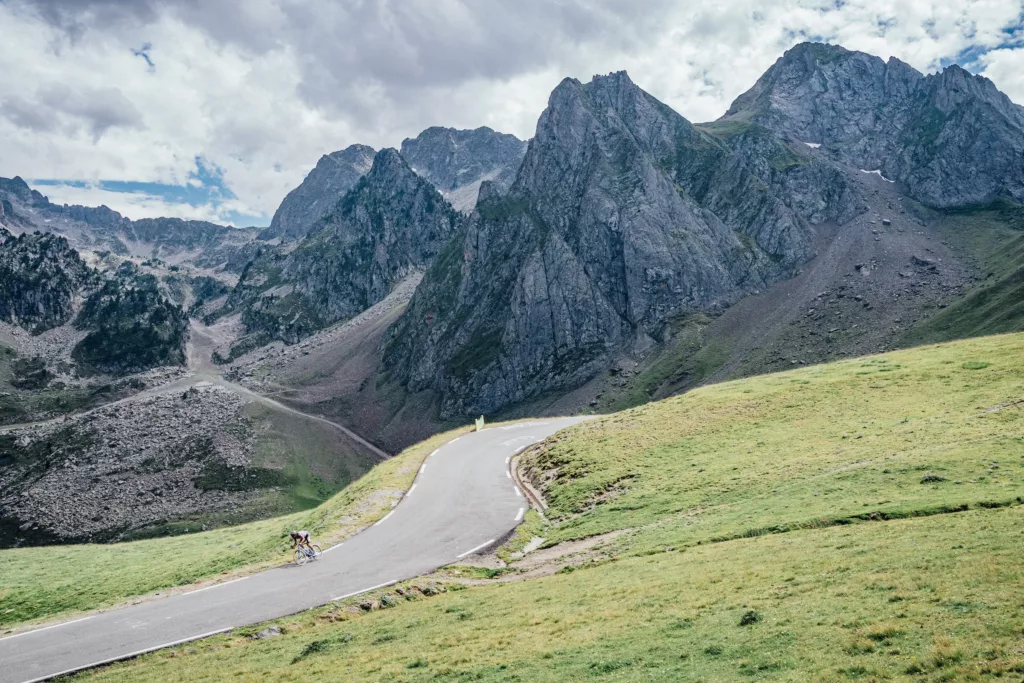
The Col du Tourmalet represents Pyrenean cycling’s holy grail. Its very name derives from “Tour Malet” (bad detour), testimony to centuries of travellers’ suffering on this high crossing. From Luz-Saint-Sauveur on the western side, the climb stretches 19 kilometres with 1,404 metres of elevation gain, averaging 7.4% gradient with maximum ramps reaching 10.2%. The eastern approach from Sainte-Marie-de-Campan measures 17.2 kilometres with 1,268 metres of gain, also averaging 7.4% but featuring brutally steep sections up to 13%. The summit stands at 2,115 metres, the highest paved pass in the French Pyrenees, and the climb has featured in 88 Tour de France stages since its inaugural appearance in 1910.
The western approach from Luz-Saint-Sauveur builds gradually through the hamlet of Barèges, France’s highest town at 1,250 metres, before steepening dramatically in the final 8 kilometres. The landscape transforms from green valley to grey moonscape as you approach the windswept summit. The eastern approach from Sainte-Marie-de-Campan delivers a more brutal experience, steeper from the outset with vicious ramps through La Mongie ski station. Most cyclists consider this side more challenging despite slightly less total elevation.
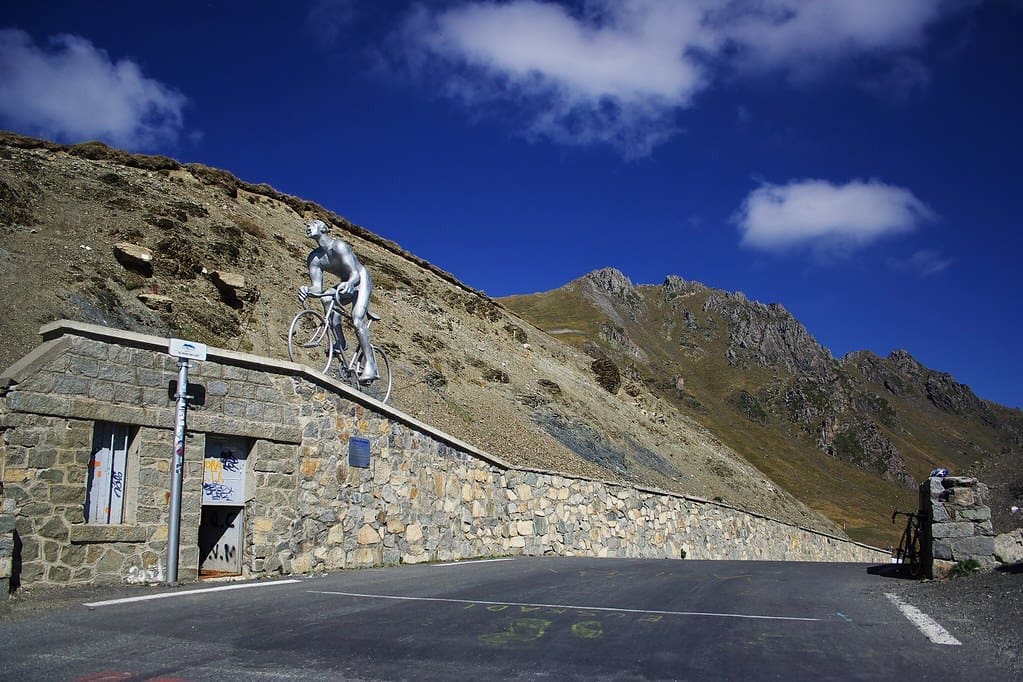
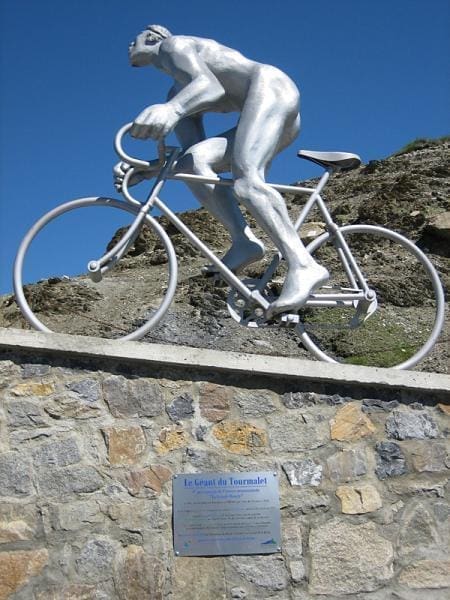
At 2,115 metres, the Tourmalet summit stands exposed to the elements, often shrouded in cloud. The summit plateau features a giant statue of Octave Lapize, winner of the 1910 Tour stage that first crossed here, erected to commemorate the Tourmalet’s centenary. The descent rewards with spectacular views toward either the Gave de Pau valley or, eastward, the chain of Pyrenean peaks stretching toward Spain. Start early, ideally 7-8am, to avoid afternoon heat and tour buses. The west side suits those building into climbing gradually, whilst the east rewards powerful riders comfortable with sustained steep gradients. In a day loop, most cyclists climb west-to-east, allowing the harder ascent when fresh, then descending the gentler western grade.
Col d’Aubisque: The Sky Road
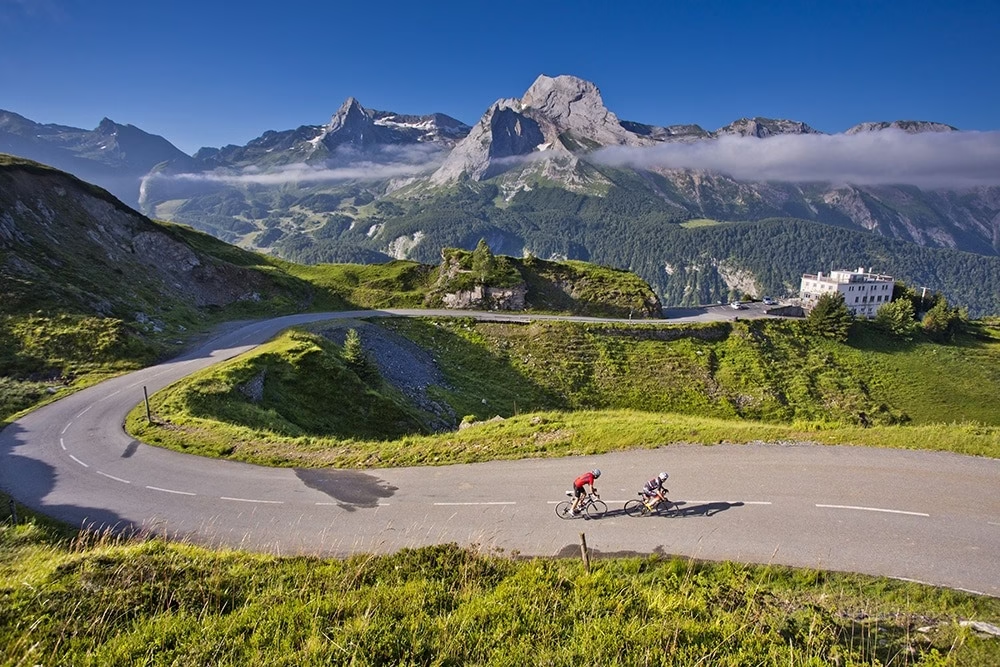
The Aubisque offers something the Tourmalet cannot: vertiginous exposure and hairpin drama. From Laruns on the northern approach, the climb measures 16.6 kilometres with 1,190 metres of elevation gain, averaging 7.2% with maximum gradients reaching 13%. The southern approach, typically ridden as an extension of the Col du Soulor from Argelès via Arrens-Marsous, totals 47 kilometres including the Soulor ascent. The summit elevation reaches 1,709 metres, and like the Tourmalet, it first appeared in the Tour during that legendary 1910 inaugural Pyrenees stage.
The southern approach, tackled as an extension of the Col du Soulor, delivers 9 kilometres of narrow, cliff-hugging road through some of the Pyrenees’ most spectacular scenery. Stone walls on the valley side provide minimal psychological protection from exposure, whilst opposite cliffs tower overhead. The northern approach from Laruns through the Cirque du Litor provides a more traditional valley-climb experience, though with consistently steep gradients that rival any Pyrenean ascent. The road winds through beech forests before emerging above treeline into high summer pastures where Pyrenean cows graze beneath dramatic rock faces.
Unlike the Tourmalet’s exposed plateau, the Aubisque summit occupies a dramatic col (pass) between peaks, creating a genuine sense of crossing from one world to another. Looking south toward Spain, the view encompasses layer upon layer of receding ridgelines. The Auberge restaurant at the summit (summer only) serves mountain fare and tolerates sweaty cyclists with remarkable patience.
Col du Soulor: The Aubisque’s Essential Prelude
The Soulor deserves recognition beyond its role as an approach to the Aubisque. This gentler ascent through the Val d’Azun provides stunning valley scenery, traditional Pyrenean villages, and a more humane gradient than its neighbours. From Arrens-Marsous, the climb spans 18.5 kilometres with 1,037 metres of elevation gain, averaging 5.6% with maximum gradients reaching 10%. Including the valley approach from Argelès-Gazost pushes the total distance to 30 kilometres. The summit sits at 1,474 metres elevation.
The road climbs steadily through Arrens-Marsous, a perfectly preserved stone village, before steepening through switchbacks in the final third. Most cyclists combine Soulor and Aubisque in a single day, creating a magnificent 47-kilometre circuit from Argelès that includes valley approach, Soulor ascent, a brief descent to Col du Soulor summit, then the dramatic Aubisque ascent. This pairing, featured countless times in the Tour, provides over 2,200 metres of climbing and represents a significant day in the mountains.
Hautacam: The Modern Classic
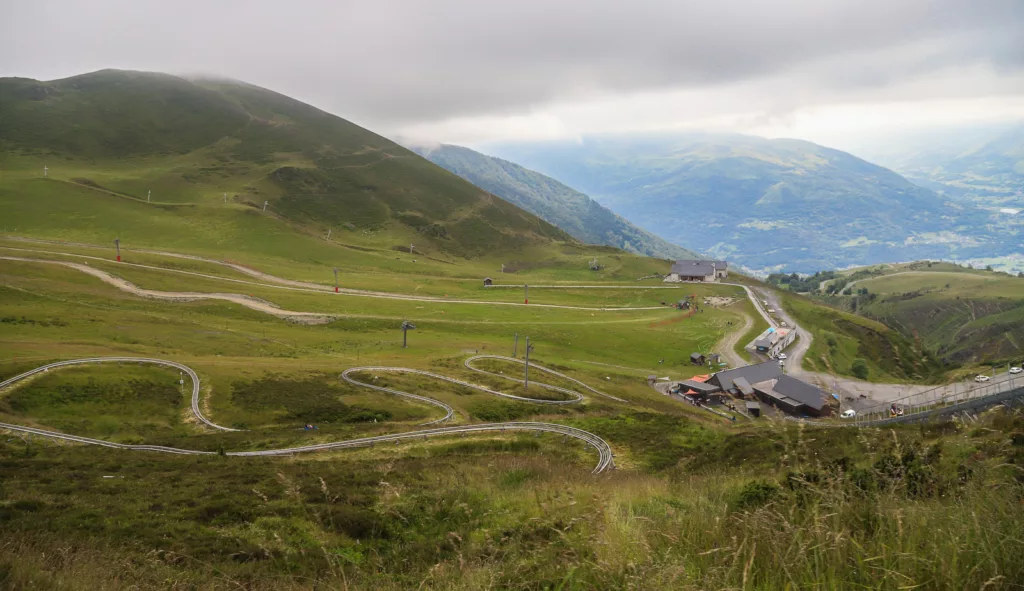
Hautacam represents a newer breed of Tour de France climb: a purpose-built road to a ski station, steep from the outset, with the gradient rarely easing. What it lacks in historical pedigree (no pre-war Tour stages), it compensates with pure climbing savagery. From Argelès-Gazost, the climb measures 13.6 kilometres with 1,120 metres of elevation gain, averaging a brutal 8.3% gradient according to Strava segments, with maximum ramps of 13% and several sections hovering above 10%. The summit elevation reaches 1,560 metres. First featured as a Tour finish in 1994, it has hosted subsequent stage finishes in 1996, 2008, 2014, 2022, and 2023, establishing itself as a modern classic. Many riders, including professionals, consider Hautacam the hardest Pyrenean ascent pound-for-pound.
The road leaves Argelès directly, eliminating warm-up valley riding. Within 2 kilometres, you’re grinding at 8-10%, and it barely relents for the next 11 kilometres. The gradient profile resembles a mountain wall more than a traditional col, with short 12-13% ramps punctuating the relentless 8% average. Unlike traditional cols crossing to another valley, Hautacam dead-ends at the ski station, requiring riders to return the same way. This psychological factor, knowing you must descend what you’ve climbed, adds particular weight to the effort. The views, however, reward magnificently: north toward Lourdes and the plains, south into the heart of the high Pyrenees.
Luc Leblanc’s 1994 victory inaugurated Hautacam’s Tour status, whilst Vincenzo Nibali’s 2014 finish extended his yellow jersey dominance. Most recently, Jonas Vingegaard’s devastating 2022 and 2023 performances on Hautacam effectively decided those Tours, cementing the climb’s reputation as a modern proving ground where pure climbing power decides outcomes.
Luz Ardiden: The Valley Wall
Luz Ardiden occupies a similar conceptual space to Hautacam: a ski station ascent, a dead-end road, sustained steep gradient. However, its character differs subtly. From Luz-Saint-Sauveur, the climb measures 13.3 kilometres with 1,040 metres of elevation gain, averaging 7.8% with maximum gradients of 12%. The summit elevation reaches 1,715 metres. First featured as a Tour finish in 1985, it has hosted subsequent finishes in 1987, 2003, 2011, and 2021.
The approach through the forest provides more shade and visual variety than Hautacam’s exposed slopes, whilst the gradient, though consistently hard, varies more than Hautacam’s relentless monotony. The climb begins in Luz-Saint-Sauveur, itself positioned at 710 metres, providing some elevation credit. The road winds through dense forest for the first half before emerging into more open terrain for the final push to the station. Like Hautacam, the dead-end nature and the knowledge that professional riders have suffered mightily here adds psychological weight. Lance Armstrong’s 2003 performance, where he famously tangled with a spectator’s musette bag before recovering to win, typifies Luz Ardiden’s drama, whilst Tadej Pogačar’s 2021 stage victory showcased the climb’s continuing relevance in modern Tour routing.
Beyond the Famous Five: Hidden Treasures
Whilst the marquee climbs draw most attention, the central Pyrenees hide numerous quieter ascents offering equally rewarding experiences without tour bus traffic.
Cirque du Litor and Eaux-Chaudes
The valley road from Laruns toward Eaux-Chaudes and the dramatic Cirque du Litor provides stunning scenery in a narrow, enclosed valley where cliffs rise vertically from the roadside. The route forms the approach to the Aubisque’s northern side but deserves appreciation in its own right. The hamlet of Eaux-Chaudes, once a fashionable spa resort, now slumbers in faded grandeur, providing atmospheric rest stops where time seems suspended in a bygone era.
Pont d’Espagne from Cauterets
This gentler ascent into the Pyrenees National Park is rewarded with some of the range’s most beautiful waterfall scenery. The 14-kilometre climb from Cauterets gains 650 metres of elevation with a gentle gradient averaging 4.7%. The Pont d’Espagne (Spanish Bridge) sits at 1,496 metres, positioned at the confluence of several mountain torrents. The route makes an excellent recovery ride or family outing, with the upper section closed to private vehicles in summer (shuttle bus or bicycle only), creating a peaceful environment where the thundering waterfalls provide natural soundtrack.
Col d’Aspin: The Gentle Giant
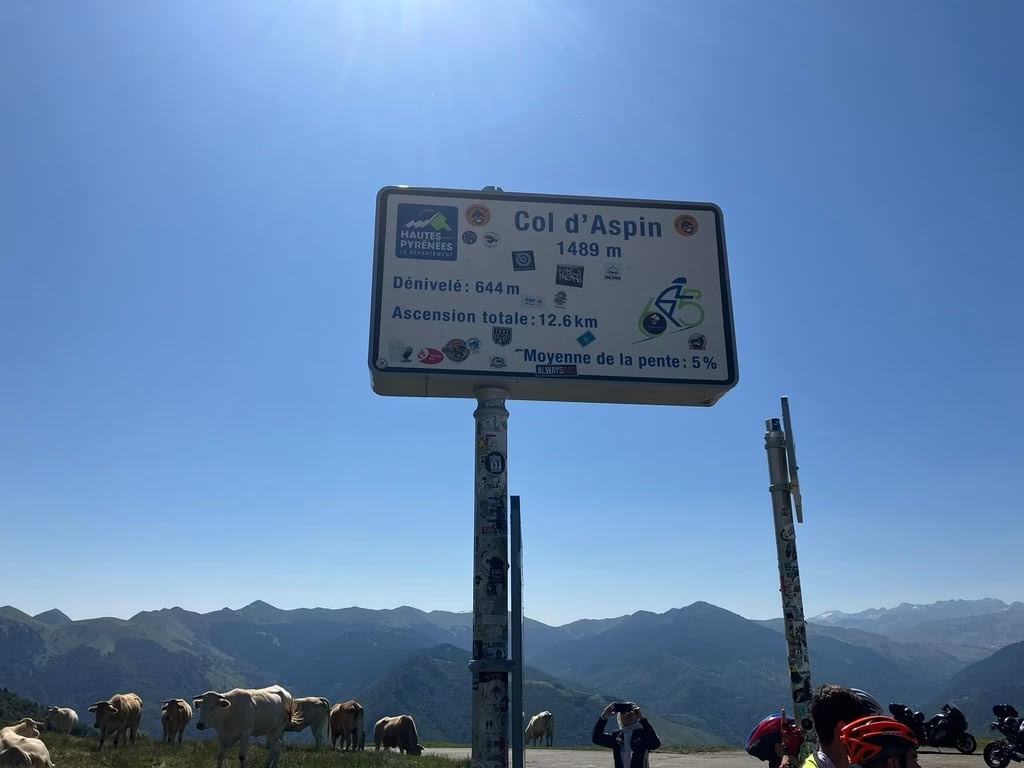
Though technically positioned in the neighbouring valley system, the Col d’Aspin warrants mention for its beauty and strategic role. At 1,489 metres summit elevation, the 12-kilometre climb from Arreau averages 6.5%, earning its reputation as the “easiest” major Pyrenean col despite 79 Tour de France appearances. Its gentle nature understates its beauty and the strategic role it plays connecting valley systems, often featuring in combination with Tourmalet or Peyresourde efforts.
The Art of Pyrenean Riding: Strategy and Tactics
Successfully cycling the central Pyrenees requires more than fitness. Understanding mountain rhythm, pacing strategy, and tactical approach separates memorable experiences from survival suffering.
Gradient Management and Pacing
Pyrenean climbs demand different pacing from shorter efforts. Hautacam’s 13.6 kilometres at 8.3% average requires 90-120 minutes for most amateur riders. Maintaining appropriate intensity throughout proves critical. The first third demands conservation, starting easier than feels necessary to preserve matches for later. The middle third establishes rhythm, finding that sustainable cadence whilst resisting the temptation to surge on easier sections. The final third permits slightly increased effort if feeling strong, though avoid pushing into zone 5 for sustained periods. For climbs exceeding 30 minutes, sustained threshold (zone 4) represents maximum sustainable intensity.
Professional riders target 4-5 watts per kilogram for hard Pyrenean efforts. Amateur cyclists should adjust based on fitness. Strong climbers can sustain 3.5-4 w/kg, moderate climbers 3-3.5 w/kg, and developing climbers 2.5-3 w/kg. These figures assume proper acclimatisation and appropriate gearing.
The Multi-Climb Day
The Pyrenees’ compact geography enables legendary multi-climb days, but planning proves essential. The classic Soulor-Aubisque loop covers 90-100km with 2,400m climbing, typically requiring 5-7 hours. The Tourmalet-Luz Ardiden combination spans 100-110km with 2,600m climbing over 6-8 hours. For the truly ambitious, the Hautacam-Soulor-Aubisque triple tackles 120km with 3,300m climbing, a serious undertaking requiring 7-9 hours for very fit riders.
Success on multi-climb days demands starting the first climb by 8am to avoid afternoon heat and storms. Take substantial 30-45 minute breaks between major climbs, not just brief stops. Fuel aggressively, targeting 80-100g carbohydrates per hour whilst riding, and maintain hydration at 750ml-1L per hour depending on temperature. Know your bail-out options and be willing to adjust plans based on how your body responds. Pride matters less than safety and enjoyment.
Weather Patterns and Timing
The Pyrenees’ Atlantic influence creates distinct weather patterns affecting ride planning. Morning starts often bring cool conditions, even in summer, with valley temperatures of 10-15°C and summits at 5-10°C requiring arm warmers or light jackets. Temperatures rise through midday, reaching 25-30°C in valleys during July-August whilst summits warm to 15-20°C. Afternoon storms develop commonly in July and August, typically building between 2-5pm, followed by evening clearing.
June brings variable conditions as roads clear mid-month, with wildflowers peaking and temperatures ranging 15-25°C in valleys. July-August deliver the warmest, busiest, most stable period with 20-30°C valley temperatures, though afternoon storms remain common. September offers ideal conditions for many, with 15-25°C temperatures, dramatically less traffic, autumn colours, and generally good weather despite slightly increased rain risk. October sees increasing precipitation and first snow on highest passes, with valleys cooling to 10-20°C.
Early morning starts, departing by 7-8am, avoid heat, traffic, and afternoon storms. The Tourmalet at sunrise, when cloud inversions fill valleys whilst summits gleam in clear light, provides one of cycling’s transcendent experiences, transforming suffering into something approaching spiritual revelation.
Training and Preparation
The Pyrenees’ sustained climbs demand specific preparation extending beyond general fitness. Understanding the demands helps structure effective training programmes.
Minimum fitness requirements include the ability to ride 5-6 hours continuously, comfortable climbing 1,500-2,000 metres in a single day, experience with gradients above 8%, and functional threshold power sufficient for 60-90 minute climbs. Specific Pyrenees preparation should build climbing endurance with 60-90 minute threshold efforts, practice multi-hour rides incorporating multiple climbs, test nutrition and hydration strategies under realistic conditions, ensure appropriate gearing with compact chainrings and 11-32 or wider cassettes, and mentally prepare for sustained suffering of a type that shorter climbs simply cannot replicate.
Unlike shorter, steeper climbs where you can power through difficult sections, Pyrenean ascents require spinning comfortable gears for 60-120 minutes. Standard racing gears prove inadequate. Compact chainrings (50/34) represent the minimum, with sub-compact (48/32) proving beneficial for many riders. Wide cassettes become essential: 11-32 minimum, with 11-34 or 11-36 for loaded touring or less strong climbers. The ability to spin 70-80rpm on 8-10% gradients proves crucial, as grinding lower cadences for over an hour destroys legs and morale in equal measure.
Practical Logistics
Getting There
The primary airports serving the region include Tarbes-Lourdes-Pyrénées (30 minutes to Argelès with limited international connections and seasonal Ryanair flights from UK), Pau (55 minutes to Argelès with limited international connections), Toulouse (2 hours to Argelès with excellent international connections including direct UK flights), and Biarritz (2.5 hours away on the Atlantic coast with seasonal international flights). Train access comes through Lourdes station, just 15 minutes from Argelès, connecting to French TGV network with Paris 5-6 hours distant. Bikes are permitted on TER regional trains without reservation and on some TGV services with advance booking, though spaces remain limited.
Accommodation
The central Pyrenees offer cyclist-specific accommodation ranging from budget-friendly to premium, concentrated around Argelès-Gazost and nearby towns. Properties typically provide bike storage, washing facilities, and cycling-specific meals. Options include Pyrenees Cycling Lodge in Saint-Savin, Escape to the Pyrenees in Villelongue, and Au Primrose Hotel in Argelès-Gazost, alongside multiple guesthouses and apartments throughout Argelès, Luz-Saint-Sauveur, and Arrens-Marsous. Book well in advance for July-August and cycling event periods.
When to Visit
The optimal window runs late June through September. Late June offers roads fully clear of snow, wildflowers at peak bloom, fewer tourists, and variable weather that adds character to the experience. July-August provide warmest temperatures, busiest periods, most reliable weather, and those afternoon storms that clear magnificently. September represents the sweet spot: excellent comfortable temperatures, dramatically reduced traffic post-summer exodus, autumn colours painting the hillsides, and higher rain probability that remains acceptable given other advantages.
Comparing the Pyrenees to Other Mountain Ranges
The central Pyrenees occupy unique space amongst cycling’s mountain destinations. Compared to the Alps, they offer more compact geography with higher climb density, generally quieter roads outside peak season, and less severe maximum gradients balanced by longer sustained efforts. The character differs fundamentally: more pastoral, less dramatic spires, with Atlantic weather influence rather than Alpine continentality. Against the Dolomites, the Pyrenees present longer climbs with less punchy gradients, fewer but more famous ascents, different rock and vegetation creating distinct visual character, and similar touring infrastructure quality.
For cyclists exploring European mountain cycling, the Pyrenees represent a distinct experience combining Tour de France heritage with accessible logistics and spectacular scenery that differs markedly from Alpine drama whilst offering equal rewards to those willing to suffer on their storied slopes.
Conclusion: The Pyrenean Pilgrimage
The central Pyrenees, with Argelès-Gazost at their heart, transcend typical cycling destinations. This is hallowed ground where cycling’s greatest champions have written their legends, where the Tourmalet and Aubisque rise as monuments to human ambition and suffering. The compact geography enables extraordinary cycling density: five legendary climbs within 30 kilometres, countless hidden gems, and infrastructure built around cycling culture that welcomes riders of all abilities whilst demanding respect for the mountains.
This is not casual holiday cycling. The Pyrenees demand respect, preparation, and willingness to suffer. But for those who embrace the challenge, who understand that cycling’s deepest rewards come through sustained effort in thin air beneath ancient peaks, the central Pyrenees offer transformation. You descend from the Tourmalet not just tired but changed, having joined the lineage of riders who’ve pedalled these same stones for over a century.
Whether you’re a serious amateur seeking to test yourself against legendary climbs, a cycling historian making pilgrimage to hallowed roads, or simply someone who loves mountains and the purity of climbing toward distant summits, the central Pyrenees deliver unforgettable experience. The question isn’t whether the Tourmalet will hurt, but how you’ll remember that hurt years hence: as suffering endured or as strength discovered.
For more inspiration exploring cycling’s greatest mountain destinations, visit our guide to cycling around the world.
Frequently Asked Questions
What is the best time of year to cycle in Argelès-Gazost and the central Pyrenees?
The optimal period is late June through September. Late June offers wildflowers, fewer tourists, and freshly cleared roads, though weather remains variable. July-August provide warmest temperatures (20-30°C valleys, 15-20°C summits) and most reliable conditions but coincide with peak tourism and afternoon thunderstorms. September represents the sweet spot for many cyclists: comfortable temperatures (15-25°C), dramatically reduced traffic, autumn colours, and generally good weather, though rain probability increases slightly. Avoid May-early June (snow still on highest passes) and October onwards (increasing precipitation, first winter storms). The Tour de France passes through mid-July, creating an exceptional atmosphere but heavy traffic.
How difficult is cycling the Col du Tourmalet compared to other famous climbs?
The Tourmalet is genuinely challenging and ranks amongst Europe’s toughest climbs, though not the absolute hardest. At 19km and 1,404m gain from the west (7.4% average), or 17.2km and 1,268m from the east (also 7.4% average), it demands 90-120 minutes of sustained effort for most amateur riders. The eastern approach from Sainte-Marie-de-Campan is generally considered harder despite slightly less elevation, featuring steeper sections through La Mongie. Compared to Alpine giants, the Tourmalet offers similar length and gain to Alpe d’Huez but with slightly gentler average gradient. Within the Pyrenees, Hautacam (8.3% average) proves harder pound-for-pound due to steeper sustained gradient. Appropriate gearing (compact chainrings, 11-32+ cassette), pacing discipline, and mental preparation prove crucial.
Can I do multiple famous climbs in one day from Argelès-Gazost?
Yes, Argelès-Gazost’s strategic position enables legendary multi-climb days. The classic Soulor-Aubisque loop (90-100km, 2,400m climbing) is achievable for strong amateur riders in 5-7 hours. Combining Tourmalet and Luz Ardiden (100-110km, 2,600m) represents a harder undertaking requiring 6-8 hours. The ambitious Hautacam-Soulor-Aubisque triple (120km, 3,300m) ranks amongst cycling’s toughest single-day challenges, requiring 7-9 hours for very fit riders. Critical success factors include early starts (7-8am), aggressive fuelling (80-100g carbohydrates hourly), proper hydration (750ml-1L per hour), adequate breaks between climbs (30-45 minutes), and realistic self-assessment with willingness to adjust plans if struggling.
Do I need a guide or can I cycle independently in the Pyrenees?
Independent cycling is entirely feasible and common in the Pyrenees. Roads are well-signposted, climbs are straightforward to navigate (single main route to summit for most), and emergency services are accessible. However, guided tours offer significant benefits: local knowledge of quieter roads and weather patterns, mechanical support, luggage transport between accommodations, nutrition planning, and camaraderie. First-time visitors, those unfamiliar with mountain cycling, or groups wanting a hassle-free experience benefit most from guided options. Experienced touring cyclists comfortable with route planning, basic mechanical skills, and self-sufficiency thrive independently. Consider your experience, language capability (basic French helpful but not essential), and desired experience style.
What’s the difference between cycling in the Pyrenees versus the Alps?
The central Pyrenees offer more compact geography with a higher density of famous climbs within a smaller area (five legendary ascents within 30km of Argelès versus more dispersed Alpine climbs). Gradients are generally more sustained but less severe maximum steepness (8-10% typical vs 12-15%+ Alpine ramps). The Pyrenees feature quieter roads outside peak season, more pastoral character with summer meadows and traditional villages, and different weather patterns (Atlantic influence bringing more moisture versus Alpine continentality). The Alps offer more dramatic peaks, higher absolute altitudes, and more extensive touring infrastructure. Both provide world-class cycling, but the Pyrenees suit those prioritising Tour de France heritage, compact itineraries, and slightly less technical climbing, whilst the Alps reward those seeking ultimate altitude and dramatic scenery.