
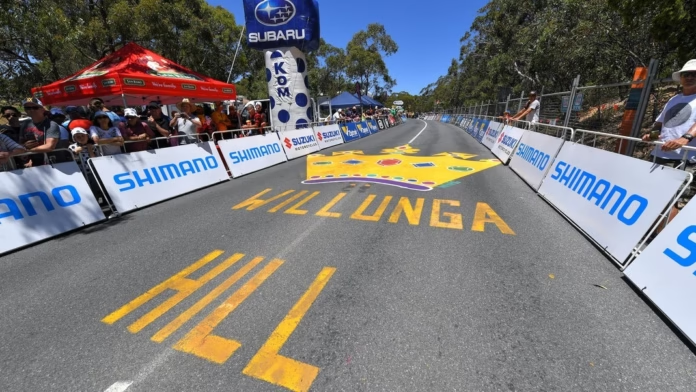
Stage four of the men’s Tour Down Under has been shortened and moved earlier in the day after warnings of extreme fire danger and forecasts of temperatures climbing as high as 43°C.
The most striking sporting change is that Willunga Hill has been removed from the route entirely. The peloton had been set to climb the race’s iconic ascent three times, in what was expected to be the defining day for the general classification.
The decision was taken following consultation with emergency services, including the Country Fire Service and South Australia Police, as well as riders and the UCI.
What has changed
Instead of the planned 176km stage, riders will now race 131km, with the start moved one hour earlier.
The stage will still head to Willunga, but without the climb, and will use the same finish location that was used for stage one of the women’s race earlier in the week. Even with the earlier start, conditions are still expected to be brutal, with temperatures likely to sit around 40°C during racing.
 Photo Credit: Getty
Safety guidance for spectators
Organisers have asked fans not to ride up Willunga Hill on Saturday because of the heat risk, and to follow advice from emergency services throughout the day.
Men’s Tour Down Under race director Stuart O’Grady said the priority had to be welfare over spectacle.
“While the removal of the famous Willunga Hill climb is disappointing news for cycling fans, ultimately rider and spectator safety is always the number one priority for our event,” O’Grady said.
 Photo Credit: Getty
How the race picture shifts
With Willunga removed, stage four is far less likely to provide a launchpad for the climbers and GC riders. In normal circumstances, repeated ascents of the hill thin the field, expose weaker teams, and create the time gaps that decide the overall. Without that terrain, the stage now looks much more like another day for the fast men, unless crosswinds or aggressive racing force splits elsewhere.
That change strengthens the hand of overall leader Jay Vine of UAE Team Emirates-XRG – winner of stage 2 here this year. With a gap of 1:05 over the first rider from another team, stripping out the major climbing test limits the most obvious opportunity for rivals to take back significant time in one hit. The emphasis for Vine now shifts to staying out of trouble, managing heat stress, and defending position rather than having to prove himself on Willunga.
Organisers have said stage five is expected to remain unchanged.
Heat protocol and why it matters
All UCI races follow the High Temperature Protocol, assessed using the Wet Bulb Globe Temperature index, which estimates heat stress in direct sunlight by combining multiple environmental factors. Based on the forecast, stage four would sit firmly in the high-risk bracket, which helps explain why officials opted for a meaningful redesign rather than smaller tweaks.

