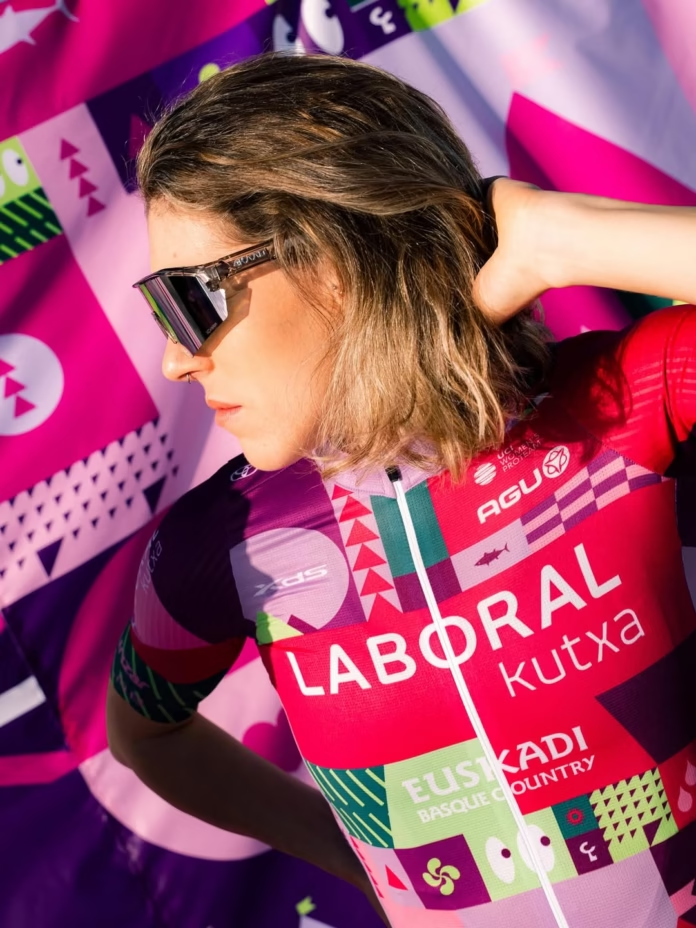
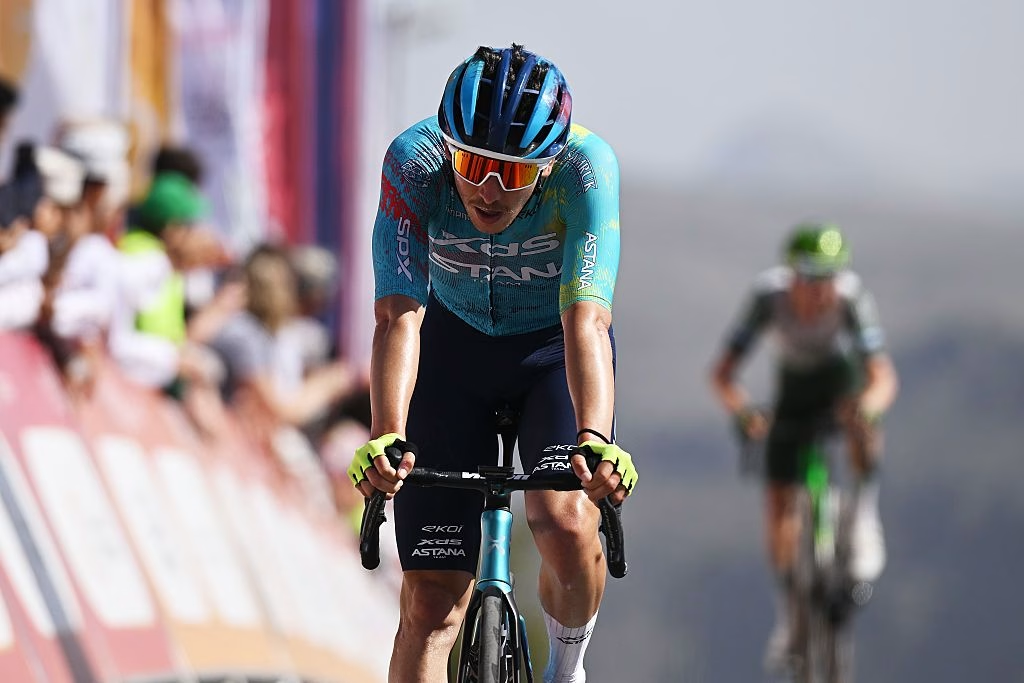
XDS Astana Team and Laboral Kutxa–Euskadi Women’s Team have signed a memorandum of technical and sporting cooperation for the 2026 season, with both organisations positioning the agreement as the first step towards a longer-term partnership.
XDS is a sponsor of both teams, and that shared link underpins the two main areas of the deal: an equipment-focused collaboration designed to speed up development and testing, and a rider development pathway intended to open doors for talented Kazakh cyclists to gain experience in international professional racing.
What the cooperation covers in 2026
The agreement is framed around two practical priorities.
Technical support, centred on bikes and equipment
XDS will play a “key role” in the cooperation through technical support, with the focus placed on the development, testing, and improvement of bicycles and their components, as well as other technical equipment. Laboral Kutxa–Euskadi will race on X-LAB bikes from XDS in 2026, reinforcing the idea that this is meant to be an active, season-long collaboration rather than a headline partnership that sits in the background.
What is notable is how clearly the language points towards a feedback loop: race use, test, refine, improve. In a sport where marginal gains are often found through repeatable detail, that kind of structured iteration can be as valuable as any single product launch.
A pathway for Kazakh riders through internships
The second strand is explicitly developmental. Laboral Kutxa–Euskadi will contribute to the development of women’s cycling in Kazakhstan by opening opportunities for talented Kazakh riders to compete in professional races around the world. The plan includes internships within the team structure, allowing riders to gain experience in major professional events, with the longer-term ambition that those riders can move towards professional contracts.
Both teams also stress that the cooperation respects sporting independence, with the agreement described as being founded on the integrity of each structure and compliance with UCI rules.
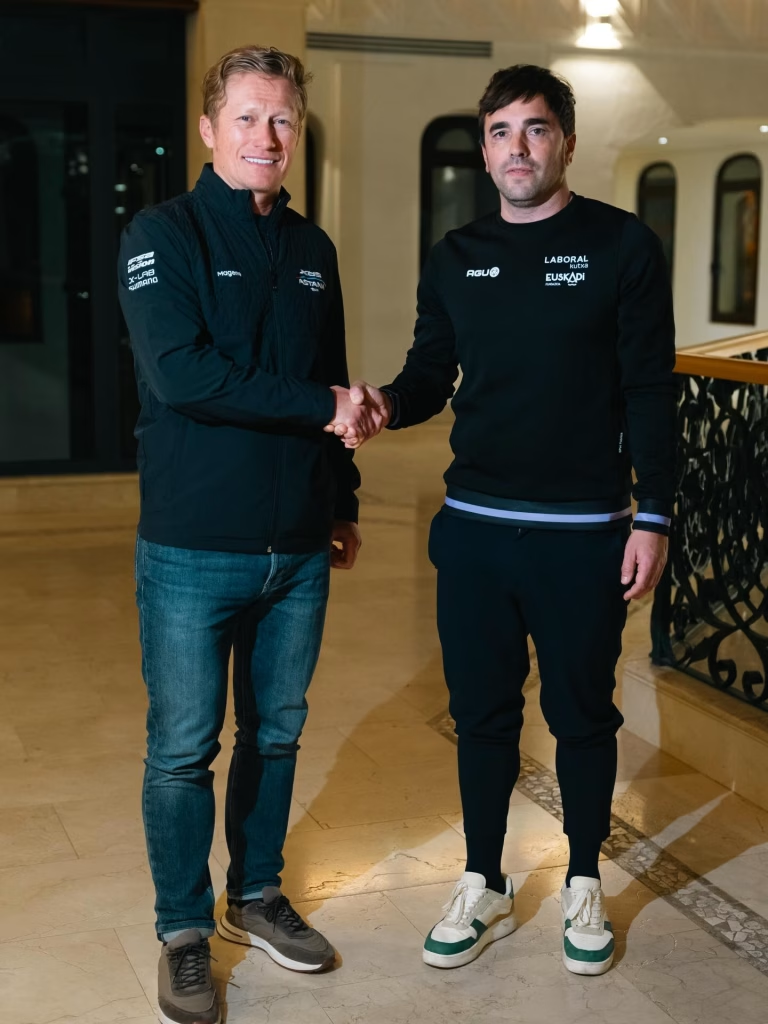
What Vinokurov and Laboral Kutxa have emphasised
Alexandr Vinokurov presented the agreement as a logical step given Laboral Kutxa–Euskadi’s recent results and trajectory, highlighting that the team finished 2nd in the ProTeam rankings last year with 12 victories, and stating that the team has already taken nine wins in the first month of the 2026 season. In his view, that performance level strengthens the case for a technical partnership between the two projects, while the internship pathway creates a direct opportunity for Kazakhstan’s best emerging riders to accelerate their learning inside one of the strongest ProTeam environments.
From Laboral Kutxa–Euskadi’s side, the message has been consistent: the agreement is framed as a strategic alliance designed to help the team keep growing in a sport that is becoming more professional and more demanding. The emphasis is on continuity of identity, long-term ambition, and a clear intent to contribute knowledge and experience to the broader development goal around Kazakhstan’s women’s cycling.
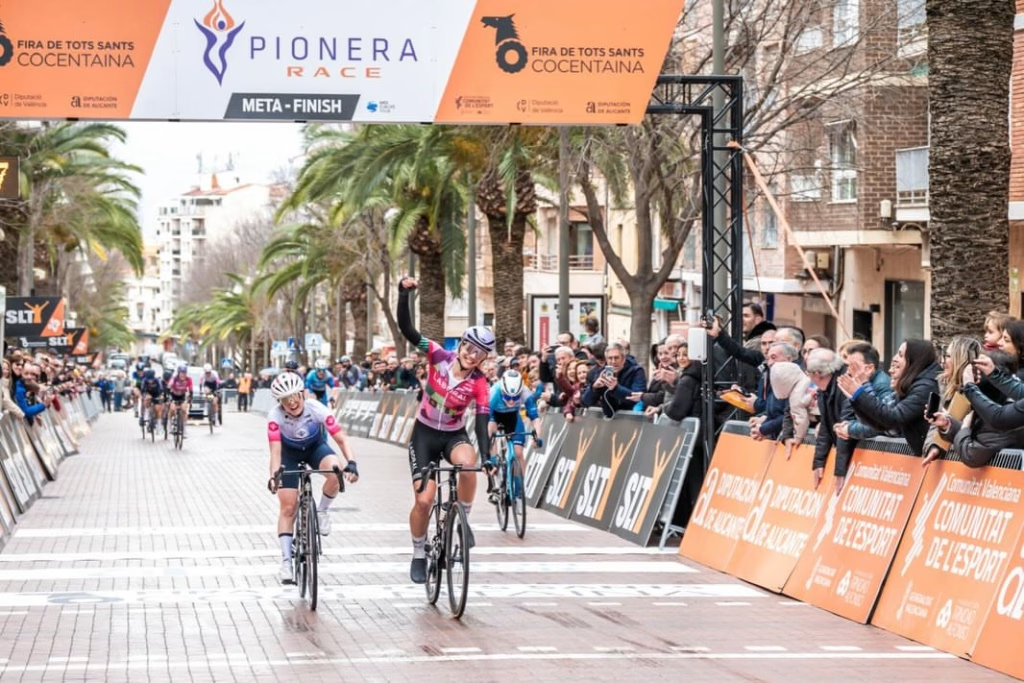
Laboral Kutxa’s early 2026 wins: the results behind the momentum
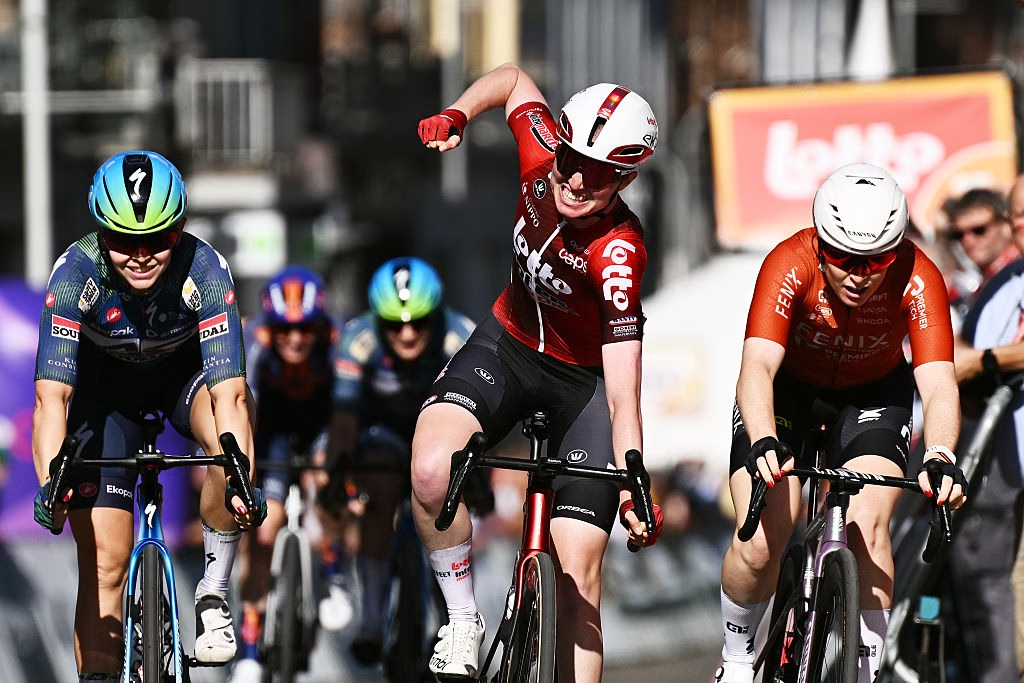
Laboral Kutxa–Euskadi have already started 2026 with a run of victories, particularly in El Salvador, and those wins give the cooperation immediate visibility in the racing calendar.
- Tour El Salvador | Prologue (2.1) – Catalina Soto Campos
- Tour El Salvador | 1st stage (2.1) – Majo van ’t Geloof
- Tour El Salvador | 3rd stage (2.1) – Catalina Soto Campos
- Tour El Salvador | 4th stage (2.1) – Paula Patiño
- Tour El Salvador (2.1) – Paula Patiño
- Grand Prix El Salvador (1.1) – Yuliia Biriukova
- Grand Prix Longitudinal del Norte (1.1) – Paula Patiño
- Grand Prix Oriente (1.1) – Majo van ’t Geloof
- Pionera Race-SCV (1.1) – Arianna Fidanza
Why this kind of agreement matters right now
This cooperation sits neatly in the current direction of women’s cycling. The top end of the sport is pushing towards higher standards across equipment, performance support, and pathways. At the same time, the talent base grows fastest when riders from developing programmes can access structured opportunities to race, learn, and adapt at a higher level.
If this memorandum delivers on both fronts in 2026, it will not just be a sponsor alignment. It will be a practical model of how technical development and rider development can move forward together, while keeping each team’s competitive identity intact.