
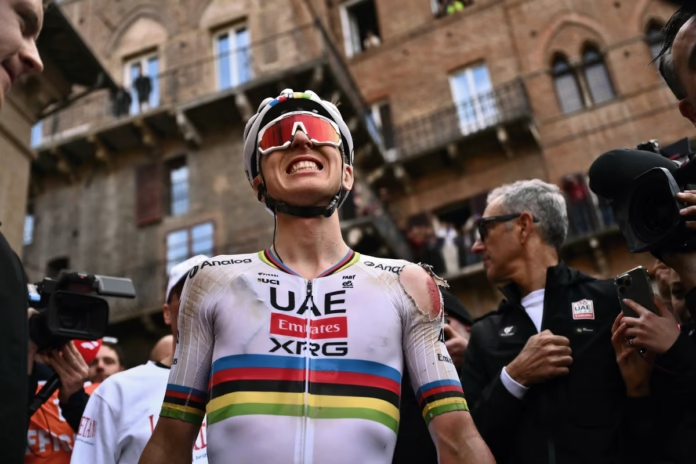
There are races, and then there is Strade Bianche. No other event in the modern calendar carries quite the same mythological weight per kilometre of road. The Tuscan sterrati, those ancient white gravel tracks winding through a landscape that has barely changed in centuries, have a way of reducing professional cycling to something elemental: grit, suffering, and the kind of beauty that makes you glad the sport exists. Many fans consider it the unofficial sixth Monument. In 2026, the race arrives at its twentieth edition, and Tadej Pogacar arrives with one very simple ambition: to win it for the fourth time in five years.
Strade Bianche History: How a Tuscan Gravel Race Became a Monument in All But Name
Strade Bianche was born in 2007, the brainchild of RCS Sport, the Italian organisation that also runs the Giro d’Italia, Milan-San Remo and Tirreno-Adriatico. From the very beginning, the concept was definitely simple: send the best riders in the world onto the unpaved white gravel roads, the sterrati, that criss-cross the rolling hills of the Crete Senesi south of Siena, and finish in the medieval heart of the city itself, on the extraordinary sloping piazza of the Piazza del Campo. It was a concept so obviously brilliant that it is remarkable nobody had done it before.
The first edition was won by Alessandro Ballan, and for several years the race remained a well-regarded but relatively niche fixture on the Italian calendar. That began to change in 2010, when Fabian Cancellara arrived and demonstrated that Strade Bianche rewarded the same qualities as the northern cobbled classics he dominated: power, technique on treacherous surfaces, and an iron nerve in the finale. Cancellara won again in 2012 and 2016, bookending an era and cementing the race’s reputation as something genuinely serious.
The 2014 edition gave the world one of cycling’s most enduring images. Michal Kwiatkowski soloed to victory, but it was the sight of Fabian Cancellara and Zdenek Stybar duelling through the dust in the finale that crystallised what made the race special. A year later, Moreno Moser and then Kwiatkowski again in 2017 kept the quality high. But the race was still building towards something.
 Photo Credit: BettiniPhoto
That something arrived in 2018, when rain turned the sterrati into something altogether more biblical. Tiesj Benoot emerged from the murk with a face caked entirely in brown mud, unrecognisable, barely human, the kind of image that stops a scroll and makes someone who has never watched cycling in their life suddenly want to know more. It was perhaps the single moment that launched Strade Bianche into the global consciousness. The photograph went everywhere. The race had arrived.
Julian Alaphilippe won a brilliantly judged edition in 2019, and then 2020 produced one of the most surreal days in recent cycling memory. Raced in August due to the pandemic, under an eerie, empty-roads silence, Wout van Aert came from behind in fog and fading light to run down Jakob Fuglsang and win by around 30 seconds. It felt like a dream sequence. The following year, Mathieu van der Poel produced a performance of such breathtaking power that it seemed to settle, once and for all, the debate about whether Strade Bianche belonged in the same conversation as Paris-Roubaix or the Tour of Flanders. It did. It does.
And then came Pogacar. His first win in 2022 announced that the race had a new overlord. His 2024 edition, in which he rode 82 kilometres alone after attacking on the very first gravel sector, is already talked about in the same breath as Cancellara’s most dominant classics performances, Merckx at his most imperious. In a remarkably short space of time, Strade Bianche has accumulated a history that feels far older than it actually is. Many races have tried to copy the sterrati formula, Paris-Tours among them. None has come close.
Strade Bianche Past Winners (2016 to 2025)
| Year | Winner | Team |
|---|---|---|
| 2025 | Tadej Pogacar | UAE Emirates XRG |
| 2024 | Tadej Pogacar | UAE Team Emirates |
| 2023 | Tom Pidcock | INEOS Grenadiers |
| 2022 | Tadej Pogacar | UAE Team Emirates |
| 2021 | Mathieu van der Poel | Alpecin-Fenix |
| 2020 | Wout van Aert | Team Jumbo-Visma |
| 2019 | Julian Alaphilippe | Deceuninck-Quick-Step |
| 2018 | Tiesj Benoot | Lotto Soudal |
| 2017 | Michal Kwiatkowski | Sky |
| 2016 | Fabian Cancellara | Trek-Segafredo |
Strade Bianche 2025 Review: Pogacar Wins Through the Pain After a Defining Crash
Tuscany laid on the full spectacle in 2025. The roads were pale and treacherous, the landscape holding its breath in the way it always does, and somewhere in the peloton, Tadej Pogacar was quietly plotting his moment. A young Dutchman, Pepijn Reinderink, started an early breakaway, but the real story was always behind him. UAE Emirates XRG kept the tempo punishing, the peloton thinned, and the only question was not whether Pogacar would attack but when.
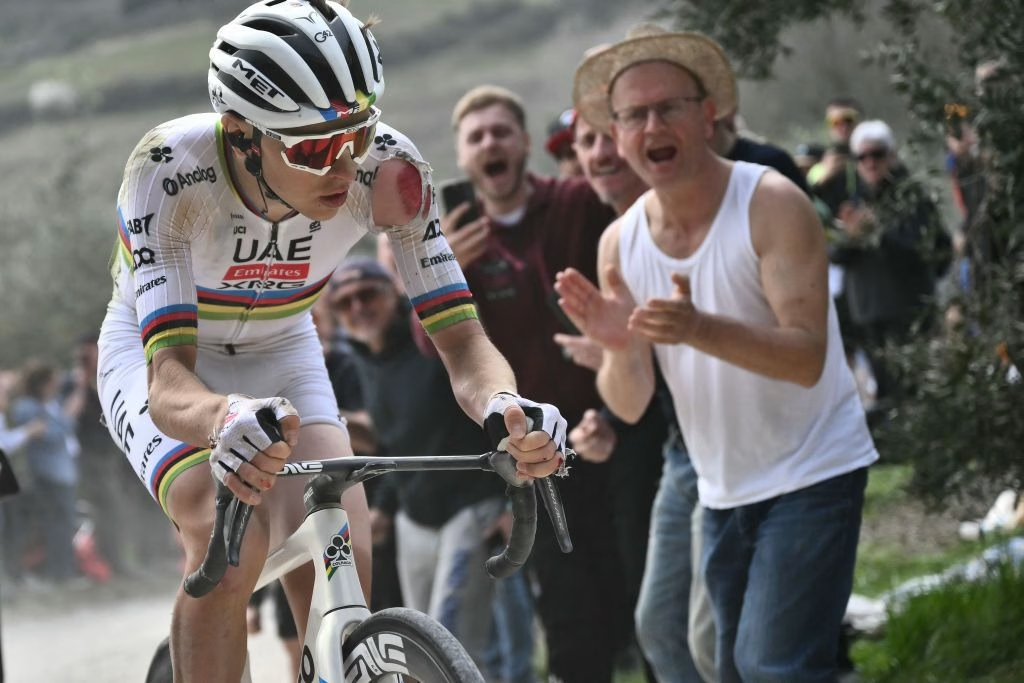
The answer came, unexpectedly, from Tom Pidcock first. Pidcock launched, Pogacar snapped onto his wheel in an instant, and the race was cracked wide open. Then came the moment that gave the 2025 edition its indelible drama: Pogacar misjudged a descent, slid wide and disappeared into the verge and undergrowth, shredding skin and pride in equal measure. A quick bike change, a considerable dose of willpower, and he was back in pursuit. Pidcock waited and checked on his rival, an act of sportsmanship that brought the pair back together for a tense, fragile finale.
The truce lasted until the Colle Pinzuto. Seated, controlled, almost casual in its authority, Pogacar accelerated. Pidcock tried to follow, held on briefly, and then simply could not. From that point, the world champion rode alone into Siena, battered and barely believable, sweeping down the Via Santa Caterina and into the Piazza del Campo to a reception that belonged more to a gladiator than a cyclist. Pidcock held on for second. Tim Wellens completed the podium in third.
Strade Bianche 2025: Final Result
| Position | Rider | Team | Time |
|---|---|---|---|
| 1 | Tadej Pogacar | UAE Emirates XRG | 5:13:58 |
| 2 | Tom Pidcock | Q36.5 Pro Cycling Team | +1:24 |
| 3 | Tim Wellens | UAE Emirates XRG | +2:12 |
| 4 | Ben Healy | EF Education-EasyPost | +3:23 |
| 5 | Pello Bilbao | Bahrain Victorious | +4:20 |
Strade Bianche 2026 Course Guide: Route Changes, Key Sectors and the Famous Finish
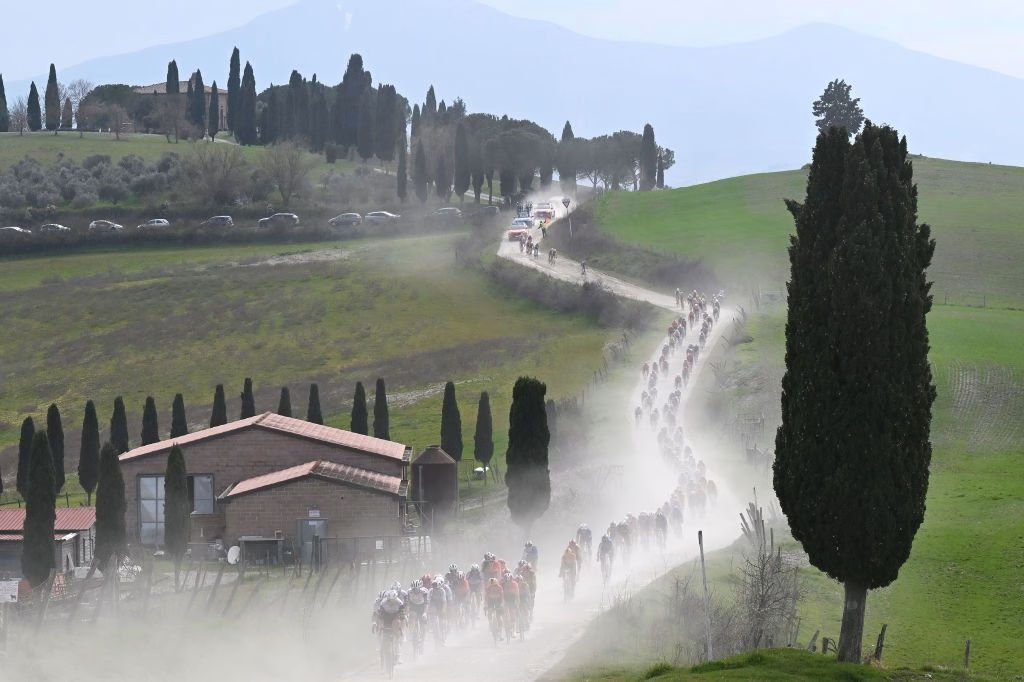
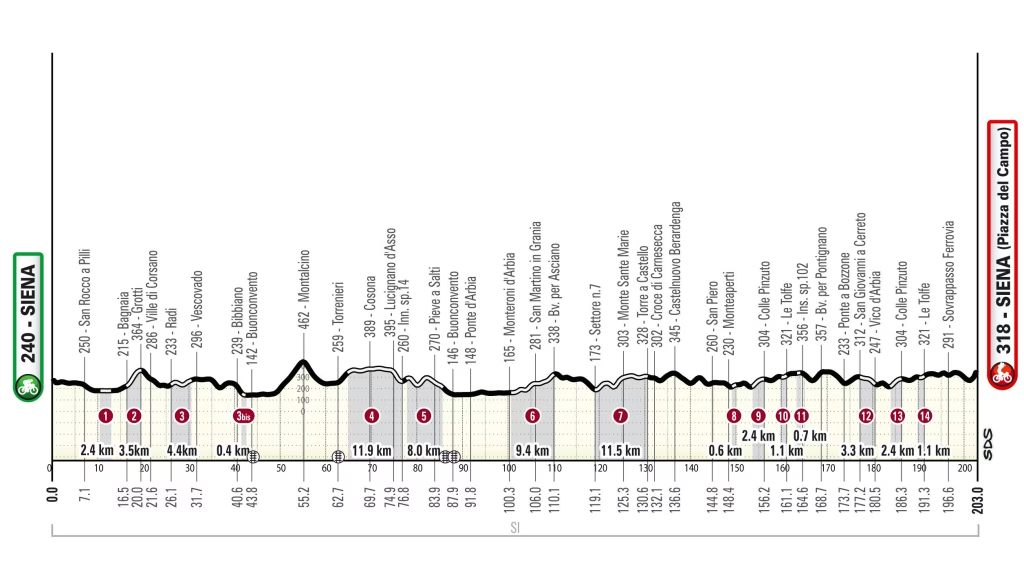
The 2026 edition arrives with a notable revision to the parcours. The organisers have removed sixteen kilometres of gravel and shortened the overall distance by twelve kilometres, bringing it down from 213km to 201km. The sectors that disappear are La Piana (6.4km) and Seravalle (9.3km), both of which appeared in the earlier, less decisive phase of the race. The opening Vidritta sector has also been halved, from 4.4km to a still-painful 2.4km. In total, riders will face 64.1km of unpaved roads rather than the eighty kilometres of recent years.
The question hanging over this decision is an obvious one. Is the organisation attempting to loosen Pogacar’s grip on the race? A shorter, punchier parcours theoretically opens the door to riders in the mould of Mathieu van der Poel, who won’t be taking part in 2026. The 2021 winner might be back in the future though.
Crucially, the finale has not been altered. The race still builds to its brutal conclusion through San Martino in Grania (9.4km of gravel) and Monte Sante Marie (11.5km), followed by the relentless series of shorter passages: Monteaperti (0.6km), Colle Pinzuto (2.4km), Le Tolfe (1.1km), Strada del Castagno (0.7km), Montechiaro (3.3km), a second passage of Colle Pinzuto (2.4km, now formally named after Pogacar following the placement of a commemorative stone this week) and a final Le Tolfe (1.1km). The finish on the Piazza del Campo, reached via the savage ramp of the Via Santa Caterina, remains one of the most iconic arrivals in world cycling.
Strade Bianche 2026: Race Details
| Detail | Information |
|---|---|
| Date | Saturday 7 March 2026 |
| Category | UCI WorldTour (1.UWT), Men Elite |
| Distance | 201km |
| Start and Finish | Siena, Italy |
| Scheduled Start | 10:40 GMT (11:40 CET) |
| Expected Finish | Approx. 17:43 GMT (16:43 CET) |
| Total Gravel | 64.1km across multiple sectors |
Strade Bianche 2026 Favourites: Who Can Stop Tadej Pogacar Winning Again?
The Clear Favourite: Tadej Pogacar
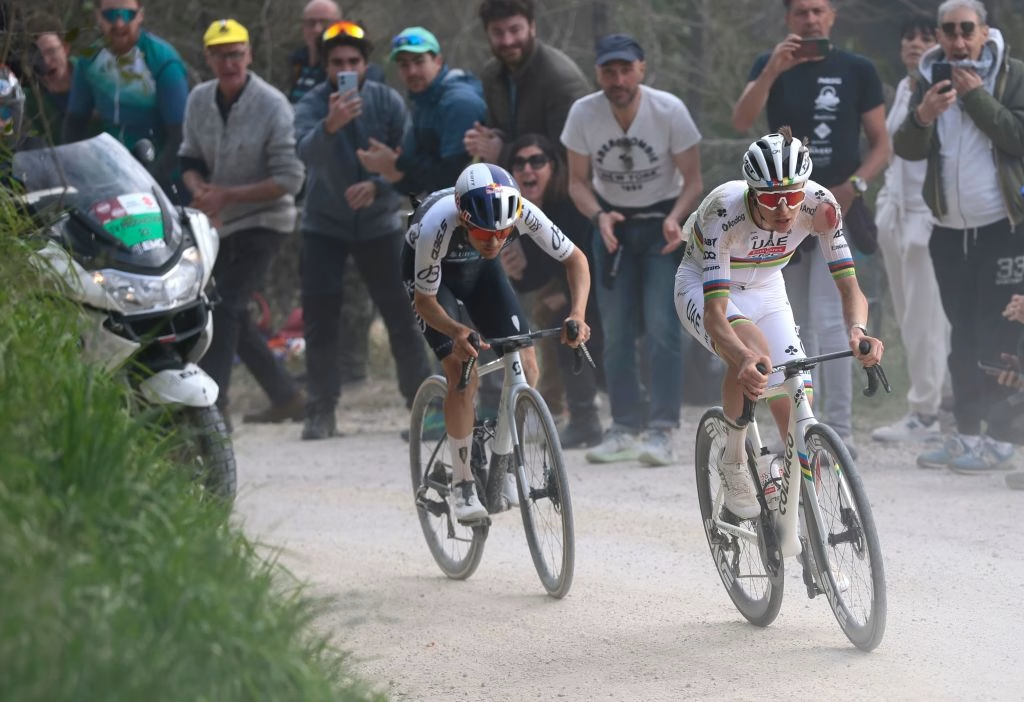
A blank 2026 palmarès next to Tadej Pogacar is not a warning sign; it is simply a reminder of how he chooses to build his season. He has arrived at this race without any soft launch before, and the evidence is almost absurd. In his 2024 opener, he rode 82 kilometres solo across the sterrati to win, turning what should have been a chaotic one-day fight into a controlled exhibition of strength and timing. A year earlier, his return to racing began with a 36-kilometre solo at Clásica Jaén, another day on gravel where he treated the decisive move as something to be made, not something to be answered. The broader record is even more straightforward: three wins from the four editions he has started, with the only interruption being a year he did not line up at all. There is no obvious seam for Strade Bianche to pull at, no vulnerability the course reliably exposes in him, and the slightly trimmed route does not change what matters. Until somebody proves they can beat Pogacar on these roads, every realistic preview still begins with him and ends with him.
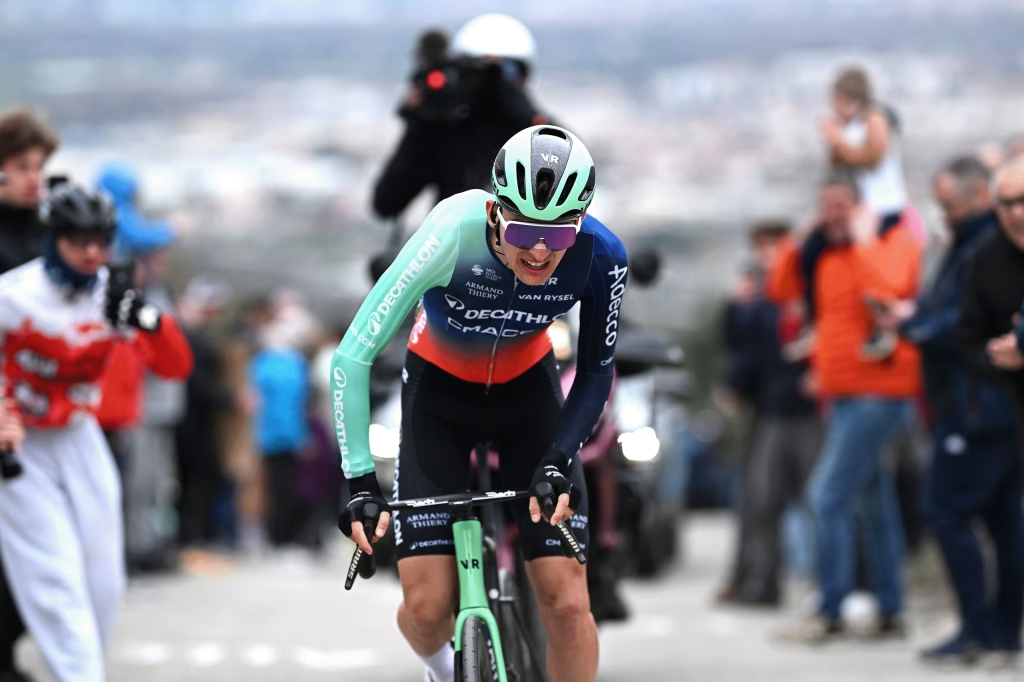 Photo Credit: Getty
Main Contenders
The most fascinating unknown in this line-up is Paul Seixas, a 19-year-old who is moving from prospect to reference point at unsettling speed. Even in his first professional season last year, he delivered results that would be career peaks for many riders: 7th at Il Lombardia, 3rd at the European Championships, and 13th at the World Championships in Rwanda. Since then, he has stacked early-season proof on top of promise, taking a mountain stage at the Volta ao Algarve and then winning the Faun-Ardèche Classic solo. What stands out is not just the victories, but the ease with which he took them, as if the race was waiting for him to decide it was over. When people reach for the obvious comparison to Tadej Pogacar, it is not hype for its own sake; it is because the trajectory is beginning to look familiar.
Every time Tom Pidcock starts Strade Bianche, he ends up in the top five, which is about as clean a record as you will find for a race this chaotic. Across four appearances he has never missed, including victory in 2023, and last year he went toe-to-toe with Pogacar in a duel that felt close on intent and aggression, even if the decisive separation came later on Colle Pinzuto. He has already picked up a stage win at the Ruta del Sol this spring, and that matters because it confirms his legs are there, not just his skill set. The Omloop clothing mishap is background noise. On this terrain, he is one of the few riders who can ride with freedom and still be tactically correct.
 Photo Credit: Getty
For Isaac Del Toro, the past Strade Bianche finish line tells you less than the rider he has become in the past month. His 33rd place last year reads like a limitation, yet the version of Del Toro who has just won two stages and overall at the UAE Tour is operating on a completely different level. He will start the day as a key part of UAE’s plan for Pogacar, but this race has a habit of turning strong helpers into protected riders when the favourites begin marking each other. If Del Toro is still there after Le Tolfe, the idea of him finishing on the podium stops being a theory and becomes a live scenario. UAE have the depth to place two riders in the top three if the race fractures in the right way.
If the finishing effort becomes the decisive filter, Romain Gregoire is immediately relevant. The Via Santa Caterina climb is exactly the sort of sharp, punishing finale that suits a rider with his punch, and he has already shown he can handle the broader demands of this race by taking 8th on debut in 2023. What changes the tone this year is his condition, because he arrives off a win at the Drôme Classic last weekend and a solid Ruta del Sol that suggests he is not just sharp, but resilient. The question with Gregoire has always been whether he can absorb the heavy middle portion of Strade Bianche and still have that final snap. If he hits Le Tolfe with his legs intact, he becomes one of the most dangerous riders to bring into Siena.
There is a quieter but still significant curiosity around Matteo Jorgenson, who gets his first look at Strade Bianche this year with a form line that suggests he is ready for it. He has come close in recent races without quite finishing the job against riders like Gregoire and Seixas, but that is not necessarily a negative. It shows he is consistently in the right moves, and that his conditioning for the hilly classics focus in 2026 is already close to peak. The remaining unknown is what happens when the race boils down to a truly explosive, short finish. If he stays calm, races economically, and lets others light the match, he has the engine to still be there when it counts, and that is often the first step to surprising a few people on these roads.
Dark Horses Worth Watching
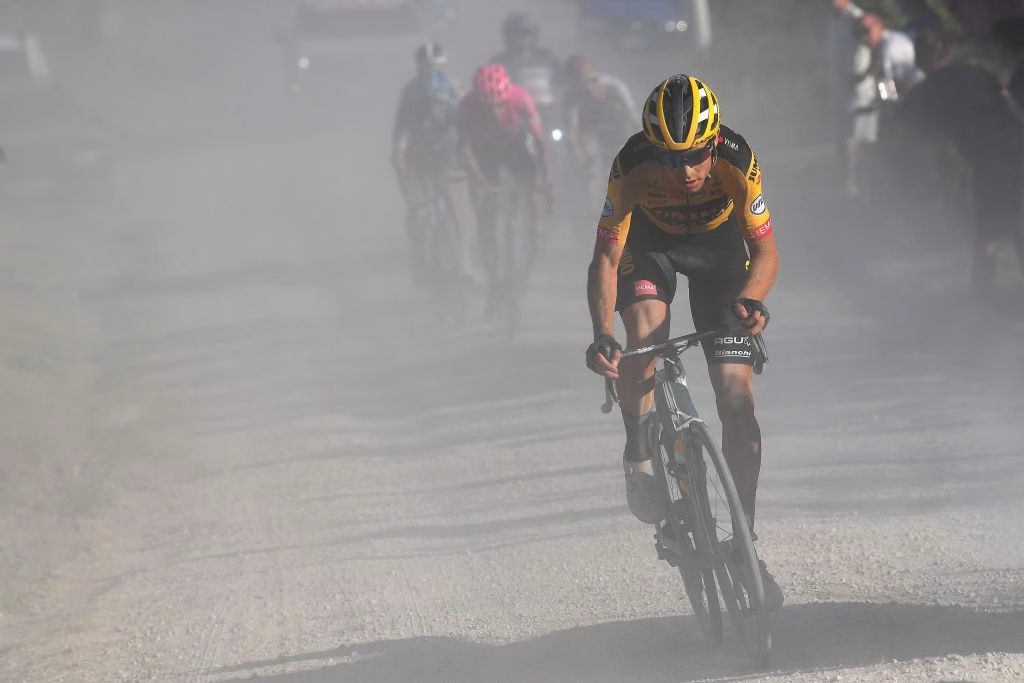
In a normal year, Wout van Aert would sit much higher in the pecking order. The ankle fracture that disrupted his 2025 season still hangs over him as an unknown, and illness kept him out of the Flemish opening weekend altogether, which means there is no recent race evidence to pin his condition to. What remains undeniable is the depth of his record here: 2nd, 3rd, a win in 2020, and 4th is a set of results almost nobody else in this field can match. Recent training camp photos hint at a rider who looks lean and ready, but until he is forced to respond on gravel at race intensity, he stays in that awkward category of contender by reputation rather than certainty. A fully fit Van Aert on these roads is one of the hardest riders in the world to control, yet right now he is still a question waiting for an answer.
The form line, by contrast, points sharply towards Jan Christen. The 21-year-old has started 2026 with the kind of momentum that usually precedes a breakthrough: overall victory at the AlUla Tour, the speed to be in the mix at Clásica Jaén before disqualification, then 2nd at the Ardèche Classic and 4th at the Ruta del Sol. He has the engine to survive repeated gravel sectors and the kick to do damage when the road pitches up towards the finish, which is the combination this race keeps demanding. With Tadej Pogacar and Isaac del Toro alongside him, the UAE scenario is not simply about one leader; it is about how many ways they can arrive in the finale with numbers. An all-UAE podium is not a fantasy if the race breaks in the expected places.
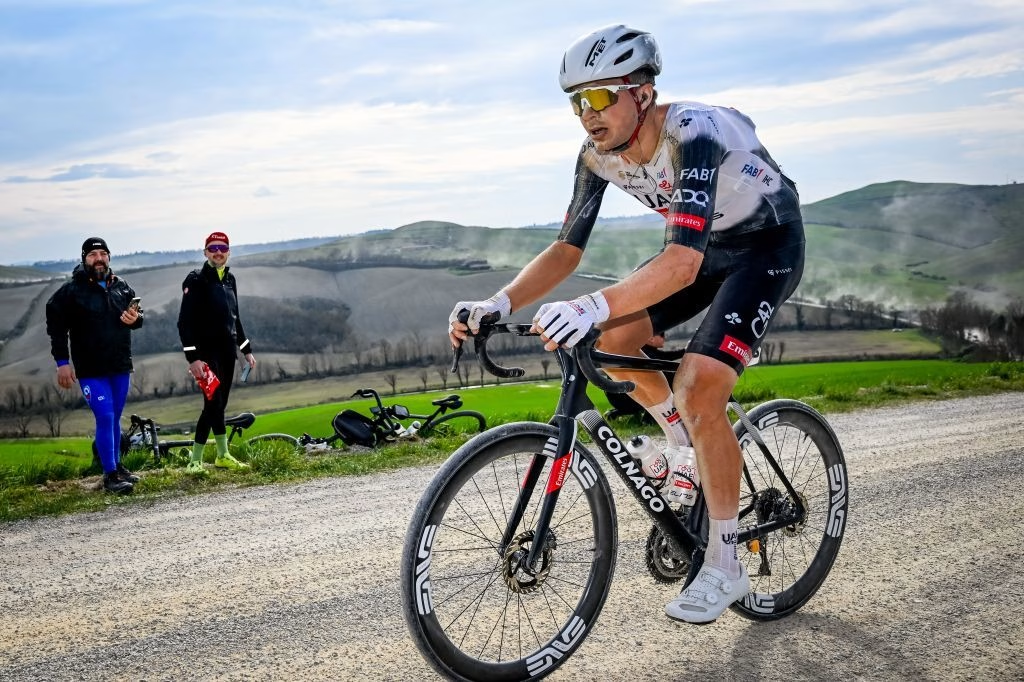 Photo Credit: Getty
There is also a very specific reason to take Florian Vermeersch seriously on a route built around long stretches of gravel. As the reigning gravel world champion, he brings a skill set that translates directly to 64 kilometres of unpaved Tuscan roads, especially when the speed rises and the line choices begin to matter as much as raw power. He was visible through opening weekend and backed that up with 3rd at Omloop Het Nieuwsblad, form that suggests he is already moving well. The only real uncertainty is not his ability, but his assignment within the UAE plan. If he is asked to work all day for the bigger names, his chances narrow. If he finds himself with a licence in the final phase, he has the tools to ride onto the podium.
After losing last spring to injury, Paul Lapeira has begun 2026 with the urgency of a rider determined to catch up on what he missed. Winning the Tour des Alpes-Maritimes was a statement of intent, and 5th at the Drôme Classic last Sunday underlined that it was not a one-off. At 25, he is reaching the point where puncheurs often sharpen into complete one-day racers, and the finish in Siena suits him because it rewards timing, punch, and the ability to keep producing accelerations after hours of attrition. If he arrives at the Piazza del Campo with the front group, he is exactly the kind of rider who can turn a top-10 into something much bigger.
Strade Bianche 2026 Outsiders: The Riders Who Could Spring a Surprise
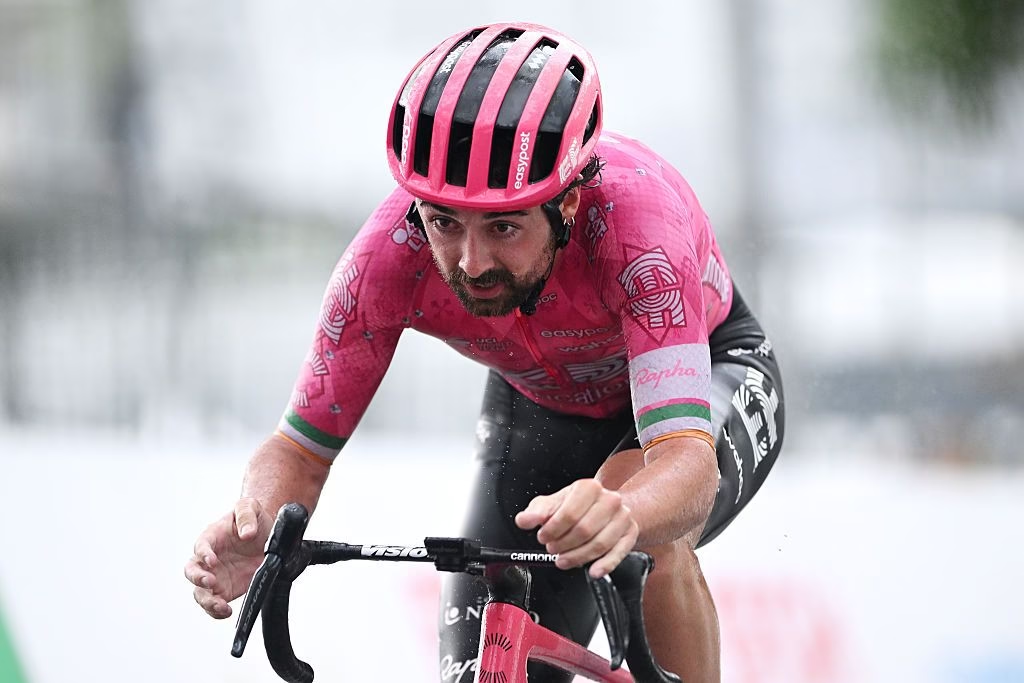
Ben Healy comes in with a recent reference point that matters, 4th here last year, and his best weapon is still the same one: the kind of long-range move that turns a settled race into a series of panicked calculations. The question is whether he has the snap to make that stick this time, after looking a touch off the pace in the Ardèche and Drôme last weekend. Giulio Pellizzari is easier to sell on momentum, having shown encouraging early-season legs at the Tour of Valencia, and a big ride on home roads would feel like a natural next step. For Lennert Van Eetvelt, the case is built on steady progression rather than a single headline result, 11th and 9th here across the past two editions, backed up by a solid UAE Tour for Lotto-Intermarché that suggests he arrives ready to race rather than simply survive.
Even with that depth, it is hard to write off Julian Alaphilippe at a race like this, because its rhythm and unpredictability still suit riders who can change the shape of the finale in one acceleration. Behind him, there is a cluster of riders with proven top-ten level on this course: Roger Adria, Pello Bilbao, Valentin Madouas, Matej Mohoric, Quinn Simmons, Attila Valter and Gianni Vermeersch all have the kind of previous-edition form that becomes important when the race turns into a selection rather than a pure sprint. Among the debutants, Tibor Del Grosso, Axel Laurance, Tobias Halland Johannessen and Clement Champoussin are the names to track as the race develops, while Albert Philipsen is the one to watch with curiosity, not because comparisons win races, but because the fact people are already making them tells you how high his ceiling might be.
Strade Bianche 2026 TV Coverage, Live Stream and Start Times by Country
Saturday looks like a fine day for racing in Siena. Temperatures are forecast to reach around 15°C, with negligible wind at Force 2 from the east-northeast. Light rain is possible during the afternoon, which will not make the race harder so much as muddier, conjuring memories of that extraordinary Tiesj Benoot-winning edition in 2018.
-
 Photo Credit: Flavia Ossola
Coverage is expected to start at 2:45pm GMT.
| Broadcaster | Country | Platform |
|---|---|---|
| TNT Sports 1 | UK | TV and Discovery+ |
| RAI Sport | Italy | TV and RaiPlay (free stream) |
| Sporza / VRT1 | Belgium | TV and VRT Max (free stream) |
| L’Equipe TV | France | TV and lequipe.fr |
| SBS6 | Netherlands | TV and Ziggo Sport |
| Viaplay | Norway, Sweden, Denmark, Finland | Streaming |
| HBOMax | USA and International | Streaming (subscription) |
| FloBikes | Canada | Streaming |
| SBS | Australia | TV and SBS On Demand (free stream) |
| DAZN | Canada, Germany, Spain, Japan | Streaming (subscription) |
| Cycling.TV | International | Streaming (subscription) |
All broadcast times are subject to change. Check your local listings for the latest schedule updates.

