
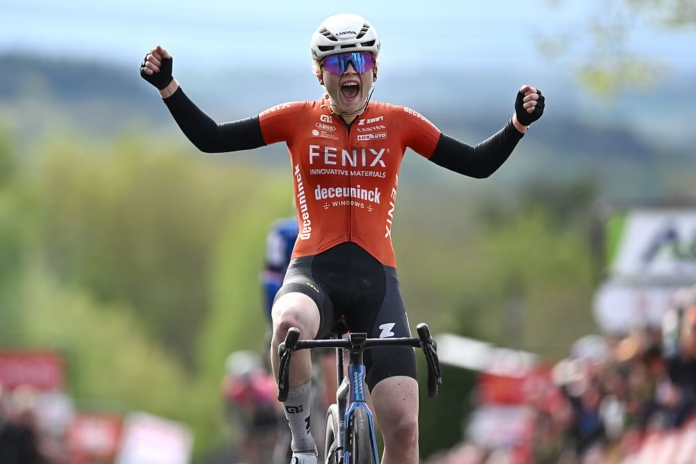
Puck Pieterse’s 2026 spring calendar is not built around caution. It is built around range.
That is the first thing that stands out. This is not the programme of a rider being protected from too many different demands, nor one that narrows her spring into a single type of race. Instead, Fenix-Deceuninck appear to be leaning fully into what makes Pieterse so compelling in the first place: she can make sense in races that should not always suit the same rider.
The programme opens with an Italian block, then rolls straight into the heart of the cobbled and hilly Classics. That means gravel, cobbles, punchy climbs, long attritional one-day races and a full Ardennes finish to the spring. It is a packed schedule, but it also feels logical. Pieterse is no longer being treated as a rider with one obvious niche. She is being treated as a rider who can shape the spring in several different ways.
Puck Pieterse’s 2026 spring Classics programme
Pieterse is set to race:
- Strade Bianche
- Trofeo Oro
- Milano-Sanremo Women
- Dwars door Vlaanderen
- Tour of Flanders Women
- Paris-Roubaix Femmes
- Amstel Gold Race
- Flèche Wallonne
- Liège-Bastogne-Liège
What this schedule tells us
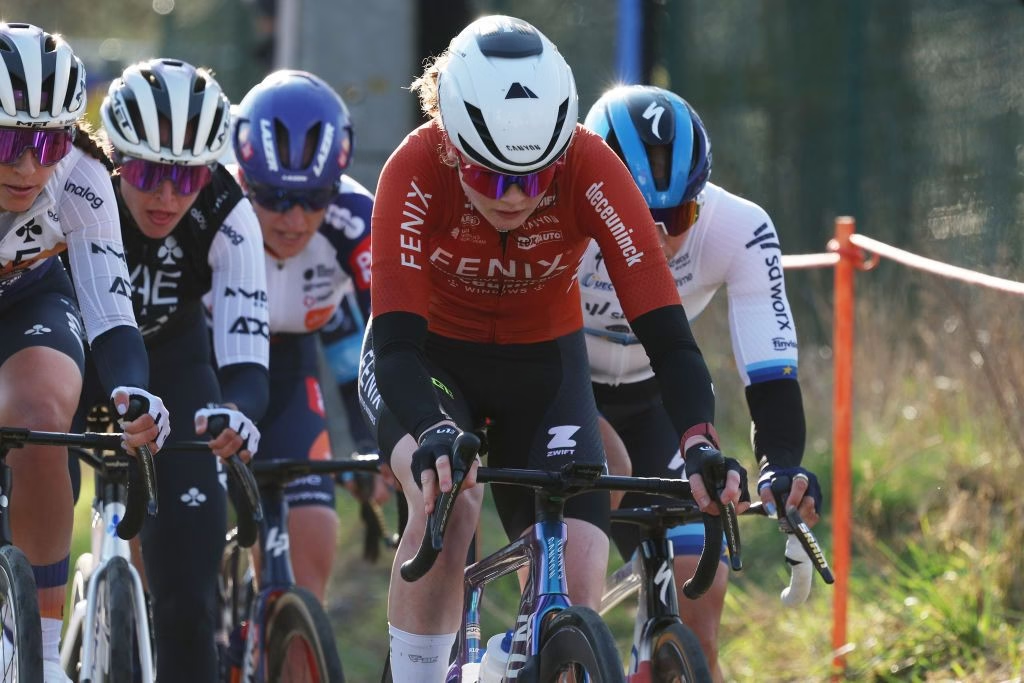
The simplest reading is probably the right one: Pieterse is being sent into almost every major one-day scenario the spring can offer.
That matters because these races do not all ask the same questions. Strade Bianche and Trofeo Oro reward aggression, technical confidence and the ability to keep handling repeated efforts on rougher roads. Milano-Sanremo asks for patience and perfect timing. The Flemish block demands positioning, cobble handling and repeated power under pressure. Then the Ardennes shift the focus toward climbing punch and selective race craft.
For most riders, that would feel too broad. For Pieterse, it feels accurate.
That is really the point of the programme. It does not narrow her identity. It reflects it.
The Italian opening makes immediate sense
Starting with Strade Bianche, Trofeo Oro and Milano-Sanremo is a very revealing way to begin the spring.
Strade Bianche is the most obvious fit. Gravel, repeated surges, technical handling and a finale that rewards riders who can stay composed while the race keeps splintering. That has always looked like natural ground for Pieterse. She is one of the few riders in the peloton whose off-road background is not just an interesting extra, but something that actively changes how races like this can be approached.
Trofeo Oro then feels like a strong bridge into the rest of the spring. It is less globally prominent than some of the races that follow, but it still suits a rider who can attack, corner well and handle a more selective one-day rhythm.
Then comes Milano-Sanremo Women, which is a very different kind of challenge. That race is more about restraint than force for much of the day, and that makes it one of the more intriguing entries in her programme. The question there is not whether she has the talent for it. It is whether she can solve the race at exactly the right moment on the Cipressa or Poggio rather than trying to overpower it too early.

The cobbled block is where the spring gets more ambitious
The middle of the programme is where the schedule starts to feel bold rather than simply logical.
Dwars door Vlaanderen, Tour of Flanders Women and Paris-Roubaix Femmes form the most demanding section of the northern spring. They are linked by surface and geography, but they are very different races.
Dwars door Vlaanderen is probably the most open of the three. It rewards riders who can handle cobbles and climbing, but it still leaves a slightly wider range of possible winners. That makes it a useful entry point in this part of the schedule and perhaps one of the clearest chances for Pieterse to turn her versatility into a result.
Flanders is a bigger and more exacting test. It is the race that exposes whether a rider can stay in control when the steep cobbled climbs begin to repeat themselves mercilessly. Pieterse has the explosiveness and technical ability to make sense there, but Flanders is never only about talent. It is about timing, road position and answering the same hard question again and again.
Paris-Roubaix Femmes may be the most fascinating race in the whole programme. On paper, Pieterse has all sorts of qualities that should translate, confidence on the bike, comfort on rough surfaces and the willingness to stay committed when races become unstable. But Roubaix is always its own world. It rewards nerve as much as strength. That makes it a race where her ceiling feels high, but the route to the result is never straightforward.
The Ardennes finish is what makes the whole programme feel complete
Amstel Gold Race, Flèche Wallonne and Liège-Bastogne-Liège are not just a tidy end to the spring. They are the races that make the whole calendar feel like a full statement.
This is where Pieterse’s programme stops looking like that of a multi-surface talent testing herself everywhere and starts looking like that of a rider expected to contend across the whole top end of the one-day season.
Amstel is probably the most fluid of the three, and in some ways the most naturally open to her. It is tactical, punchy and often won by a rider who reads the finale as well as she rides it. That feels like a very plausible Pieterse race.
Flèche Wallonne is much more specific. The Mur de Huy asks for one violent answer at the end of a hard day, and there is nowhere to hide. That makes it one of the more specialised races in the programme, but also one where her climbing punch could still make her dangerous if she arrives in the right position.
Liège-Bastogne-Liège is the broadest and deepest test. It asks for endurance, judgement and the ability to keep making the right decisions when the race has already started to empty the field. If Pieterse is still riding strongly by then, Liège becomes a measure of just how far her one-day range really stretches.

What to watch for across the spring
The most interesting thing about this programme is not whether Pieterse can be competitive. She can.
The more revealing question is where she starts to dictate races rather than simply animate them. In some events, Strade Bianche, Dwars door Vlaanderen and Amstel Gold Race in particular, it is easy to picture her actively shaping the winning move. In others, like Milano-Sanremo, Flanders or Roubaix, the question is a little more about how her strengths translate when the race asks for a slightly different rhythm or a more specific kind of control.
That is what makes the schedule so good. It does not just give her chances to win. It gives the season a way of measuring exactly what kind of Classics rider she is becoming.
Why this spring matters
This feels like the programme of a rider moving from possibility to expectation.
Pieterse has had the talent for some time. What a schedule like this does is place that talent under the brightest possible spring spotlight. If she rides well, it will not be in one niche corner of the calendar. It will be across almost the full spread of one-day racing that matters most in March and April.
For Fenix-Deceuninck, that is a powerful position to be in. For the rest of the peloton, it is a warning. Very few riders can arrive at Strade Bianche, Flanders, Roubaix and Liège in the same spring with a believable case in all of them.
Puck Pieterse can. That is what makes her 2026 Classics programme so interesting.

