Trofeo Alfredo Binda rarely gives you a neat answer to the spring, but it usually gives you a useful one. This year, it gave several.
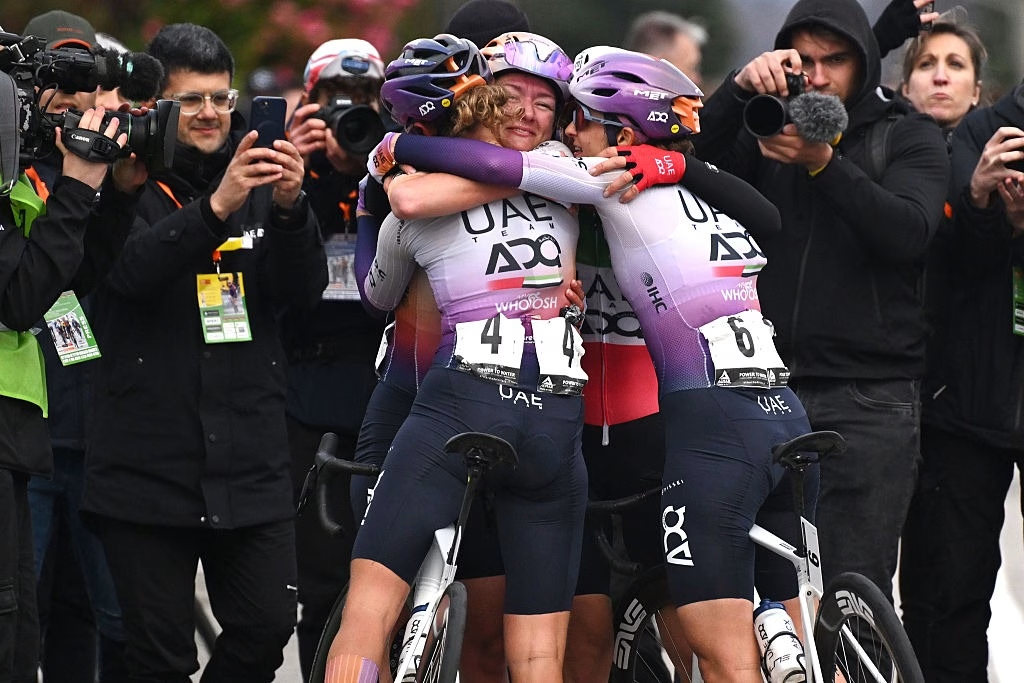
Karlijn Swinkels won from a three-rider move ahead of Anna van der Breggen and Mie Bjørndal Ottestad, taking her first Women’s WorldTour victory in a race that only really settled once the repeated pressure of the circuits had stripped the day down to its strongest riders. That alone made it significant. The way it happened made it more so.
Binda sits in a very revealing slot on the calendar. It is early enough that not every hierarchy is fully fixed, but late enough that riders can no longer hide behind the idea that they are still building. What happens here usually tells you something real. The 2026 edition said quite a lot.
For the race itself, ProCyclingUK’s Trofeo Alfredo Binda 2026 race report and 2026 Trofeo Alfredo Binda race preview are the best companion pieces.
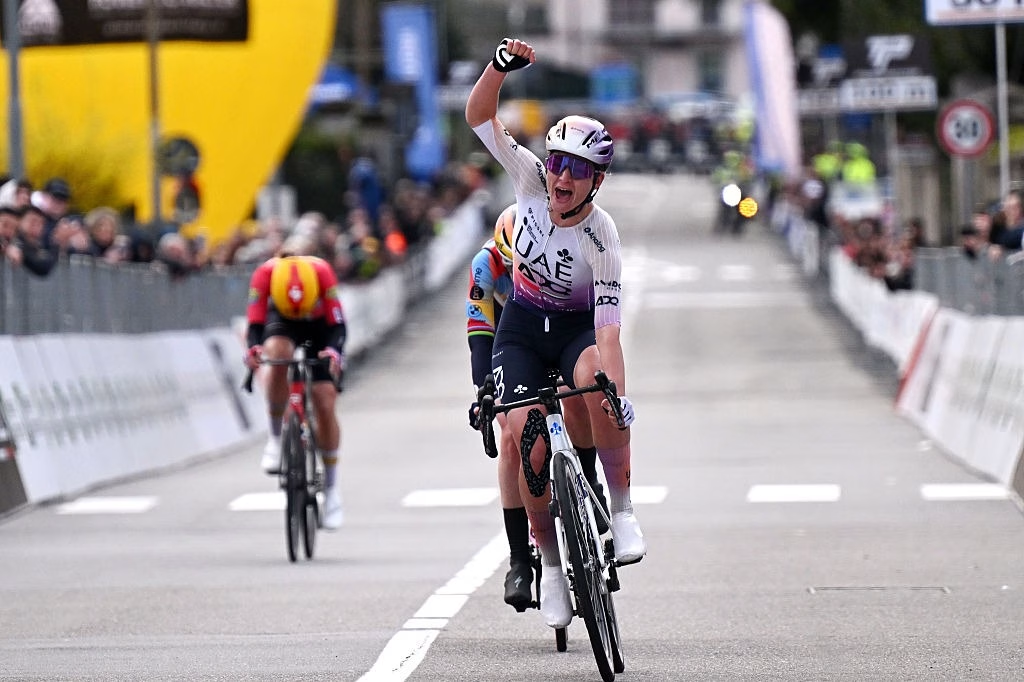 Photo Credit: Getty
Karlijn Swinkels is no longer just a useful card in a strong team
This is the biggest takeaway from the race and probably the one that will travel furthest into the rest of the spring.
Swinkels was already respected. She was already the sort of rider who made sense in hard one-day races and who kept appearing in the right part of the results. But a first Women’s WorldTour win changes the tone around a rider, especially when it comes in a race like Binda. This was not a soft opening, not a reduced field, and not a result built on chaos alone. It was a proper, selective one-day race, and she finished it off against two riders who made very different kinds of demands.
That win also breaks a pattern that had started to define her career. Swinkels had already built up eight Women’s WorldTour podiums without a win, leaving her second on that particular list behind only Soraya Paladin on 12. She was also joint-second for Women’s WorldTour top-5 finishes without a win on 18, level with Maria Giulia Confalonieri, with Paladin again out on her own on 33. That sort of record can become a weight if it drags on long enough. Instead, Binda turned it into a footnote.
That matters because the spring is not just about strength. It is about changing status at the right moment. Swinkels is no longer simply a very good option inside a strong team. She is now a genuine Women’s WorldTour race winner, and rivals will start reading her differently because of that.
UAE Team ADQ look deeper and more dangerous than before
Swinkels’ winning is one thing. The way UAE Team ADQ shaped the race is another.
The team forced the split and still ended the day with the rider who had the fastest finish from the decisive move. That tells you something useful about their spring. This is not a team relying on one obvious script. It is a team with multiple ways to win and enough confidence to shape races before the final kilometre.
That matters in the coming weeks because one-day racing in March and April is often won by teams who can make the race uncomfortable before everyone else is ready. UAE looked very capable of doing that in Cittiglio. More importantly, they now have another rider who has proved she can convert that work into the biggest result of her career.
It gives the team more flexibility, and spring rivals tend to dislike flexibility more than almost anything else.
Anna van der Breggen is not just present; she is shaping races
Second place in itself does not always mean very much. This second place did.
Van der Breggen did not simply survive Binda through class and memory. She was one of the riders who helped turn the final phase of the race into a real elimination test. That is the key point. This was not a nostalgic podium built on knowing where to be. It was a podium built on still being able to help define how the race was ridden.
That is significant because Binda is exactly the sort of event that reveals whether a rider’s spring form is decorative or meaningful. It is not the Ardennes, but it does ask for repeatability, positioning and the ability to keep making the right decisions once the race starts to harden. If Van der Breggen is already this close to the sharp end in mid-March, then the conversation around the rest of her spring changes.
This result does not prove that the old dominance is simply back. That would be far too easy a conclusion. But it does suggest that she is no longer only present in the right races. She is starting to shape them, and that is a much more consequential thing.
Her wider schedule still points that way too. ProCyclingUK’s Anna van der Breggen’s 2026 spring Classics programme already framed Binda as one of the races that would tell us whether the spring was becoming more serious than sentimental. It now clearly is.
Mie Bjørndal Ottestad is turning from outsider into a real favourite
Ottestad finishing third matters because it fits a broader trend rather than standing alone.
The Binda podium was not built around one rider sneaking into the right move and hanging on. It was built around three riders who were strong enough to survive the repeated selection of the race and still have something left at the finish. Ottestad being one of them, says plenty. She increasingly looks like the sort of rider who thrives when one-day races stop being tidy and start becoming attritional.
That is exactly the sort of profile that keeps resurfacing once the spring deepens. Riders like that may not always start as the headline favourite, but they keep finding their way into the decisive part of the race, and that makes them increasingly hard to dismiss.
Binda suggested Ottestad belongs firmly in that group now. The coming weeks should confirm whether she can turn that into something even bigger.
Trofeo Alfredo Binda still rewards durability over noise
This may be the most useful race-level lesson of all.
Pre-race conversation often gravitates toward the biggest names, the most obvious storylines and the riders who feel easiest to imagine winning. Binda has a habit of stripping that away. It asks riders to keep answering the same question, lap after lap, climb after climb, rather than giving them one spectacular moment to rescue the day.
That is exactly what happened again here. The result was not random, and it was not built on hype. It was built on repeatable strength.
That is why Binda remains such a useful marker for the rest of the spring. Riders who go well here usually have something durable about them. They are not simply landing one big finish. They are coping with a race that keeps asking them to prove the same thing in slightly different ways.
For a race that can sometimes be dismissed as a reduced-sprint classic, it continues to say quite a lot about what comes next.
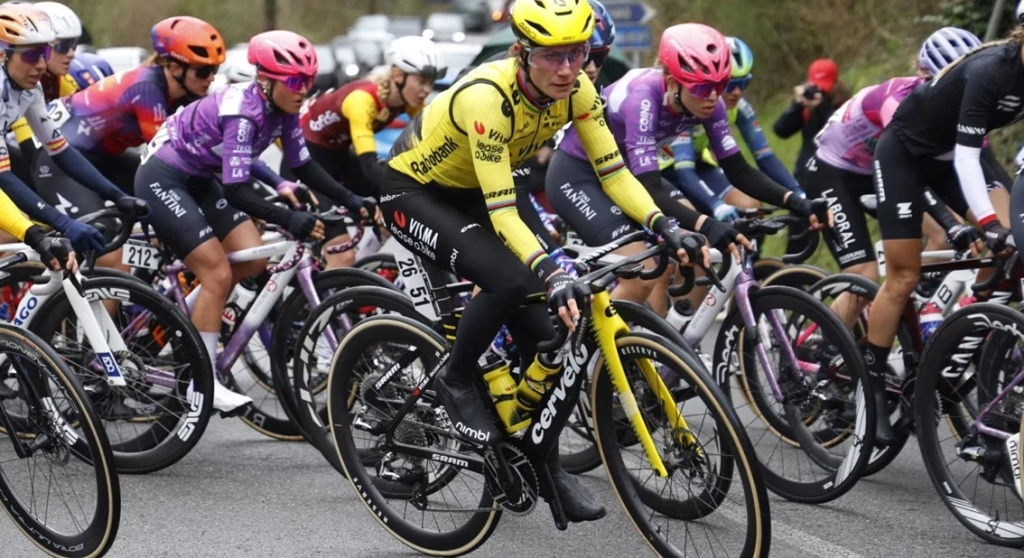 Photo Credit: Cor Vos
Marianne Vos still belongs in the relevant group
Vos finished sixth, and while that is not the headline result of the day, it still matters.
Not because sixth is spectacular on its own, but because Binda is the sort of race where quietly being near the front is often part of a larger pattern. Riders do not simply drift into the first ten here by accident. They arrive there because they are handling the race well enough to stay relevant, while others are already fading away.
That makes Vos’s ride less a disappointment and more a useful reminder. She remains close enough to the front in the right races to matter, and in spring, that is often how bigger results begin to take shape.
What Trofeo Alfredo Binda 2026 really means
If Binda means one thing for the season, it is that Karlijn Swinkels has moved from respected contender to established Women’s WorldTour winner.
If it means a second, it is that UAE Team ADQ now look even more dangerous because they have added another genuine winning card to a team that already knew how to force selective one-day races.
If it means a third, it is that Anna van der Breggen’s spring is now a serious sporting story rather than a sentimental one.
And if it means a fourth, it is that the riders who can survive repeated pressure rather than just produce one brilliant finish are again the ones likely to shape the biggest one-day races of the next month.
That is why Binda matters every year. It does not always give the loudest answer. It usually gives one of the most useful.