
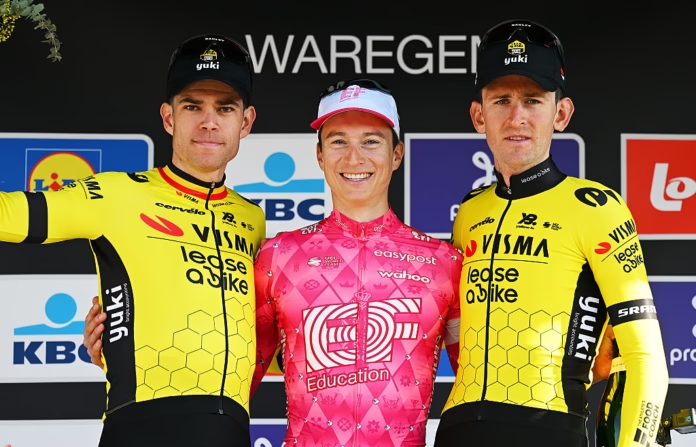
Men’s Dwars door Vlaanderen 2026 takes place on Wednesday 1 April, starting in Roeselare and finishing in Waregem over 185km. It sits in one of the most revealing slots of the spring, just a few days before the Tour of Flanders, which is why the race matters far beyond its own finish line. This is not just another cobbled one-day race. It is a race that tells you who is sharp, who is bluffing and who is ready for Sunday.
For anyone new to it, the simplest way to understand Men’s Dwars door Vlaanderen is as a more compressed, more tactical Flemish test than the biggest Monuments. It does not have the scale or prestige of the Tour of Flanders, but it borrows enough of the same terrain to feel familiar. Steep hills, cobbled sectors, constant positioning battles and a finale where timing matters almost as much as strength all shape the identity of the race. In 2026, the route is tougher again, with two extra climbs and the hill zone brought into play earlier than before.
If you want the wider cobbled-season context first, ProCyclingUK’s Beginner’s guide to In Flanders Fields 2026 and Beginner’s guide to Tour of Flanders Men 2026 help show where Dwars door Vlaanderen fits in the bigger picture.
What is Men’s Dwars door Vlaanderen?
Men’s Dwars door Vlaanderen is a one-day WorldTour race in Belgium, run through the Flemish Ardennes and built around the kind of terrain that keeps classics racing tense from well before the finish. It starts in Roeselare, ends in Waregem, and is known for forcing riders to balance aggression with restraint. Go too early and you burn through your legs before the key sectors. Wait too long and the winning move can already be gone.
That makes it a very useful race for beginners. You can see the same broad ingredients as the Tour of Flanders, but in a slightly more manageable format. The race is long enough to be selective, short enough to stay intense, and varied enough that several types of classics rider can still believe they have a chance.
Why does this race matter so much in the spring?
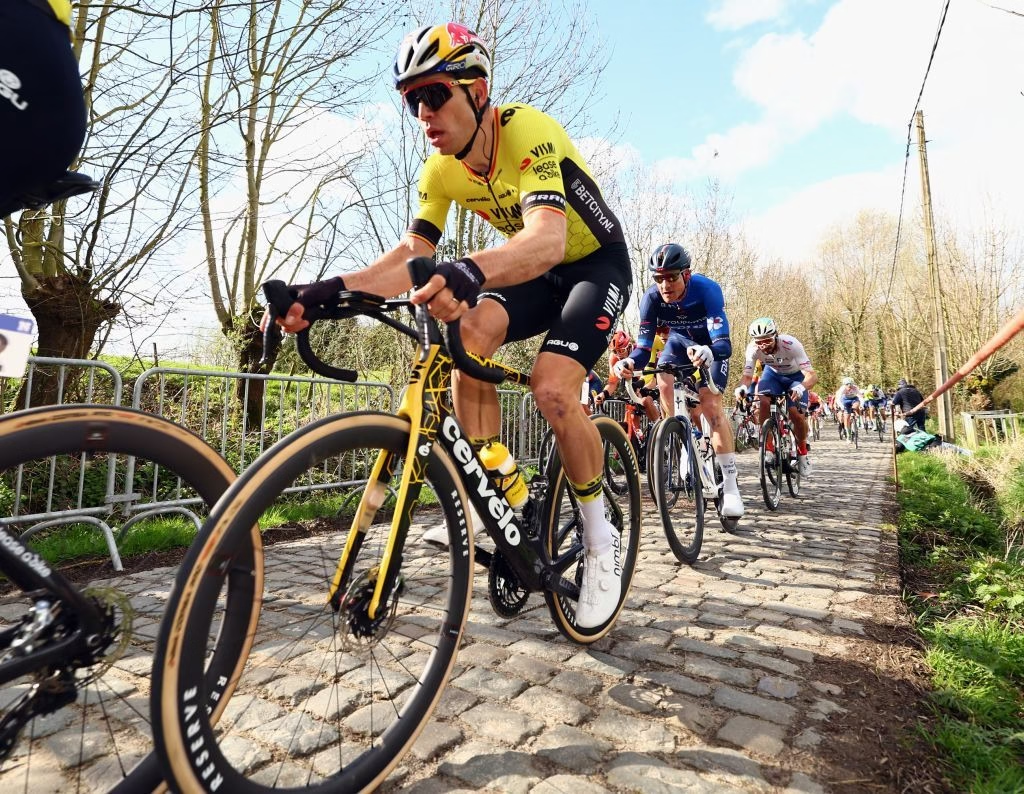
Its place in the calendar is central to its identity. Men’s Dwars door Vlaanderen lands only four days before the Tour of Flanders, so riders and teams are always making a calculation. Some need a result. Some want confirmation that their form is where it should be. Some want to avoid risk and simply get through the race with good legs. That mix of ambition and caution gives the race a slightly different tone from a Monument.
It is also one of those races where performances tend to carry extra meaning. If a rider is dominant here, people immediately start asking what that means for Sunday. If a favourite struggles, that gets noticed too. Dwars door Vlaanderen does not just produce a winner. It produces clues.
What does the 2026 route look like?
The 2026 route is 185km long and includes 12 climbs and seven cobbled sectors. The climbing starts earlier than in previous years, with the first gradients arriving 47.7km into the race, and the Hellestraat returns after missing the 2025 route. The route then builds through the familiar Flemish hill zone before heading into a finishing sequence that includes double ascents and repeated pressure points.
That matters because Dwars door Vlaanderen usually works through accumulation rather than one single killing blow. The race wears riders down bit by bit. Every climb matters a little. Every cobbled stretch matters a little. Every fight for position costs energy. By the time the decisive attacks come, the strongest legs are often the ones that have spent the least energy getting there.


Which climbs should beginners watch for?
The headline climbs in the middle and final parts of the race include Berg Ten Houte, Côte de Trieu and Hotond, all of which return twice in 2026. There is also a new challenge in the Onderbossenaarstraat, a 1.4km ascent that reaches 10 per cent and overlaps partly with the Taaienberg area. That addition helps make the race feel more selective earlier on.
For newer viewers, the important thing is not simply to remember every climb name. It is to understand what these climbs do. None of them is long in a mountain-stage sense. Their power comes from how steep they are, how awkwardly they arrive and how little recovery riders often get between them. That is classic Flemish racing in a sentence.
Is this a cobbles race or a climbs race?
It is both, which is why the race is so interesting.
Men’s Dwars door Vlaanderen is not a pure pavé slog in the Paris-Roubaix sense, and it is not a climbing race in the usual stage-racing sense either. It is a hybrid Flemish race where the cobbles disrupt rhythm, the climbs force repeated accelerations, and the roads in between demand constant concentration. The strongest rider does not always win. Very often, the rider who best understands when the race is truly opening wins.
What kind of rider usually wins Dwars door Vlaanderen?
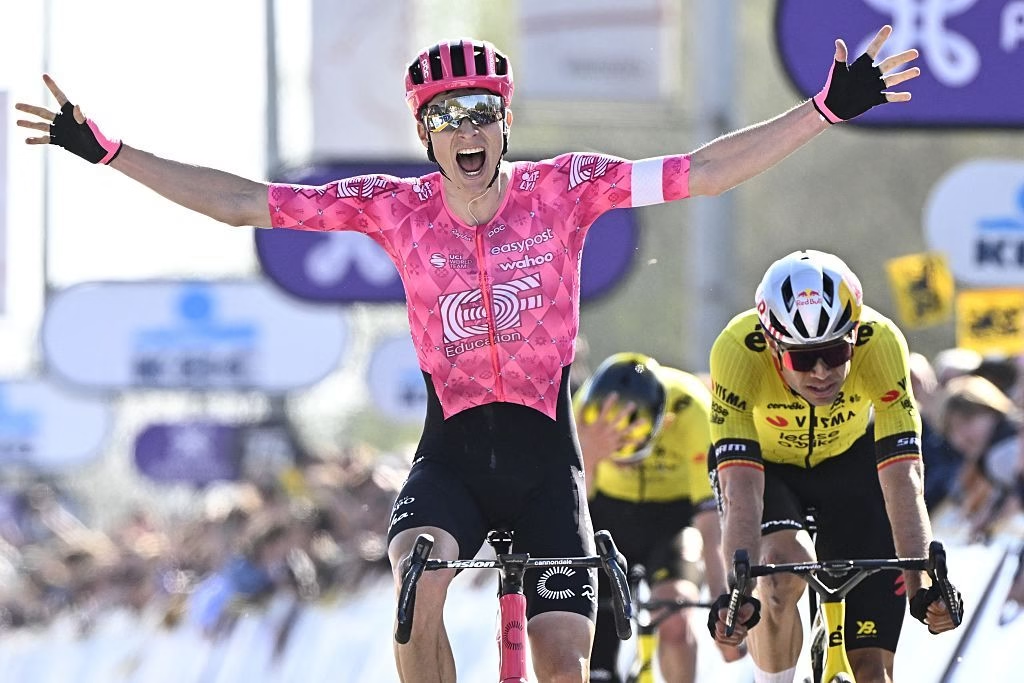
This race tends to suit powerful classics riders with punch rather than pure sprinters or pure climbers. You need to handle repeated short climbs, stay balanced over cobbles, hold position through narrow roads and still have enough left to attack or sprint late on. It rewards riders who are hard to drop and hard to bring back.
That is why Dwars door Vlaanderen often feels like a race for complete one-day riders rather than specialists. Someone with a fast finish can win, but usually only if they can survive the selective middle of the race first. Someone with a big attack can win, but only if they judge the final kilometres correctly.
How does the finale work?
The closing phase is built around repeated pressure rather than one final iconic obstacle. In 2026, the race again uses a finishing circuit that includes two loops via Nokereberg and Herlegemstraat on the way back towards Waregem, while also repeating key climbs and cobbled sectors earlier in the decisive zone.
What that usually creates is a finale where the race can still be won in more than one way. A solo attacker can get clear if the favourites hesitate. A small elite group can stay away if the collaboration is good enough. A reduced sprint can still happen if nobody is willing to commit too early. That uncertainty is part of the appeal.
Why is it such a good Tour of Flanders warm-up?
Because it asks many of the same questions, just on a slightly smaller scale.
Teams have to manage positioning, react to short violent efforts and decide how much they want to reveal before the Tour of Flanders. Riders get a chance to test themselves on familiar-style terrain without having to survive the full scale of a Monument. For fans, it becomes a useful bridge race. You can watch it both as a stand-alone event and as a form guide for what is coming next.
That is one reason the race often produces so much discussion. A big win here can instantly change how the weekend is framed.
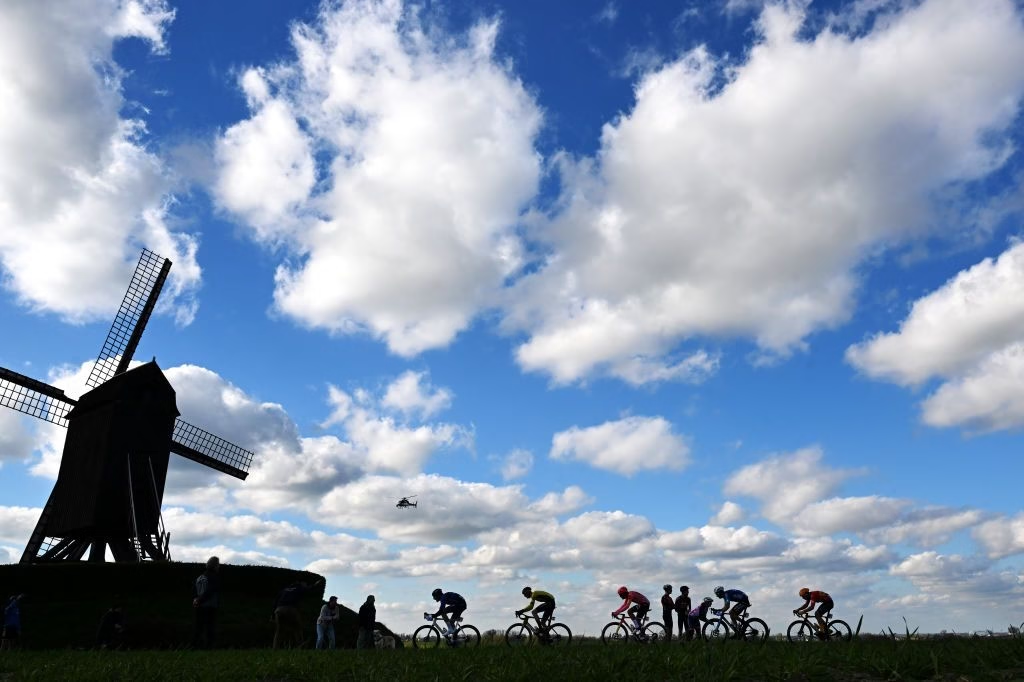
What should a first-time viewer watch for?
Watch when the race starts to string out, not just when the attacks begin. In races like this, the first real selection often happens before television commentary treats it as decisive. Riders caught too far back on a narrow road or short climb can spend huge energy just trying to get back into position.
Also watch which teams commit numbers early. If one team starts placing several riders near the front through the key sectors, that usually tells you they want to make the race selective rather than wait for a sprint. In Men’s Dwars door Vlaanderen, control is always fragile, and that is why the race so often feels alive.
What is the best way to think about Men’s Dwars door Vlaanderen 2026?
Think of it as a pressure race.
It is not just a race of climbs, or cobbles, or star names. It is a race where pressure keeps building until the riders who can still think clearly under strain are left to decide it. The 2026 edition looks tougher than before, with extra climbs, earlier climbing, and a route that should force the race open well before Waregem. That is exactly what you want from Dwars door Vlaanderen.
For more Flemish spring context, ProCyclingUK’s Beginner’s guide to E3 Saxo Classic 2026 is the natural next read, especially because E3 and Dwars door Vlaanderen together tell you a great deal about how the cobbled campaign is taking shape.

