
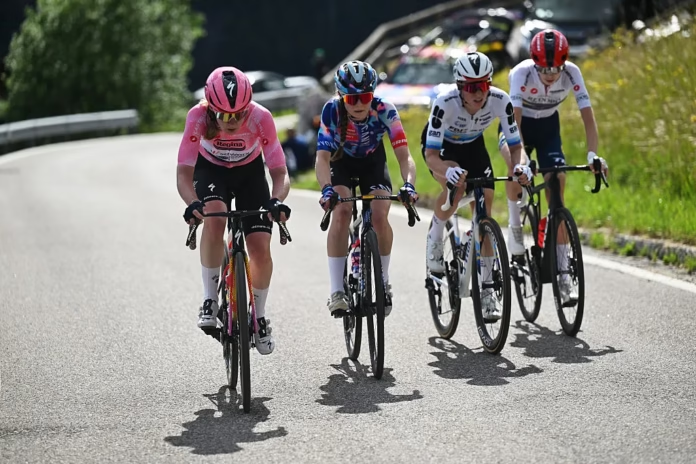
The Giro d’Italia Women 2026 reaches one of its more tactically awkward days on stage 7, with 159km from Sorbolo Mezzani to Salice Terme on Friday, 5th June. After the flat sprint opportunity to Brescello, the race moves back into hillier terrain for a stage that looks less severe than the Dolomites or Sestriere, but still has enough late climbing to trouble tired legs.
This is not a queen stage, but it could still be important. The route carries around 1,000 metres of elevation gain, with the main difficulty packed into the late climb before the run towards Salice Terme. That makes stage 7 difficult to categorise. It is not hard enough to guarantee a full GC battle, but it is too selective to treat as a straightforward sprint day.
That balance should make the racing interesting. The sprinters will try to survive. The breakaway riders will see a real chance. The GC teams will want to avoid unnecessary risk before Sestriere, but the late climb gives rivals enough road to apply pressure if someone is out of position or struggling after the previous mountain block.
For wider context, our Giro d’Italia Women 2026 full route guide breaks down the full nine-stage race, while our Giro d’Italia Women 2026 stage 6 preview covers the flatter stage that leads into this hilly transition day.
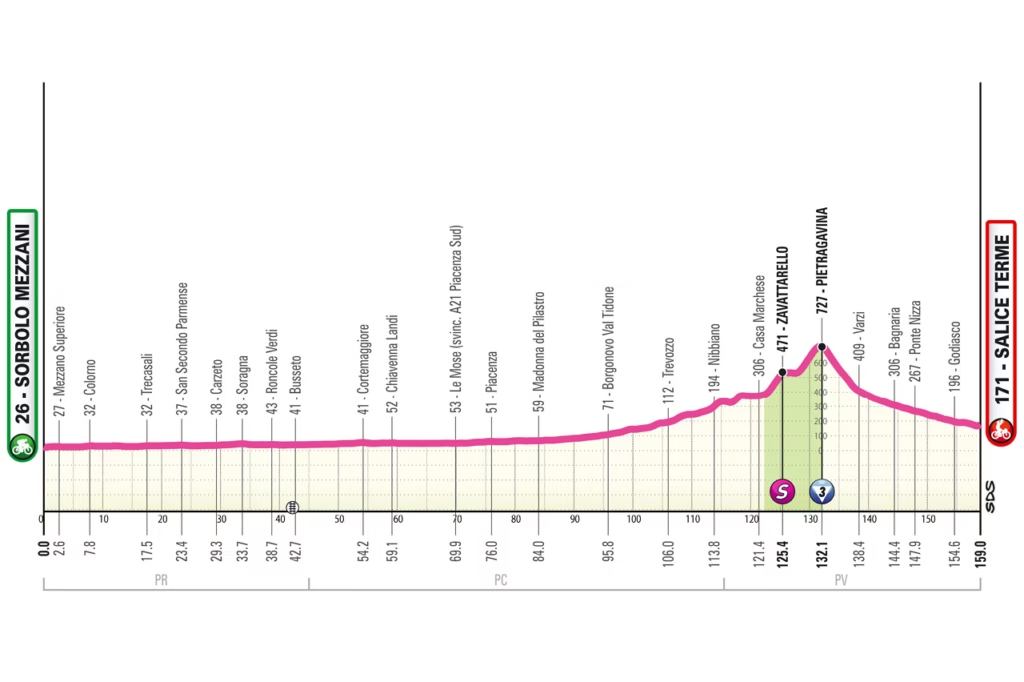
What is the route for Giro d’Italia Women 2026 stage 7?
Stage 7 starts in Sorbolo Mezzani and finishes in Salice Terme after 159km. The stage comes at a delicate point in the race, with the sprinters having had their clearest remaining chance on stage 6 and the GC riders already looking towards the Sestriere stage the following day.
The route is mostly manageable for much of the day, but the late climb changes the calculation. Teams have to decide whether to make that section hard enough to drop the sprinters, launch a GC probe, or allow a strong breakaway to settle the stage ahead.
The descent and run-in to Salice Terme should also matter. A rider who crests the climb with a small gap may have enough road to hold off a disorganised chase. Equally, a reduced group could come back together before the finish, setting up a sprint between riders with enough climbing strength to survive the selection.
That makes stage 7 a classic stage-race trap. It is not the biggest mountain day, but it arrives late enough in the Giro to expose fatigue and is awkward enough tactically to punish hesitation.
Why stage 7 is harder than the profile suggests
The headline numbers do not make stage 7 look brutal, especially compared with the Dolomite stage to Santo Stefano di Cadore or the coming Sestriere stage. But its difficulty lies in timing and uncertainty.
By this point in the Giro, the peloton will have already absorbed the opening sprint block, the hilly stage to Buja, the Nevegal uphill time trial, the Dolomite stage and the long flat stage to Brescello. That accumulated fatigue changes how a climb feels. A late ascent that might be manageable in the first half of the race can become far more selective in the final third of a Grand Tour.
The other factor is team motivation. Some sprint teams may still want to chase if their fast finisher can survive the climb. Some GC teams may prefer restraint before stage 8. Breakaway riders will sense that hesitation and try to exploit it. If no single group takes responsibility, stage 7 could become one of the more open days of the race.
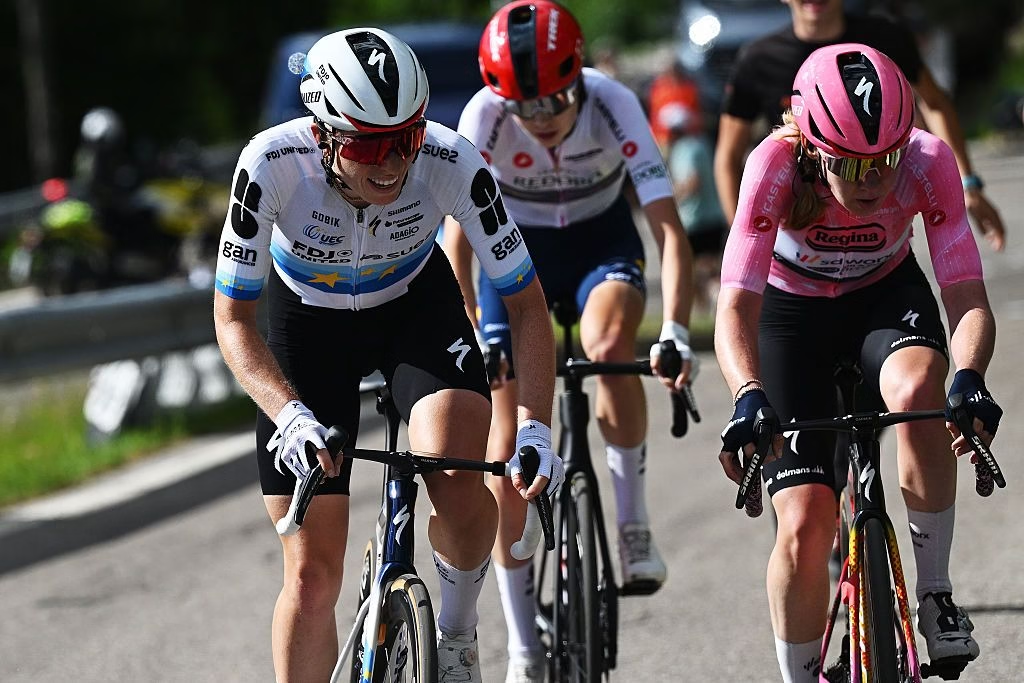 Photo Credit: Getty
Could the breakaway win?
Stage 7 looks like one of the best breakaway opportunities of the Giro d’Italia Women 2026. It is too hard for the pure sprinters to control comfortably, but not obviously hard enough for the GC teams to commit to a full day of chasing.
That combination often gives breakaway riders room. A strong early move with climbers, rouleurs and riders who are not dangerous on GC could build a useful gap before the late climb. Once the climb arrives, the break would need enough quality to survive the selection, but the run towards the finish gives attackers an incentive to commit fully over the top.
The challenge for the break is the stage’s position in the race. If teams such as Lidl-Trek, UAE Team ADQ, Canyon SRAM zondacrypto or FDJ United-Suez believe they have a rider who can win from a reduced group, they may not allow the move too much freedom. If the GC teams sense weakness, the pace could rise sharply on the climb and bring everything back.
Even so, this is not an obvious bunch sprint day. The breakaway has a genuine chance, especially if the front group contains riders who can climb well and keep the momentum high after the summit.
Will the GC riders attack?
A major GC attack is possible, but not guaranteed. Stage 8 to Sestriere is the obvious day for the maglia rosa battle, with the Colle delle Finestre and the summit finish offering much more scope for decisive gaps. Stage 7 looks more like a day for pressure, testing and opportunism.
Anna van der Breggen’s team will not want to spend more energy than necessary. Demi Vollering, Antonia Niedermaier, Isabella Holmgren, Marlen Reusser, Elisa Longo Borghini, Niamh Fisher-Black and the other GC contenders all know the biggest climbing test is still to come. That could encourage a more cautious race.
But caution is not the same as calm. If a GC rider is badly positioned before the late climb, if a team starts to look isolated, or if a dangerous rider attacks over the summit, the race can still split. Even a small gap on stage 7 could matter before Sestriere.
The most likely GC scenario is a selective but controlled climb, with the strongest favourites staying close together. The danger is that the stage sits in the awkward space where no one wants to commit too early, but everyone has to react once the road begins to bite.
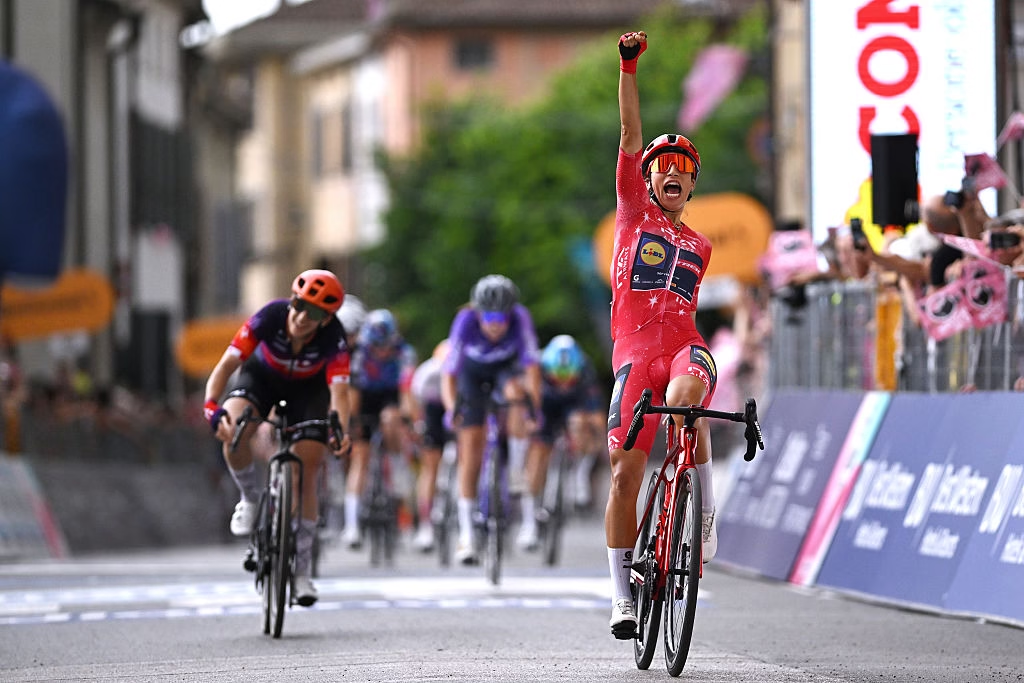
Could Elisa Balsamo survive and sprint?
Elisa Balsamo’s chances depend almost entirely on how hard the late climb is raced. If the stage is controlled steadily, she has the resilience and race craft to survive more difficult terrain than a pure flat sprinter. Her opening run at this Giro has already shown how dangerous she can be when a stage finishes from a group that has been under pressure.
If the climb is attacked properly, however, this becomes much harder. A climb late in the stage gives dropped riders some chance to return, but only if the front group hesitates. If the strongest climbers continue to drive over the top, the sprinters may not see the front again.
For Lidl-Trek, the decision may depend on the race situation. If Balsamo comes through stage 6 strongly and still has the legs to contest the points classification, they may try to keep stage 7 together enough for her. But the team also have GC interests through Isabella Holmgren and Niamh Fisher-Black, which may make the day more complicated than a simple sprint chase.
Why this stage could suit Elisa Longo Borghini
Elisa Longo Borghini looks like one of the most natural riders for a stage like this. It is not purely a mountain day, and it is not a flat sprint. It asks for endurance, positioning, climbing strength, descending confidence and the ability to read a messy finale.
That combination has often suited Longo Borghini. If the GC favourites are reluctant to go all-in before Sestriere, she could use the late climb as a way to force selection without necessarily needing a long solo move. A small group over the summit would give her options: attack on the descent, push the pace into the finish, or sprint from a reduced front group.
Her wider GC situation will matter. If she needs to regain time after the earlier mountain stages, stage 7 may offer a less obvious chance to do it. Rivals might be more willing to watch each other before stage 8, and that can create exactly the kind of hesitation she likes to exploit.
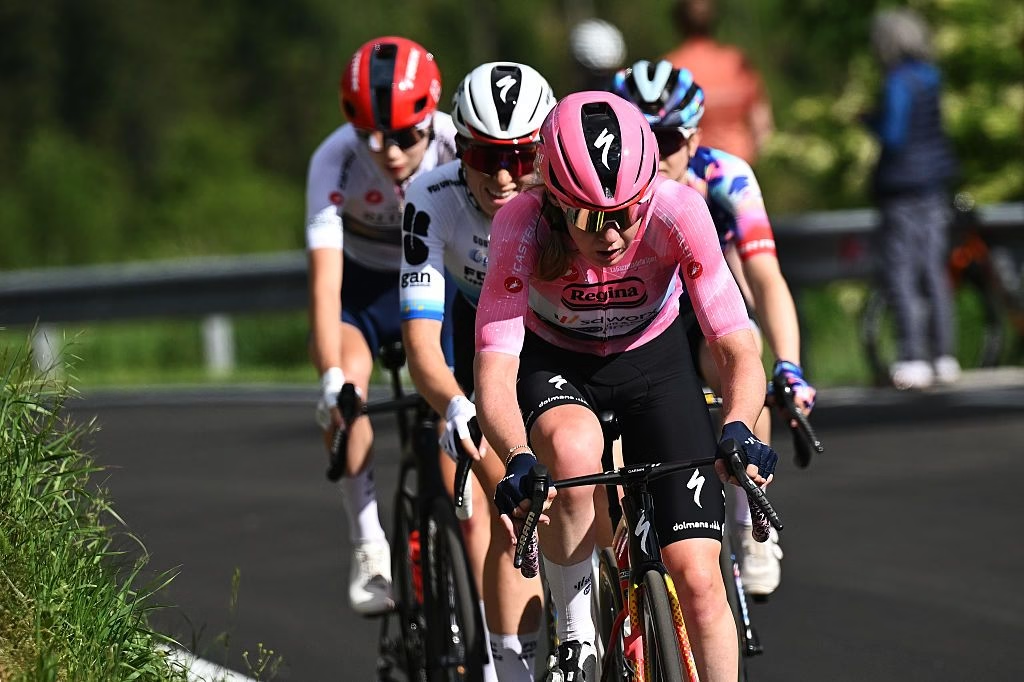
Demi Vollering and Anna van der Breggen remain central
Vollering and Van der Breggen are unlikely to ignore stage 7 completely. Both have the strength to make the late climb difficult, and both understand how valuable even small psychological advantages can be before the final mountain block.
Vollering’s stage 5 win at Santo Stefano di Cadore showed that she can still turn selective terrain into victory. If she senses weakness, she may not wait for Sestriere. A sharp move over the late climb would force Van der Breggen and Team SD Worx-Protime to respond, even if the time gains are small.
Van der Breggen’s task is more about control. She does not need to win stage 7. She needs to avoid being isolated, avoid splits and keep the race manageable before the hardest climb of the Giro. If the stage becomes selective, she has the ability to follow, but the bigger objective is preserving the maglia rosa without wasting unnecessary energy.
Antonia Niedermaier and Isabella Holmgren could be dangerous
Antonia Niedermaier and Isabella Holmgren both have reasons to be alert on stage 7. Niedermaier has been one of the strongest climbers in the race, and a late climb followed by a fast run-in gives her a chance to apply pressure without needing a full mountain stage to do it.
Holmgren’s position is especially interesting. She has been racing for the young rider classification, but her move up the general classification means she is now part of the wider GC conversation. If she feels strong, she could follow the best on the climb and use the stage to reinforce both her white jersey lead and her place near the top of the overall standings.
Both riders may also benefit if the biggest names look too closely at each other. Stage 7 is the kind of day where a well-timed move from a slightly less marked contender can become more dangerous than expected.
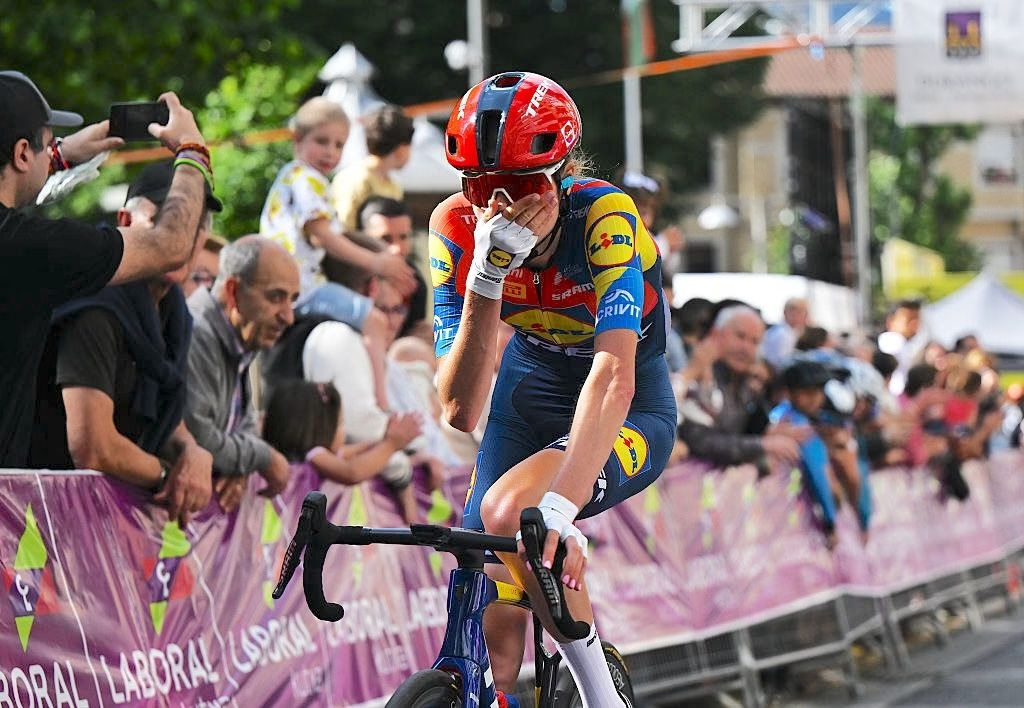
The reduced sprint contenders
If the late climb removes the pure sprinters but does not create a solo winner, the stage could come down to a reduced sprint. That opens the door for riders who can climb better than the full-bunch sprinters but still finish quickly.
Chiara Consonni is an obvious name if she survives the climb. She has the timing and finishing speed to win from a reduced group, especially if the final kilometres become tactical. Lara Gillespie also fits the stage well because she combines sprint speed with enough endurance to stay in contention after harder racing.
Georgia Baker, Lily Williams, Megan Jastrab, Martina Fidanza and Anniina Ahtosalo may also be part of the discussion depending on how the climb is ridden. The finish is not simply about top-end speed. It is about who has enough left after the late selection and who arrives in Salice Terme with support, position and confidence.
Where the stage could be won
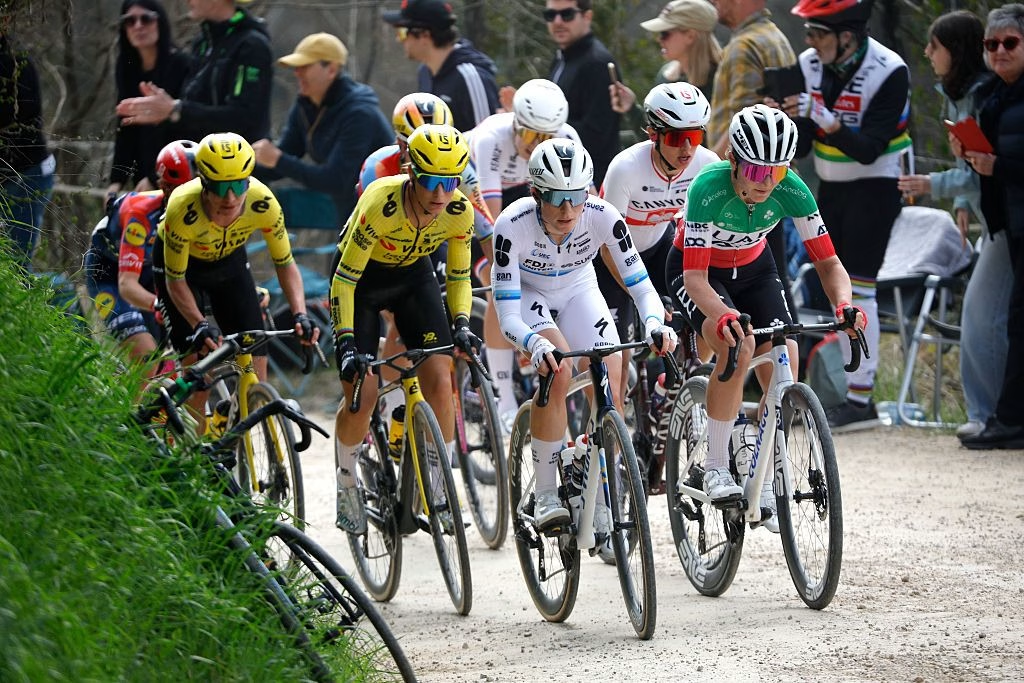
The obvious point is the final climb, but the decisive moment may come just after the summit. A rider or small group that goes over the top with a gap will force the bunch to organise quickly. If the chase hesitates, the stage could be gone before the final flat kilometres.
That makes the top of the climb tactically important. Riders cannot simply survive it and assume the race will regroup. They need to be near the front, alert to attacks and ready for the run towards Salice Terme. The first few kilometres after the summit could be more important than the final kilometre itself.
If the race does come back together, then the finish becomes about timing. A reduced group sprint after a late climb is often messy because teams have fewer riders left. The winner may be the rider who finds the right wheel rather than the one with the strongest lead-out.

What comes next after stage 7?
Stage 8 is the Giro’s major final mountain test, with the race heading from Rivoli to Sestriere over 105km. The Colle delle Finestre and the summit finish should make it the most important remaining GC day of the race.
That gives stage 7 extra tactical tension. Some teams will want to save everything for Sestriere. Others may see stage 7 as a chance to attack before the obvious battleground. The sprinters and breakaway riders know this may be their last realistic opportunity before the GC battle takes over again.
Stage 9 around Saluzzo then gives the race one final difficult day, but Sestriere is the stage everyone will have marked. Stage 7, therefore, sits in the dangerous space between opportunity and restraint.
Giro d’Italia Women 2026 stage 7 prediction
Stage 7 looks ideal for a breakaway or a reduced sprint. The late climb is too awkward for a straightforward bunch finish, but it may not be hard enough for the main GC riders to fully commit before Sestriere. That gives attacking riders a real chance.
Longo Borghini looks like one of the strongest options if the race comes back together into a reduced front group. Vollering and Van der Breggen will be present if the GC favourites decide to race, while Niedermaier and Holmgren could both use the climb to apply pressure. If the pace is steadier, Balsamo, Consonni or Gillespie may still find a path back into contention.
Prediction: Elisa Longo Borghini to win from a reduced group in Salice Terme.

