
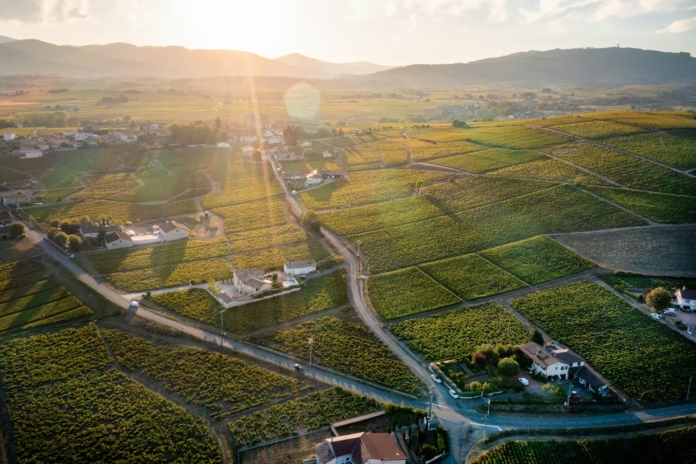
Stage 5 of the 2026 Tour de France Femmes carries the peloton from Mâcon into the heart of Beaujolais, crossing a landscape of vineyard-covered hills, compact climbs and villages whose names are better known from wine labels than cycling maps.
The 140km race route to Belleville-en-Beaujolais contains eight categorised climbs and approximately 2,900 metres of ascent. It is deliberately severe, linking the Côte de Cenves, Col de Gerbet and Mont Brouilly into a day designed for breakaways and Classics-style racing.
A cycling holiday in Beaujolais does not need to be quite so relentless.
The region works because the same roads can produce very different days. Strong riders can follow steep vineyard lanes over Mont Brouilly and through the northern wine villages, while recreational cyclists can stay near the Saône valley or use the flat Voie Verte between Belleville-en-Beaujolais and Beaujeu.
It is a region for riding rather than conquering. The climbs are generally shorter than those of the Alps, the distances between villages are manageable and almost every route can be shaped around a café, market or wine producer.
Why Beaujolais is so good for cycling
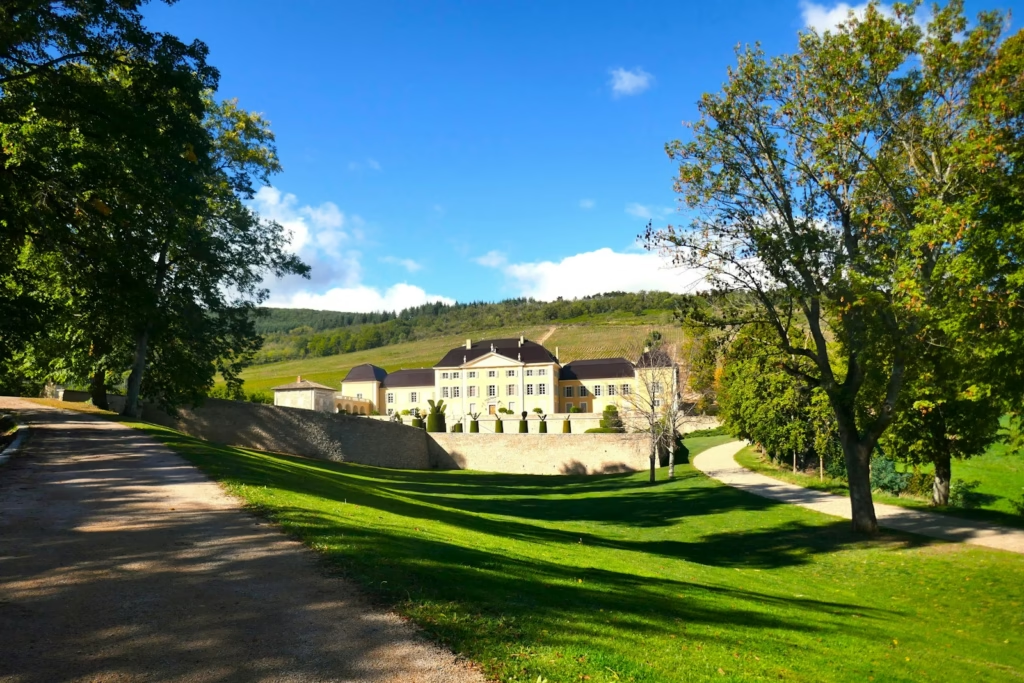
Beaujolais sits immediately south of Burgundy, between the Saône plain to the east and the first foothills of the Massif Central to the west.
That geography creates a natural cycling gradient.
The roads close to the Saône are relatively flat and straightforward. Turn west towards the vineyards and the terrain begins rolling almost immediately, with short climbs linking villages built into the hillsides. Continue further inland and the landscape becomes higher, greener and more rugged.
The result is unusual flexibility within a small area.
A recovery ride can remain close to Belleville-en-Beaujolais and the valley. A moderate day can connect villages such as Beaujeu, Régnié-Durette, Morgon and Fleurie. A harder route can include Mont Brouilly, the Col de Crie or the quieter lanes of Beaujolais Vert.
The climbs are rarely long enough to dominate an entire day. Instead, the accumulated ascent comes through repetition. A road may rise for three kilometres, descend through another village and immediately begin climbing again.
That rhythm explains why Stage 5 is so demanding despite containing no Alpine mountain. The professional race links eight classified ascents, but an ordinary rider can choose two or three and still experience the character of the region.
The day’s racing terrain is examined more closely in our Tour de France Femmes Stage 5 preview.
Mont Brouilly is the obvious ride from the race
Mont Brouilly is the defining climb of Stage 5 and the most natural target for cyclists inspired by the television coverage.
The race approaches it late in the stage, after more than 100km of repeated climbing, before tackling the final 3km at an average gradient of 7.7%. Fresh legs make the experience more forgiving, but the ascent still contains steeper sections that interrupt any comfortable rhythm.
Its attraction is not based on length. Mont Brouilly rises directly from the surrounding vineyards and offers a much sharper experience than its modest statistics suggest.
The summit area contains the Chapelle Notre-Dame-aux-Raisins, while the slopes fall within the Côte de Brouilly appellation. Vineyards occupy the lower and middle parts of the hill, making the climb feel inseparable from the wine landscape around it.
A good road-cycling loop can begin in Belleville-en-Beaujolais, travel north through Cercié or Régnié-Durette and approach Mont Brouilly from Saint-Lager. From the summit, riders can descend towards Odenas before returning through the vineyards.
The distance can be kept near 50km or extended towards Morgon, Fleurie and Chiroubles. The harder version quickly becomes a serious day because every additional village seems to require another climb.
Mont Brouilly is best ridden early in the morning outside the busiest summer weekends. The roads are narrow, agricultural traffic remains part of the landscape and sightlines can be limited around stone walls and vineyard entrances.
Ride through the ten Beaujolais crus
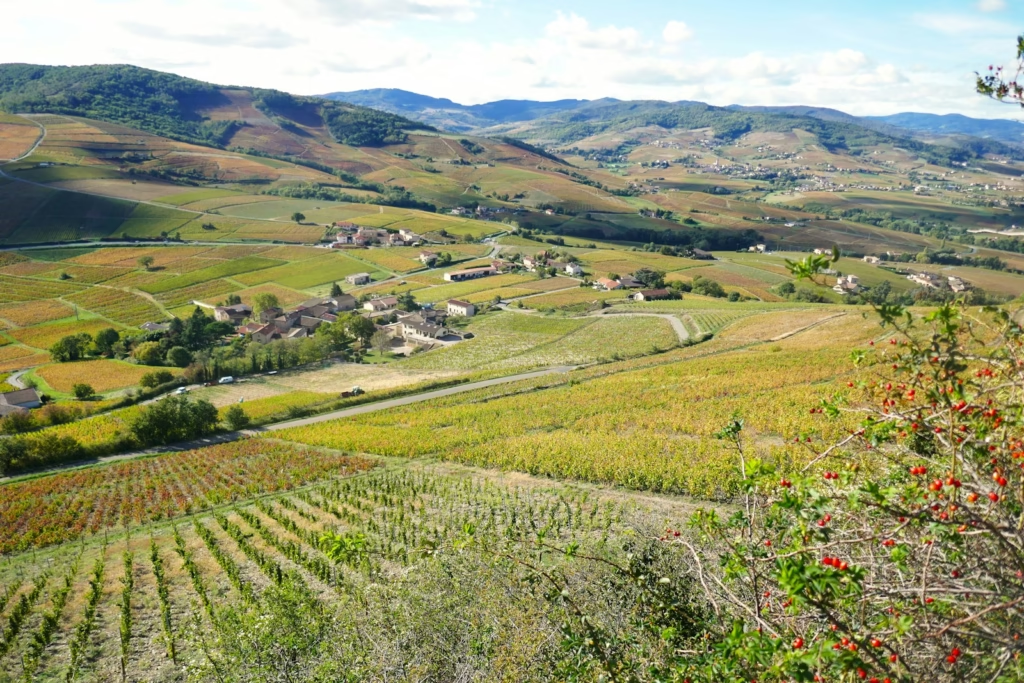
The northern part of Beaujolais contains ten named cru areas:
Saint-Amour
Juliénas
Chénas
Moulin-à-Vent
Fleurie
Chiroubles
Morgon
Régnié
Côte de Brouilly
Brouilly
They form a ready-made framework for a multi-day cycling trip.
The villages are close enough to connect without long transfer sections, but the hills prevent the rides from becoming repetitive. A route through Fleurie, Chiroubles and Morgon feels different from one around Brouilly and Régnié, even though both remain within the same wider wine region.
Fleurie is one of the most useful cycling bases in the northern crus. It sits among vineyard roads that can be linked towards Chiroubles, Villié-Morgon, Chénas and Moulin-à-Vent without first negotiating a large town.
Morgon provides access to rolling roads around Villié-Morgon and the Côte du Py, while Beaujeu works well for riders who want to combine the wine villages with the quieter roads further west.
A dedicated rider could attempt to visit all ten crus in one long route. That is possible, but it misses part of the region’s appeal. Beaujolais is better experienced through two or three shorter loops, with enough time to stop rather than treating every village sign as another checkpoint.
A classic northern Beaujolais loop
A strong but manageable day can begin in Belleville-en-Beaujolais and travel north through the central wine villages.
A possible route links:
Belleville-en-Beaujolais
Saint-Lager
Mont Brouilly
Régnié-Durette
Villié-Morgon
Fleurie
Chiroubles
Beaujeu
Belleville-en-Beaujolais
Depending on the precise roads chosen, the loop will usually fall between 70km and 90km. It contains enough climbing to feel substantial without requiring an entire day.
Mont Brouilly provides the clearest physical challenge, but the road towards Chiroubles often creates the more memorable section. The village sits high above the Saône plain, with open views across the vineyards and towards the Alps in clear conditions.
The return through Beaujeu offers several options. Riders with tired legs can use gentler roads towards Belleville, while anyone still seeking elevation can add another loop through the western hills.
This is also a sensible route for an e-bike. The compact climbs reward assistance without turning the day into little more than a flat cycle path, and the villages provide regular places to stop.
The Voie Verte offers a gentler introduction
Not every Beaujolais ride needs to involve Mont Brouilly.
The region’s Voie Verte runs for approximately 15km between Belleville-en-Beaujolais and Beaujeu. It follows the former railway through the Ardières valley and provides a largely flat, traffic-free route suitable for families, less experienced cyclists and recovery rides.
It also works as the spine of a longer day.
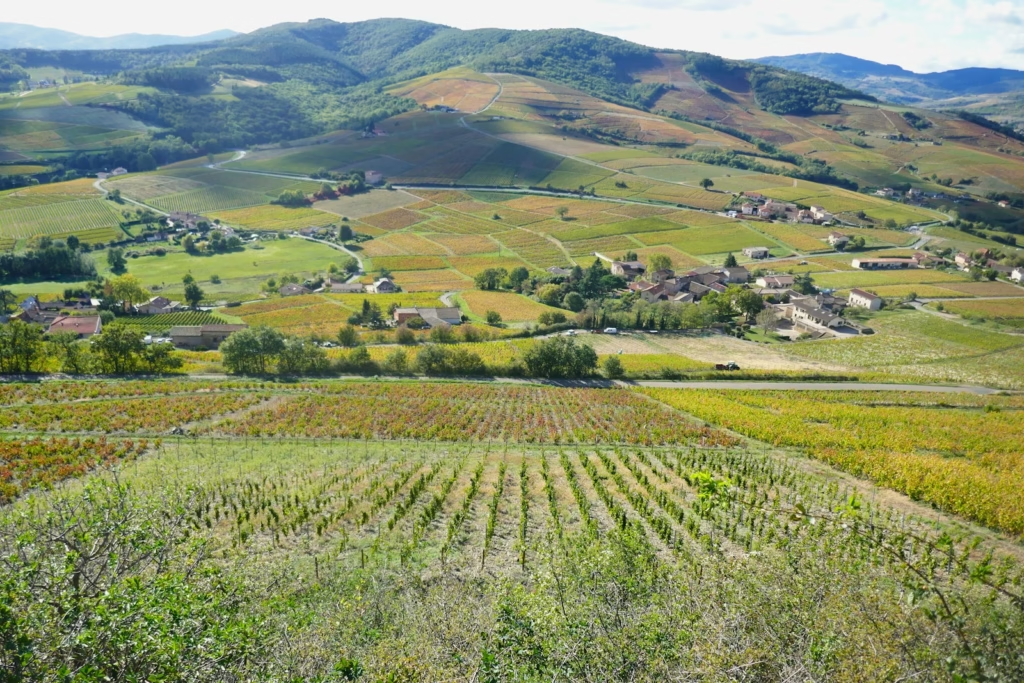
Several signposted cycling loops leave the greenway and climb into the surrounding vineyards before returning to it. This allows riders to add difficulty gradually rather than committing to one long mountain route.
A group containing different abilities can use Belleville or Beaujeu as a shared base, with some riders remaining on the Voie Verte while others extend into Régnié, Morgon or the Brouilly slopes.
The surface and gentle gradient also make it suitable for touring bikes, hybrids and e-bikes rather than only road bikes.
For riders planning a wider French trip, this combination of quiet lanes and accessible traffic-free riding is one of the reasons Burgundy and Beaujolais sit naturally within our guide to cycling in France.
Beaujolais Vert offers quieter and harder roads
West of the best-known wine villages, the terrain becomes less obviously associated with vineyards and more closely resembles the lower Massif Central.
Beaujolais Vert contains forested hills, higher roads and a large network of marked cycling and mountain-bike routes. It is the area to choose when the objective is a harder training day rather than a leisurely wine-country loop.
The gradients can become more sustained, while the road network is generally quieter once away from the main village connections.
Beaujeu is a useful gateway. From there, riders can head towards the Col de Crie and the higher country around Monsols, Claveisolles and the Azergues valley.
This part of the region is cooler and greener than the slopes nearer the Saône. It can therefore be a better option during the hottest weeks of July and August, although water and food stops become less frequent.
Road cyclists should plan carefully rather than assuming every small village contains an open café. Mountain bikers have an even wider selection, with hundreds of kilometres of marked routes across Beaujolais Vert.
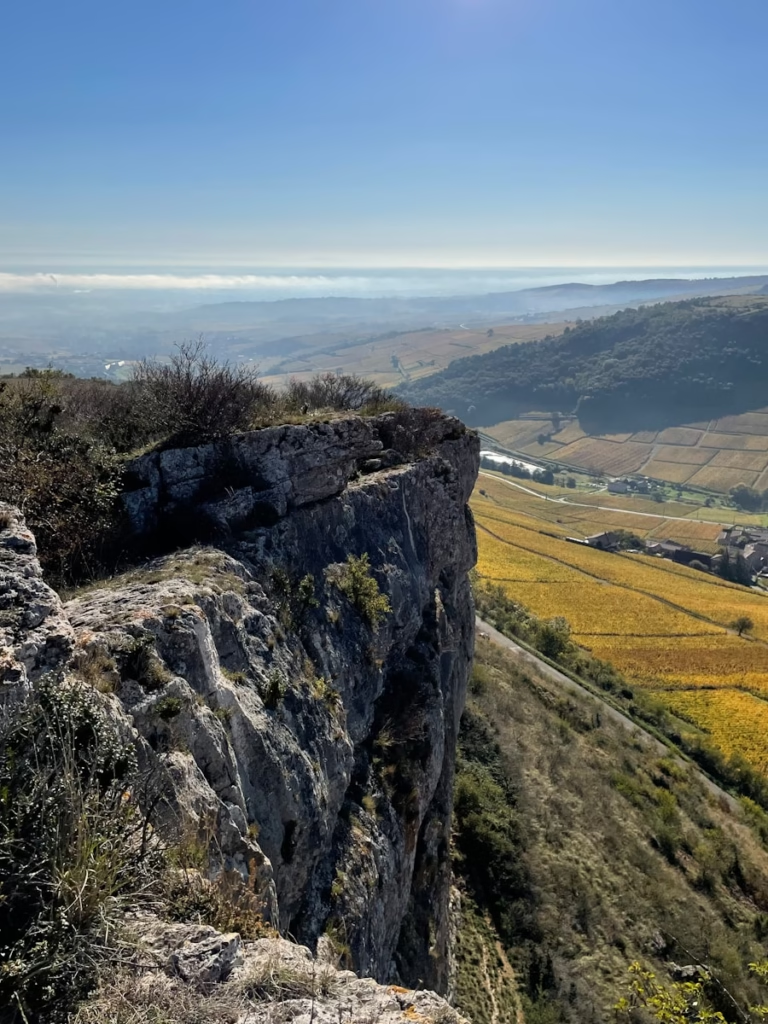
Belleville-en-Beaujolais is the practical base
Belleville-en-Beaujolais is the easiest base for a first cycling visit.
It has direct rail connections, a wider choice of accommodation and straightforward access to the Saône valley, the Voie Verte and the roads towards Mont Brouilly.
The town is particularly useful for mixed trips. Riders can begin from the hotel without needing a car, while non-cycling companions have easier access to shops, restaurants and transport than they would in one of the smaller vineyard villages.
The trade-off is atmosphere. Belleville is practical rather than the most picturesque place to stay.
Riders prioritising early starts, secure bike storage and easy evening logistics should look for accommodation near the centre or towards the western side of town. That reduces the amount of urban riding required before reaching the quieter roads.
When booking, ask specifically about secure overnight bicycle storage. A description such as “bike friendly” may mean anything from a locked garage to permission to leave a bike in an uncovered courtyard.
Beaujeu provides more character
Beaujeu is the historic capital of Beaujolais and a stronger choice for riders who want the wine region to shape the entire trip.
The town sits at the western end of the Voie Verte and close to the point where the vineyard roads begin rising into Beaujolais Vert.
Its position makes it particularly good for a three or four-night stay. One day can be spent on a cru-village loop, another in the higher western hills and a third using the greenway as an easier recovery route.
Beaujeu has less accommodation and fewer transport options than Belleville, so it suits travellers arriving with a car or using an organised cycling holiday.
The advantage is that the ride begins immediately. There is little need to negotiate main roads before reaching the landscape visitors have come to experience.
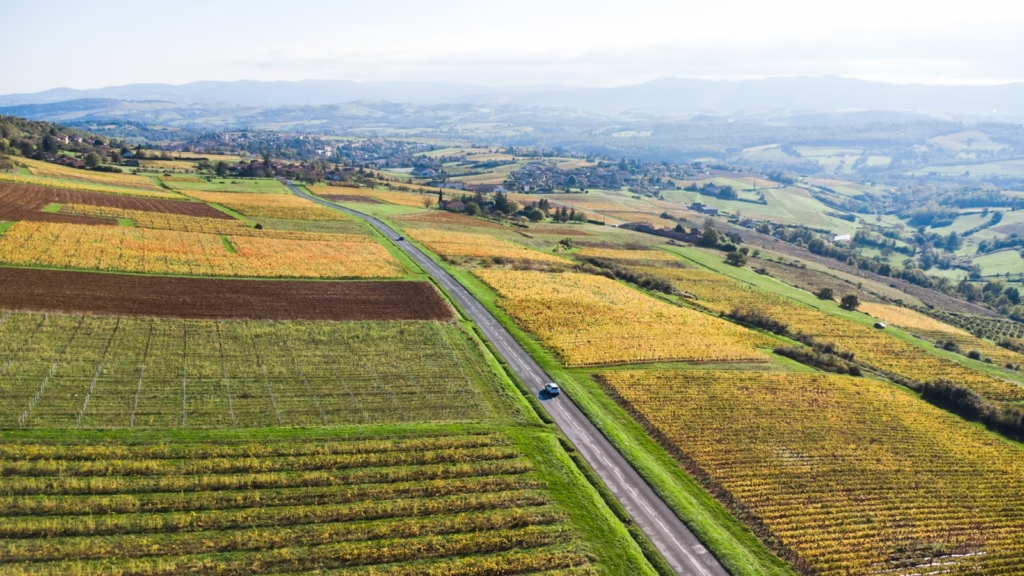
Fleurie or Morgon for a vineyard stay
Fleurie and the area around Villié-Morgon suit riders looking for a smaller guesthouse, wine estate or converted farmhouse.
These bases place cyclists directly among the northern crus. Morning rides begin on vineyard lanes, while several producers and village restaurants are accessible without driving afterwards.
Fleurie is especially well positioned for loops through Chiroubles, Moulin-à-Vent and Juliénas. Morgon provides a slightly more central position for routes towards Régnié, Brouilly and the northern villages.
The limitations are practical. Evening dining options may be restricted on certain days, taxis are not always easy to arrange and public transport is limited.
A village stay therefore rewards planning. Confirm restaurant opening days, arrange vineyard visits in advance and avoid assuming food will be available after returning from a late ride.
Mâcon works for a wider Burgundy and Beaujolais trip
Mâcon, the start town for Stage 5, sits north of the main Beaujolais crus and provides a useful base for riders who want to combine both regions.
To the north and west lie the vineyards of the Mâconnais, including roads around Solutré-Pouilly, Vergisson and Cluny. To the south are Saint-Amour, Juliénas and the northern edge of Beaujolais.
A week based in or around Mâcon can therefore alternate between Burgundy-style limestone landscapes and the granite-influenced hills of Beaujolais.
The city has better transport, accommodation and restaurant choice than the smaller villages. It is also convenient for riders arriving by train with a bicycle.
The drawback is that some rides require a longer approach before reaching the quietest roads. A hotel on the western or southern side of Mâcon can reduce that problem.
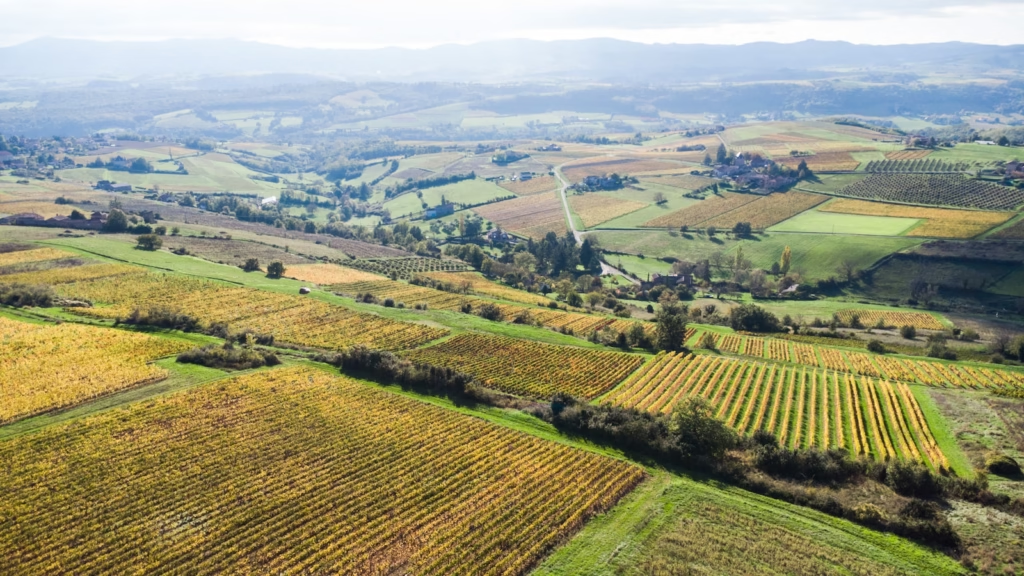
Wine culture without turning the ride into a tasting session
Beaujolais is closely associated with Beaujolais Nouveau, but the region is far more varied than the annual November release suggests.
Gamay is the dominant grape, producing wines that range from light and fruit-led to more structured bottles from areas such as Morgon, Moulin-à-Vent and Côte de Brouilly.
For cyclists, the cru system gives each day an easy cultural structure. A route through Fleurie, Morgon and Brouilly is not simply passing between villages. It is crossing different growing areas shaped by slope, soil and exposure.
Wine visits should be arranged for after the ride rather than inserted repeatedly into it.
Even small amounts of alcohol affect judgement and coordination, while summer heat and dehydration can magnify the effect. The safer plan is to finish riding, shower, eat and then visit a producer on foot or with arranged transport.
Many estates require an appointment, particularly outside the busiest holiday periods. Smaller producers may be working in the vineyard or cellar rather than operating a permanent tasting room.
A good trip combines one or two properly planned visits with village restaurants and local wine bars, rather than trying to collect as many tastings as possible.
The wider relationship between regional food, wine and riding is explored in our guide to cycling through France’s regional flavours.
What to eat after riding
Beaujolais cuisine is shaped by both Burgundy to the north and Lyon to the south.
Charcuterie, terrines, sausages and slow-cooked meat appear frequently, accompanied by potatoes, gratins or seasonal vegetables. Local cheeses and simple dishes built around eggs, poultry and cream provide the sort of substantial food that makes sense after several hours of climbing.
Cyclists should not assume every village café serves food throughout the afternoon. French lunch hours remain relatively fixed, particularly outside larger towns.
A rider finishing at 15:00 may find the kitchen closed until the evening. Carry enough food to complete the route and regard a planned lunch stop as something to confirm rather than hope for.
Morning bakeries provide the simplest solution. Bread, pastries and filled baguettes are easy to carry, while supermarkets in Belleville, Beaujeu and the larger villages allow riders to prepare before leaving.
Water is the more important concern in summer. Vineyard roads are exposed and temperatures can rise quickly, while public fountains are not always guaranteed to be drinking water unless clearly marked.
Two bottles are sensible for most longer loops, with planned refill points in the larger villages.
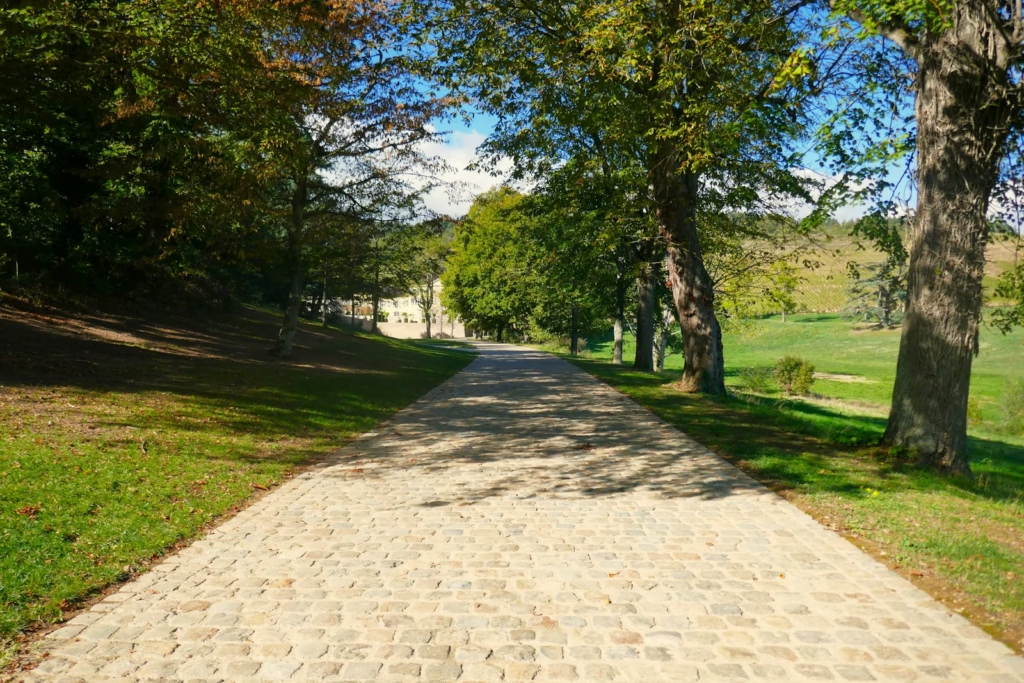
When to cycle in Beaujolais
Late spring and early autumn offer the best balance.
May and June usually provide green vineyards, long daylight and temperatures more suitable for repeated climbing. September brings harvest activity and warmer colours, although agricultural vehicles become more common on the narrow roads.
July and August offer the most reliable holiday weather but can be very hot. Early starts become essential, particularly on exposed slopes around Brouilly and the Saône valley.
The grape harvest can make September especially atmospheric, but cyclists must ride patiently around tractors, trailers and workers moving between plots.
Winter is possible at lower altitude, although the landscape becomes quieter and many tourism businesses reduce their opening hours. The higher roads of Beaujolais Vert can also be cold, wet or occasionally affected by snow.
A three-season bike trip is therefore more realistic than treating the region as a guaranteed year-round destination.
Road conditions and traffic
The best Beaujolais cycling takes place on narrow departmental and communal roads.
Surfaces are generally suitable for road bikes, but vineyard lanes can contain gravel, mud and agricultural debris. Extra care is required after rain or during harvest.
The quieter roads are not necessarily traffic free. Tractors and local vehicles may occupy most of the width, while stone walls and vegetation reduce visibility through bends.
Main roads along the Saône valley carry faster traffic and should be avoided where a quieter parallel option exists. Route-planning software may select them because they appear more direct, but the additional speed rarely justifies the poorer riding experience.
A road bike with 28mm or wider tyres is ideal. A gravel bike provides greater freedom to use smaller lanes and occasional unsealed links without sacrificing much speed.
Gearing should reflect repetition rather than one enormous climb. A compact chainset or similarly low climbing gear helps once the fifth or sixth ascent begins to feel harder than the profile suggested.
-
 Photo Credit: Canyon SRAM (supplied media release)
 -
 Photo Credit: Park Tool



How long should a Beaujolais cycling trip be?
Three days is enough to understand the region.
The first day can explore the Voie Verte and nearby vineyards. The second can include Mont Brouilly and the central crus. The third can head north towards Fleurie and Morgon or west into Beaujolais Vert.
Five to seven days allow a more relaxed trip combining Beaujolais with Mâconnais Burgundy, Lyon or the ViaRhôna corridor.
An organised cycling holiday can simplify luggage transfers, route planning, bike hire and vineyard appointments. A self-guided trip offers more freedom and is straightforward for riders comfortable navigating quiet French roads.
The region is compact enough that changing hotel every night is rarely necessary. One base in Belleville, Beaujeu or Fleurie can support several distinct loops.
That reduces packing, protects recovery time and leaves more space in the day for the food and wine culture that gives the region its identity.
A landscape built for watching and riding
Stage 5 presents Beaujolais in its most intense form.
The Tour de France Femmes links almost every climb it can find between Mâcon and Belleville-en-Beaujolais, turning vineyard roads into a 2,900-metre test of endurance and positioning.
Cycling visitors can take a different approach.
Mont Brouilly can be ridden without seven climbs beforehand. The cru villages can be explored across several days rather than one breathless afternoon. The Voie Verte provides an easy route when tired legs no longer need another gradient.
Beaujolais does not offer the scale of the Alps or the instantly recognisable white roads of Tuscany, but that is part of its appeal. Its difficulty comes in compact doses, softened by villages, vineyards and the knowledge that the next stop is rarely far away.
For anyone inspired by the images from Stage 5, it is one of the easiest Tour landscapes to turn into a realistic cycling holiday.
More regional riding ideas can be found in the ProCyclingUK travel and cycling abroad hub.

