The best gravel bike for you is the one that suits the riding you will actually do. A bike for linking country lanes with firm forest tracks has different priorities from one carrying camping equipment over rough, steep ground. Before comparing brands, decide how much road riding, loose terrain and luggage your usual week is likely to involve.
For a first gravel bike, start with fit, suitable low gears and room for the tyres you need. Those choices are difficult or expensive to correct later. An aluminium bike with the right specification can be a better purchase than a discounted carbon model that leaves you stretched out, overgeared or short of tyre clearance.
Choose the bike around your routes
| Your main riding | What to prioritise | What to check carefully |
|---|---|---|
| Road rides with occasional firm tracks | Comfortable fit, suitable tyres and useful spacing between gears | Whether an endurance road bike already covers your needs |
| Mixed lanes, bridleways and forest roads | Tyre clearance, dependable braking and low climbing gears | Mud clearance and the roughest sections of your regular routes |
| Loaded trips and bikepacking | Low gears, luggage compatibility and manageable handling | Load limits, mounting points and heel clearance around bags |
| Gravel racing | Race-appropriate fit, tyres, gearing and handling | Whether the course rewards a fast road-like setup or greater off-road capability |
“Gravel” covers a wide range of surfaces. Our guide to gravel riding in the Midlands gives examples of the different routes you might build into a ride. If your preferred terrain consists mainly of rocky descents, roots and technical trails, include a mountain bike in your comparison rather than assuming drop handlebars are essential.
Fit matters more than the frame badge
Do not assume that your road-bike size transfers directly to a gravel bike. Compare the geometry of the actual sizes available, particularly stack and reach, and try the bike if possible. You should be able to reach the brakes comfortably from the positions you use off-road, without feeling that you have to hold yourself in place through your shoulders.
Handlebar width, flare and stem length also affect the experience. A very wide bar is not automatically more comfortable, especially if much of your riding is on the road. Check whether changes to the cockpit are straightforward or involve proprietary components and complicated cable routing.
Tyre clearance gives you options
Look at the manufacturer’s permitted tyre size for the exact frame, fork and wheel configuration. A tyre’s measured width can differ from its sidewall label because rim width affects its shape. Leave the required clearance for mud and movement rather than fitting the largest tyre that appears to squeeze between the stays.
Tread matters alongside width. A relatively smooth tyre can work well on tarmac and dry, firm tracks, while loose or muddy ground may call for more grip. Neither a deeply treaded tyre nor a very wide one is automatically the best choice for every mixed ride. Ask whether the supplied wheels and tyres support tubeless use, and whether tape, valves and sealant are included.
Compare the lowest gear, not just the number of speeds
A single-chainring drivetrain removes the front derailleur and simplifies shifting. A double-chainring setup can offer closer steps between gears across a useful overall range, which may appeal if you spend substantial time on the road. The better option depends on the actual chainring and cassette combination.
For example, a 40-tooth chainring paired with a 44-tooth largest sprocket gives a lower climbing ratio than a 40-tooth chainring with a 36-tooth sprocket, assuming the same wheel and tyre size. Both might be advertised simply as a 1x drivetrain. Consider what you will need on a steep climb after several hours, particularly with luggage, rather than choosing around the fastest gear.
Aluminium, steel or carbon?
Frame material affects cost, weight and construction, but it does not tell you everything about comfort or durability. Tyres, pressure, geometry, seatpost design and fit all contribute to how the bike feels. Avoid treating “steel is comfortable” or “carbon is harsh” as a reliable buying rule.
Compare complete bikes at your budget. A more expensive frame may come with cheaper wheels, brakes or finishing kit to reach the same price. Check the cost and availability of replacement parts, including derailleur hangers and any proprietary seatpost or cockpit fittings, before committing.
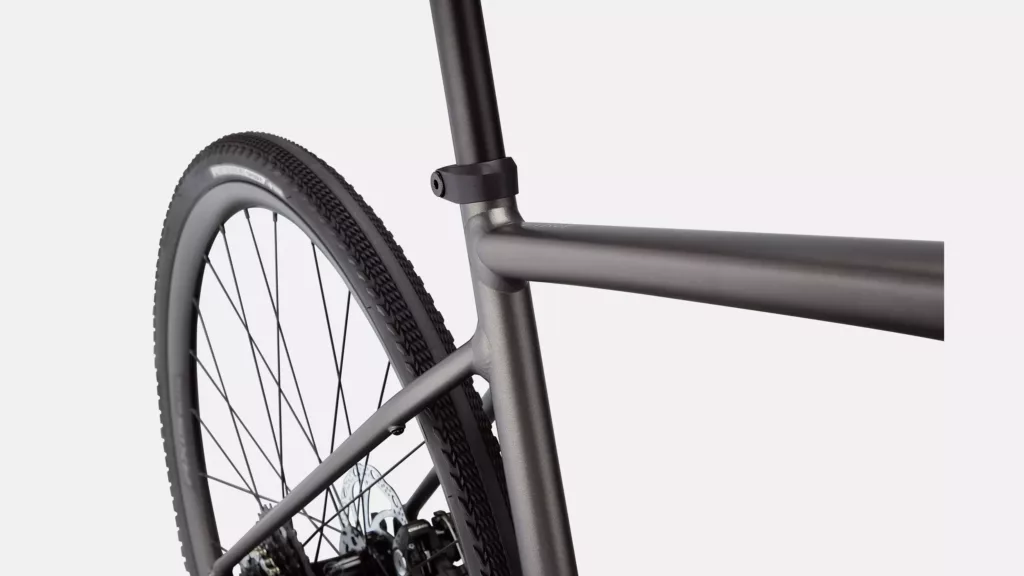
Five gravel-bike ranges to compare
These established ranges provide useful starting points for a shortlist. They are not interchangeable specifications: model year, frame material and build level can change the features considerably. Compare the exact bike on sale, particularly when a retailer is discounting an older generation.
Specialized Diverge
The Diverge range includes aluminium and carbon bikes. Future Shock is a feature to check on the particular model, rather than assuming every Diverge has the same system. Compare its riding position, tyre clearance and equipment with your intended routes, and include the servicing requirements of any suspension or compliance system in the ownership cost.
Cannondale Topstone
Topstone Alloy and Topstone Carbon need to be assessed separately. Cannondale’s Kingpin rear suspension system belongs to the carbon platform; it should not be listed as a feature of a conventional Topstone Alloy. The alloy range is worth comparing for a straightforward mixed-surface bike, while the carbon models offer a different frame design and specification.
Trek Checkpoint
Checkpoint ALR uses an aluminium frame, while Checkpoint SL is carbon and incorporates IsoSpeed. Do not transfer the SL’s features onto an ALR listing. The range’s emphasis on longer rides and carrying equipment makes mounting points and luggage fit useful comparison points, but check the exact generation’s geometry and clearance.
Giant Revolt
Giant offers aluminium Revolt models and composite Revolt Advanced models. Depending on the version, features include D-Fuse components and adjustable rear dropouts that alter wheelbase and tyre clearance. Check which components and adjustments are included on the particular build, and compare its supplied gearing with the hills you expect to ride.
Salsa Warbird
The carbon Warbird is designed around gravel racing and endurance riding. Its Class 5 VRS frame design aims to provide compliance over rough surfaces; it is not the same thing as fitting a conventional suspension fork or rear shock. For a UK purchase, establish local availability, fit support and access to replacement parts alongside the specification.
Leave room in the budget for the complete setup
Check whether pedals are included and whether your existing shoes suit the system you intend to use. Recessed two-bolt cleats can make walking sections more practical, but flat pedals are also a valid choice. Our SPD and SPD-SL comparison explains the compatibility and walking differences.
Allow for repair equipment, bottles, luggage and any immediate tyre changes. A bike that consumes the entire budget can become an expensive compromise if it needs different gearing or contact points before the first proper ride. Ask the shop for the total cost of the setup you intend to use.
What to check on a test ride
Use the brakes from the hoods and drops, change through the gears and include a hill if the test route allows it. Pay attention to whether you can look ahead comfortably and control the bike at low speed. If luggage matters, check how bags and bottles fit within your frame size rather than judging from a photograph of a larger bike.
Finish with a shortlist of two or three exact builds, not just brand names. Compare fit, lowest gear, tyre clearance, luggage requirements and total price side by side. The bike that meets those needs with the fewest immediate changes is usually the more useful purchase.
-
 Photo Credit: Canyon SRAM (supplied media release)
 -
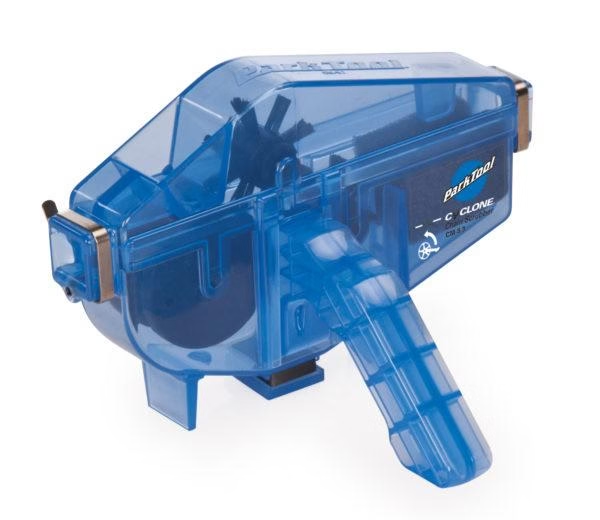
 Photo Credit: Park Tool