
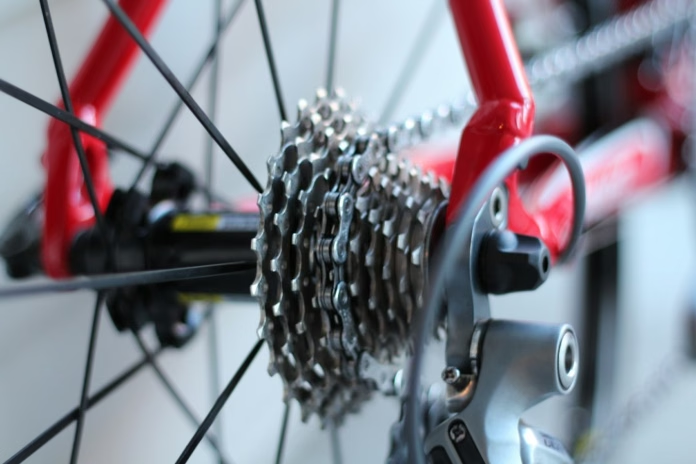
The most alarming time for a bicycle chain to jump is often when you stand up to accelerate. One moment the pedals are driving smoothly; the next they lurch forwards, your foot loses resistance and you are left wondering whether the rear derailleur needs another turn of its barrel adjuster. Sometimes it does. Just as often, the problem lies in a worn sprocket, a new chain fitted to an old cassette, or damage that an indexing adjustment cannot repair.
Diagnosing a skipping chain begins with one distinction: is the chain slipping over the teeth while staying in the same gear, or is it trying to shift between gears without being asked? The sensations can be similar, but the causes and the appropriate repairs are different. This guide starts with what you can observe on the bike, without recommending a replacement drivetrain before the fault has been located.
Why does a bike chain skip when you pedal hard?
Park Tool’s rear derailleur troubleshooting guidance makes a useful distinction between two patterns. A chain that skips across many different gear combinations may have poor indexing. A chain that jumps under pressure on one or two heavily used sprockets may have worn chain and cassette teeth. Neither diagnosis is guaranteed by one symptom, but they give you a sensible order in which to investigate.
Think about the history of the problem. Did it begin immediately after fitting a new chain? Was there a recent crash, wheel removal or change of cassette? Does the problem happen only while climbing in one gear, or across the whole cassette whenever you shift? A mechanic can often learn more from those details than from another attempt to adjust the limit screws.
| What the bike does | Likely causes to investigate | First check |
|---|---|---|
| Jumps under load on one or two sprockets | Worn sprocket teeth, chain and cassette wear mismatch | Inspect the cassette and check chain wear |
| Hesitates or moves between many gears | Indexing, cable tension or derailleur alignment | Observe shifting in a repair stand |
| Skips once every few crank revolutions | Stiff or damaged chain link, damaged tooth | Turn the cranks slowly and inspect each link |
| Started after the rear wheel was removed | Wheel seating, axle security, drivetrain alignment | Check the wheel is fitted correctly |
| Started after a fall or bike transport | Bent derailleur hanger or damage to the rear mechanism | Inspect alignment and have the hanger measured |
A new chain can expose an already worn cassette
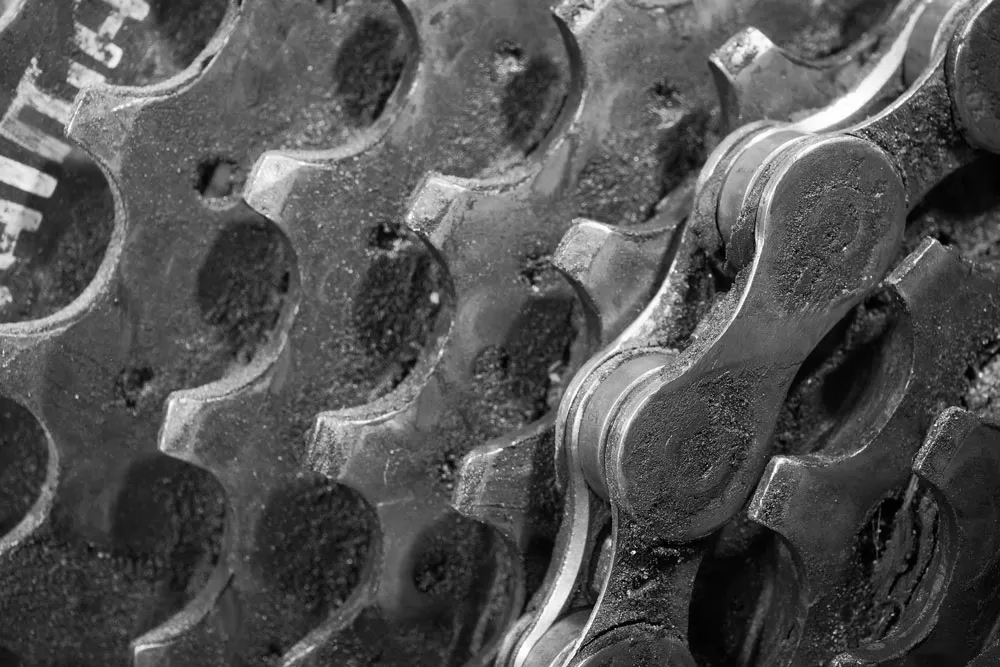
A chain does not simply stretch like an elastic band. Wear at its pins and rollers gradually increases the effective pitch of the links. The teeth on the cassette wear to match that ageing chain, particularly on the sprockets most frequently used. Fit a fresh chain and it may no longer mesh properly with the worn tooth profiles. Under a heavy pedal stroke, the chain can ride up and jump.
This is why a new chain can appear to make a previously quiet bike worse. The new chain is not necessarily defective and the solution is not to put the worn chain back indefinitely. The cassette may have reached the point where it needs replacing too.
A chain checker provides a more useful starting point than counting kilometres. Replacement thresholds depend on the drivetrain and chain design. A modern 11- or 12-speed road drivetrain generally needs closer monitoring than an older wide-spaced system, while some SRAM chains require compatible gauges because of their roller construction. Our chain wear and replacement guide explains how to read the tool and avoid assuming one gauge setting applies to every chain.
If the chain has only just been replaced, make a note of which rear sprockets skip. A small sprocket used repeatedly on hard training rides may be more worn than the rest of the cassette. Replacing only the chain will not restore a sound mesh if the teeth themselves are worn.
How to tell if the problem is gear indexing instead
Indexing describes how precisely the derailleur positions the chain under each sprocket. On a cable-operated system, the shift lever moves cable through housing and the derailleur translates that movement into lateral travel. A little too much or too little effective cable tension can leave the chain rubbing against a neighbouring sprocket or hesitating between gears.
With the bicycle safely supported, turn the cranks and shift through the rear gears one at a time. Watch whether each shift completes cleanly and the jockey wheel settles beneath the chosen sprocket. If the chain persistently tries to climb towards the next larger sprocket, the cable tension or alignment may be incorrect. If it struggles to climb when you ask it to shift, cable slack or friction may be involved.
On a conventional mechanical rear derailleur, small adjustments at the appropriate barrel adjuster can correct straightforward indexing problems. Park Tool’s guidance notes that turning a typical barrel adjuster anticlockwise increases effective cable tension, which often helps slow shifts towards larger sprockets. The exact adjustment procedure depends on the system, so check the manufacturer’s instructions before turning anything.
Electronic shifting systems do not use the same cable-tension adjustment. They may require a specified micro-adjustment procedure. Do not follow a mechanical indexing video on an electronic derailleur merely because the symptoms sound familiar.
Check for a stiff chain link or damaged tooth
A chain that catches at predictable intervals may have a tight or damaged link. This can happen after fitting a connecting pin or quick link incorrectly, or following an impact. Turn the pedals slowly by hand and look for a link that fails to articulate smoothly as it passes around the derailleur jockey wheels. Inspect the joining link and the chain’s side plates.
Do not reuse a visibly damaged or incorrectly fitted connecting link. Manufacturers have particular requirements for quick-link compatibility and whether a link may be reused. A link designed for a specific chain family or speed count should not be substituted just because it appears to fit.
A damaged cassette tooth, bent chainring or debris lodged in the drivetrain can also cause periodic faults. Examine the chainring and cassette carefully, ideally with a light, but keep fingers clear of moving teeth and the chain while the cranks are turning. Wear gloves for handling oily components, not for reaching into a running drivetrain.
Why derailleur hanger alignment matters
The rear derailleur hanger is deliberately replaceable on many bikes because it can bend during a crash or when a bicycle falls on its drive side. Even a small misalignment can make some gears shift acceptably while others behave badly. The symptom is often worse towards one end of the cassette.
Do not judge hanger straightness only by looking at it from behind. A specialist alignment gauge checks its relationship to the wheel more accurately. If the problem started after a fall or transport incident, have the hanger checked before spending time repeatedly turning adjustment screws.
On bikes with an integrated or hangerless derailleur mounting system, the inspection and replacement procedure is different. Check the instructions for the actual frame and drivetrain. Forcing an incompatible alignment tool or trying to bend a component that is not intended to be bent can cause expensive damage.
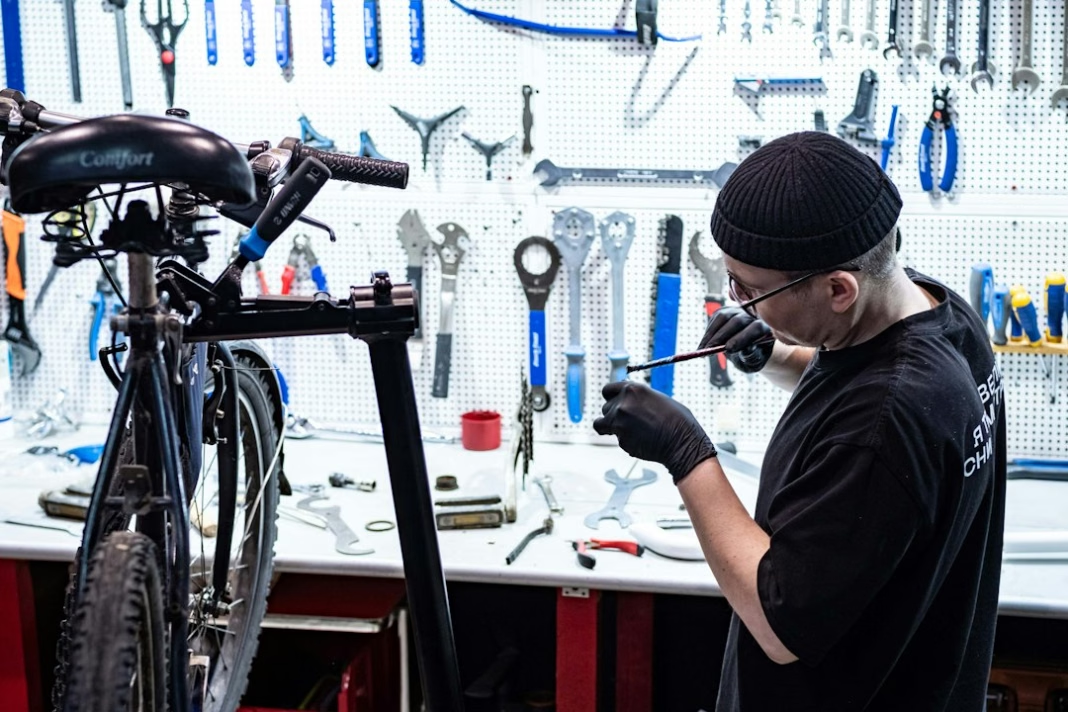 Photo Credit: Anton Savinov / Unsplash
What if the chain skips only when climbing?
Climbing and standing accelerations demand higher torque at the cranks. That additional load can expose wear that is barely noticeable when pedalling gently on the flat. A bike may seem to shift perfectly while suspended in a workstand but jump as soon as the rider stamps on the pedals.
This does not automatically mean a climbing gear is defective. It may simply be the sprocket you use most often. Try to identify which combination reproduces the fault, without deliberately standing on the pedals at speed where a skip could throw you off balance. If the bike is skipping under load, avoid hard riding until the fault has been resolved.
Shifting itself can also be rough when attempted under very high torque. Ease pressure briefly as you change gear, particularly on steep ramps. That is good technique, but it is not a substitute for repairing a drivetrain that jumps while you are holding a steady gear.
Should you replace the chain, cassette or chainrings?
Replace the component that has actually failed, while recognising that worn components can compromise their newer neighbours. If the chain checker confirms excessive wear, the chain should be addressed. If a fresh compatible chain then skips over certain cassette sprockets under load, the cassette may also need replacement. If the chain slips at the front and chainring teeth are visibly worn or damaged, investigate the chainrings.
Before buying anything, check that the replacement parts suit the bike’s drivetrain. Cassette speed, tooth range, freehub body, derailleur capacity and chain compatibility matter. A nominally 12-speed chain is not automatically suitable for every manufacturer’s 12-speed system.
Our guide to lubricating a bike chain covers routine maintenance once the drivetrain is mechanically sound. Lubricant may improve rough or noisy shifting, but it cannot restore worn tooth profiles or straighten a bent hanger.
When to stop troubleshooting and use a bike shop
A slight delay between otherwise clean shifts is one thing. Repeated violent skipping under load is different: it can cause a loss of balance and should not be treated as a harmless annoyance. Stop riding hard if the chain jumps unexpectedly. Seek professional help if the hanger may be bent, the derailleur is visibly damaged, the chain has a compromised link or you cannot establish a reliable gear engagement.
A useful workshop description is specific: ‘The chain jumps on the fourth-smallest sprocket when I climb out of the saddle, and it started after a new chain was fitted.’ That gives a mechanic a clear starting point. ‘The gears need adjusting’ may send them towards cable tension before the worn cassette is investigated.
The fastest repair is usually the one that begins with accurate observation. Establish where the chain goes when it jumps, which sprockets are involved and what changed recently. That will tell you whether a careful adjustment is appropriate or whether a worn part needs replacing.

