
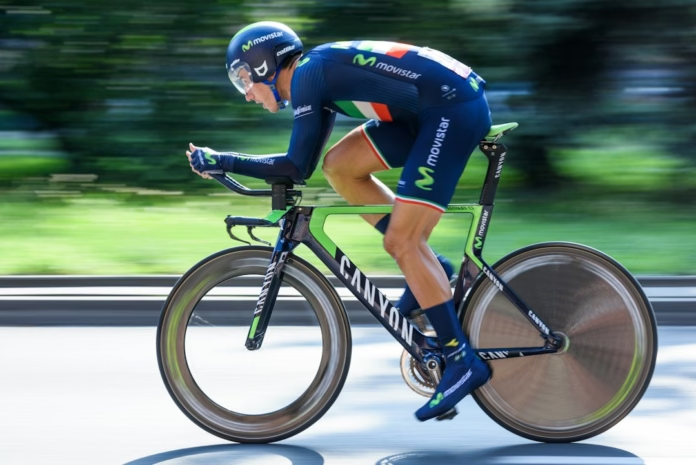
A road rider climbing at 65 revolutions per minute can be working at exactly the same power as somebody turning the pedals at 90. The difference lies in how that work is delivered. Lower cadence generally means greater force with each pedal stroke; a higher cadence spreads the effort across more revolutions. Neither approach is automatically the fastest or most economical for every cyclist.
Cadence is one of cycling’s most visible numbers, yet it is often treated as though an 85rpm reading proves good technique and a 70rpm reading reveals a problem. Training intensity, gradient, gearing, experience and even fatigue all influence the answer. For riders wondering whether to spin faster, the useful approach is to understand the trade-off before changing the way they pedal.
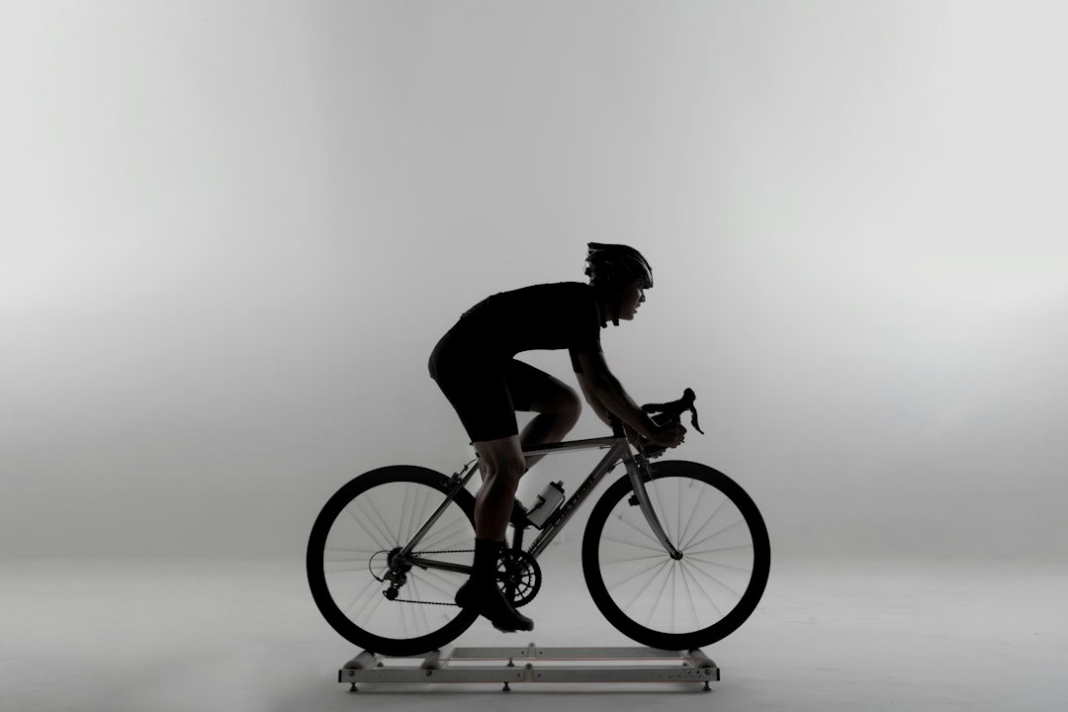 Photo Credit: Aditya Wardhana / Unsplash
What is cycling cadence and how do you measure it?
Cadence is the number of complete pedal revolutions made in one minute, expressed as rpm. If your right crank makes 20 complete turns in 15 seconds, that equates to 80rpm. Count only one crank or foot; counting both sides would double the reading.
Many GPS computers, power meters and smart trainers record cadence directly. An inexpensive crank-mounted cadence sensor can add it to a bike without a power meter. If you want to measure it manually, choose a quiet, safe stretch, count one pedal’s full revolutions for 15 seconds and multiply by four. It gives a useful estimate, although it is less reliable during accelerations.
Cadence is not speed. At a constant gear ratio, turning the cranks faster generally moves the bike faster, but cycling speed also depends on gearing, terrain, wind and resistance. A rider climbing slowly at 90rpm may be producing more power than somebody descending rapidly at 60rpm. The head-unit figure only describes how fast the cranks are turning.
Is 80 to 100rpm really the ideal range?
British Cycling’s general gear-selection advice points riders towards roughly 80–100rpm as a useful range. It can encourage smooth pedalling and discourage grinding away in a needlessly hard gear. It is practical guidance, not a universal physiological law. A beginner comfortable at 75rpm does not necessarily need to force a cadence of 95 just to fit a chart.
Research offers a more complicated picture. In a study of 14 elite male cyclists published in the European Journal of Applied Physiology, riders completed repeated time trials at prescribed cadences. An 80rpm condition produced strong efficiency and performance results, while freely chosen cadence averaged about 90rpm. The findings do not establish a single correct cadence for all cyclists, all durations or all intensities.
In particular, the cadence that minimises oxygen use at a given power can differ from the cadence riders prefer at high effort. Cadence changes the balance between muscular force and contraction frequency. Riding very slowly can load the muscles heavily, while spinning extremely quickly can impose its own coordination and metabolic costs.
| Cadence | What it can feel like | When to be cautious |
|---|---|---|
| Below 65rpm | High force per stroke, especially uphill | Can feel like grinding in a hard gear |
| 65–80rpm | Comfortable for some riders on steady efforts or climbs | Do not assume comfort means an ideal gear under every load |
| 80–100rpm | Common practical range for general road riding | There is no reason to chase 100rpm at all times |
| Above 100rpm | Quick leg turnover, useful for some hard efforts and drills | Bouncing or instability suggests control is limiting the exercise |
These are descriptive ranges rather than medical thresholds or performance grades. The rider’s power output, terrain and experience matter at least as much as the number.
Why high cadence can feel easier on the legs but harder on the breathing
At a fixed power output, the mechanical relationship is straightforward: when the cranks turn faster, average torque at the crank must fall. In ordinary language, each revolution involves less turning force. That can ease the sensation of pushing against a heavy gear, particularly during sustained efforts.
There is a catch. Increasing cadence also means the muscles have to contract more frequently. The nervous system coordinates more movements and the legs repeatedly accelerate and slow through the pedal stroke. At some point, riders may notice breathing becoming harder even when the power reading stays unchanged. A 90rpm effort can therefore feel kinder to the legs yet more demanding overall than 75rpm.
It is tempting to turn that observation into a rule about strength versus cardiovascular fitness. The real relationship is more subtle. The efficient choice depends on how muscular force, oxygen consumption, fatigue and coordination interact at the power a cyclist is producing.
What cadence should you use for climbing?
There is no guarantee that a rider can hold the same cadence on a 12 per cent climb as on flat ground. Gradient, available gearing and speed can all set a practical limit. British Cycling’s climbing guidance recommends avoiding an unnecessarily hard gear and aiming around 75–90rpm where conditions permit.
On a long climb, an easier gear can keep pedal force manageable and preserve a smoother seated rhythm. On a very steep ramp, you may be forced to pedal more slowly even in the lowest gear. That alone is not evidence of poor technique. The problem comes when a heavy gear forces you into repeated, unsustainable surges to keep moving.
Shift before the steepest section if you can. Once you are standing and pushing very hard on the pedals, shifting under load can become clumsy and may strain the drivetrain. A suitably low climbing gear is often more useful than trying to train yourself to spin at an arbitrary number on a hill your bike is not geared for.
Does cadence matter for sprinting and time-trials?
During a sprint, cadence can rise substantially as the rider accelerates through the gears. That does not make a sprinter’s peak number a useful target for endurance riding. Sprint cadence is shaped by gearing, speed, torque, the duration of the effort and the rider’s ability to produce power at high crank speeds.
For a sustained time-trial, the question is whether a cadence lets the rider hold the necessary power, maintain an aerodynamic position and avoid excessive fatigue. Riders can arrive at different answers. A slightly lower cadence might feel efficient but create more local muscular strain; a higher cadence might suit the rider’s established technique but raise perceived breathing effort.
Even professionals are not uniformly matched in pedalling style. A single television graphic showing a rider’s rpm is not a reliable explanation of why they are faster than another competitor. Position, aerodynamics, power and pacing usually tell more of the story. Our FTP testing guide explains how to compare your own sustainable effort more meaningfully.
How to find your natural cadence without guessing
A controlled trainer session is an effective way to compare different cadences at the same intensity. Warm up, choose a steady power comfortably below threshold and ride for three five-minute intervals at approximately 75, 85 and 95rpm. Keep the resistance or power target consistent and allow easy pedalling between intervals if necessary.
Note perceived exertion, breathing, stability in the saddle and how your legs feel. If you have a heart-rate monitor, record the readings but remember heart rate takes time to settle and can drift with temperature and hydration. Repeat the exercise on another day before deciding that one cadence is definitively better.
There is no need to force a new rhythm if it causes knee pain, hip rocking or bouncing in the saddle. Those symptoms warrant attention to fit and pedalling comfort, not simply tougher cadence drills. Riders recovering from injury or managing persistent pain should seek an appropriate clinical or bike-fit assessment rather than treating cadence advice as a remedy.
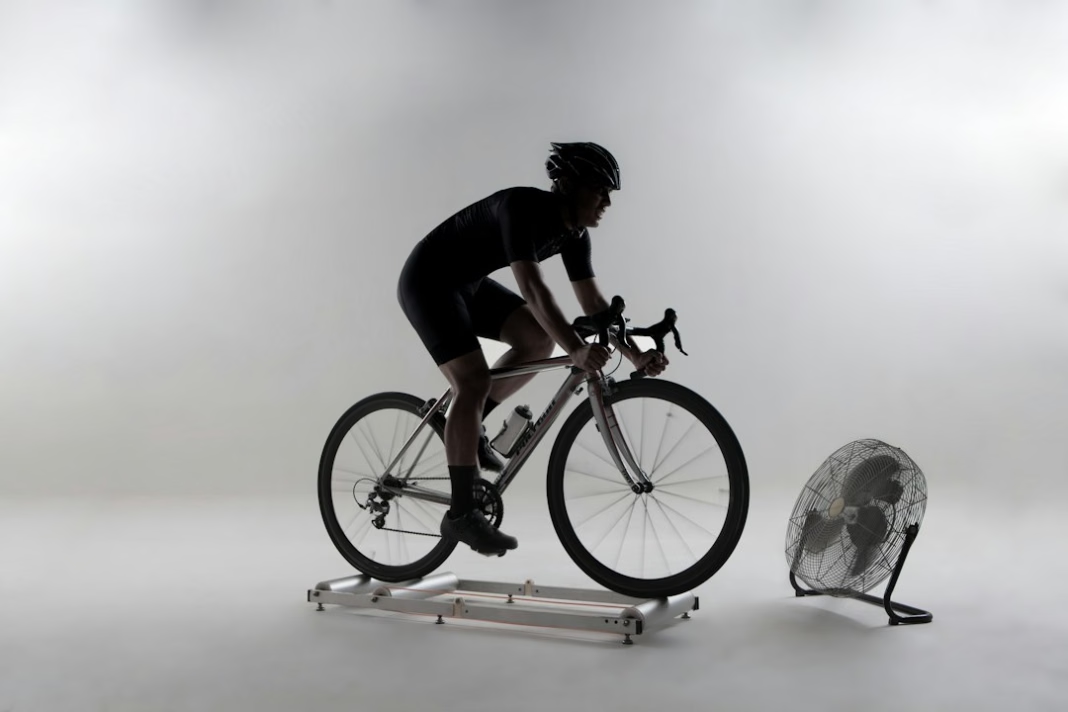 Photo Credit: Aditya Wardhana / Unsplash
Three practical ways to improve your pedalling
First, use the gears proactively. A small downshift before a rise can maintain momentum without an abrupt jump in leg force. Learning to notice when you are grinding is more valuable than staring at the cadence field for an entire ride.
Second, try brief high-cadence drills on safe, flat roads or a trainer. Pedal slightly faster than usual in an easy gear, keeping your hips steady and your upper body relaxed. These are coordination exercises, not maximal-speed efforts. Stop increasing the cadence when you begin to bounce.
Third, compare cadence at the same effort, not the same road speed. Wind and gradient change the work required, so it is easy to draw misleading conclusions from two rides at different speeds. If you have a power meter, the zones described in our cycling training zones guide can help you repeat an experiment under similar demands.
A good cadence is ultimately one that lets you deliver the power required with control and without unnecessary fatigue. For many riders that will often sit around the familiar 80–100rpm range, but the useful skill is knowing when to change gear and when to let the number move.

